How to Curl Hair with Flat Iron: Simple Steps for Beautiful, Long-Lasting Curls
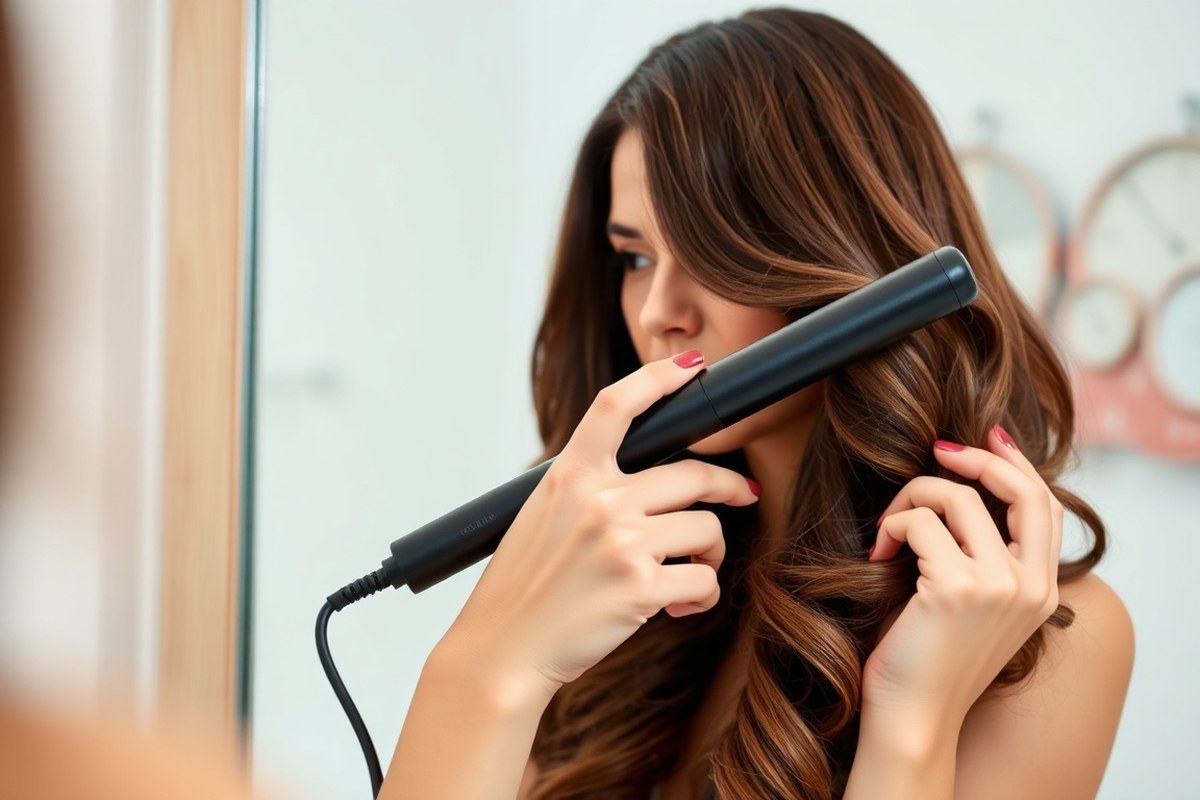
How to curl hair with flat iron is a common question for many. It’s simple once you get the technique right. You twist the iron 180 degrees and pull it down your hair slowly.
Holding the iron too long can cause damage. So keep the movement steady but quick.
Start by choosing the right heat setting for your hair type. Fine hair needs lower heat, while thick hair can handle higher temps.
Always use a heat protectant spray before curling to keep your hair healthy. You should also section your hair to curl small parts accurately.
Flat iron curls last longer because the plates heat evenly. This even heat sets the curls better compared to regular curling irons.
Picking a flat iron with curved edges helps make curling easier. Using a smaller section of hair per curl gives more defined results.
Key Takeaways
- Use 300°F for fine hair to avoid heat damage.
- Set flat iron between 350°F and 400°F for medium to thick hair.
- Hold the flat iron vertically next to your head for control.
- Twist the iron 180 degrees away from your face to curl.
- Pull the iron slowly down the hair for smooth curls.
- Choose 1-inch or larger plates depending on curl size desired.
How to Curl Hair with a Flat Iron: Step-by-Step Technique
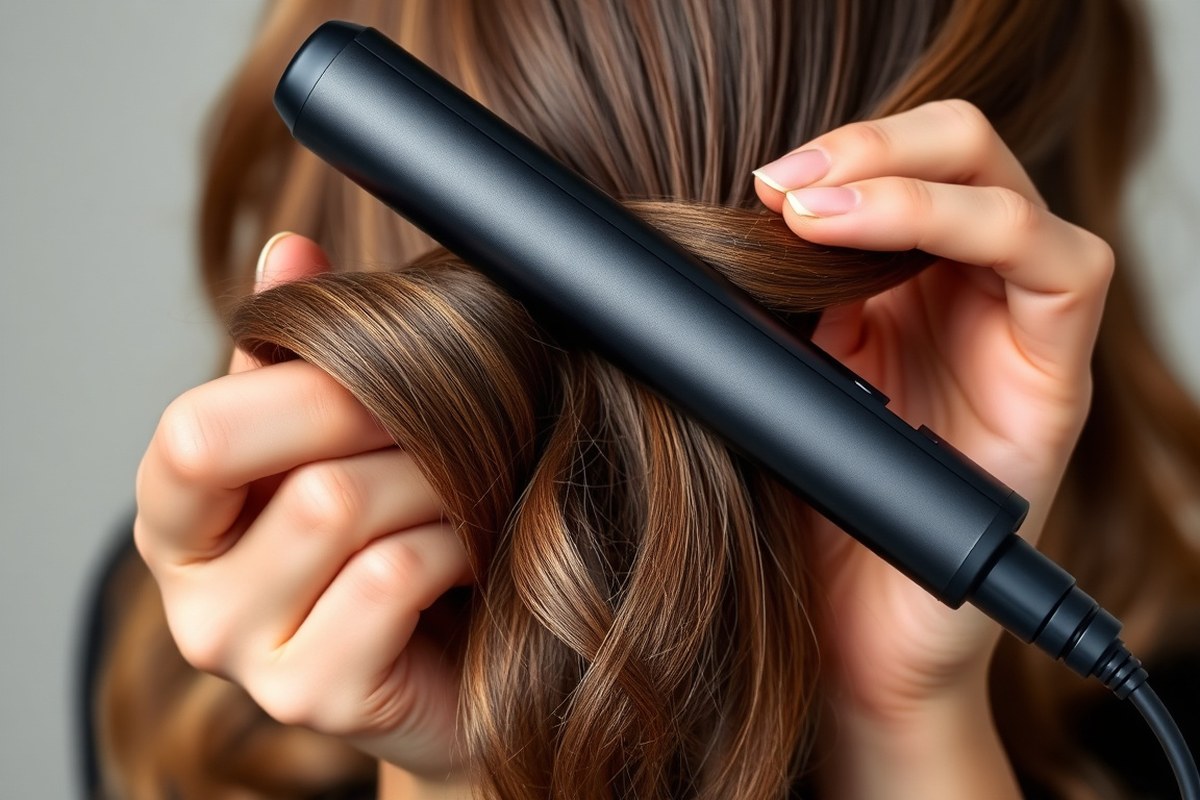
Curling your hair with a flat iron involves a few clear steps. Section your hair. Clamp the iron close to the root.
Twist the iron to wrap hair around it and glide down slowly. Taking the right amount of hair and twisting properly creates smooth curls without kinks.
- Take a 1-inch section of hair. Smaller sections give tighter curls, larger ones make loose waves.
- Clamp the flat iron near the roots. Hold the iron at a slight downward angle. Keep it about ½ inch away from your scalp. This helps avoid burns.
- Twist the flat iron 180 degrees away from your face. This motion wraps the hair flat against the iron’s barrel.
- Slowly glide the iron down to the ends while maintaining the twist. Move at a steady pace to create a smooth curl.
- Release the clamp once you reach the bottom. Let the curl cool in your hand for a few seconds to help it hold.
- Repeat on all sections, alternating twist directions for a natural look. Consistency avoids curls all turning the same way.
- Use curved-edge flat irons for more smooth curls. They grip the hair better and reduce creases.
- Clamp and curl each section only once to avoid damage. Single-pass technology irons cut down heat exposure time.
Keep the hair wrapped flat against the iron during the twist. Twisting the iron, not the hair itself, gives defined spiral curls. Try slowing your glide or holding the iron longer if curls won’t hold.
For thick or textured hair, smaller sections help heat penetrate evenly. Thin or fine hair curls quickly with slightly larger sections. Always start with heat-protectant spray to reduce damage.
Choosing the Right Flat Iron and Heat Settings

Choosing the right flat iron for curling depends on your hair. Think about your hair’s texture and length. Also, consider how much damage it already has.
Smaller plates, about 1 inch wide, work best for tight curls and shorter hair. Wider plates, 1.5 to 2 inches, suit longer hair and help create loose waves.
Material matters. Ceramic plates heat hair evenly and reduce damage. Titanium plates heat up fast and stay hot longer.
They work well for coarse, thick hair. Be careful using them on fine strands.
Heat setting is key to avoid damage while curling. Use these temperature guidelines for your hair type to get good curls:
| Hair Type | Recommended Temperature | Plate Size | Flat Iron Material |
|---|---|---|---|
| Fine or damaged hair | 300°F | 1 inch or smaller | Ceramic |
| Medium, normal hair | 350-370°F | 1 to 1.5 inches | Ceramic or ceramic-titanium blend |
| Coarse, thick hair | 370-400°F | 1.5 to 2 inches | Titanium or ceramic-titanium blend |
These ranges balance good curl shape with hair safety. Fine hair curls well at a lower temperature to avoid burning the strands. Thick and coarse hair needs more heat for curls to last.
You can curl most hair types with a flat iron by adjusting heat and plate width. Curling fine or damaged hair calls for a gentler iron and lower heat to prevent breakage. Thick hair takes longer under higher heat but curls hold better.
Use a heat protectant spray before curling your hair. This helps reduce damage during heat styling. It’s extra important for color-treated or fragile hair.
Flat irons with curved edges help you make curls. They make it easier to twist the iron while styling. This helps you get smoother curls.
Check the features before buying. Also, choose a model that heats quickly and has adjustable temperature controls.
A good curling flat iron costs between $50 and $150, depending on brand and features. Investing in quality helps protect your hair and gives consistent curls. Avoid flat irons with no temperature control, especially if your hair type varies or is fragile.
Preparing Hair and Products for the Best Curl Results
Start with clean, dry hair for the best curls. Damp hair plus heat straighteners damages strands and messes curls up. Always detangle thoroughly before you curl to avoid snags and uneven styling.
Washing and Drying Hair
Wash your hair with a gentle shampoo and conditioner that suits your hair type. Curls hold better on hair without any heavy product buildup. Avoid oily or heavy conditioners that weigh hair down before curling.
Dry hair fully before curling. Flat irons work best on totally dry hair. Damp hair combined with hot plates often leads to sizzle, breakage, and uneven curls.
Let your hair air dry as long as you can. Use a blow dryer if needed.
Set it to low or medium heat to protect hair. You can roughly dry hair with a microfiber towel first to speed up the process.
Applying Heat Protectants
Use a heat protectant spray to shield hair from flat iron heat damage. Sprays create a thin barrier and help curls last without frying your strands. Choose products designed for temperatures up to or above 450°F (232°C).
Spray evenly on dry hair and comb through with a wide-tooth comb for full coverage. Pay close attention to the ends since they are most prone to damage.
- Aussie Total Miracle Heat Protecting Spray
- Drybar Hot Toddy Heat Protectant Mist
- TRESemmé Thermal Creations Heat Tamer Spray
- CHI 44 Iron Guard Thermal Protection Spray
- L’Oréal Elnett Satin Heat Protecting Spray
Apply the spray about 6 to 8 inches away from your hair. Avoid overloading to prevent buildup or sticky residue.
Selecting Styling and Finishing Products
Lightweight hairsprays help curls hold without stiffness or crunch. For fine hair, spraying hairspray before curling can help curls last longer. Let it dry fully before brushing out curls gently.
Use smoothing serums or creams on curls if your hair tends to frizz. These products add shine and tame flyaways without weighing curls down.
- Light-hold hairspray for flexible but lasting curls
- Anti-frizz serum for smooth texture
- Lightweight mousse for volume and bounce
- Texturizing spray for natural waves
- Leave-in conditioner to keep curls soft
Apply finishing products sparingly after curling to keep curls soft and touchable. Avoid heavy oils or creams, which can flatten curls quickly.
Different Curl Styles You Can Achieve with a Flat Iron
You can create many curl styles with a flat iron. Style beach waves, bouncy curls, or polished S-waves. They each need different techniques to shape.
Styles change by twisting the iron differently. Also, the speed you glide it affects the look.
Try changing these for new results. Adjusting these details lets you get loose waves or tight curls with a smooth finish.
Creating Beach Waves
Beach waves are loose, casual, and a bit messy, giving a relaxed look without tight curls. Use a flat iron with rounded plates and work with 1-inch sections, clipping near the roots. Twist the iron halfway while gliding it slowly.
Keep the wrap loose to get soft waves. This makes a tousled, natural look.
Hold the iron on each hair section for 5 to 8 seconds. After heating, let the curl cool in your hand. This sets the curl nicely.
Alternate twisting the iron toward your face and away. This creates more natural-looking waves with varied directions.
Keep switching sides as you go. This gives a less uniform wave that looks more easy and beachy.
Making Bouncy, Defined Curls
For tighter, bouncy curls, pick narrower 1-inch sections and clamp the iron at the root. Rotate your wrist fully to turn the iron 180 degrees. Wrap the hair around the outer edge of the iron.
This technique forms smooth curls. Slowly glide the iron down the length of the hair with firm but steady pressure.
Clamp the iron on each hair section for about 5 seconds. This helps shape springy curls that hold their volume longer. Timing controls the curl tightness.
Let the curl cool while holding it in your hand to keep its bounce. Using a single flat iron with rotating plates can make these curls easier and more consistent.
Polished S-Waves for a Glam Finish
Polished S-waves offer a smooth, glossy curl that frames your face elegantly. Take larger sections and clamp the iron around the middle of the hair strand. Slowly glide the iron down, twisting your wrist consistently to form a smooth S-shape.
Move the iron steadily and slowly down your hair. Hold it on each section for 6 to 8 seconds. This steady heat gives better curl shape.
The slow glide gives a sleek look without kinks or rough edges. Use a flat iron with rounded edges whenever possible.
It lets you twist hair without crease lines or breaks. This keeps curls smooth and intact.
How to Curl Different Hair Types Safely and Effectively
Adjust your curling method and heat settings based on your hair type for best results. Fine, coarse, color-treated, and short hair all need different care to avoid damage. Picking the right heat and technique helps your curls hold and looks natural.
Curling Fine and Fragile Hair
Keep your flat iron temperature low, between 250°F and 300°F, to avoid breakage. Fine hair is easier to damage, so always use a heat protectant spray beforehand. Avoid heavy styling products that weigh hair down and reduce curl bounce.
Use fewer passes with the flat iron to form curls. Curl small sections slowly and gently, letting the heat shape your hair without overheating it. This way, you prevent frizz and keep your strands healthy.
Handling Thick and Coarse Hair
Thick or coarse hair can handle heat up to 400°F. This higher heat helps curls stay longer. It works best for strong hair types.
Start at a moderate setting and increase gradually if curls don’t set. Using smaller hair sections gives the iron better grip and creates tighter curls.
Hold the flat iron in place slightly longer for thick hair. But avoid staying too long to stop damage. Slowly twist the hair one full turn between the plates.
Then glide the iron down the hair. This locks in the curl shape well. Use a heat protectant to keep hair safe.
Tips for Short Hair Curling
Choose a flat iron with narrow plates that fit your hair length for easier wrapping. Short hair should wrap at least one full turn around the plates to form curls properly. Use a lower heat setting to prevent burning short strands, especially close to the scalp.
Work with smaller sections to control the curl shape better. Roll the flat iron slowly and gently on short hair. This motion creates natural curls without pinch marks.
It keeps the hair smooth and soft. Don’t forget spritzing heat protectant on all sections before styling.
Always apply a heat protectant before using a flat iron to prevent hair damage.
How to Make Flat Iron Curls Last Longer
The key to longer-lasting curls is letting them cool in place. Let the curls cool fully before touching or brushing them. Cooling helps the curls set and hold their shape without falling fast or becoming limp.
Light sprays make a big difference. Spray a little hairspray on each section before curling it. This helps lock the curl shape as you curl.
Use just enough to lightly coat the hair. After curling all your hair, spray a lightweight setting spray.
This gives extra hold without making hair stiff or heavy. It keeps curls soft and touchable.
Wait 5 to 10 minutes after curling before spraying final hairspray. This helps preserve some natural bounce in your curls. Don’t rush the cooling process.
For firmer hold, spray immediately after curling. Avoid heavy sprays that weigh hair down or leave it crunchy.
- Use heat protectant spray before curling to shield strands and boost hold
- Curl small sections for tighter, longer-lasting curls
- Hold the flat iron tightly when twisting for a neat spiral
- Let curls cool fully on your head without disturbing them
- Spritz a light hairspray before and after curling to lock curls
- Refresh curls by scrunching with dry shampoo or a texture spray, no heat needed
Lightly scrunching curls with a dry shampoo or texture spray can revive them without heat. This adds volume and grip back into curls that start falling or looking tired. Avoid straightening or re-curling with heat too often, as that can cause damage and curl loss.
Common curl mistakes include curling wet or damp hair. Using sections that are too big also hurts curl hold.
Skipping heat protectant and not letting curls cool also make curls fall fast. Each step you properly follow helps the curl last longer and look natural without stiffness.
Common Curling Mistakes and How to Fix Them
Bent or creased curls usually happen when you clamp your flat iron too tightly. You want a smooth glide with even pressure, not a squeeze. Hold the flat iron at a steady 180-degree angle.
This helps your hair twist evenly. It prevents sharp bends in your curls.
Flat or frizzy curls come from using too low heat or uneven section sizes. Use 300°F to 350°F for most hair types, adjusting for fine or damaged hair.
Large sections make curls fall flat quickly. Smaller sections help curls hold better.
The angle for twisting matters a lot. Start twisting the flat iron just below the roots.
As you curl down, slightly drop the angle to keep curls natural and prevent creases. Scrolling evenly with a smooth motion is key to consistent curls.
- Use a medium heat setting: 300°F to 350°F depending on your hair type.
- Section hair in small, even parts about 1 inch wide for better curls.
- Hold the flat iron loosely, gliding smoothly without clamping too hard.
- Start twisting the iron near the scalp, then slowly rotate while pulling down.
- Let curls cool fully before touching or moving them to set the shape.
- Use a clip to hold curls in place as they cool to keep bounce.
- Adjust flat iron angle slightly lower as you move toward the ends.
Frizz can also mean your iron’s plates aren’t smooth or heating unevenly. Investing in a good flat iron with ceramic or tourmaline plates helps. Uneven heat can burn some strands, leaving curls rough.
When curls lose shape fast, check your product use and section size. Using a light hold spray before curling and a cool-down hold boost helps. Big sections and quick pulls won’t shape as well; slow, small sections are better.
Time Needed and Tips for Faster Curling with a Flat Iron
Curling hair with a flat iron usually takes about 20 to 30 minutes for medium-length hair. Long hair usually takes closer to 30 minutes or more.
Time depends on thickness and curl size. Shorter hair can take around 15 to 20 minutes since there’s less length to work through.
Using wider flat iron plates, like 1.25 to 2 inches, can speed things up, especially on long or thick hair. Bigger plates cover more hair at once, cutting your time down.
The tradeoff is less precision. So wider plates work best if you want loose, beachy waves rather than tight curls.
When you need speed, take bigger hair sections. Twist the iron only halfway. Pull it down the hair strand.
Glide the flat iron faster, which saves time and still creates bouncy curls. For tighter curls, smaller sections and slower movements are necessary. But this increases your curling time.
Don’t try to rush the curling process too much. Steady, smooth glides prevent damage and uneven curls.
For fast results, use dry, detangled hair. Set your iron to the right heat. Match it to your hair type.
Hold the flat iron vertically. Clamp near the root and bend the hair in half.
Twirl it and slide down slowly. This method helps curls form faster and look more natural.
Thick or coarse hair takes longer to curl. You need more passes with the flat iron. This helps curls last longer.
Keep flat iron plates between 1 and 1.5 inches for most hair types. But use wider plates for faster results on long hair when precision is less important. Smaller plates give you more control but add time.
Step-by-Step Action Plan to Curl Your Hair with a Flat Iron
Follow these simple steps to curl your hair with a flat iron confidently. Track your progress by how natural and lasting your curls look.
- Before You Start: Wash and dry your hair completely. Your curls will last longer if your hair is clean and dry.
- Preparation Phase: Apply heat protectant spray evenly. You’ll know it worked if your hair feels smooth and not greasy.
- First Time Curling: Set your flat iron to the right temperature for your hair type. Fine hair needs 300°F, thick hair needs 375°F. Test on a small piece to avoid damage.
- Doing the Curl: Section your hair into small parts. Clamp and twist the flat iron slowly down each section. You’ll see a curling motion form as you move.
- Finishing Touches: Let your curls cool completely before touching. This helps the curls keep their shape longer.
- After Curling: Lightly run your fingers through curls or use a wide-tooth comb for softer waves. Avoid using a brush to prevent frizz.
- Setting the Style: Apply a light hairspray or curl hold spray. The curls should hold for hours without stiffness or stickiness.
- Next Day Maintenance: Use dry shampoo at your roots. Gently clip curls to refresh them. This keeps their bounce without washing again.
Frequently Asked Questions
How Do You Prevent Flat Iron Curls from Loosening Quickly?
Use a light hairspray right after curling and avoid touching the curls. Let them cool fully to set the shape and stay longer.
Can You Curl Hair with a Flat Iron Without Damaging It?
Always use a heat protectant spray before curling to reduce damage. Keep the temperature moderate and do not hold the iron too long on your hair.
Is It Better to Curl Hair in Small or Large Sections with a Flat Iron?
Curling small sections gives tighter, longer-lasting curls, while large sections create loose waves. Choose based on your preferred curl size.
Should You Curl Hair Towards or Away from Your Face with a Flat Iron?
Pivot the iron away from your face for a natural look. Curling away opens up your face and softens your features.
What’s the Key Difference Between Flicks and Curls Made with a Flat Iron?
Flicks have a slight bend at the ends; curls are fully rounded. Both start by wrapping hair flat against the iron without twisting.
How Do You Fix Curls That Look Frizzy After Using a Flat Iron?
Smooth frizzy curls by running the flat iron lightly over them again. Use a serum designed to tame frizz and add shine.
Final Thoughts
Curling hair with a flat iron takes practice but is manageable with the right steps. Try a small section today to see how your hair reacts. Keep a heat protectant handy and adjust your iron’s temperature for the best results.