How to Make Your Hair Not Frizzy: 8 Proven Steps for Smooth Hair
How to make your hair not frizzy is a common question. The quickest way is to keep your hair moisturized and avoid harsh drying. Using gentle products and drying your hair until it’s mostly dry can cut frizz a lot.
Start by towel-drying your hair with a microfiber towel to reduce friction. Aim to let your hair air dry most of the way before using heat. This lessens damage and keeps strands smoother for longer.
Adding a styling cream or leave-in conditioner helps lock in moisture. These products form a protective barrier, stopping humidity from turning your hair into a frizzy mess. Consistency in your daily routine makes the biggest difference.
Key Takeaways
- Dry your hair until about 80 to 90% dry before using a blow-dryer.
- Use a microfiber towel, like the Kitsch Hair Towel Wrap, to reduce rough drying.
- Apply a styling cream such as RŌZ Evergreen Hair Styling Cream to lock moisture.
- Leave-in conditioners help create a barrier against humidity and frizz.
- Massage warm oil like coconut oil into hair and scalp for 15 minutes weekly.
- Trim your hair every 8 to 12 weeks to prevent split ends and frizz.
1. How to Make Your Hair Not Frizzy: Effective Daily Care Steps

Controlling frizz starts with a daily routine that treats your hair gently and keeps it hydrated. Apply your styling products right after showering, when your hair is damp. This helps lock in moisture and smooth the strands, reducing frizz throughout the day.
How you dry and style your hair can impact frizz a lot. Avoid drying hair by rubbing it harshly with a towel.
Use a microfiber towel or soft cotton T-shirt to gently squeeze out water. Detangle wet hair carefully with a wide-tooth comb to prevent breakage.
Follow these steps every day to keep frizz under control and hair smooth:
- Use a gentle shampoo made for your hair type. This stops your hair’s natural oils from washing away. Always pick shampoos that keep hair healthy and soft.
- Put on a hydrating conditioner after shampooing your hair. Let it sit for two to three minutes before rinsing. This helps add important moisture to your hair strands.
- After showering, gently squeeze excess water from your hair using a microfiber towel or cotton T-shirt.
- Apply an anti-frizz serum or leave-in conditioner evenly on damp hair to seal in moisture.
- Comb your hair with a wide-tooth comb to detangle and distribute the product without causing breakage.
- Allow your hair to dry naturally to avoid damage. Or use a hair dryer set to low heat with a diffuser. This approach reduces heat damage and cuts down frizz.
- Wear a hat or scarf to protect hair in tough weather. This is especially useful in dry or very windy conditions. Covering hair shields it from elements that cause dryness and frizz.
This routine works best when done consistently. Get your hair trimmed regularly, about every eight weeks. This stops split ends from forming and spreading.
Split ends let moisture leave the hair, which makes frizz worse. Controlling frizz takes patience. But gentle care combined with the right products will smooth your hair and make styling easier.
2. What Causes Frizzy Hair and How Moisture Affects It

Frizzy hair happens because the outer layer of your hair lifts and lets moisture in unevenly. This swelling creates strands that stick out and look fuzzy. Moisture, especially from the air, plays a big role in how much frizz you see.
How Moisture Causes Hair to Swell and Frizz
Your hair’s outer layer is called the cuticle. When the cuticle lifts or roughens, moisture slips inside the strands unevenly.
This uneven swelling makes hair strands stick out instead of lying flat. That’s why your hair looks frizzy and puffy.
Why Humidity Makes Frizzy Hair Worse
Humidity means there is extra moisture in the air, often above 70% levels. This moisture vapor enters the open cuticles on your hair shaft.
As water vapors soak into your hair, the strands swell and lose their smooth alignment. Curly hair feels this most because it’s already shaped unevenly.
What Happens to the Hair Cuticle When Frizz Forms
The cuticle is like overlapping scales on each strand. When hair is dry or damaged, these scales lift up and stop lying flat.
Lifted cuticles pull moisture from the air, causing your hair to puff up in some spots. This leads to frizz, especially near the ends of your hair.
Damage and Heat Make Hair More Prone to Frizz
Using heat tools often dries your hair out, making cuticles lift and get rough. This makes your hair suck up moisture and swell.
Dry, damaged hair doesn’t hold moisture inside well. The cuticle stays raised, causing more frizz and breakage over time.
Balancing Moisture to Control Frizz
Washing too much strips natural oils and dries hair, lifting the cuticle. Washing too little causes buildup and flat hair, but less frizz from damage.
Using sealing products like leave-in conditioners locks the cuticle down. They help your hair hold moisture without swelling and shield it from humidity.
Use a leave-in conditioner to lock your hair cuticle and prevent humidity from causing frizz.
3. How Hair Type and Condition Influence Frizz and Care Needs
Frizz shows up differently depending on your hair type and condition. Curly or coarse hair usually frizzes the most.
Fine or straight hair has less frizz but still can dry out. Damage and dryness make frizz worse by roughening the hair surface and lifting cuticles.
Frizz Characteristics by Hair Type
Curly and coarse hair types often experience the most frizz. Their natural bends allow moisture to escape easily, making hair dry and frizzy. Straight or fine hair usually frizzes only at damaged spots.
These include split ends or near the hairline. The rest of the hair stays smooth.
Waves fall between curls and straight strands in frizz tendency. They can go smooth with enough moisture but tend to look puffed up in humidity. Hair that’s been chemically treated may lose its natural pattern and frizz more easily.
Recommended Products and Routines for Each Type
Use rich, hydrating conditioners and leave-in treatments for curly or coarse hair. These lock in moisture so curls stay defined and shiny. Pick sulfate-free shampoos or cleansing conditioners to protect your hair’s natural oils and reduce dryness.
Fine or straight hair benefits from lighter formulas to avoid weighing it down. Use small amounts of natural oils like argan oil. Apply them to the ends to calm flyaways.
It also adds a nice shine. Try to stretch time between washes to keep natural oils longer and prevent dry frizz.
| Hair Type | Frizz Traits | Care Tips |
|---|---|---|
| Curly/coarse | Most prone, moisture escapes easily | Hydrating conditioners, leave-ins, sulfate-free cleansers |
| Wavy | Moderate frizz, puffiness in humidity | Moisture focus, avoid heavy products, use light oils |
| Straight/fine | Less frizz, shows at dry or damaged ends | Lighter moisturizers, natural oils sparingly, less frequent washing |
| Chemically treated | Frizz from damage and lost natural oils | Regular protein/moisture treatments, trims every 3-4 months |
This table highlights differences in frizz and how to care for each hair type. Changing your routine to fit your hair texture helps fight frizz.
It keeps your style looking great all day. This simple step really makes a difference.
Decision Guide: Damage Versus Natural Texture Frizz
Natural texture frizz happens because of hair type and moisture balance. Damage frizz results from dryness, split ends, heat, or chemical treatments. Knowing which fits your hair guides your care plan.
Check for split ends or rough strands. They point to damage frizz, which needs trims and protein treatments. Your hair frizzes mostly in humidity and looks healthy besides.
Focus on hydration by using gentle hair products. This helps keep your hair smooth and soft.
Use the following steps to decide how to care for frizz:
- Look for dryness or split ends to identify damage.
- When your hair shows damage, get trims every 3-4 months. Use protein treatments to help rebuild and strengthen hair strands. These steps protect your hair further.
- Healthy hair that frizzes needs rich conditioners to stay smooth. Avoid washing your hair too often to keep moisture in. These habits help control frizz naturally.
- Avoid excessive heat styling to preserve natural moisture.
4. Choosing Haircuts and Trims That Reduce Frizziness
Trimming your hair every six to eight weeks helps keep frizz under control. Split ends make hair look fuzzy and worsen frizz. So cutting off damaged ends stops that.
Haircuts that remove bulk help smooth your hair’s look. Long layers or blunt cuts keep the shape. These styles reduce frizz by controlling volume.
Split ends cause hairs to separate and stick out, which adds to frizz’s fluffiness. Regular trims cut off frayed ends early. This prevents split ends from traveling up your hair.
It keeps your hair healthier and less frizzy. This keeps hair healthier and easier to style.
- Ask for blunt ends if your hair is thick or curly to reduce split ends.
- Long layers help reduce bulk without sacrificing length or shape.
- Trim every 6 to 8 weeks for frizz-prone hair to maintain health.
- Visit a stylist who understands your hair type for best results.
- Avoid over-thinning hair, as it can create more flyaways and frizz.
When you get regular trims, your hair stays stronger and looks polished. It also makes daily styling easier because there are fewer broken strands to stick out. Your ends might need trimming if splits are bad.
Trims might take a few inches off. This reduces frizz and improves hair health.
5. Washing, Conditioning, and Treatments to Fight Frizz
Shampoos made for dry or frizzy hair usually contain ingredients like glycerin and natural oils. These help lock in moisture and reduce dryness that causes frizz. Avoid shampoos with harsh sulfates because they strip your hair’s natural oils, making frizz worse.
Conditioning is your next step after shampooing. Use a conditioner every time you wash your hair to keep it hydrated and smooth. Use a deep conditioning treatment or hair mask once a week.
This helps restore moisture and softness to your hair. It gives extra care to dry, frizzy strands. You should leave these treatments on for at least 30 minutes.
For very dry hair, leave the mask on overnight. Use a shower cap to keep your bedding safe. This protects your sheets from the treatment.
Many people find DIY or natural masks effective and gentle. Ingredients like coconut oil, argan oil, avocado, honey, and yogurt work well. They add nourishment and weight to hair strands, helping to stop frizz.
You don’t need expensive products to get these benefits. Natural masks can be used weekly just like store-bought masks.
Here is a simple weekly routine to fight frizz with washing, conditioning, and treatments:
- Choose a sulfate-free shampoo with glycerin or natural oils for moisture.
- Wash your hair two to three times a week. This stops your scalp and hair from drying out. Avoid daily washing to keep moisture locked in.
- Apply conditioner from mid-length to ends every time you wash, leave for 2 to 3 minutes.
- Use a deep conditioning mask once a week. Leave it on for 30 minutes or overnight. You can also use natural treatments for better results.
- Rinse hair with cool water to help seal the cuticle and reduce frizz.
- Gently towel dry your hair without rubbing to avoid creating static and frizz.
- Apply a lightweight leave-in conditioner or oil like argan to damp hair before styling.
Overwashing your hair can dry it out, making frizz worse. Stick to washing 2 to 3 times weekly, unless your scalp gets oily faster.
6. How to Use Heat Tools Safely to Avoid Causing Frizz
Using too much heat or the wrong temperature causes frizz and damage. Keep heat settings between 300°F and 350°F for most hair types. Fine or damaged hair needs the lowest setting, around 300°F, to avoid drying it out.
Always apply a heat protection spray before you start drying or styling. Spray it evenly on damp hair, not just the ends. This layer shields hair from direct heat and helps keep moisture locked in.
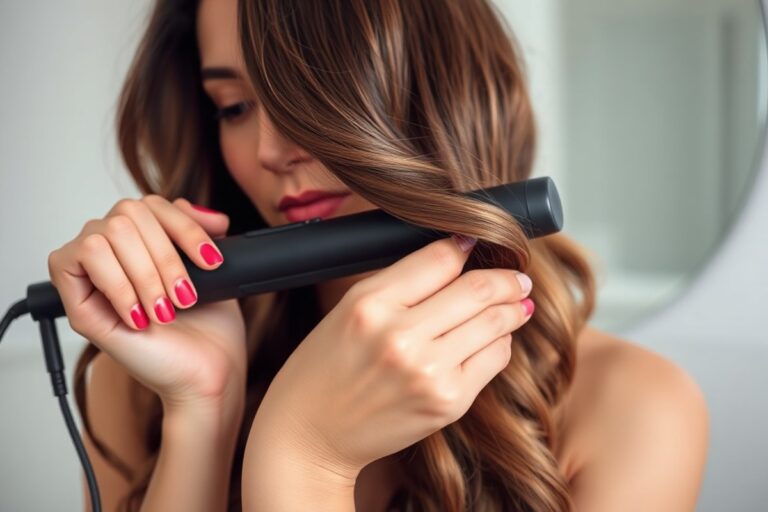
Some heat tools are better at reducing frizz. Look for dryers with ionic technology, which breaks down water molecules and smooths hair cuticles. Ceramic or tourmaline flat irons spread heat evenly and cause less damage than metal plates.
- Dry hair until it’s about 80% dry before using any heat tool
- Use a brush with firm, flexible bristles for blow-drying straight hair
- Set your flat iron or curling iron to the hair’s recommended temperature
- Work in small sections to avoid repeated passes over the same hair
- Finish with a serum or light oil for extra smoothness and shine
Don’t use high heat on wet hair, it leads to puffiness and breakage. Blow-dry your hair gently using medium speed. Finish by using cool air.
This helps set your style and closes cuticles. Protecting your hair needs the right products and tools.
It takes some practice to get it right. Doing this lowers frizz in the long run.
7. Nighttime and Styling Habits That Keep Frizz at Bay
Nighttime hair habits greatly affect frizz. Friction while you sleep roughens the hair cuticle, causing frizz and breakage. Using the right pillowcase helps keep your hair smooth.
Choosing the right styles also prevents frizz. Using good products keeps your hair moist.
Use of Silk or Satin Pillowcases
Sleeping on cotton pillowcases causes friction that roughens your hair cuticle. This friction leads to frizz and dull hair by morning. Satin or silk pillowcases are gentle and allow your hair to glide smoothly through the night.
The smooth surface keeps hair cuticles flat and holds moisture better. You can buy silk pillowcases for about $15 to $30 online or in stores. Switching to one can show fewer tangles and less frizz in just a few nights.
For extra protection, use a silk or satin hair wrap along with the pillowcase. This combo seals in moisture and prevents rubbing. Many hair experts recommend using both for best results.
Protective Hairstyles Before Bed
Loose braids or a soft bun reduce hair movement that causes friction on your pillow. However, avoid tying your hair too tight. Overly tight styles can cause breakage or hair loss overnight.
Here’s a simple checklist to protect your hair at night:
- Wear a loose braid or twist to prevent tangles.
- Use gentle fabric scrunchies, not elastic bands.
- A silk or satin bonnet adds extra friction protection.
- Keep hair moisturized with a light leave-in conditioner before styling.
- Avoid tight ponytails or buns that pull on roots.
Following these steps helps hair stay intact and smooth until morning. Protective styles also keep your hair better moisturized and reduce frizz.
Avoiding Excessive Touching or Rerunning Fingers
Touching your hair often spreads oils and dries out strands. Also, running fingers through hair repeatedly breaks down the cuticle. This creates more frizz and weakens your hair.
Try not to fuss with your hair at night or during the day. Let it be to avoid breaking the smooth, moisturized surface. Over time, staying hands-off will help your hair stay shiny and frizz-free.
8. Common Frizz Mistakes and How to Fix Them
Overdoing heat styling and brushing dry hair often makes frizz worse. Heat lifts your hair cuticle, which lets moisture escape and causes that rough, frizzy look.
Brushing dry hair breaks up curls and creates more flyaways. So avoid it unless your hair is damp and conditioned.
Another common mistake is using rough towels or harsh rubbing to dry hair. Wet hair is fragile, and rubbing with a regular towel creates friction. This friction damages the cuticle and makes frizz worse.
Use a microfiber towel or old cotton T-shirt to dry your hair. Gently blot hair instead of rubbing to cut damage and frizz. This method helps keep hair smooth and less tangled.
Sometimes, people stick with one anti-frizz product and wonder why it doesn’t work. Not all products suit every hair type. Layering too many can weigh hair down or leave it greasy.
Choosing the right product depends on your hair’s texture and how dry or oily it is. Your usual hair routine might not always work well.
Try salon treatments or get advice from a hair expert. They can offer solutions that suit your hair type.
- Avoid heat over 350°F when styling to protect hair cuticles
- Pat hair dry instead of rubbing with towels
- Use anti-frizz serums suited to your hair type, not just the trendiest one
- Skip brushing dry curls; use your fingers or a wide-tooth comb when wet
- Rinse with cool water after washing to close hair cuticles and reduce frizz
- Change your pillowcase to silk or satin to lower overnight friction
Frizz can still stick around if your hair is severely damaged or very dry. In that case, salon treatments like keratin smoothing or deep conditioning can help.
Those treatments usually cost around $100-$250 and last a couple of months. They smooth the cuticle and lock in moisture, meaning less frizz day to day.
Remember, less friction means less frizz; gently handling your hair makes a big difference.
Step-by-Step Action Plan to Fight Frizz Starting Today
Follow these steps over the next few weeks to see your hair get smoother and shinier. Track how your hair responds after each step to find what truly helps.
- Day 1: Swap your regular shampoo for a gentle, sulfate-free one. Watch for less dryness and softer hair after washing.
- Day 3: Add a deep conditioning treatment once a week. Notice if strands feel less rough and easier to brush.
- Week 1: Trim any split ends to reduce frizz triggered by damaged hair tips. Look for less puffiness on dry days.
- Week 2: Avoid towel rubbing. Instead, gently squeeze out water and pat dry with a microfiber towel or soft old T-shirt. Your hair should be less frizzy right after drying.
- Week 3: Limit heat styling and always use a heat protectant spray. Hair will be smoother and less prone to flyaways in the next few days.
- Week 4: Change your pillowcase to silk or satin to reduce overnight friction. Your hair should feel softer when you wake up.
- After 1 Month: Try styling with lightweight serums or oils designed for your hair type. You’ll notice frizz control that lasts through the day.
Frequently Asked Questions
How Can I Reduce Frizz on Humid Days?
Use anti-frizz serum and avoid over-washing. Humidity adds moisture, causing more frizz on your hair’s surface. Applying a silicone-based product creates a barrier against humidity and keeps strands smooth longer.
Is Brushing My Hair When Dry Causing Frizz?
Brushing dry hair can cause tangles and breakage. It roughens the cuticle, making hair look frizzy. Use a wide-tooth comb or brush hair gently when damp to reduce frizz and damage.
Can Certain Diets Affect Hair Frizz?
Yes, lack of hydration and nutrients can increase frizz. Your hair needs vitamins and water to stay healthy and moisturized. Eating foods rich in omega-3s and drinking water can improve hair texture gradually.
Does Swimming Cause More Frizz?
Swimming in chlorine or saltwater dries out hair, causing frizz. Both strip natural oils and damage the cuticle. Rinse hair immediately after swimming and use a protective leave-in conditioner to reduce frizz.
What Role Does Scalp Health Play in Frizz?
An unhealthy scalp can lead to uneven hair growth and frizz. Conditions like dryness or dandruff disrupt hair moisture balance. Keep your scalp clean and moisturized to support smooth hair.
Can Hair Accessories Increase Frizz?
Yes, rough or tight accessories can cause breakage and frizz. Avoid metal clips and tight bands that pull hair. Use soft fabric scrunchies and avoid pulling hair too tight to keep strands smooth.
Wrapping Up
Your hair won’t stay frizzy if you treat it right day by day. Start with small changes and pay attention to what works best. Try just one new habit today, like gentle drying, and see how it feels.