How to Care for Curly Hair: A Complete Guide for Healthy, Defined Curls
How to care for curly hair starts with washing less often to keep curls healthy. Most curly hair does best washing every 2 to 3 weeks. Shampoo less if hair stays oily longer.
Use clarifying shampoo every 4 to 6 weeks to clean buildup. Follow this with conditioner every time.
Choosing the right shampoo and conditioner matters for curl health and definition. Look for moisturizing and protein-rich formulas since hair is mostly protein and curls need hydration. Apply conditioner after shampoo and let it sit about 15 minutes to work well.
Detangle gently with fingers or a wide-tooth comb while hair is wet and coated in conditioner. Dry curls by scrunching with a towel to remove water.
Let hair mostly air dry before using heat. This helps prevent damage and frizz while keeping your curls bouncy and defined.
Key Takeaways
- Wash curly hair every 2 to 3 weeks to avoid drying out curls.
- Use a clarifying shampoo every 4 to 6 weeks for deep cleaning.
- Condition hair right after shampoo and leave on for 15 minutes.
- Detangle curls with your fingers or a wide-tooth comb while wet.
- Scrunch curls and air dry mostly before applying heat or styling products.
- Choose protein and moisture-rich shampoos and conditioners for curl health.
How Often to Wash Curly Hair for Best Health
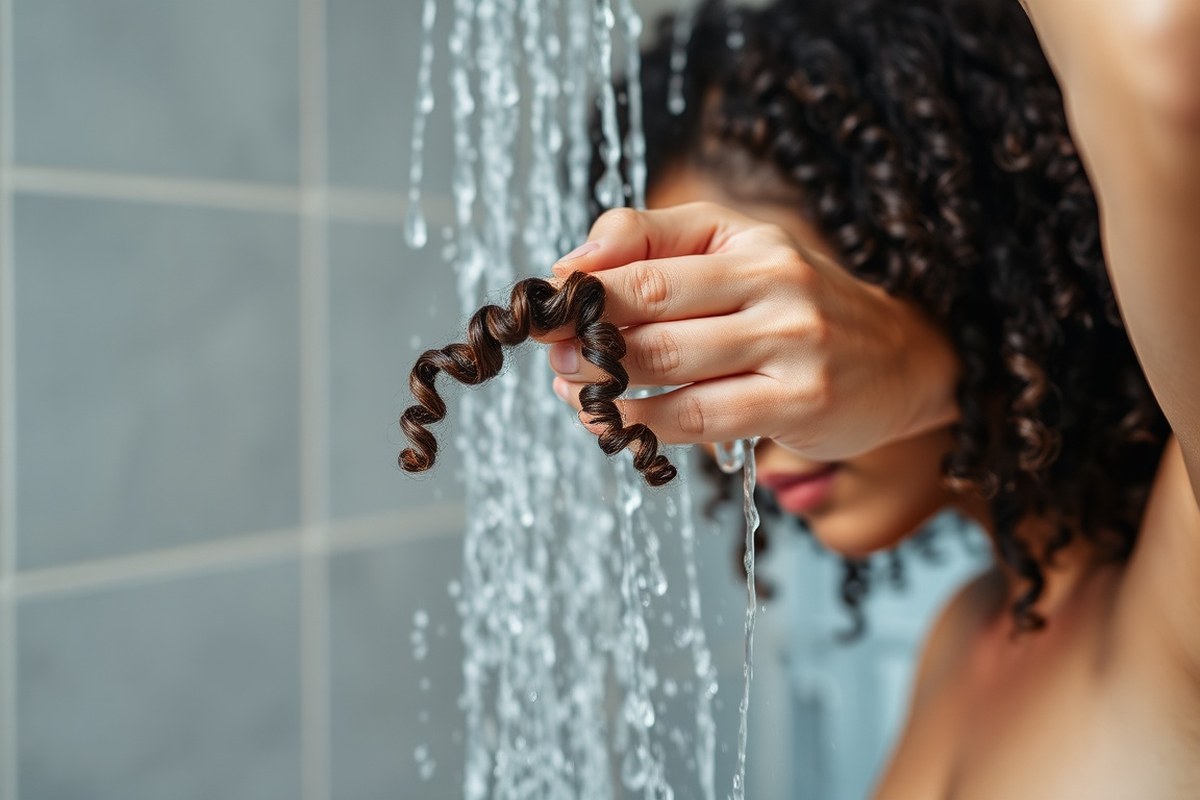
Curly hair needs less frequent washing than straight hair because it’s naturally drier. Washing every 1 to 2 weeks suits most curly and coily hair types.
Wavy ones can wash every other day. Overwashing dries curls, causes frizz, and weakens hair strands.
Clarifying shampoos help remove product build-up and oil without damage when used properly. Use a clarifying shampoo every 4 to 6 weeks for most curly hair.
Use a clarifying shampoo every 1 to 2 weeks for oily scalp. Always follow with a rich conditioner to restore moisture.
Your curl type, scalp condition, and styling products affect how often you should wash. Curly hair that feels dry should stretch washing to 2 weeks or more.
Wash with clarifying shampoo every week if your scalp gets oily fast. Avoid shampoos with harsh sulfates; choose moisturizing, sulfate-free formulas instead.
Follow these steps to create a washing schedule that suits your curls and scalp health:
- Identify your curl type: wavy, curly, or coily curls need different washing frequencies.
- Note how your scalp feels: oily or dry helps decide how often to wash.
- Choose a moisturizing, sulfate-free shampoo to prevent stripping natural oils.
- Wash wavy hair every 2 to 3 days. Wash curly hair once every week to 10 days.
- Use a clarifying shampoo every 4 to 6 weeks to remove product build-up. More often if scalp is oily.
- Always follow shampoo with a good conditioner to lock in moisture.
- Watch your hair for brittleness or extra oiliness. Change your washing schedule if needed. Wash less or more often to find the right balance.
Choosing Shampoo, Conditioner, and Treatments for Curls

Choosing the right shampoo depends on your curl type and hair porosity. Softer, wavy curls need lightweight shampoos that won’t strip moisture. Tighter curls benefit from richer, more hydrating formulas to lock in moisture and reduce frizz.
Sulfate-free shampoos are generally better for curls because they clean without drying out your hair. Use a clarifying shampoo every one to two weeks. It removes buildup from styling products.
This keeps your curls clean and fresh. This helps curls stay bouncy and light.
Conditioners add slip and moisture, which are essential for detangling and defining curls. Thicker curls need creamy, heavier conditioners.
Looser curls do well with lighter, lotion-style conditioners. Conditioners also protect curls from damage and promote elasticity.
Pre-shampoo treatments are worth adding if your hair feels dry or brittle. Apply oils like coconut or castor oil 20 to 30 minutes before washing.
This shields hair from shampoo’s drying effects. Deep conditioning once a week restores moisture and helps balance protein, preventing breakage.
| Curl Type | Recommended Shampoo | Conditioner Type | Porosity Consideration |
|---|---|---|---|
| Loose waves (Type 2) | Lightweight, sulfate-free | Light lotion or leave-in | Low porosity: lightweight formulas for better absorption |
| Curly (Type 3) | Hydrating, sulfate-free | Thick cream or rich leave-in | Medium porosity: balance moisture and protein |
| Kinky curls (Type 4) | Rich, sulfate-free, moisturizing | Heavy cream or oil-based | High porosity: use weightier products to seal moisture |
Protein balance is key. Use protein treatments only if curls feel mushy or stretchy.
Otherwise, focus on moisture-rich products. Avoid product buildup by alternating protein treatments with deep conditioning.
To protect curls and keep them soft, apply deep conditioner evenly after shampooing. Cover with a shower cap and leave it on for 20 to 30 minutes. Then rinse with cool water to seal the hair cuticle and lock in moisture.
Use a clarifying shampoo every 1, 2 weeks to avoid buildup. But avoid daily use because it can strip natural oils.
Detangling Curly Hair Without Damage
Detangling curly hair without damage happens best when hair is wet and coated with conditioner. Use your fingers or a wide-tooth comb to gently work through knots. This keeps curls intact and reduces breakage.
Ideal Timing for Detangling
Detangle your curls during or right after a shower. Hair is wet and slippery.
Conditioner softens strands and loosens tangles, making combing easier and safer. Avoid detangling dry curls, which can cause breakage and disrupt the curl pattern.
Working through tangles immediately after washing helps keep curls shaped and defined. Waiting too long may cause hair to dry tighter into knots, leading to more damage. Some people find detangling in the shower the gentlest, as they can rinse out knots gradually.
Tools Safe for Detangling Curls
Use a wide-tooth comb to gently separate curls without pulling or snagging. Special detangling brushes designed for curly hair feature flexible bristles that glide through knots. Avoid fine-toothed combs and stiff brushes which can rip hair strands.
Try finger detangling first when your curls have loose patterns. This reduces tugging and lets you feel where tangles form. For tighter or thicker curls, tools help minimize pulling pain and protect hair structure.
Here’s a quick checklist of tools that protect curls:
- Wide-tooth comb
- Detangling brush with flexible bristles
- Fingers for gentle loosening (best for fine or loose curls)
Technique: Finger Detangling vs Combing
Hold a section of hair carefully. Gently pull knots apart with fingertips.
This method feels natural and prevents snapping fragile strands. Use this especially if your curls are fine or prone to breakage.
Combing works best on wet, conditioned curls. Section your hair and start detangling from the ends upwards.
This avoids bunching knots near the scalp and lowers breakage risk. Always comb sections slowly and softly.
Here’s a step-by-step detangling routine to keep curls safe:
- Wet your hair fully in the shower or with a spray bottle.
- Apply a generous amount of conditioner or detangling spray.
- Divide hair into manageable sections with clips or ties.
- Use fingers or a wide-tooth comb to start detangling at the ends.
- Work your way up to the roots gently, avoiding harsh pulling.
- Rinse conditioner out carefully to avoid tangling again.
- Wrap curls in a microfiber towel or cotton T-shirt to reduce frizz.
Effective Drying and Styling Methods for Defined Curls
Drying curly hair with low heat or air drying reduces frizz and keeps curls defined. Plopping is a popular method that speeds drying and improve curl shape. Applying styling products on soaking wet hair locks in moisture and controls frizz.
Air Drying vs Diffuser Drying
Air drying is gentle and helps curls keep their natural pattern. Let your curls dry partly air-dry to avoid frizz. Flipping your head upside down every few minutes can give volume.
A diffuser spreads warm air over a larger area, cutting down on frizz. Use the dryer on low heat to protect hair from damage. Diffusing also speeds drying without disturbing curls’ shape.
How to Plop Curls Correctly
Plopping uses a soft cloth or cotton T-shirt to scrunch curls upward and hold them. This method dries hair faster while maintaining curl definition. It works best on soaking wet hair right after applying products.
Try plopping for 15 to 30 minutes to remove excess water without rough rubbing or brushing. It avoids frizz by gently supporting the curls as they dry.
- Wash and condition your hair fully, then gently squeeze out extra water with a microfiber towel.
- Apply your styling products evenly to soaking wet hair.
- Lay a cotton T-shirt or microfiber cloth flat on a surface.
- Flip your head forward and lower curls onto the cloth.
- Wrap the cloth around your head, securing it at the nape or forehead.
- Leave the hair wrapped for 15 to 30 minutes, then unwrap carefully.
- Let your hair air dry or use a diffuser on low heat to finish drying.
Order of Applying Styling Products
Start with leave-in conditioner or moisturizing cream to hydrate curls. These keep hair soft and ready to form well-defined curls. Don’t skip this step even if your hair feels wet.
Next, add curl cream or a curl-improving mousse to shape curls and provide hold. Use light products if your hair is fine to avoid weighing it down. For stronger hold, apply gel or styling wax as a final layer.
Scrunch curls gently from the ends toward roots after applying each product. This helps curls clump gracefully and prevents frizz. Avoid touching your hair again until it is fully dry to keep curls intact.
Protecting Curls from Heat and Environmental Damage
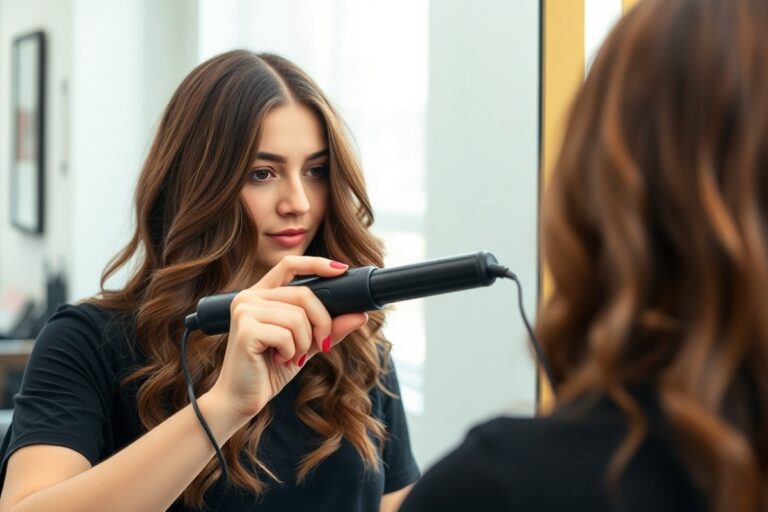
Heat can quickly damage curly hair if not managed well. Using a heat styling tool, keep the temperature between 300°F and 350°F (150°C to 177°C). Higher than 350°F risks burning your curls and causing breakage.
Many flat irons and curling wands let you adjust heat in small increments. Touch your hair during styling.
When it feels too hot or starts drying, lower the heat. Or pause the styling tool to protect your curls.
Before any heat styling, always apply a thermal heat protectant. These products create a barrier that stops heat from stripping your hair’s natural oils. Most heat protectants hold up to 450°F (230°C).
Choose one with silicone-based ingredients like dimethicone for a smooth shield. Spray or comb it evenly through your curls while damp, then style as usual.
Never use heat on dry curly hair without a protectant. It causes split ends fast.
Hard water can also harm your curls. It leaves minerals like calcium and magnesium on hair strands. These minerals make curls feel rough, dry, and lose their bounce.
Hard water spots can add unwanted frizz and dullness. You might notice your curls look less defined even right after washing.
Use a water filter on your showerhead to reduce hard water damage. Test your water first. If hardness is above 7 grains per gallon, a filter helps.
Another option is a chelating shampoo once or twice a month to remove buildup. A leave-in conditioner after washing can help lock in moisture.
Rinse your curls daily with filtered or bottled water when hard water is bad. This helps protect your hair from damage.
- Set heat tools to 300°F, 350°F for safe styling
- Always apply a silicone-based heat protectant on damp hair
- Avoid direct heat on dry hair
- Use a shower filter or chelating shampoo for hard water
- Rinse with bottled water if hard water is harsh
- Use a leave-in conditioner to seal moisture after washing
- Lower heat or stop styling if hair feels hot or dry
Applying water to curls during styling can help reactivate products without extra heat. Sticky curls after misting usually mean you have enough product in your hair. Avoid adding more to prevent buildup.
Stickiness can lead to crunchiness or stiffness, so avoid adding more product than needed. Manage heat and water quality daily to keep curls soft and bouncy. These simple steps reduce frizz and damage to your hair.
Maintaining Curl Health with Moisture, Oils, and Trims
Curly hair dries out faster because oils from your scalp struggle to reach the ends. Keeping your curls moisturized means using conditioners deeply and often. Apply conditioner from roots to tips after washing to lock in moisture.
Oils help seal in hydration and protect curls from damage. Jojoba oil mimics your scalp’s natural oils and strengthens strands.
Coconut oil helps reduce protein loss, making curls softer and less prone to breakage. Argan oil is great for adding shine without weighing curls down.
Weekly hair masks boost moisture and repair curls. Use a mask once a week. Leave it on for 20 to 30 minutes.
Cover your hair with a shower cap. This timing lets ingredients like panthenol and oils soak in deeply for better hydration. Rinse with cool water to seal hair cuticles and keep your curls defined.
- Massage scalp gently to spread natural oils
- Apply a deep conditioner or hair mask weekly
- Seal moisture with jojoba, coconut, or argan oil
- Use a shower cap for 20-30 minutes during masks
- Rinse hair with cool water after treatments
- Condition hair fully, not just the ends
- Avoid brushing dry curls to maintain shape
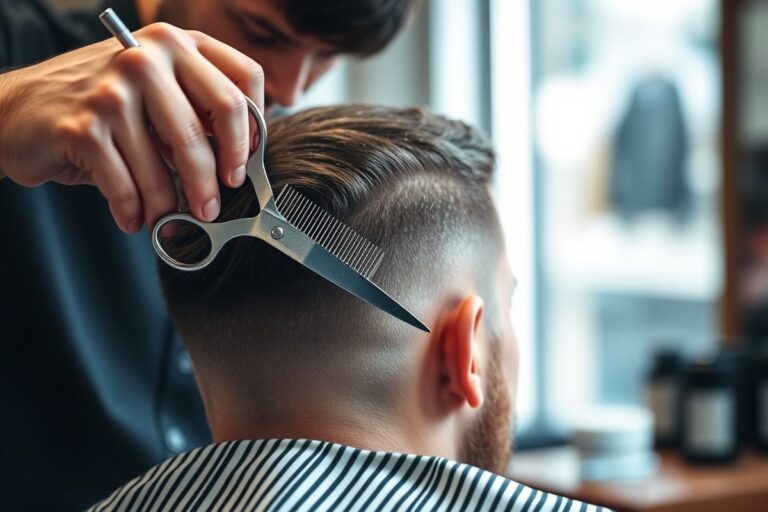
Trim your curls every 10 to 12 weeks to stop split ends. Tight curls need trimming closer to every 10 weeks because they are more fragile.
Looser curls can wait for 12 weeks between trims. Regular trims keep curls bouncy and fresh without bulk or frizz.
Failing to trim leads to split ends that travel up the hair shaft. This causes frizz and dryness over time. Fresh trims prevent this and keep your curls looking healthy.
Trim prices vary. Expect to pay $30 to $60. Costs depend on location and stylist.
Identifying Your Curl Type and Hair Porosity for Tailored Care
Knowing your curl type and hair porosity helps you pick the right products and care routine. Curl types range from loose waves to tight coils, numbered 2 to 4. Porosity shows how well your hair holds moisture, affecting styling and hydration.
Overview of Curl Type Categories
Curl types range from 2 to 4, with subcategories A, B, and C. Type 2 has waves, 3 shows defined curls, and 4 has tight coils. Each subtype describes curl tightness, shape, and volume.
Type 2A is soft, loose waves, while 4C has very tight, almost zig-zag coils. Identifying your curl type helps you pick the right products.
It improves your hair’s natural look. It also helps avoid damage.
- Wash and air dry your hair without applying products.
- Look at your curls in natural light and without manipulation.
- Compare your curls to examples of type 2, 3, and 4 online or in a guide.
- Check curl shape: waves (S shape) mean type 2.
- Check curl tightness: springy loops mean type 3.
- Tight coils or zig-zag patterns mean type 4.
- Note curl consistency; mixed types are common in a single head.
| Curl Type | Look | Care Focus |
|---|---|---|
| 2A-2C (Wavy) | Loose waves, light volume | Light hydration, gentle styling |
| 3A-3C (Curly) | Defined, springy curls | Moisture retention, curl definition |
| 4A-4C (Coily) | Tight coils, fragile strands | Heavy moisture, protective styling |
Hair Porosity Test at Home
Hair porosity reveals how fast your hair absorbs and loses moisture. A simple float test shows this in minutes. High porosity hair soaks water quickly but loses it fast too.
Gather clean, dry hair strands for testing. Avoid treated or oily hair for accurate results.
- Fill a clear glass with room temperature water.
- Drop 3 to 4 clean hair strands into the water.
- Watch for 2 to 4 minutes without stirring.
- Observe hair sinking quickly (high porosity), slowly (medium), or floating (low).
- Note your results for better care choices.
Adjusting Care for Your Curl and Porosity
You use curl type and porosity together to pick products and routines that fit. High porosity hair needs frequent hydration and sealing to stop dryness. Low porosity hair benefits from lighter products that don’t build up.
Coarser curl types like 4B and 4C usually hold moisture less and break easier. Use rich conditioners and oils to protect and nourish them. Wavy types need light moisturizers and gentle cleansing to keep bounce.
Everyday and Overnight Routines to Keep Curls Fresh
Refreshing curls without washing saves moisture and keeps them healthy. Use a spray bottle to mist your hair lightly with water or a curl refresher spray. Gently scrunch with your hands to bring back bounce and shape.
Protecting curls at night stops frizz and maintains curl shape. Slip on a satin or silk bonnet before bed. Wrap your hair loosely in a satin scarf at night.
Satin pillowcases also help reduce friction that can damage curls. Using either method protects your curls while you sleep.
Quick fixes for frizz or limp curls are useful between washes. Apply a small amount of curl cream or leave-in conditioner to dry sections, focusing on ends. Avoid heavy products, they weigh curls down and cause greasiness.
- Lightly spritz water or curl refreshing mist
- Scrunch curls softly to reshape them
- Wear satin bonnet or scarf to sleep
- Use satin pillowcase for gentle overnight care
- Apply curl cream sparingly on dry curls
- Finger-coil limp curls to boost definition
- Avoid overloading curls with product
Start your nightly curl care by brushing gently with fingers. You can also use a wide-tooth comb for detangling. This step protects your curls from breakage.
Apply a bit of leave-in conditioner or curl custard if curls feel dry. Then, gather hair on top and secure loosely with a silk scrunchie.
Finish by covering with a satin bonnet or scarf. This routine cuts frizz and locks moisture.
Don’t use cotton pillowcases; they roughen curls and cause breakage.
On days when curls look flat or frizzy, avoid brushing. Instead, try finger-coiling small sections to boost curl shape. Refresh with a little water or curl spray before you style.
These simple steps revive curls without washing. Keep product amounts low to prevent buildup and limp curls.
Your Step-by-Step Plan for Caring for Curly Hair
Follow these clear steps to get your curls healthy and defined. Each step helps you see small changes and know what works best.
- Before you start: Identify your curl type and hair porosity. Use simple tests online to get this right and tailor your care.
- Week 1: Wash your hair with a sulfate-free shampoo twice this week. Your curls should feel clean but not dry.
- Week 2: Add a rich conditioner to your routine and use a wide-tooth comb for detangling. Your curls should feel softer and less tangled.
- Week 3: Deep condition once before shampooing to boost moisture. Your hair should look shinier and feel hydrated.
- Week 4: Try a leave-in conditioner or curl cream after washing. Your curls should stay defined and less frizzy all day.
- Every day: Use your fingers to refresh curls with water or a curl spray. They should look bouncy without buildup or stiffness.
- Every night: Protect curls by sleeping with a satin or silk scarf or pillowcase. You’ll notice less breakage and frizz in the morning.
- Every 6 to 8 weeks: Trim your ends to avoid split ends and maintain shape. Your curls should look neat and full of life.
Frequently Asked Questions
Is It Okay to Use Regular Hair Products on Curly Hair?
Regular products can dry out curly hair and cause frizz. Choose products designed for curls to protect moisture and define your natural texture better.
How Can I Tell If My Curly Hair Is Truly Healthy?
Healthy curls feel soft, bounce back, and show shine without excessive frizz. If your curls break or dry out easily, your hair needs extra care or moisture.
Can Changing My Pillowcase Help Protect My Curls Overnight?
Yes, using a silk or satin pillowcase reduces friction and frizz. It keeps curls from tangling and drying out while you sleep.
Should I Avoid Brushing Curly Hair When It’s Dry?
Yes, dry brushing causes breakage and frizz in curls. Detangle gently when wet and use a wide-tooth comb or your fingers instead.
Is It a Good Idea to Clarify Curly Hair Regularly?
Clarifying can help remove buildup but do it sparingly. Over-clarifying strips natural oils, making curls drier and more prone to damage.
Can I Swim with Curly Hair Without Ruining My Curls?
Swimming is fine if you protect curls with oil or a swim cap. Rinse right after swimming to remove chlorine or salt, which can dry hair.
Key Points to Remember
Caring well for curly hair takes small, steady steps. Start with your hair type and move to moisture and gentle handling. Pick one step today and stick with it for better curls tomorrow.