What Does Purple Shampoo Do to Your Hair? Complete Guide for Best Results
What does purple shampoo do to your hair? It tones down yellow and brassy hues in blonde, silver, or gray hair.
The purple pigments cancel out unwanted warm tones, keeping your hair color fresh and bright. This works because purple lies opposite yellow on the color wheel, neutralizing those yellow shades.
Before using purple shampoo, wet your hair thoroughly to help even pigment spread. Let it sit just a few minutes, too long can cause a slight purple tint. Watch your hair type closely.
Timing depends on porosity and lightness. Lighter, porous hair needs less time.
Using purple shampoo regularly stops brassiness from building up between salon visits. It’s a simple way to maintain a cool tone without extra salon trips. Just remember, overuse can dry out your hair, so balance is key.
Key Takeaways
- Use purple shampoo once a week if your hair has low porosity.
- For highly porous hair, limit purple shampoo use to once every 1, 2 weeks.
- Let purple shampoo sit 1, 3 minutes on platinum, silver, or white hair.
- Let it sit 2, 5 minutes on natural blondes for best toning results.
- Wet hair before application to help the purple pigments distribute evenly.
- Rinse promptly to avoid leaving a purple or gray tint on your hair.
What Does Purple Shampoo Do to Your Hair?

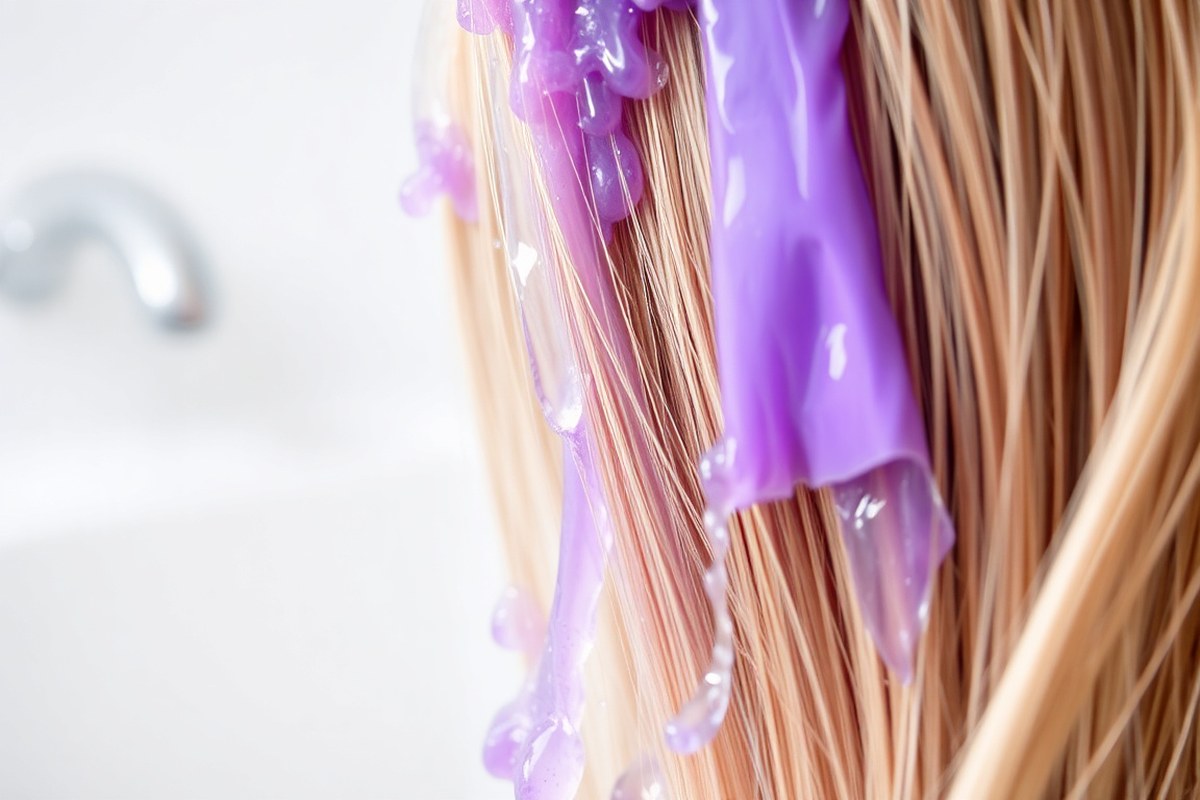
Purple shampoo is a special hair care product with violet pigments. These pigments prevent unwanted yellow or brassy tones in light hair.
They work on blonde, silver, gray, or lightened hair. It acts as a color corrector rather than changing your hair color permanently.
The reason purple shampoo works is because purple is opposite yellow on the color wheel. Violet pigments neutralize yellow hues in your hair when applied. This stops brassy or dull colors from showing.
Let the shampoo stay on your hair for about five minutes. This time helps the pigments fully brighten your hair.
This shampoo doesn’t lighten or darken your hair like bleach or permanent dye. Instead, it deposits color to reduce brassiness temporarily.
Blonde, bleached, silver, and gray hair pick up yellow tones most. These hair colors benefit the most from purple shampoo.
Purple shampoo doesn’t fix orange or copper tones in hair. These tones are common in darker blondes or brunettes. For those shades, a blue shampoo might be better.
Use purple shampoo regularly to keep your light hair fresh. It cleans without changing your natural hair color.
The product usually comes in bottles costing around $10 to $30, depending on brand and ingredients. The main task is to apply, let it sit a few minutes, then rinse out.
You want a subtle touch of purple, not purple hair. So avoid leaving it in too long or using it daily.
Your hair won’t change permanently because purple shampoo’s effect washes out with your next shampoo. It’s a maintenance tool to fight brassiness, not a color treatment.
Yellowish gray or silver hair gets cooler tones with purple shampoo. It refreshes your hair quickly and easily.
How Purple Shampoo Neutralizes Brassiness Using Color Theory
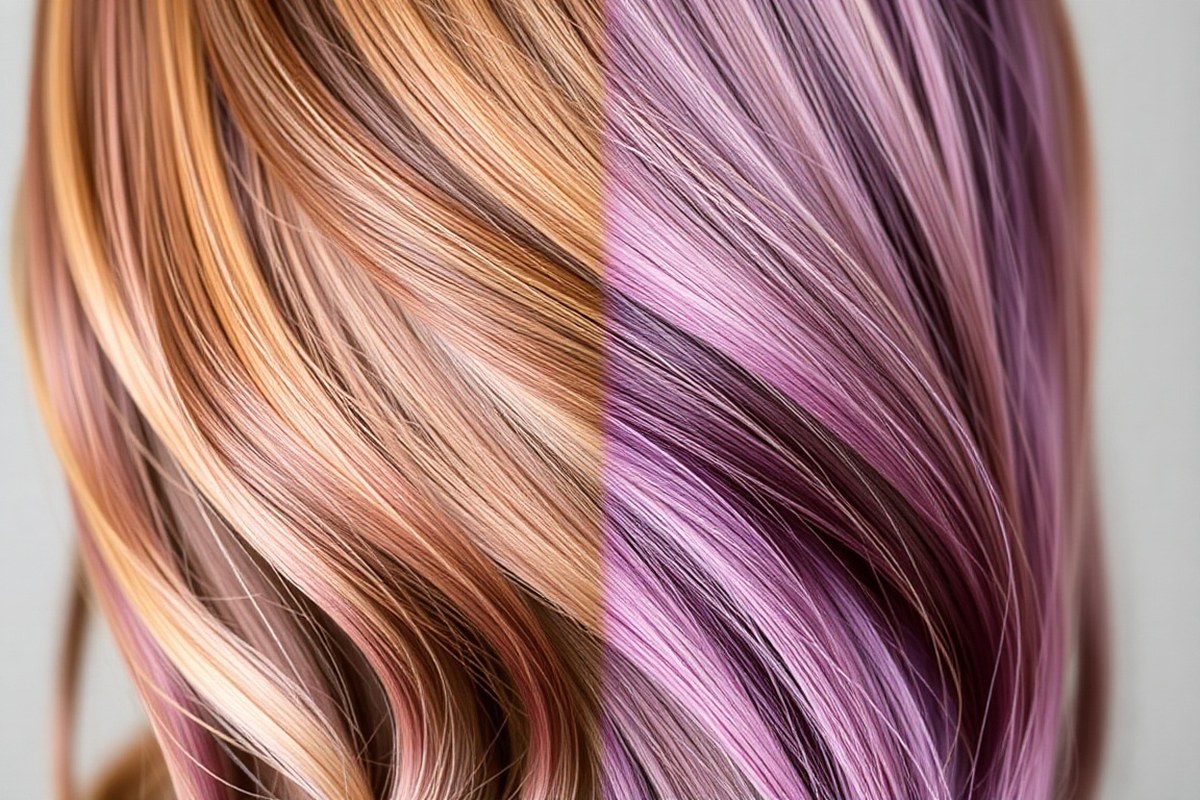
Purple shampoo works by using purple pigments to cancel out unwanted yellow tones in your hair. This happens because purple sits opposite yellow on the color wheel.
Purple pigments settle on yellow hair to cancel out warm tones. This makes your hair look cooler and less brassy.
Colors across from each other on the wheel cancel out. Purple shampoo puts violet pigment that balances yellow shades. It changes tone without bleaching or lightening hair.
Purple shampoo has violet pigment that fights yellow and gold tones. These hues often show up in blonde, gray, and lightened hair.
These pigments sit on the hair’s surface and neutralize brassiness without changing the base color. This means your hair stays your natural shade but looks fresher and less warm-toned.
Purple shampoo doesn’t actually brighten your hair or bleach it. Instead, it masks the yellow tones with violet tones, creating a more balanced, cooler appearance.
This is why purple shampoo works best if your hair is turning yellow rather than orange. For orange or copper tones, a blue shampoo might be more effective.
Using purple shampoo once a week works well for most blondes to keep brassiness at bay. Overuse can leave a slight violet tint or dry the hair. So it’s important to follow directions carefully.
Leave purple shampoo on hair for 2 to 5 minutes to get best results. Time depends on how porous your hair is and its brassiness.
Use purple shampoo only when needed to avoid dryness or a purple tint. Overdoing it can change your hair color negatively.
How to Use Purple Shampoo Correctly Based on Hair Type
Apply purple shampoo on wet hair. Spread it evenly while massaging. Rinse after the right time for your hair type.
This method helps neutralize brassiness without risking an unwanted purple tint. Frequency depends on your hair type to avoid dryness or over-toning.
Step 1: Wet Hair and Measure Shampoo
Wet your hair well with warm water to help the shampoo spread evenly. The amount of shampoo depends on your hair length and thickness. Medium or long hair usually needs several capfuls.
Start with less; you can add more as you go. Getting the right amount helps avoid buildup and uneven tones.
Step 2: Apply and Massage Evenly
Apply the purple shampoo starting at the roots and work it through to the ends. Use your fingers to massage it gently into your hair, making sure every strand gets covered.
Don’t apply purple shampoo on dry hair. Wet hair spreads the purple pigment more evenly. Avoid scrubbing hard to prevent irritation or frizz.
Step 3: Leave in According to Hair Shade and Porosity
For light blonde or silver hair, leave the shampoo on for 3 to 5 minutes. Darker or brassy blonde shades can handle up to 5 minutes but not more.
High porosity hair needs purple shampoo every 1 to 2 weeks. Leave it on for 3 minutes or less. For low porosity hair, use it once a week and leave it for 5 minutes max.
Leaving purple shampoo on too long can stain hair gray or purple. Fine or porous hair needs extra caution. Use it less often or for shorter times.
Step 4: Rinse Thoroughly and Condition
Rinse your hair thoroughly with cool water to wash out all the purple pigments. Leaving any shampoo residue risks a dull or grayish purple tint on your hair.
Follow with a conditioner suited to your hair type to rehydrate and smooth strands. Conditioner helps prevent dryness from the shampoo’s stronger cleansing base.
- Wet hair thoroughly with warm water.
- Measure out several capfuls of purple shampoo.
- Apply shampoo evenly from roots to ends on wet hair.
- Massage gently to distribute without scrubbing hard.
- Leave shampoo on for 3, 5 minutes based on hair shade and porosity.
- Rinse completely with cool water to remove all product.
- Apply conditioner to restore moisture and softness.
- Low porosity hair should get purple shampoo once a week. High porosity hair can use it every one or two weeks.
Choosing the Right Purple Shampoo for Your Hair Shade and Condition
Platinum and fully bleached hair soak up purple pigment fast. Let purple shampoo sit for 1 to 3 minutes on these shades to avoid uneven tone.
For natural blonde or gray hair, start with shorter contact, about 30 seconds to 1 minute. You can always add time if needed, but too long risks a purple tint.
Hair porosity affects how purple shampoo works. High porosity hair absorbs pigment quickly and may turn purple if left too long.
Choose a shampoo with avocado oil or glycerin if hair feels dry. Look for formulas labeled hydrating or nourishing to help avoid extra dryness or brittleness.
Sulfate-free purple shampoos are gentler and better for sensitive scalps or fragile hair. Products like Olaplex No.4P Blonde Enhancer work well across hair types and offer hydration. You can find plastic-free solid shampoo bars on the market.
Ethique’s Purple Shampoo Bar is one good choice. It’s great for those who want eco-friendly options. These usually combine violet pigment with moisturizing ingredients to balance color care and softness.
Match your shampoo to your hair tone first. Lighter hair needs stronger toners. Use this rule to pick the best shampoo.
Next, check porosity. Use gentle, hydrating formulas for high porosity or damage.
Finally, pick sulfate-free if your scalp or hair reacts to harsh detergents. Follow product directions closely on timing and frequency to prevent unwanted purple or dryness.
Cost varies by brand and size. A bottle of quality purple shampoo runs from $15 to $30. Solid bars can last longer and reduce plastic waste.
Good results show fresh, cool blonde or gray tones without stiffness or dryness. Too much product or leaving it on past recommended time causes purple residue or brittle hair.
What to Expect After Using Purple Shampoo: Results and Timeline
You’ll usually notice less brassiness after just one use of purple shampoo. The violet pigments start neutralizing yellow tones quickly, often within a minute or two. However, the full effect can vary depending on your hair’s condition and color depth.
Hair with light blonde or platinum shades often shows results faster. For darker blondes or hair with yellow tones, it takes time. You may need a few treatments over one or two weeks.
The color will start to show a clear difference then. Porous or damaged hair absorbs pigment faster. So you only need to leave purple shampoo on for about 30 seconds to 1 minute.
In some cases, hair may appear a bit darker instead of just less yellow. This can happen if violet pigment is too strong. It also happens when the shampoo stays on too long.
Porous hair is more sensitive to this effect. To avoid this, rinse the purple shampoo out after the recommended time. Usually, that’s one minute for delicate hair and up to three minutes for stronger hair.
The violet pigments don’t last long after washing. They wash out with your next shampoo. So you need to use purple shampoo regularly to maintain toned hair.
For healthy blondes, once a week is often enough. If your hair is dry, damaged, or bleached, use purple shampoo less.
Every one to two weeks is enough to avoid brassiness. More frequent use could harm your hair.
Some notice more yellow after purple shampoo use. This happens when they wash away too much pigment. The leftover yellow tones can then become clearer.
You want some violet color left to counteract the warm tones, not all of it gone. Also, purple shampoo works best after cleansing.
So shampoo your hair first to remove products and oils. This helps the violet pigments work on brassy areas effectively.
Don’t leave purple shampoo on your hair longer than recommended to avoid purple or dull tones.
Common Purple Shampoo Mistakes and How to Fix Them
Leaving purple shampoo on too long can cause a purple or ashy tint. Most labels suggest 3 to 5 minutes, depending on your hair shade. Going past that time risks over-toning and dryness.
Rinse your hair with warm water right away if it turns purple. Wash with a gentle clarifying shampoo to lift excess color. You can also apply a deep conditioner or a hair mask to restore softness.
Purple shampoo can dry out hair because it often contains stronger cleansing agents. Using it without follow-up moisture can leave your hair brittle and lifeless. Always pair purple shampoo with a rich conditioner, ideally one made for dry or damaged hair.
Purple shampoo can cause scalp irritation when left too long. Use it less often to avoid soreness. Stop use immediately if you notice itching or redness.
Rinse your scalp with cool water and apply a calming scalp treatment or aloe vera gel. Ongoing irritation means you should visit a dermatologist for advice.
- Stick to the recommended 3-5 minute time on the label
- Use purple shampoo 1-2 times a week to avoid dryness
- Always follow with a hydrating conditioner or hair mask
- Rinse with warm water, then cool to close cuticles
- Use a clarifying shampoo if you notice violet tint
- Stop use and soothe scalp immediately if irritation occurs
- Choose purple shampoos designed for dry or damaged hair
Overusing purple shampoo often happens by leaving it on too long. Wash your hair for only 1 to 2 minutes. Focus on mid-lengths and ends to avoid a purple scalp.
Investing in a gentle purple shampoo formulated for your hair type reduces dryness risks. These shampoos usually cost $10 to $25.
They include instructions to help stop most issues. Following these small steps lets purple shampoo do its job without damaging your hair or scalp.
When Purple Shampoo Isn’t Right: Alternatives for Different Hair Colors
Purple shampoo isn’t the best fit for all hair colors. It works well for blonde, gray, and silver tones.
It often falls short on brown or orange hair. Different shades need different color-correcting shampoos to fix brassiness properly.
Hair Color vs. Toner Type
Purple shampoo cancels out yellow tones best. It shines on white, gray, and silver hair.
For brown hair, blue shampoo is a better choice. It handles orange or copper tones that purple shampoo can’t fix.
Natural or non-blonde gray hair also benefits from specific shampoos or toners. Some dermatologists test products like Ethique’s purple shampoo bar, which suits color-treated hair without harsh chemicals. Professionals often recommend using toners, which apply more precise correction than shampoos.
Brassiness Type and Corrective Shampoo
Brassiness isn’t just yellow, it can be orange or reddish too. Purple shampoo neutralizes yellow tones because purple is opposite yellow on the color wheel. However, orange brassiness needs blue shampoo for correction because blue cancels out orange.
Applying the right shampoo means knowing your brassiness type. Your hair looks coppery or orange. Purple shampoo won’t fix that.
Blue shampoos guard against orange hues, and some clarifying formulas help oily hair better. Always wet hair with lukewarm water to open cuticles before applying shampoo, ensuring even color correction.
Product Recommendation Overview
Match your hair color and brassiness to the right product. Use this quick guide to help you choose. Use purple shampoo two to three times a week for blonde hair maintenance.
Gray hair needs a lighter routine, at least once a week. Brassy brown or orange hair calls for blue shampoo instead.
| Hair Color | Brassiness Type | Best Shampoo | Frequency |
|---|---|---|---|
| Blonde | Yellow | Purple shampoo | 2-3 times per week |
| Gray/Silver | Yellow | Purple shampoo | At least once a week |
| Brown | Orange/Copper | Blue shampoo | As needed to neutralize brassiness |
| Natural Non-blonde Gray | Yellow or varied | Dermatologist-tested purple bars or toners | Weekly or per product instructions |
Professional toners remain the go-to for strong color correction on difficult brassiness. They last longer and can add custom nuances to your hair.
Products like purple shampoo are good for regular upkeep. But a toner or salon treatment can handle heavy discoloration better.
How to Test Hair Porosity and Troubleshoot Purple Shampoo Use
Hair porosity measures how well your hair absorbs and holds moisture and products like purple shampoo. Testing it at home is simple and helps you adjust your purple shampoo routine. You can make your toning faster or gentler, based on what your hair needs.
Step 1: Collect Hair Strand
Start by collecting a few clean hair strands from your brush or comb. Choose strands from different parts of your head to get a good sample. Avoid freshly styled hair or hair with product buildup for better results.
This quick step only takes a moment and requires no special tools besides water later on. You can do it anytime during your routine.
Step 2: Place in Water and Observe
Fill a clear glass with room temperature water. Place the strands gently on the water’s surface, don’t push them down.
Watch them for 2 to 4 minutes. Notice if they float, sink, or stay in the middle.
Low-porosity hair usually floats or stays near the top. High-porosity hair sinks quickly because it’s more porous and absorbs water fast. Medium porosity strands will slowly sink and may hover in the middle.
- Gather several loose hair strands from different parts of your head.
- Fill a clear glass with room temperature tap water.
- Gently place the hair strands on the water surface without pushing them down.
- Wait calmly for 2 to 4 minutes and watch how the strands behave.
- Note if strands float on top, sink immediately, or settle in the middle.
Make sure not to add conditioners or oils before the test, they affect how hair floats.
Step 3: Interpret Results for Shampoo Use
Your hair floats. This means you have low porosity hair.
Use purple shampoo 1 to 2 times weekly, as pigment absorption is slower. Too frequent use can leave a violet tint or dry your hair.
Strands sink fast. This means your hair has high porosity.
Hair will absorb purple pigments fast and hold them longer. Limit purple shampoo use to once a week and watch for dryness or too intense toning.
Medium porosity means a balanced absorption rate. Follow standard shampoo instructions and adjust if the tone looks weak or too strong.
Step-by-Step Action Plan for Using Purple Shampoo
Follow these easy steps to get the best results from purple shampoo. This plan helps avoid mistakes and keep your hair tone just right.
- Before you start: Check your hair porosity with a strand test. When it sinks quickly, your hair soaks up product fast and needs less time with purple shampoo.
- Day 1: Use purple shampoo for 2 to 3 minutes. Rinse and check if your hair tone looks less brassy without purple stains.
- Week 1: Use purple shampoo twice this week. Your hair should feel clean without dry or purple patches.
- After 2 weeks: Assess your hair color. Should brassiness stay strong, add 1 extra minute to shampoo time each wash.
- Week 3: Add a moisturizing conditioner after each use to prevent dryness. Look for soft, shiny hair without yellow tones.
- Week 4: Reduce purple shampoo to once a week if your tone stabilizes. Use a regular shampoo for other washes.
- Monthly Check: Evaluate your hair color and porosity. Change your purple shampoo formula if your hair feels dry or gains a gray tint.
Frequently Asked Questions
Can Purple Shampoo Cause Dry Hair?
Yes, purple shampoo can dry your hair. It has strong pigments, so always use a hydrating conditioner after.
How Often Can I Safely Use Purple Shampoo?
Use purple shampoo once a week if hair has low porosity. For damaged or dry hair, limit it to once every 1, 2 weeks.
Can Purple Shampoo Stain My Scalp or Skin?
Purple shampoo can stain the scalp or skin temporarily. Wipe immediately if it drips to avoid lasting marks.
Does Purple Shampoo Work on Natural Blonde Hair?
Yes, purple shampoo can reduce yellow tones in natural blonde hair. Results may be subtler than on bleached hair.
Is Purple Shampoo Safe for Chemically Treated Hair?
Purple shampoo is safe for color-treated hair when used properly. Follow product directions to avoid overuse or dryness.
Can Purple Shampoo Fix Brassiness from Sun Exposure?
Purple shampoo helps reduce sun-induced brassiness by neutralizing yellow tones. Use regularly to maintain cooler hues.
Wrapping Up
Purple shampoo works by canceling out unwanted yellow tones in blonde or silver hair. Use it carefully to avoid dryness or purple buildup. Start today by trying a short test wash and see how your hair responds.