How to Use Bobby Pins Correctly: A Complete Guide That Actually Works
Knowing how to use bobby pins correctly makes hairstyling easier. Place the wavy side down against your scalp for a better grip. This helps the pins hold your hair firmly without slipping.
Push the pin in at an angle, catching enough hair to secure it. Avoid sliding pins in straight or with the flat side down. This keeps your style neat and comfortable all day.
Choose bobby pins that match your hair color to keep them discreet. For thick or curly hair, use stronger pins made for extra grip. Crossing two pins over each other adds hold on loose strands.
Place pins close to your scalp so they don’t stick out. Remove pins by sliding them out sideways to avoid pulling hair. Using pins properly lets you style confidently without damage or discomfort.
Key Takeaways
- Insert bobby pins with the wavy side facing your scalp for strong grip.
- Press forward at a slight angle instead of pushing straight down.
- Use sturdier jumbo pins for thick or coarse hair types.
- Pin small hair sections instead of large bunches to prevent slippage.
- Match pin color to hair shade for a hidden, polished look.
- Don’t reuse bent or damaged pins; they won’t hold properly.
How to Insert Bobby Pins the Right Way

Insert bobby pins with the wavy side facing your scalp for stronger grip. Place the pins near the scalp, not too far away, to keep hair secure. Press them in at a slight angle without squeezing too tightly to avoid damage.
Orientation of the Wavy Side
The wavy side of the bobby pin should lie against your scalp. It creates friction that holds the hair better. The smooth, flat side faces outward where it’s less likely to slip.
Holding the pin with the ridges facing your hair traps smaller strands tightly. That stops your hair from sliding out during the day.
Putting the ridges facing up makes the grip weaker. Pins fall out faster this way.
Where to Insert on the Hair Strand
Insert bobby pins as close to the scalp as you can safely manage. That gives the pin a stronger anchor point in your hair. Avoid pushing the pin very far from the scalp or you’ll lose hold.
Use small sections of hair to prevent pins from being overloaded. Trying to hold many strands at once makes the pin slip out.
To hold ends or loose pieces, slide the pin slightly under the hair. This locks the hair gently.
Pressure and Angle to Apply
Angle the pin slightly down toward your scalp when you insert it. This helps it catch more hair and stay in place. Too much pressure can stretch and break hair, so press firmly but carefully.
Don’t clamp pins too tightly; that causes discomfort and hair damage. Pins should grip snugly without feeling painful. Loose pins fall out, so find a balance between firm hold and comfort.
Follow these steps for secure, damage-free bobby pin placement:
- Slightly open the bobby pin by pressing its ends apart.
- Hold the pin so the wavy side faces down, toward your scalp.
- Gather a small section of hair to secure with the pin.
- Slide the pin in near the scalp, going with the natural curve of your head.
- Press the pin gently but firmly to lock the hair in place.
- Check comfort; remove and adjust if it feels too tight or loose.
- Use multiple pins for thick or heavy hair, spacing them evenly.
Choosing the Best Bobby Pins for Your Hair Type
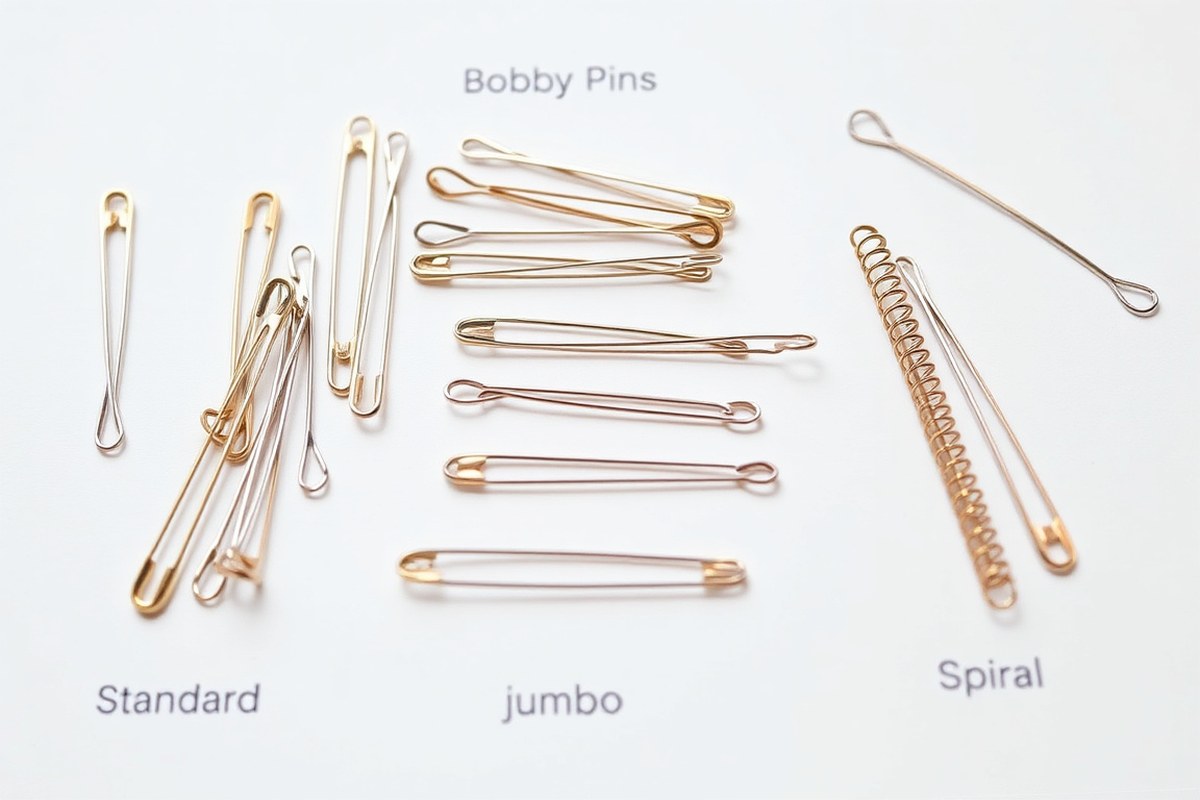
Choosing the right bobby pins depends on your hair’s thickness, texture, and length. Smaller pins work well for fine hair.
Jumbo pins hold thick or coarse hair better. Spiral pins are handy for curly or voluminous hair, offering extra grip and style options.
Standard Bobby Pins
Standard bobby pins are the most common and measure about 1.5 inches long. They work best for fine to medium hair textures. These pins hold small sections of hair securely without weighing strands down.
Thin bobby pins can struggle with thick or coarse hair. Their narrow width makes gripping lots of hair hard. This often causes pins to slide out.
Keep hair sections no thicker than half an inch to avoid pins slipping out. For fine hair, smaller, tighter pins provide better hold.
These pins cost about $2 to $5 for 50 pieces. That makes them affordable to buy in bulk. You can stock up without spending much.
Using too much hair in a standard pin causes slipping. This happens especially with thick or textured hair. Pins hold better with less hair.
Jumbo Bobby Pins
Jumbo bobby pins are much longer than standard ones. They measure two to three times the length. Some pins are over 3 inches long.
They’re ideal for holding thick, coarse, or lots of hair at once. The longer length grips more hair firmly.
Use jumbo pins for thick hair sections up to an inch wide. They also work well for voluminous styles. Jumbo pins hold large amounts of hair securely.
They’re thicker and stronger, so just one jumbo pin can replace several small ones. These pins help keep heavy hairstyles neat and in place all day.
Jumbo pins cost more than standard ones but fewer are needed. They can save time by securing more hair at once. This can balance out the higher price.
Having thick hair means jumbo pins are a smart pick. They make styling easier and more secure. Investing in them pays off for thick hair.
| Bobby Pin Type | Length | Best Hair Type | Maximum Hair Thickness per Pin | Cost Range (approx.) |
|---|---|---|---|---|
| Standard | 1.5 inches | Fine to medium | 0.5 inch | $2, $5 per 50 |
| Jumbo | ~3 inches | Thick, coarse, voluminous | 1 inch | Higher than standard |
| Spiral (Spin Pins) | Varies (twisted design) | Curly, thick, textured | Large sections supported | Varies, often more expensive |
Spiral and Specialty Pins
Spiral or spin pins stand out with a twisted design that grips hair better. They can hold large volumes and thick curls without slipping. Often, one spin pin replaces many traditional pins.
These pins work great for curly and textured hair types. They handle hair volume and shape well. They do this without flattening the hair.
They work well for updos that need strong hold without visible pins. Decorative specialty pins also add a style accent while securing your hair.
Spin pins cost more but combine multiple functions in one. Use them when you want fewer pins in your hair with solid hold.
Don’t cram too much hair into one pin; it won’t grip well and slips.
Creative Ways to Use Bobby Pins for Different Hairstyles
Bobby pins are great for more than just holding hair tight. You can use them to keep buns and braids secure. They also help keep bangs neat.
Sometimes, you make the pins part of your style. They work well for hiding ponytail elastics or standing out as decoration.
Securing Updos and Braids
For updos, insert bobby pins where twists and rolls overlap. This holds the hair in place without slipping. Use the pins with the ridged side down to grip better.
Slide pins in at the braid’s base to lock it down. This keeps the braid close to your scalp. Use this method when braiding.
Pin small sections as needed to keep loose strands tidy. Cross two pins in an “X” shape for extra hold.
- Start by twisting or looping hair sections first
- Insert pins close to roots or overlapping hair
- Use matching pin colors for a cleaner look
- Pin perpendicular to hair direction for strongest grip
- For big buns, insert pins around the bun base
- Crisscross pins in problem spots to prevent movement
Adding texture spray before pinning helps grip all types of hair. This approach lasts longer and looks smooth.
Controlling Bangs and Flyaways
Pinning bangs sideways will keep them neat and away from your face. Tuck larger bangs under with hidden pins for a subtle style change.
For flyaways, use small bobby pins discreetly to flatten and smooth stray hairs. Apply a light hairspray before pinning to avoid bumps and keep volume controlled.
- Pin bangs just above the temple or near the ear
- Use pins matching your hair color for invisibility
- Apply hairspray to pins for extra hold
- Keep pins close to scalp for subtle fixing
Pin hair in small rolls for gentle waves or volume. Hold each roll in place before you release it. This technique adds body to straight hair.
Using Bobby Pins as Accessories
Bobby pins can be seen instead of hidden to add style. Align them in geometric shapes or lines for a modern look. Use colorful or painted pins to match your outfit or mood.
Cover a ponytail elastic by placing pins around its base. This hides the elastic and adds flair at the same time. Use multiple pins and layer them for a fuller decorative effect.
- Try arrangements like parallel lines, zigzags, or X shapes
- Pick metallic, pastel, or bright pins for variety
- Paint plain pins with nail polish for custom colors
- Use pins to frame your hairstyle’s best features
- Pin over elastic bases to conceal them creatively
- Mix plain and decorated pins for balanced looks
Decorative bobby pins give you daily style options without extra tools. They can change a simple ponytail or bun to a standout look.
Techniques to Make Bobby Pins Stay Longer
Making bobby pins stay put takes a few smart tricks. Start by prepping your hair with light hairspray or sea salt spray.
These products roughen slippery strands, helping pins grip better. Avoid wet hair, since bobby pins can slip and cause dents in damp strands.
Criss-crossing bobby pins is a simple way to lock your style in place. Place one pin over the other in an “X” shape to create extra tension.
This method works especially well on thick or heavy hairstyles like buns or updos. Also, turn your pins upside down so the open side grabs more firmly.
Layering pins in key spots spreads out the hold. Use one pin on the outside section of hair, which actually supports all the hair underneath.
Matte pins usually hold better than shiny ones because their surface is less slippery. Spray your pins with dry shampoo for added grip before slipping them in.
- Spray a light coat of hairspray or sea salt spray on your dry hair.
- Turn the bobby pin upside down, with the ridged side against your scalp.
- Insert the bobby pin where you want the most hold, catching the outer layer of hair.
- Place a second bobby pin diagonally over the first, forming an “X” to lock them.
- Use matte pins or spray dry shampoo on pins to improve grip.
- Layer more pins if your hair is very thick or heavy.
- Avoid pushing pins into wet hair to prevent slipping and dents.
Common Mistakes When Using Bobby Pins and How to Fix Them
Using bobby pins wrong damages hair and ruins your look. One common mistake is inserting pins with the flat side up. This makes them less gripping and more likely to slip out.
Start pinning with the flat side down. Flip it halfway.
The ridged side should face down inside your hair. That helps lock the hair strands better.
Rusty or bent bobby pins damage hair. They snag strands. This breaks your hair.
Always check that pins are smooth and strong before using them. Damaged pins cost nothing but can lead to painful tangles and hair loss over time.
Pinning large sections in one go is another issue. Large hair chunks strain the pin and look bulky. Smaller sections hold better and look neater.
Too much hair on one pin causes slipping. It slides around. Tight pinning won’t help.
- Spray pins with dry shampoo or hairspray to prevent slipping.
- Only use pins that feel smooth and unbent to avoid hair damage.
- Pin small hair sections, about half an inch wide or less.
- Insert pins with flat side down first, then flip halfway in.
- Use multiple pins for heavy or thick hair instead of one big pin.
- Secure pins at an angle for a stronger hold.
Try dry shampoo on roots first to help bobby pins grip better. That adds texture to your hair and makes pins grip better. Also, avoid pinning straight, vertical sections.
Angle your pins diagonally toward your scalp to catch more hair. For thick or curly hair, use more pins to distribute weight evenly.
Pick smooth, strong pins. Pin smaller sections at an angle. This stops slipping and hair damage.
How to Remove and Care for Bobby Pins Safely
Removing bobby pins safely helps avoid hair breakage and keeps your style intact. Pins can tug too hard, causing hair to snap or pull out. Taking your time and using the right technique protects both your hair and scalp.
Using bent or rusty pins can damage hair and cause snags. Toss old pins once they lose their shape or their finish wears off. Good pins hold tight without bending easily and have a smooth coating.
Follow these steps to safely remove bobby pins without hurting your hair or scalp:
- Locate the bobby pin’s foot end. Hold the pin firmly by the top and foot.
- Gently push the foot end upward and outward. Avoid pulling straight away from your head.
- Slide the pin slowly out of your hair. Ease it out to prevent snagging strands.
- Check the pin for bends or rust spots. Replace any pins that are damaged or misshapen.
- Store pins in a dry place. Avoid moisture to keep pins from rusting or breaking.
Removing pins slowly stops hair from getting caught or pulled. If you feel resistance, wiggle the pin gently instead of yanking. Rounded tips and smooth finishes reduce the chance of hair damage.
Check your pins after every use. Bent pins are harder to slide out and can crease hair.
Toss them once they look worn or don’t hold hair well anymore. Investing a few dollars in good pins saves your hair and styling time.
When to Show or Hide Your Bobby Pins
You can hide bobby pins for a neat, polished look. Or, you can show them off as part of your style. Both ways work well.
Keeping them hidden suits classic styles, like tidy buns or sleek ponytails. Placing pins with the ridged side inward helps them grip better without drawing attention.
To hide pins effectively, space them evenly and tuck them parallel to your scalp. Push the pin in close to your head. Focus on the base of a ponytail or where hair meets your scalp.
This keeps pins secure. This keeps everything smooth and limits pin visibility.
Visible bobby pins can add an edgy or playful touch. Using colored or patterned pins turns them into little accessories. Lay bobby pins across your hair in geometric shapes.
Use crisscross styles for a trendy look. Celebrities like Sarah Jessica Parker use this technique.
For example, try a half-up, half-down hairstyle and comb back the front pieces. Fix those sections with visible pins in a creative pattern that stands out. The straight side of the pin should face outward to show off the shine or color.
Showing pins works best with shorter hair or styles where hair is loosely pulled back. Visible pins add character but demand care in placement to look intentional. Uneven spacing or scattered pins can make the style look messy instead of artistic.
Take care not to push visible pins too tight. Pins that hurt might be digging into your scalp too hard. This can break hair or give you headaches.
Choose pins that hold gently. Adjust for a snug but comfortable grip that holds your style through your day.
Bobby Pins vs Hairpins: What’s the Difference?
Bobby pins and hairpins look alike but work differently. Bobby pins are closed-ended and grip hair tightly.
Hairpins usually have an open, U-shaped form and hold hair more gently. Knowing these differences helps you pick the right one for your style and hair type.
Use bobby pins when you need strong hold. They can keep buns and updos secure all day.
Hairpins suit softer holds or when you want to add decorative touches. Some hairpins are designed to carry small decorations like sequins or beads, great for special looks.
| Feature | Bobby Pins | Hairpins |
|---|---|---|
| Shape | Closed-ended, flat on one side, ridged on the other | Open-ended, U-shaped, often smooth |
| Hold Strength | Strong, designed to grip hair firmly | Mild, better for loose holds or accents |
| Common Uses | Securing buns, updos, taming flyaways | Decorating, gentle pinning of loose strands |
| Material Quality | Varies from drug store to professional quality | Usually metal, sometimes decorative finishes |
| Usability | More cooperative for novices | Requires care to avoid slipping |
You can use bobby pins and hairpins on the same hairstyle. But use each where it fits.
For example, choose bobby pins to fix a bun and hairpins to decorate the edges. They are not fully interchangeable because their grip and design target different needs.
Drug store bobby pins may cost less but can slip out more easily. Professional bobby pins offer better hold and might last longer. Try a few to see which one feels best for your hair texture and style.
Always place bobby pins with the ridged side down to improve grip and avoid hair damage.
Step-by-Step Action Plan for Using Bobby Pins
Follow these steps to get bobby pins working perfectly for your hairstyle. Each step helps you secure your hair and keep your style neat.
- Before you start styling: Choose bobby pins that match your hair type and color. Check that they feel sturdy but not too tight.
- During styling: Insert bobby pins with the wavy side down and the open ends facing inward. This grip helps pins hold better.
- Right after insertion: Use a light hairspray or texturizing spray over the pins. This adds extra grip and helps pins stay put.
- Once your style is set: Gently test your pins by moving hair slightly with your fingers. Pins that don’t slip are holding well.
- After wearing your style: Remove bobby pins carefully one at a time. Avoid pulling or yanking to protect your hair.
- Weekly maintenance: Clean your bobby pins with warm, soapy water. Dry them fully to prevent rust and keep pins smooth.
- When refreshing your style: Replace old or bent pins with new ones. Fresh pins provide better hold and avoid hair damage.
Frequently Asked Questions
How Do I Know If My Bobby Pins Are Wearing Out?
Bobby pins lose grip when the metal bends or rust appears. Replace them if they no longer hold your hair firmly. Bent pins can slip or snag, making your styles fall apart faster.
Can Bobby Pins Damage My Hair?
They can cause breakage if used too tightly or repeatedly in the same spot. Avoid pinning wet hair and don’t leave pins in overnight. Use smooth, snag-free pins to protect strands.
Can You Reuse Bobby Pins?
Yes, but only if they’re still strong and not bent. Clean them regularly to remove oils and hairspray buildup. Weak pins won’t hold hairstyles well and may slip out.
Are There Bobby Pins Better Suited for Curly Hair?
Thick or textured hair needs sturdier, jumbo bobby pins for secure hold. Look for pins designed for volume and strength to avoid losing grip. Smaller pins often can’t handle curly hair.
How Many Bobby Pins Should I Use for a Bun?
Usually 5 to 7 bobby pins make a secure bun. But it depends on hair thickness.
Thicker hair may need more pins to stay put. Use pins evenly spaced around the bun.
Can I Use Bobby Pins in Short Hair?
Yes, shorter hair often needs multiple small pins to hold layers or bangs. Use pins that match your hair color for a subtle look. Short styles might benefit from creative pin placements.
Key Points to Remember
Using bobby pins the right way keeps your hairstyles secure and your hair healthy. Try these tips with your next style and watch how well they hold. You’ll find bobby pins become a simple, reliable tool for any look.