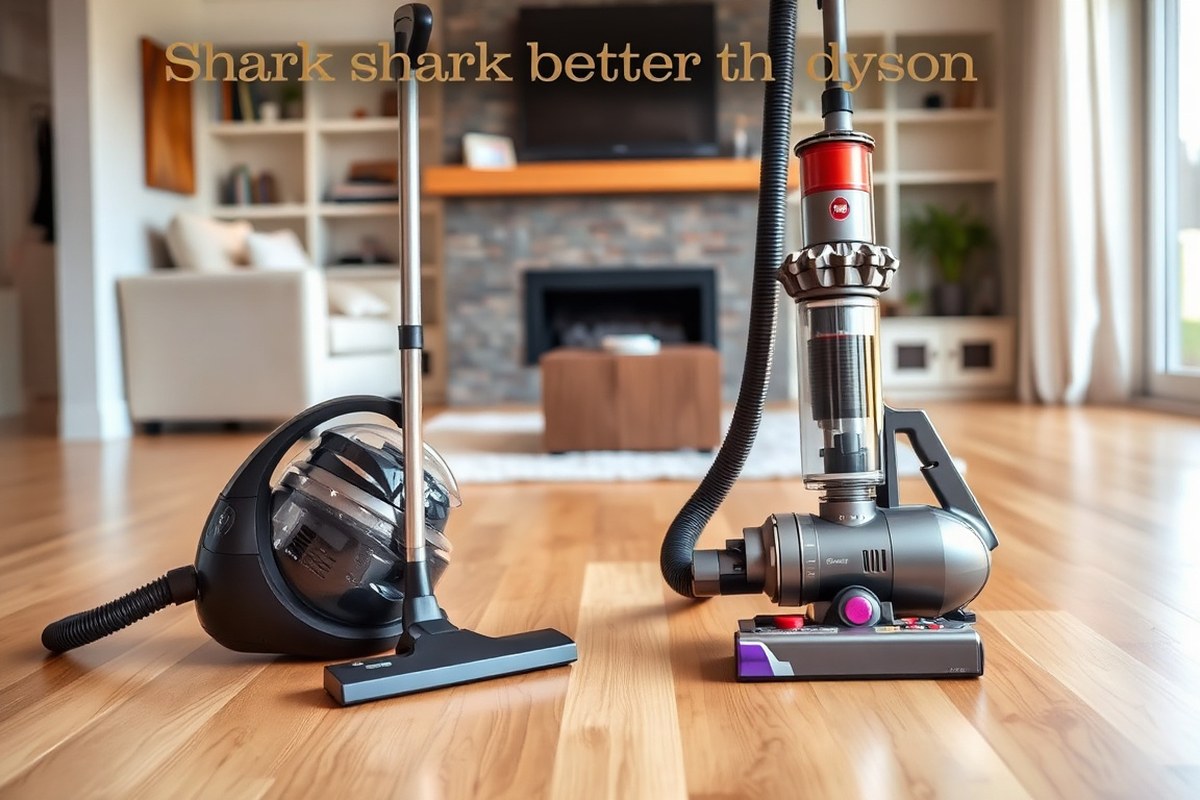
Is the Shark Better Than Dyson? Complete Vacuum Comparison and Buying Guide
Is the Shark better than Dyson depends on what you need from a vacuum. Shark offers great value under $500, especially if you want solid cleaning without high-tech perks.
Dyson stands out with advanced features like cordless use and smart alerts. It delivers great performance but costs more than some other brands.
When budget matters, Shark vacuums run longer per charge. They clean well for daily messes without extra cost.
Dyson models score higher on performance tests and offer innovative features. So they might suit homes with specific needs.
Start by figuring out your budget and cleaning goals. Keep in mind Dyson’s extra tech adds to the price.
Shark often comes with deals closer to half off. That’s a big factor if you want to save without sacrificing too much power.
Key Takeaways
- Shark vacuums cost about half as much as Dyson models with similar features.
- Dyson offers better cleaning scores and smart features for higher prices.
- Shark cordless models run up to 70 minutes; Dyson tops at 60 minutes.
- Shark often has bigger discounts and frequent sales than Dyson.
- The Shark Stratos is heavy, close in weight to Dyson’s upright vacuum.
- Shark’s replacement bags are cheaper than most competitors.
Is Shark Better Than Dyson for Vacuum Cleaning?

Dyson vacuums generally clean better overall due to stronger suction and more advanced detection technology. For example, the Dyson Outsize delivers 28 percent more raw suction power than comparable Shark models.
This extra power helps Dyson pick up heavy dirt and pet hair. It also captures microscopic dust efficiently.
Shark vacuums still clean well but often have less suction. They usually cost less than Dysons. The Shark NV360 Navigator detects floors accurately.
It runs up to 70 minutes on one charge. Shark’s Dirt Detect adjusts suction to the mess size. This makes it smart for mixed debris.
Price plays a big role in deciding which to buy. Dyson’s top models cost about twice as much as Shark’s. They suit buyers wanting peak cleaning and tech.
Shark works better if you want strong cleaning on a budget. Look for models with large dust bins and self-empty bases.
Pick Dyson if you prioritize highest suction and the best cleaning on tough messes. You’ll get excellent results cleaning thick carpets and pet hair. But expect to spend more upfront and on maintenance.
Choose Shark for reliable cleaning with easy features. It’s good for everyday use and bigger homes.
To test which suits you, compare how each performs on your main floor type. Dyson handles low-pile carpets and hard floors better. Shark excels on hard floors and has laser guidance.
Their robot vacuums are often more affordable. Both brands bring good cleaning but differ in power, price, and features.
How Do Shark and Dyson Cordless Vacuums Compare?

Shark and Dyson cordless vacuums offer similar battery runtimes but differ in weight and tech features. Both brands provide up to 70 minutes on their top models.
Dyson tends to be lighter and packs more innovation. Shark aims for strong performance and longer warranties.
Battery Life and Runtime Comparison
Both Shark’s PowerDetect and Dyson’s Gen5detect deliver about 70 minutes on low power. Most cordless models from each brand have runtimes around 60 minutes for regular cleaning. On higher settings, Dyson vacuums drain batteries much faster, often offering just 7 to 9 minutes.
Shark generally advertises runtimes near 70 minutes across many models, focusing on consistent performance. Dyson offers some models with shorter runtimes. Select vacuums come with removable batteries.
This lets you use them longer without charging. Choose Shark if you want longer cleaning time without swapping batteries.
Weight and Ergonomics Differences
Dyson vacuums typically weigh less, with some models under 6 pounds. Shark’s cordless models usually weigh closer to 8 pounds. This weight difference makes Dyson vacuums easier to handle for longer cleaning sessions or overhead tasks.
Shark models sometimes stand on their own without wall mounts, which adds convenience. Dyson vacuums require wall mounting to stand upright but feel more balanced when in use. Lighter weight helps reduce arm fatigue when vacuuming stairs or furniture.
Technology Features Exclusive to Dyson
Dyson cordless vacuums include laser dust detection and particle counting. These features highlight invisible dust and adjust suction automatically. They also use advanced motors for powerful cleaning and user feedback via LCD screens.
Shark vacuums have unique floor and dirt sensors but lack Dyson’s laser and particle analytics. Dyson’s technology helps you see exactly where dust collects, improving cleaning precision. This adds to the price but benefits people sensitive to allergens or dust.
Remove batteries for spare charging if you expect long cleaning times beyond 70 minutes.
Price and Value: Which Brand Offers Better Vacuum Bang for Your Buck?
Dyson vacuums are generally more expensive than Shark models, but Shark offers strong value. Shark vacuums tend to cost less upfront and have lower ongoing costs. Long-term value depends on what you pay for and your maintenance needs.
Price Comparison by Model Tier
Shark vacuums range from about $150 to $499, covering budget to mid-range models. Dyson starts around $300 for upright vacuums. Premium cordless models like the Dyson V15 cost over $1,000.
Prices vary by model. The Dyson Ball Animal 3 upright sells for about $399.
Shark’s Vertex DuoClean PowerFin, a mid-range upright, costs less. Both are solid choices.
Dyson tends to charge more for smaller, lighter designs and advanced features. Shark vacuums usually weigh a bit more. They have bigger dustbins, balancing price with capacity.
This suits bigger cleaning jobs. People on tight budgets often prefer Shark vacuums.
They offer good performance at lower prices. That fits most basic needs.
Maintenance and Replacement Cost Differences
Shark vacuums save money by not needing expensive replacement bags, as they use bagless bins. Competitors charge about $5 per vacuum bag, so Shark owners avoid this ongoing cost. Dyson vacuums use filters that need cleaning or replacing every 6 to 12 months.
This adds to upkeep costs. Keeping the filter clean is important.
Battery replacement is another cost to consider. Dyson cordless models like the V11 and V15 need pricey battery replacements after a few years. Batteries wear out with regular use.
This increases long-term expenses. Shark battery replacements, where applicable, usually cost less but vary by model. Regular filter and brush cleaning help keep both brands running longer.
Warranty and Support Insights
Both Shark and Dyson typically offer 5-year warranties on many models, giving similar coverage length. Shark sometimes extends warranties up to 7 years, especially on popular pet hair vacuums. This longer warranty may provide better peace of mind for some buyers.
Dyson’s customer support is known for being responsive, but replacement parts can be pricey. Shark’s solid warranty and generally lower part prices might make repairs less costly over time. Check warranty specifics with retailers, as terms can differ by model and region.
Model-by-Model Comparison of Popular Shark and Dyson Vacuums
The Shark Vertex competes closely with Dyson’s V15 Detect in cordless performance. Both models excel in suction power and advanced technology.
But Shark offers an Auto-Empty docking station that Dyson lacks in its V15. This feature automatically empties the bin and recharges the vacuum, making maintenance easier.
Shark’s Navigator series cleans well on different surfaces. It rivals Dyson’s Ball Animal 3. Both are good upright vacuums.
Although exact air watt numbers for Shark models aren’t published, Dyson’s uprights provide clear power ratings. The Dyson Gen5detect, a newer upright model, offers 262 air watts. The Ball Animal 3 hits 290 air watts, showing Dyson’s strong suction in this category.
Shark began making robot vacuums in 2019. They now have models that empty themselves. Some even vacuum and mop at once.
Dyson also entered the robot vacuum space but has fewer models compared to Shark. Shark tends to cover more ground with budget-friendly and feature-rich robotic options.
| Model | Type | Air Watts (AW) | Special Features |
|---|---|---|---|
| Dyson V15 Detect | Cordless Stick | 240 | Laser detects dust, high suction |
| Shark Vertex | Cordless Stick | Not published | Auto-Empty dock, strong suction |
| Dyson Ball Animal 3 | Upright | 290 | Powerful brush for pet hair |
| Dyson Gen5detect | Upright | 262 | Advanced filtration, high suction |
| Shark Navigator | Upright | Not published | Multi-surface cleaning |
The Dyson Outsize is another cordless option with a large 0.5-gallon dustbin. It holds more dirt than Dyson’s V11 model. It also holds more than Shark’s Vertex.
This helps if you dislike frequent emptying. This model is good for bigger homes.
Robot vacuum buyers get choices between Shark’s broad range and Dyson’s fewer models. Shark offers budget plans and self-emptying docks on robots. Dyson’s robotics are newer and less varied.
You want a vacuum that vacuums and mops. Check out Shark’s hybrid robot models.
Which Vacuum Is Better for Pet Hair and Allergies?
Both Shark and Dyson offer strong choices for pet hair removal and allergy control. Dyson tends to lead in pet hair pickup. Shark stands out with its auto-empty feature that traps most allergens.
Your best choice depends on what you need most. Do you want extra allergen protection? Or do you want the strongest pet hair cleaning?
Pet Hair Removal Features
Dyson’s V15 Detect and Gen5detect models excel at pet hair cleaning, especially on carpets. They use dirt-sensing tech plus dual brush rolls to pick up hair without tangling. The Gen5detect costs about $200 more but cleans a bit better.
Shark vacuums also shine for pet hair, especially their uprights with dual brush rolls. Their cordless Pet Stick Vacuum runs 40 minutes.
The ION F80 model lasts up to 80 minutes, enough for big jobs. However, some Shark models struggle with carpet edges and heavy pet hair buildup.
Filtration and Allergen Control
Both brands use HEPA filters to trap fine particles, dust, and dander that trigger allergies. Hair often wraps around filters inside the dustbin, which needs cleaning to keep suction strong. Shark claims its auto-empty feature traps over 99.97% of dust and allergens, which suits allergy sufferers well.
Dyson filters work well to trap dust and allergens. But not all models have auto-empty features. That might mean you touch dust more often.
Regular filter cleaning is necessary for both brands to maintain air quality. Allergy relief depends on careful upkeep as much as filtration technology.
Benefits of Auto-Empty Systems
Shark’s auto-empty tech seals dust and allergens inside a disposable bag after vacuuming. This reduces your direct contact with pet dander or dust, cutting allergy triggers at home. Bags cost extra and must be replaced, adding to long-term upkeep.
Dyson’s auto-empty feature is mostly on pricier models like the Outsize, with a huge 1.52L dustbin. It offers similar allergen containment but raises the initial price. Without auto-empty, emptying the bin manually can release allergens back into the air.
Clean filters and bins regularly to avoid suction loss and allergy flare-ups.
How Do Shark and Dyson Robot Vacuums Differ?
Shark and Dyson robot vacuums differ in navigation and cleaning approaches. Dyson models use laser sensors for precise mapping, which helps them clean systematically. Sharks map rooms well.
They rely more on camera sensors. Cameras can struggle in low light.
Dyson’s V15 Detect robot offers stronger suction power around 230 air watts. Shark’s PowerDetect features a DuoClean Detect nozzle. This nozzle cleans in both directions, avoiding the common problem of just pushing debris backward.
Shark’s dual brush roll makes it great on various floor types, especially picking up pet hair. Dyson vacuums handle finer dust particles better, thanks to their advanced filtration and airflow. Your choice may depend on whether you want raw power or smart debris detection.
Shark includes a mopping function in some models that dampens floors lightly while vacuuming. Dyson does not currently offer mopping features on its robots. Shark’s mopping works best for light cleaning.
It’s for sealed floors. It won’t replace a mop for sticky messes.
The app experience is another big difference. Dyson’s app offers detailed real-time cleaning maps and reports on performance.
It also integrates well with voice assistants like Alexa. Shark’s app provides basic controls and scheduling but can be less polished.
Easy, interactive controls are important. Dyson’s app gives convenience and insight. Shark’s app is straightforward and sufficient if you focus on reliable cleaning without many extras.
Both let you set cleaning zones. Both can block no-go areas. Dyson’s app is easier to customize.
For homes with mixed floors and light mopping needs, Shark’s robot offers a solid all-in-one solution. You want detailed cleaning data. You want top suction and precise mapping.
Dyson leads in these features. Shark models are cheaper.
Good if you have a tight budget. Smart features may be less important.
Maintenance, Durability, and Ease of Use Compared
Shark vacuums often have two brush rollers. They can trap more dirt. But they may need cleaning more often.
Dyson stick vacuums sometimes come with several cleaner heads you swap for different floors. Cleaning these brushes well helps keep suction strong. Use scissors or fingers to remove hair from rollers.
Do this every two weeks. It’s needed if you vacuum daily.
Shark vacuums usually have a wand that bends forward to clean under furniture easily. Dyson heads often feature LED lights to spot dust on hard floors. Both brands require routine filter cleaning.
Take out the filter and rinse it with cold water about once a month. Let it air dry fully for at least 24 hours before putting it back. That prevents clogs and keeps airflow steady.
Bagged Shark vacuums trap dust inside and cut allergen exposure but need new bags regularly. These bags cost around $10 to $15 each and last about a month for average use. Dyson models mostly use bagless bins.
Emptying the dust cup after use is easy. It can release dust into the air. Dust may bother people with allergies.
Shark vacuums typically weigh between 10 to 15 pounds depending on the model. Dyson sticks range from 5 to 7 pounds, making them lighter for carrying around.
Lighter vacuums reduce arm strain during regular cleaning sessions. Choose a model you can lift easily upstairs or into a closet.
Both brands replace brushes every 1 to 3 years. It depends on how much they wear out and dirt buildup. Replacement brushes cost $15 to $30.
Check brushes for splits and flattened bristles annually. Worn brushes reduce cleaning power and can damage floors.
Both Shark and Dyson vacuums last about 5 to 7 years with proper care. Regular filter washing, prompt brush cleaning, and careful storage extend lifespan.
Dropping or hitting vacuums against hard surfaces can crack parts or break batteries. Store your vacuum in a dry area, standing upright to avoid damage.
How to Choose Between Shark and Dyson for Your Home
Start by listing your cleaning needs and budget clearly. For example, ask yourself how often you vacuum and what surfaces you have.
Shark fits well if your budget is under $500 and you want solid all-around cleaning. Dyson shines if you want the top cordless stick vacuum and don’t mind spending more.
Evaluate your home’s layout next. Larger spaces or homes with many rugs can benefit from Dyson’s strong suction. Its precise dirt detection helps clean effectively.
This makes it a good choice for such spaces. Shark models like the Apex AX952 are powerful but have limits. They tend to pick up less fine dirt than Dyson models.
This difference matters if you need very detailed cleaning. For smaller homes or mostly hard floors, Shark vacuums work well.
They perform the job at a lower price than Dyson. This suits budgets without large carpeted areas.
Think about special needs such as pets or allergies. Dyson’s V15 Detect excels at picking up fine dust and allergens. It uses laser detection and has strong filtration.
This feature helps if you need cleaner air quality. Shark vacuums can handle pet hair but might lag a bit behind in overall allergen capture.
Check the vacuum’s weight and maneuverability too. Shark vacuums often feel lighter for longer cleaning sessions and easier to carry around stairs.
Compare features like battery life, dust capacity, and attachments. Dyson models usually offer longer runtime and smarter tech like LCD screens to show dirt levels. Shark vacuums may provide larger dust bins and convenient self-cleaning brush rolls.
Dyson Outsize is a top pick for cordless runtime. It lasts long enough for big cleaning jobs.
This suits large home cleaning without frequent charging. Shark cordless vacuums like PowerPro Cordless balance performance with cost and decent battery life.
Try this: write down what matters most, price, cleaning power, runtime, or special features. Then match each vacuum’s specs to your list. Choose Shark PowerPro if budget is your main priority.
It offers powerful suction under $400. This makes it a great value option. Dyson V15 suits your needs better if fine dust detection matters.
It also performs well with longer battery life. These features help with detailed, lengthy cleaning.
Don’t buy a vacuum before knowing your floor types and cleaning habits, this avoids costly mismatches.
Your First Week with Your New Vacuum: A Quick-Start Plan
Getting the right vacuum is only the first step. Use this plan to start cleaning efficiently and check if you made the right choice.
- Day 1: Unbox your vacuum and charge it fully. A full battery means longer cleaning sessions without interruption.
- Day 2: Vacuum a small area like your living room first. Notice how well it picks up dirt or pet hair there.
- Day 3: Test the vacuum on different floor types in your home. Make sure it handles carpets and hard floors easily.
- Day 4: Clean the vacuum filter and dustbin. Check if the cleaning process is simple and fast.
- Day 5: Use the vacuum on a high-pile carpet or tight space. Confirm it reaches and cleans well without extra effort.
- Day 6: Compare battery life during regular use. Know if the vacuum lasts long enough for your typical cleaning.
- Day 7: Evaluate noise levels when running the vacuum. A quieter vacuum makes cleaning more pleasant.
- After 1 Week: Decide if the vacuum handles pet hair or allergies as you hoped. This ensures you picked the right model for your needs.
Frequently Asked Questions
Is Shark Better Than Dyson for Battery Life?
Shark vacuums last up to 70 minutes, longer than Dyson’s 60 minutes. So, Shark is a better choice if runtime matters most to you.
Does Shark Offer Better Vacuum Emptying Convenience?
Shark has a simpler emptying system that avoids stuck debris inside the bin. Dyson users often find debris clumps harder to remove, making Shark more user-friendly here.
Are Shark Vacuums More Affordable Than Dyson Models?
Yes, Shark vacuums often cost less than half of Dyson’s price. You get decent technology at a lower price, making Shark better for tight budgets.
Do Shark Vacuums Include High-Tech Sensors Like Dyson?
Shark vacuums use laser guidance, while Dyson has camera navigation in robot models. That means different tech approaches for mapping your home.
Which Brand Has Better Features in the $500 Price Range?
Shark offers more feature-rich models under $500, unlike Dyson’s entry-level options. So, Shark provides more value for mid-range budgets.
Is Dyson Better If I Want the Absolute Best Cleaning Power?
Dyson vacuums generally have better suction and cleaning performance. Choose Dyson if you prioritize top cleaning results over price.
Wrapping Up
Shark and Dyson both make strong vacuums with different strengths. Think about your home’s needs and budget to choose well. Try testing your new vacuum on real messes to see how it handles them.