How to Style Hair with Flat Iron: A Complete Guide with Proven Tips
Wondering how to style hair with flat iron without damage? Start by choosing the right temperature for your hair type.
Fine hair needs low heat around 300°F. Coarse hair manages up to 380°F safely. Medium hair types should stay between 330°F and 350°F for best results.
Always make sure your hair is 100% dry before using a flat iron. This prevents heat from harming strands and helps you get a smoother style.
Use a heat protectant spray to shield your hair from high temperatures. Applying the spray evenly ensures every strand is covered.
Pick a flat iron size that fits your hair length for better control. One-inch plates work for most. But shorter or thick hair might need smaller or wider plates.
Going slow and keeping the iron moving avoids heat spots and ridges. Work in small sections to straighten or curl evenly.
Key Takeaways
- Match your flat iron temperature to your hair texture for safe styling.
- Use heat protectant spray before every flat ironing session.
- Only straighten hair that is completely dry to avoid damage.
- Choose flat iron plates sized to your hair length for best results.
- Clamp small sections of hair and move the iron slowly for smoothness.
- Avoid holding the flat iron too long in one spot to prevent ridges.
How to Style Hair with a Flat Iron: Step-by-Step Techniques
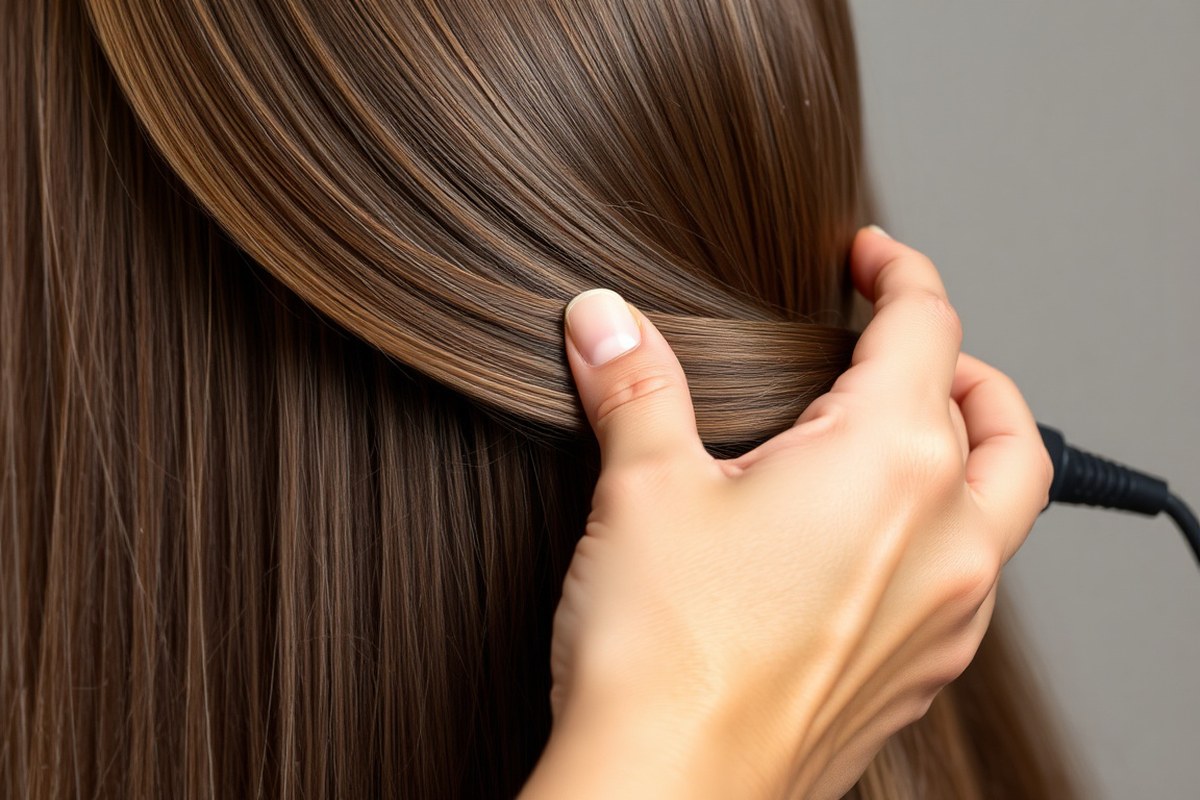
Start with dry hair and divide it into sections to style easily. Smaller sections work best, about one to two inches wide. Sectioning helps the heat reach all strands evenly, giving you a smoother finish.
Using a flat iron, you can straighten your hair. You can also curl or wave it. How you hold and move the iron changes the style.
Straightening is the simplest, slowly glide the iron down each section from scalp to ends. To curl, clamp a section near the roots.
Then twist the iron 90 degrees. Pull it down to form a curl.
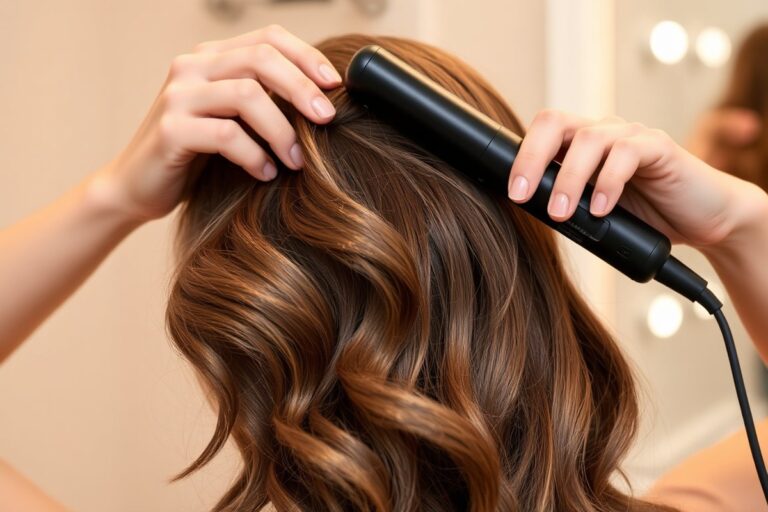
For waves, hold the iron horizontally. Turn it back and forth gently. This creates soft bends in your hair.
This method softens the look and gives a flowing wave rather than tight curls. Always work from the bottom layers up toward your hairline for even styling.
- Divide your hair into small, manageable sections, about 1 to 2 inches wide.
- Clamp the flat iron at the root. Smooth or curl the hair as you want. Move it slowly for best results.
- For straightening, slowly pull the iron down the hair length without stopping.
- For curls, twist the iron 90 degrees away from your face while pulling down.
- To create waves, hold the iron horizontally and gently bend hair in alternating directions.
- Repeat on all sections, moving from the back to the front of your head.
- Let styled hair cool without touching to set the style longer.
Choosing the Right Flat Iron and Temperature for Your Hair

Picking the right flat iron plate size depends on your hair length and style goals. Smaller plates, around 0.5 inches, work best for short hair or detailed styling. Standard 1-inch plates work well for medium to long hair.
They give good control. These plates also cover more hair per pass, saving time.
The plate material matters too. Ceramic plates suit fine or color-treated hair because they heat evenly and gently. Titanium plates heat faster and hold high heat, which helps coarse or thick hair straighten quicker.
Wide plates, 1.5 inches or more, can speed up styling for long or thick hair. But they are harder to use on short hair.
| Hair Length | Recommended Plate Size | Best Plate Material | Suggested Temperature Range (°F) |
|---|---|---|---|
| Short (chin length or less) | 0.5 to 1 inch | Ceramic | 300 to 350 |
| Medium (shoulder length) | 1 inch | Ceramic or Titanium | 350 to 400 |
| Long (past shoulder) | 1 to 1.5 inches | Titanium or Wide Ceramic | 375 to 425 |
| Coarse or Very Thick Hair | 1 to 1.5 inches | Titanium | 400 to 450 |
| Fine or Damaged Hair | 0.5 to 1 inch | Ceramic | 250 to 300 |
Temperature settings must match your hair’s texture to avoid damage. Fine hair needs lower heat, around 250 to 300°F, so you don’t burn it.
Coarse hair can handle 400 to 450°F for thorough straightening. Use a heat protectant spray before styling to prevent frying strands.
Synthetic hair usually won’t handle flat irons well unless it’s specially made for heat styling. Check the label before trying. Heat can melt synthetic fibers or cause uneven results.
For synthetic wigs or extensions, keep the heat under 350°F. Make sure they are heat resistant first. Test a small section before styling everything.
Don’t go over 450°F, even on thick hair. Too much heat risks breaking hair strands.
A good rule is to start with a lower temperature and test your hair’s reaction. Slide the iron slowly over a small section to see how it straightens. Don’t stop at one slow pass.
Increase heat by 25°F steps to smooth hair. Stay within your hair type’s safe temperature range.
Using the wrong plate size or too much heat can cause uneven style or hair damage. Small plates on long hair take longer and might leave waves. Wide plates on short hair miss roots often, needing extra passes.
Start with the right size and temperature. So styling feels easier and your hair stays healthy.
Preparing Your Hair Before Flat Ironing for Best Results
You should always iron completely dry hair for best results. Applying heat directly on damp hair can cause damage and won’t give you a smooth finish. Using a heat protectant before straightening shields your hair.
It protects hair from high temperatures. It also helps keep your hair shiny.
Shampoos and Conditioners That Aid Straightening
Choose shampoos and conditioners designed to smooth and hydrate hair. Look for products labeled “smoothing” or “frizz control” as they make hair easier to straighten. Formulas with ingredients like keratin or argan oil can help protect your hair while adding shine.
Moisturized hair straightens better because dry or damaged hair creates more frizz. Using a deep-conditioning treatment once a week can also improve your hair’s texture before flat ironing. Avoid heavy oils or silicone buildup that can weigh hair down and reduce hold.
How to Apply Heat Protectant Spray Correctly
Spritz your hair evenly with a heat protectant spray like a fine mist. Aim for a light, uniform layer without soaking your hair.
Oils or sprays made for heat protection can guard up to 450°F. This temperature is enough for flat iron use. They keep your hair safe from heat damage.
Make sure the product is absorbed through your hair before applying heat. Wait a few minutes if the protectant feels wet. You can also blot it with a towel.
This helps avoid damage when straightening. Start flat ironing only when hair feels completely dry and protected to prevent breakage.
- Hold the spray about 6 to 8 inches from your hair
- Focus on mid-lengths and ends, areas most prone to damage
- Comb through lightly to distribute the product evenly
- Allow 2 to 3 minutes for the spray to settle before styling
- Reapply if you need extra protection when re-straightening
Products like L’Oréal Paris SLEEK IT Iron Straight Heatspray work on dry or damp hair. Always dry your hair completely before using your flat iron.
This keeps your hair safe and smooth. This keeps the hair safe and ensures your straightening lasts longer without frizz.
Drying Hair Thoroughly Before Styling
You need fully dry hair before you use a flat iron to avoid frying your strands. Blow-dry your hair on a low or medium heat setting steadily until all dampness is gone. Use a round or paddle brush while drying to help smooth hair.
It also speeds up the drying process. Brushing makes hair easier to straighten.
Air-drying can work. But only if your hair is 100% dry, which may take much longer. Keep blow-drying or wait longer if your hair feels cool.
Slight dampness means it’s not fully dry yet. Fully dry hair straightens better and stays healthy. Starting with even slightly wet hair increases the chance of heat damage and doesn’t straighten well.
Safe Flat Ironing Practices to Avoid Hair Damage
Protecting your hair from heat damage starts with choosing the right temperature. Use the flat iron the right way to avoid damage.
Avoid styling wet or damp hair to prevent breakage. Limit how often you straighten to keep your hair strong and healthy over time.
Matching Temperature to Hair Type
Not all hair types need the same heat level. Fine or thin hair styles well at 250, 300°F, reducing the risk of damage. Thick or coarse hair often requires 350, 400°F. But avoid going higher to prevent burning strands.
Use a flat iron with adjustable temperature settings. Start with the lowest heat that straightens your hair effectively. Always increase heat gradually if your hair resists styling.
Never use a flat iron hotter than 450°F. Higher temperatures cause more harm than good. For instance, 450°F is usually reserved for very coarse hair and tough curls.
Limiting Frequency of Heat Styling
Styling your hair with heat every day raises damage risks. Ideally, limit flat ironing to two or three times each week. This gives your hair time to recover between sessions.
On days you don’t use a flat iron, try heatless styles like braiding or buns. These methods keep your hair healthy and reduce breakage. Protective styles help keep ends intact too.
Use heat protectant spray every time you style. These products form a barrier that reduces heat absorption. It costs around $8 to $20 and greatly helps prevent harm.
Detecting and Preventing Heat Damage
Heat damage shows up as dry, brittle hair that splits or breaks easily. Your hair may feel rough, look dull, and lose natural bounce.
Your ends may be frayed or strands snap when combing. These signs show heat damage.
Protect hair by never styling damp hair. Using a flat iron on wet hair makes it weaker and more prone to breaking. Always wait until your hair is completely dry before straightening.
- Apply a heat protectant spray or serum first
- Use a flat iron with ceramic plates for even heat distribution
- Keep each section thin, about 1 inch thick, for quick, gentle passes
- Don’t hold the flat iron longer than 5 seconds on one spot
- Clean your flat iron plates regularly to avoid residue build-up
- Trim damaged ends regularly to avoid split ends traveling up strands
- Deep condition your hair weekly to restore moisture and strength
Notice how flat ironed hair looks smooth and shiny, not dry or frizzy. Your hair feels soft and combs easily.
This means you’re styling safely. Stay consistent with protective steps, and your hair will stay healthy long term.
Styling Different Hair Lengths and Textures with a Flat Iron
Styling hair with a flat iron changes a lot based on your hair’s length and texture. Short hair needs different tools and moves than long hair. Curly, fine, or coarse hair needs different heat settings.
Use sections that suit your hair type. This helps keep your hair smooth and healthy.
Short Hair Techniques and Recommended Flat Iron Sizes
Short hair works best with flat irons that have narrow plates about 1 inch wide. Smaller plates give you more control close to the roots and around the ears. Use one- to two-inch sections to avoid missing strands or clamping too many hairs at once.
Hold the iron about three inches from your ends. Flip it 90 degrees up or down. This creates a sleek finish or soft bends.
This method adds style without overdoing heat. Keep heat at 300, 320°F if your hair is fine to prevent damage.
Medium and Long Hair Styling Approaches
For medium to long hair, wider plates work better because they cover more hair per pass. Using 2-inch sections saves time and gives even heat across thicker strands. Start the iron a few inches from the scalp to protect roots from direct heat.
Work slowly on each section, gliding the iron from roots to ends smoothly. At medium hair length, you can add curls by twisting the iron as you pull. Heat for medium hair should stay between 330, 350°F to keep strands healthy.
Adjusting Heat and Sections for Curly or Coarse Hair
Coarse or curly hair needs higher heat settings, about 360, 380°F. Always apply heat protectant before styling. Small 1- to 2-inch sections let you straighten curls evenly without tugging or burning.
Use ceramic plates because they distribute heat well and reduce frizz on textured hair. Move slowly through your hair with the iron. Hold it for just one or two seconds per section.
This flattens curls without frying your strands. Avoid pressing too hard to keep hair smooth.
Start at the lowest heat for your hair type. Increase the heat slowly only if you need to. This protects your strands from damage.
Using a Flat Iron to Create Volume and Shape
A flat iron can do more than just straighten your hair. It can add volume, create waves, and shape bangs for a fresh look. Using the right technique, you can lift roots.
You can also make ends flick out naturally. You don’t need extra tools for this.
To add volume, focus on lifting hair at the roots while applying heat. You can create soft waves by twisting the iron. Twist it gently as you pull it down.
This shapes your hair nicely. For shaping bangs, a flat iron works well to smooth them or add a gentle curve.
- Section your hair: Divide hair into manageable parts, especially near roots and bangs.
- Heat the roots: Clamp the iron at the roots. Tilt it slightly away from your scalp. Hold for 3 to 5 seconds to lift hair.
- Create waves: Clamp a small section of hair. Twist the iron 180 degrees. Then pull it slowly down the hair.
- Flick the ends: Hold the iron at the hair ends. Twist it slightly away from your face. This makes a natural outward bend.
- Style bangs: Glide the iron gently down your bangs. Curve them under or outward as you prefer. Choose the shape you want.
- Finish for hold: Use a light mist of hairspray to maintain volume and shape without stiffness.
Be sure to use a heat protectant before starting. It helps avoid damage while using high temperatures between 300°F and 380°F. Too much heat can cause breakage or frizz, which ruins stylish volume and smoothness.
Results show fuller roots with soft waves that frame your face. Watch out for flat, limp hair. It means you don’t have enough lift.
Or you might be using the iron too fast. Slow, controlled moves give you better volume and shape.
Common Flat Iron Mistakes and How to Fix Them
One common mistake is using a flat iron on wet hair. This causes major damage to the hair shaft and leads to breakage. Always make sure your hair is completely dry before you start straightening.
Holding the iron in one spot too long causes creases or sharp crimps. You should keep the flat iron moving smoothly through your hair. Aim to slide it along each section in about 3 to 5 seconds.
Frizz often appears when the flat iron doesn’t seal hair cuticles properly. That can happen if heat settings are too low.
You might also miss applying a smoothing product first. Using a lightweight heat protectant spray helps reduce frizz and adds shine.
- Always dry your hair fully before straightening
- Set temperature based on hair type (lower for fine hair)
- Move the iron steadily through each section in 3, 5 seconds
- Apply a heat protectant spray before styling
- Don’t clamp the iron tightly near the tips
- Comb through hair gently before ironing to remove tangles
- Fix frizz with a tiny bit of smoothing serum afterward
For frizz already there after styling, try a tiny drop of smoothing serum on your palms. Then gently run your hands over the hair surface. Avoid putting too much product on to prevent greasiness or weighing hair down.
Getting each of these steps right keeps your hair smoother and healthier looking. It takes practice to find the right speed and heat level. Start slow, watch for signs of heat stress, and adjust as needed for your hair type.
Maintaining Your Flat Iron and Hair After Styling
Cleaning your flat iron plates regularly stops buildup that can burn your hair. Use a soft cloth dampened with rubbing alcohol once the iron cools completely. Wipe off any residue gently, avoiding abrasive materials that damage the plates.
Store your flat iron in a dry spot away from water and heat. Wrap the cord loosely to avoid tangles or breaks. Use a heat-resistant mat or pouch if you put it away still warm after use.
Certain hair products keep your style lasting longer after flat ironing. Oils like argan, Moroccan, coconut, or Obliphica Berry nourish and smooth strands while reducing frizz. Apply a small amount evenly through your hair once cooled.
- Clean plates after every 5 to 10 uses to prevent buildup
- Always unplug and cool the iron before cleaning or storing
- Store on a flat surface or hang with a heat-safe hanger
- Use a leave-in serum with natural oils to extend style hold
- Avoid heavy products that weigh hair down or make it greasy
- Comb hair gently before styling to prevent snags
Keep your flat iron clamped all the way down your hair. This helps create a smooth, lasting finish. Rushing can cause uneven heat and require repeat passes, which damages hair.
Never spray water or styling spray directly on hot plates. It can damage the iron or create steam burns.
Step-by-Step Action Plan for Flat Iron Styling
Follow these steps to style your hair with a flat iron confidently and safely. Each step includes a sign that you’re doing it right.
- Before you start: Wash and dry your hair completely. Your hair should feel clean and dry, not damp or sticky.
- Day 1: Apply heat protectant evenly. Your hair will feel slightly smoother and protected but not greasy.
- Day 1: Set your flat iron temperature to match your hair type. You’ll notice the iron glides without pulling or smoking.
- Day 1: Section your hair into small parts. Each piece should be thin enough for the iron to clamp easily.
- Day 1: Glide the flat iron down each section slowly and steadily. Your hair should come out straight and shiny without frizz.
- Week 1: Practice shaping techniques like curls or volume once a week. You’ll see your hairstyles hold all day and look natural.
- Week 2: Clean and maintain your flat iron by wiping plates with a damp cloth. The iron will heat evenly and last longer.
- Ongoing: Use nourishing hair masks weekly to keep hair healthy. Your hair should feel soft and strong, not brittle.
Frequently Asked Questions
Can You Curl Hair with a Flat Iron Instead of a Curling Iron?
Yes, you can curl hair with a flat iron by twisting it as you glide down. Moving slowly prevents burns and creates smooth curls.
How Do I Clean My Flat Iron Safely?
Unplug the iron and let it cool. Use a damp cloth to wipe plates gently. Avoid dipping it in water to protect the electrical parts.
What Should I Do If My Flat Iron Snags or Pulls Hair?
Stop and unplug the iron immediately if it pulls hair. Check for dirt or sticky buildup on plates and clean it before using again.
Is It Okay to Use a Flat Iron on Wet Hair?
It’s better to avoid using a flat iron on wet hair. Damp hair can steam and get damaged, so blow-drying first protects your hair.
How Long Does It Take to Style Hair with a Flat Iron?
Styling usually takes 10 to 30 minutes, depending on hair length and style. Thicker hair takes longer to straighten or curl properly.
Can I Use a Flat Iron Daily Without Damaging My Hair?
Daily use risks damage due to constant heat. Use a heat protectant and lower temperature in daily styling to reduce harm.
The Bottom Line
Styling with a flat iron takes practice but gets easier fast. Start with clean, protected hair and use the right heat. Try one new style this week and watch your confidence grow.