How to Flat Iron Curl Short Hair: Simple Techniques for Lasting Curls
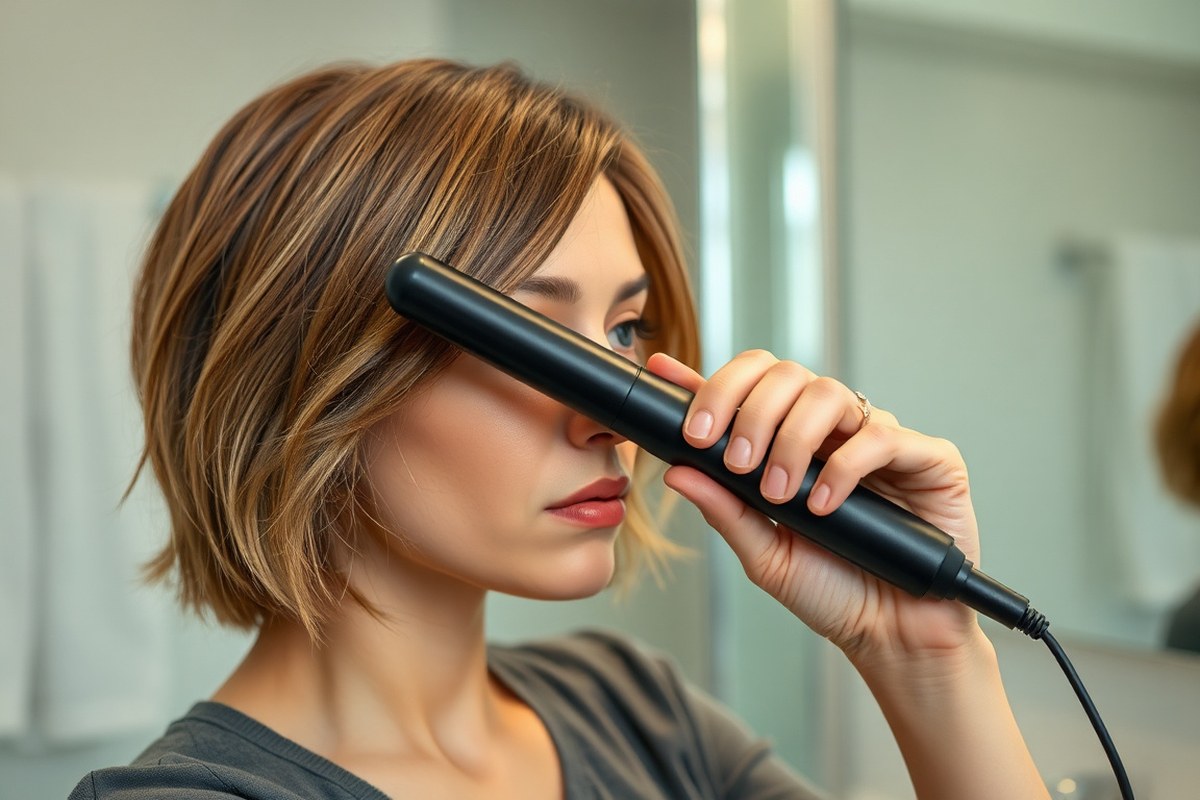
Learning how to flat iron curl short hair is simpler than you think. Curl your hair by twisting the flat iron 180 degrees. Then slowly slide it down each section to create defined curls.
This works well even when hair is too short to wrap fully around the iron. Start with completely dry hair since damp strands plus heat can cause damage. Use a narrow flat iron about 1 inch wide for better control on short hair.
Hold the flat iron near your roots but avoid touching your scalp to prevent burns. This method gives beachy waves or soft curls with little hassle. It works quickly, so you can switch styles fast for any occasion.
Take your time sectioning your hair and adjust heat to avoid frying your strands. This keeps your curls healthy and looking great without much effort.
Key Takeaways
- Use a 1-inch or smaller flat iron for tight control on short hair.
- Always start on completely dry hair to prevent heat damage.
- Twist the flat iron 180 degrees for natural-looking curls.
- Keep the iron close to roots but don’t scorch the scalp.
- Use medium heat settings around 360°F unless hair is very thick or thin.
- Section hair to create curls evenly and avoid clumps.
How to Curl Short Hair Using a Flat Iron Step-by-Step

Curling short hair with a flat iron takes practice but follows a simple process. Using small sections and controlled movements gives you the best curl shape.
Twist the flat iron away from your face. Glide it slowly to avoid bends or flat spots.
Start by preparing small sections around one inch wide. Using a narrow plate flat iron around 1 inch wide helps you shape curls nicely. Work in layers and alternate curling directions for natural-looking waves and volume.
- Clamp a 1-inch section of hair near the roots. Place the flat iron as close to your scalp as comfortable.
- Twist the flat iron away from your face. Rotate the iron 180 degrees while holding the hair firmly.
- Slowly glide the iron down the hair strand. Move about one inch per second for smooth curls.
- Release the clamp once the iron reaches the end. Avoid stopping mid-hair to prevent bends or creases.
- Repeat on the next section. Alternate curling direction with each section for a natural look.
- Let curls cool before touching. Cooling helps them set and hold longer.
Use slow, steady motions to keep curls smooth and springy. Going too fast causes loose bends, and moving too slow can overheat ends. Small sections create defined curls while alternating directions adds volume without stiffness.
This method works best on hair that’s dry and protected with heat spray. Using clips to section hair makes the process faster and more organized. After a few tries, you’ll find your perfect rhythm and technique.
Choosing the Best Flat Iron and Heat Settings for Short Hair

Short hair curls best with a flat iron that has narrow plates. Between 0.75 inch and 1 inch wide works well to grab small sections easily. Wide plates can flatten short strands instead of curling them.
Heat settings depend on your hair type. Fine or damaged hair should stay at 300°F to 350°F to avoid damage. Coarser or thicker hair needs heat between 350°F and 400°F. Use heat protectant every time you style your hair.
This helps curls hold and protects your strands. Always start with a lower temperature and raise if curls don’t form well.
| Hair Length | Flat Iron Plate Size | Recommended Heat Setting |
|---|---|---|
| Very Short (1-3 inches) | 0.5″ to 0.75″ | 300°F – 340°F (Fine) / 340°F – 370°F (Thick) |
| Short (4-6 inches) | 0.75″ to 1″ | 300°F – 350°F (Fine) / 350°F – 400°F (Thick) |
| Short with Layers (5-8 inches) | 1″ to 1.25″ | 320°F – 350°F (Fine) / 360°F – 400°F (Thick) |
Flat irons with rounded plates are better than flat ones for curls. Rounded edges let you twist hair without creating harsh kinks. This shape smooths out curls so they look soft and natural, not stiff or crimped.
Floating or rotating plates help a lot too. They adjust slightly as you pull the iron, which helps shape curls and waves better. Rotating plates cost a bit more but give you more styling control, especially on short hair.
Always use a heat protectant before curling to reduce damage and preserve hair health.
For a 1-inch flat iron, ceramic plates provide even heat distribution. This prevents hot spots that can burn short strands. Take small sections of hair, just a few hairs wide.
Wrap each section slowly around the flat iron. This technique gives you defined, lasting curls. Too fast, and the curls might not hold well.
Preparing Short Hair Safely Before Curling
Preparing short hair correctly before curling prevents damage and helps curls hold longer. You should dry your hair fully, detangle gently, and apply a proper heat protectant evenly. These steps take just a few minutes but make a big difference.
Drying Your Hair Completely for Best Results
Make sure your hair is completely dry before using a flat iron. Damp hair heated at 200°C or above risks sizzling and breaking strands. Use a blow dryer or let your hair air-dry fully before starting.
Use a blow dryer with a diffuser to avoid frizz and focus on drying roots first. Short hair dries faster, but check with your fingers for any damp patches. Styling on 100% dry hair gives smoother, shinier curls that last longer.
Applying Heat Protectant Evenly
Spritz all sections of your hair with a heat protectant before you curl. A good product creates a shield from heat damage and helps curls hold better. Make sure to cover roots to ends but avoid over-applying, which can weigh hair down.
After spritzing, comb through your hair gently with a wide-tooth comb or your fingers. This spreads the protectant evenly and removes tangles. Wait about 1 to 2 minutes for the product to settle before heating your hair.
Choosing the Right Products for Short Hair
Choose lightweight heat protectants designed for your hair type to avoid buildup. Look for sprays or serums with ingredients like silicones or dimethicone, which protect without greasiness. Avoid heavy creams that can flatten your curls.
Besides heat protectants, a light texturizing spray can add grip for curls to hold well. Use a small amount to prevent stiffness or crunchiness. These products work best on clean hair that’s been fully dried and detangled.
- Always detangle your hair before applying heat protectant.
- Use a broad-toothed comb on wet hair, fingers on dry hair.
- Choose heat protectants with UV filters for extra protection.
- Apply heat protectant from roots to ends, in even strokes.
- Allow a 1-2 minute wait after application before heat styling.
- Use lightweight texturizing spray to boost curl hold if needed.
- Work in small sections for thorough product coverage and even heat.
Three Effective Flat Iron Curling Techniques for Short Hair
Three main curling techniques work well with a flat iron on short hair. These are the Bend & Glide, Twist &.
Slide, and Clamp + C Motion methods. Each creates different curl shapes and suits certain hair types or styles.
The ‘Bend & Glide’ Method
This method works by bending the flat iron slightly while gliding it down your hair. Start by clamping the iron close to your scalp. Gently bend the iron inward to form the curl.
Hold it steady before moving down the hair strand. Glide the iron slowly down the hair to set a soft wave or loose curl.
Bend & Glide gives relaxed, beachy waves. It suits fine to medium hair that can hold waves without needing tight curls. The curls usually last a few hours if you don’t touch your hair too much.
A downside is it takes practice to control the bend without creasing the hair. Also, if the glide is too fast, the curl won’t hold well. This method won’t create tight or structured curls on very short hair.
The ‘Twist & Slide’ Method
This uses a half-twist of the iron as you slide it down your hair strands. You clamp a medium section, twist the iron 180 degrees, then slide down quickly. It’s good for rough waves with some movement and bounce.
Short hair with some texture or wave holds well with this method. Talk about layered cuts and choppy styles, it improve natural volume while curling.
The waves stay better than with Bend &. Glide, especially if you use smaller sections.
It can be tricky to twist evenly. You might get uneven curls if you twist too much or too little.
Quick gliding may leave parts not fully curled. So section size and speed matter a lot.
The ‘Clamp + C Motion’ Method
Clamp your hair and curve the iron into a C shape. This adds a full twist to your hair. Hold the clamp tightly to shape the curl.
Take small sections and clamp hair near the scalp. Rotate the iron completely around the hair.
Then slowly slide the iron down the strand. This lets curls set tighter and last longer.
It suits thick, straight, or stubborn hair that needs strong shaping. The curls come out well-defined and springy, great for elegant or vintage looks. Although it takes more time and smaller sections, the payoff is strong, lasting curls.
Smaller sections mean a longer process and higher heat exposure. You need to watch out for heat damage by using a lower temperature or protective spray. Moving too fast means curls won’t hold well.
Slow down to let curls properly set. Patience helps curls last longer and look better. This method requires patience but gives impressive curls on short hair.
How to Section Short Hair to Maximize Curl Definition
Sectioning short hair correctly makes curling easier and more even. You want to split your hair into manageable parts to keep control while styling. This helps the flat iron curl each part smoothly and avoids missed spots.
Dividing Hair into Top and Bottom Sections
Start by parting your hair into two main layers: top and bottom. The top section usually covers the crown and the upper sides of your head. The bottom section includes hair along the nape and lower sides.
Use a flat clip to hold the top section out of the way. That way, you only work on the bottom layer first, which is easier to handle. Once you finish curling the bottom layer, unclamp the top and work there.
Creating Small Subsections for Controlled Curls
Within each layer, divide your hair into smaller subsections for better curl control. Small sections about 1 inch wide work best for short hair. This size makes curling easier and ensures even heat distribution.
Too large sections may not curl uniformly and can waste time. Too small may be tricky to handle and slow you down. Aim for neat, similar-sized sections in each layer before you start curling.
- Comb one layer smooth and pick up a 1-inch-wide subsection.
- Clip or hold the rest of the hair away to keep it out of your way.
- Curl that subsection with the flat iron, moving steadily for an even curve.
- Release the curl carefully and let it cool before touching.
- Move to the next 1-inch section and repeat the process.
- Finish all sections in the layer before unclipping the next layer.
Using Clips for Hands-Free Styling
Flat clips or small duckbill clips are perfect for holding your hair layers and subsections. They keep hair neatly separated, letting you use both hands for curling. Clipping reduces frustration and speeds up your styling time.
Clip the top section first after dividing into two layers. Then use clips to secure subsections in the layer you’re working on. Make sure clips sit firmly but don’t press too hard to avoid dents.
Use flat clips instead of claw clips to avoid awkward bumps on short hair.
Tips for Making Flat Iron Curls Last Longer on Short Hair
Start with a light styling mousse or curl-improving cream on damp hair. These products add texture that helps curls grip your short strands better. Apply a few small dabs, too much product can weigh curls down and make them limp.
After curling, spray a flexible hold hairspray evenly from 8 to 12 inches away. This locks the curl shape without making hair stiff or crunchy. Look for hairsprays labelled “flexible hold” or “curl defining” to maintain bounce and volume.
Boost curl longevity by setting your curls as they cool. Pin each curled section with a clip until your hair returns to room temperature. This cool-down step helps curls form a firmer shape that lasts through the day.
- Use heat protectant spray before flat ironing to keep hair smooth
- Light mousse or curl cream adds grip without heaviness
- Flexible hold hairspray prevents stiffness while holding curls
- Pin curls while cooling to set shape longer
- Dry shampoo refreshes curls and adds volume midday
- Touch up with low heat if curls fall flat, but avoid overusing heat
Dry shampoo helps revive curls if they lose shape during the day. Spray a little at your roots, then scrunch hair gently to add volume. It absorbs oil and lifts curls back to life without washing.
If curls do fall flat, twist small sections with your fingers and add a touch of hairspray for quick lift. Avoid flattening curls by not touching them too much. Keep fries and frizz at bay by using anti-humidity spray when needed.
Common Mistakes and How to Fix Them When Curling Short Hair
Curls losing volume or falling flat usually happen when the roots stay too straight. To fix limp roots, lift the flat iron at the base. Twist it away from the scalp quickly.
Mist the hair lightly with texturizing spray near the roots. This helps hold volume longer.
Creases or bends happen when the flat iron clamps too tightly. Or when you pause in one spot.
Keep the iron moving smoothly through your hair with gentle pressure. Use smaller sections, about 1/2 inch wide, for even curls without dents.
Frizz and crunchy curls often mean too much heat or product buildup. Set your flat iron temperature between 300°F and 350°F for short hair.
Avoid using too much hairspray before styling. Apply it after curls cool for best hold and softness.
- Don’t clamp flat iron too hard to prevent creases
- Use small sections to ensure uniform curls
- Lift roots with quick twists to add volume
- Set heat between 300°F and 350°F for short hair
- Apply hairspray only after curls have cooled
- Use a light texturizing spray at roots before curling
- No long pauses on hair to avoid dents or bends
Uneven curls can also happen if your hair isn’t sectioned well. Keep sections clean and clipped for organized styling. Check each curl after releasing it to spot flaws and touch up if needed.
Gently scrunch stiff or crunchy curls with your hands after the product dries. This breaks up hardness without losing shape. Light oils or serums on curls can tame frizz while keeping curls soft and bouncy.
Natural Curl Direction and Curling Near Roots Safely on Short Hair
You can safely curl hair about a quarter-inch from the roots. Avoid clamping too close to the scalp to prevent burning or pulling. A good flat iron like the L’ANGE HAIR Le Duo 360° helps you curl close to the scalp.
It avoids touching your skin. This design keeps styling safe and easy.
Hold the flat iron near the roots, but not touching your scalp. This helps lift the hair and adds volume at the base. Be gentle and keep the iron moving continuously for a few seconds to avoid damage.
Alternating curl directions on each section creates a natural, fuller look. Twist one piece away from your face, then the next toward it. This breaks up uniform waves and prevents hair from looking like one big curl.
The direction changes prevent curls from clumping together flatly. Uniform curls tend to lie in the same way, making hair look less full. Mixing directions adds body and prevents the curls from falling into each other.
For short hair, start curling at the roots. Then slide the iron down with a gentle twist. This makes tight curls that hold well.
Switch hands or adjust how you hold the iron so you alternate directions naturally. This takes practice but results in soft, voluminous curls.
Too close to the root or scalp risks burning and damage. Too uniform curl direction leads to flat, lifeless hair. Balancing the distance and curl direction means looking fuller and styled without harm.
Keep the flat iron moving near the roots to stop heat spots. Alternate curl directions for better volume. This method gives your hair a natural look.
Step-by-Step Action Plan for Flat Iron Curling Short Hair
Follow these clear steps to get your curls right the first time. Check your results after each to stay on track.
- Before you start: Wash and dry your hair completely. Your curls hold better on clean, dry hair.
- 5 minutes before curling: Apply heat protectant all over your hair. Your hair stays safe and shiny.
- Start curling: Section your hair into small parts. This helps curls stay neat and last longer.
- During curling: Use medium heat (around 300°F). Too hot or too low messes with your curl shape.
- After curling each section: Let curls cool completely before touching them. This sets the shape for long wear.
- Right after curling all sections: Use a light hairspray or styling product. It keeps curls in place without stiffness.
- End of day: Sleep with a silk or satin scarf or pillowcase. Your curls stay smoother and last overnight.
Frequently Asked Questions
Can I Curl My Short Hair Without a Flat Iron?
Yes, you can curl short hair using curling wands or rollers. These tools usually create softer curls.
They can be easier for beginners. They handle simpler than a flat iron.
Is a 1-inch Flat Iron Best for Curling Short Hair?
A 1-inch flat iron is typically best for short hair. It gives you more control and helps create tighter, defined curls without struggling with large plates.
How Do I Prevent Heat Damage When Curling Short Hair?
Always use a heat protectant spray before styling. This reduces damage and keeps your hair healthy while using high temperatures.
Can I Curl My Short Hair While It’s Damp?
No, curling damp hair can cause more damage and uneven curls. Dry your hair completely before curling with a flat iron for safety and better results.
How Long Will Flat Iron Curls Last on Short Hair?
Flat iron curls on short hair usually last a few hours to a day. Using a light hairspray helps maintain the curls longer without stiffness.
Should I Use Mousse or Gel Before Curling Short Hair?
Using a light mousse before curling can add volume and hold. Gel may weigh hair down and make curls look stiff or greasy.
The Bottom Line
Curling short hair with a flat iron works well when you prep and protect properly. Start with small sections and the right heat. Try this curling method today.
See how soft curls look. Find out how long they last on your short hair.