How to Remove a Perm: Complete Methods for Safe, Fast Curl Removal
Wondering how to remove a perm quickly and safely? The best way is to wash your hair within 24 hours to loosen the curls gently. Repeat washing every one to two days.
Do this for up to ten days. This helps fade the perm as much as possible.
Avoid washing too soon or using harsh shampoo. The neutralizer works best for 24 hours. Let it set before washing.
After that, your hair remains pliable for about 48 to 72 hours. So acting in this window helps undo the curls. Avoid harsh chemicals or heat treatments early on to protect your scalp and hair.
Patience is key because a perm gradually relaxes over weeks. You can speed things a bit using gentle methods, but rushing can cause damage. Use simple care steps and watch your timing.
This helps bring back your natural texture. It avoids damage to your hair.
Key Takeaways
- Wash your hair within 24 hours after the perm to start loosening curls.
- Repeat washing every 1-2 days for up to 10 days for best results.
- Wait at least 48-72 hours before using heat tools or chemical treatments.
- Avoid harsh shampoos or treatments that could irritate your scalp immediately after.
- Your hair is most malleable during the first 72 hours after the perm.
- Gentle scalp massages can help relax the curls over time.
How to Remove a Perm Safely at Home
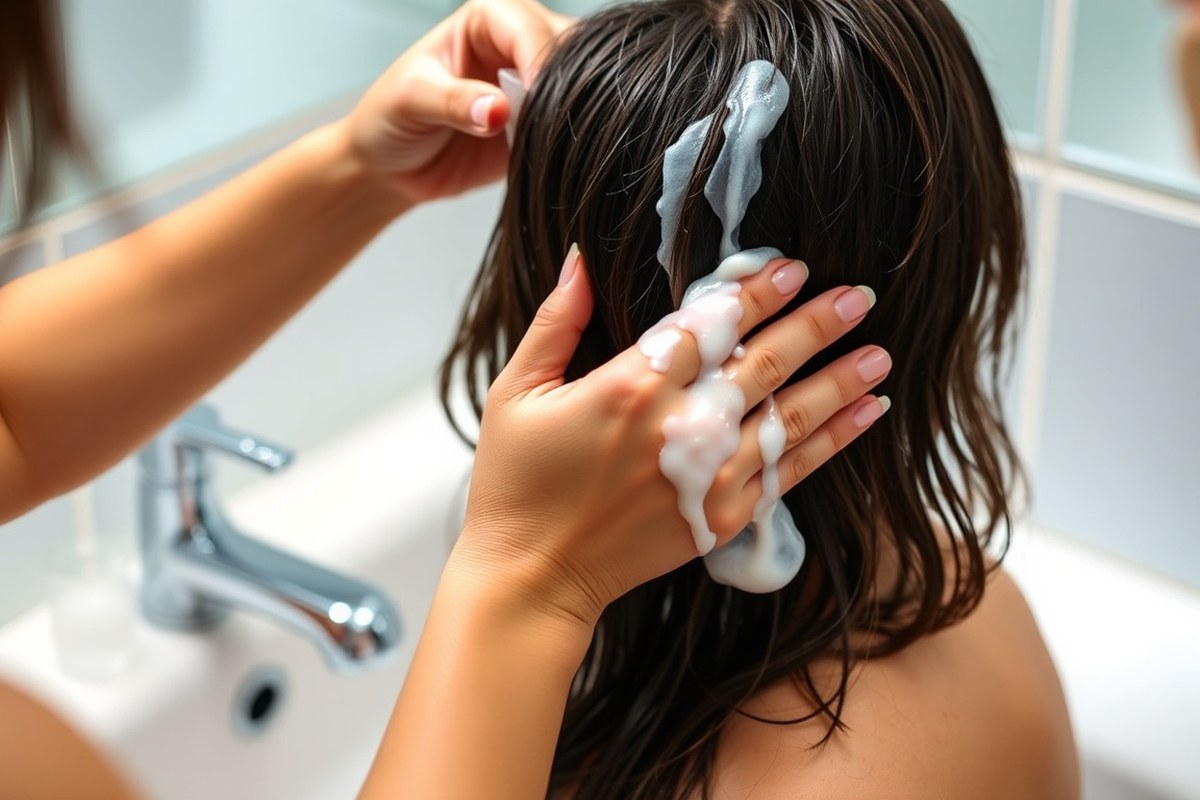
Removing a perm at home requires a careful approach to avoid damage. Washing your hair with the right products and applying minimal heat can help loosen curls gently. Use deep conditioning to protect hair while loosening the perm texture over time.
Follow these steps to safely reduce the effect of your perm without harsh chemicals. Keep in mind, washing your hair too often can dry it out. So balance cleansing with nourishing treatments.
- Wash your hair with a clarifying shampoo to reduce perm hold. This step removes buildup and helps relax curls slightly, especially within 24 hours of your perm.
- Apply a rich conditioner or hair oil to moisturize strands deeply. Conditioner loosens curls and prepares hair for gentle straightening.
- Gently wet your hair and blow dry it using a low heat setting. Use a round or flat brush to pull hair straighter as you dry it.
- Limit washing to 2, 3 times a week to prevent dryness and frizz. Overwashing can strip natural oils, which protect your hair during perm removal.
- Repeat this routine several times a week to gradually loosen perm curls. Immediate removal won’t happen, but curls will soften noticeably.
- When your hair feels dry, try a deep conditioner or oil weekly. Cocoa butter or olive oil mixtures can help keep hair strong and smooth.
- Avoid high heat or harsh chemical treatments while removing the perm. These can cause breakage or scalp irritation.
Washing just once won’t remove the perm completely. But it reduces tension in the curl bonds. Conditioning is key to maintaining your hair’s health during the process.
Stay patient, as loosening a perm this way takes weeks. Stubborn curls may need a salon visit for safer removal.
Why Timing Matters: How Long It Takes for a Perm to Fade
Perms work by breaking and reforming disulfide bonds in your hair’s protein. This chemical bond shift changes your hair’s shape to curls or waves.
Once those bonds change, your hair holds the new style. This lasts until the bonds weaken or your hair grows out.
Your hair remains most changeable for about 48 to 72 hours after a perm. During this window, you can gently reshape or relax the curls more easily. After a while, the new bonds fully set in your hair.
It becomes less flexible. Reversing the style then gets harder.
The intensity of the perm affects fading time. A strong perm creates more permanent bond changes. So it lasts longer, typically 4 to 6 months.
Weaker perms or fine hair usually fade faster. Sometimes this happens in 2 to 3 months. This occurs as bonds break down sooner.
Chemical treatments like relaxers or keratin products can speed up loosening your perm. But these come with risks to your hair’s health, including dryness and breakage. The safest plan is to wait out the flexible period.
Use mild clarifying shampoos and conditioning treatments. This helps protect your hair.
Do not wash your hair with strong shampoos in the first 48 hours. It risks undoing your perm.
To best remove or loosen a perm, act within two to three days of perming. Start with clarifying shampoos or vinegar rinses to strip some curl forces without harsh damage. After that, expect a slow natural fade until new growth replaces permed hair.
Types of Perms and Their Impact on Removal Options
Perms use different chemicals and curl types, which affect removal choices. Two main perm types are lye and no-lye. Lye perms work stronger but can damage hair more.
No-lye perms are gentler but less powerful. The chemicals used impact how easy or hard it is to reverse the perm.
Curl tightness also matters for removal. Tighter curls need stronger methods to loosen them properly. Loose waves may relax simply with shampooing or mild treatments.
Your natural hair texture plays a role too. Thick or coarse hair resists chemical changes more than fine hair.
| Factor | Lye Perms | No-Lye Perms |
|---|---|---|
| Chemical Strength | Stronger, more damage risk | Milder, less damage risk |
| Curl Tightness | Often tighter curls | More moderate curls |
| Removal Difficulty | Harder to reverse | Easier to soften |
| Hair Texture Impact | Greater effect on coarse hair | Gentler on fine hair |
| Typical Removal Options | Stronger chemicals or heat tools | Shampoos, softer treatments |
For tight, lye-based perms, chemical treatments or heat loosening often work best. These methods take 30 to 60 minutes and may cost $20 to $50 in products. Softer perms respond well to clarifying shampoos or curl softeners used over days.
Hair texture changes removal success too. Thick hair might need more time or repeated steps to loosen curls.
Fine hair risks damage from harsh chemicals and may do better with gentle care. Always test a small strand first to avoid hair breakage.
Using Clarifying Shampoos and Chemical Treatments
Clarifying shampoos and chemical relaxers can both help break down the bonds from a perm. Clarifying shampoos work gently by stripping buildup and loosening curls. Chemical relaxers attack bonds more strongly but need cautious use to avoid damage.
Clarifying Shampoo Benefits and Usage
Clarifying shampoos have a higher pH and contain sulfates that open the hair cuticle. This helps break down the chemical bonds forming your perm curls. Use clarifying shampoo only twice a week.
Too much drying can harm your hair. Stick to this limit to keep your hair healthy.
Wash your hair thoroughly with the shampoo, focusing on problem areas. Leave the shampoo on for 3 to 5 minutes before rinsing to let it work. Follow with a deep conditioner each time to keep your hair hydrated and strong.
- Use twice a week max to prevent brittleness
- Apply on wet hair and massage well
- Leave shampoo on for 3 to 5 minutes
- Rinse thoroughly with lukewarm water
- Follow every wash with a hydrating conditioner
- Choose a gentle clarifying shampoo with natural ingredients
Results come gradually, so expect some loosening of your perm after several washes. Overuse can cause dryness, so balance with conditioning.
Chemical Relaxers: Pros and Cons
Chemical relaxers break the disulfide bonds that shape permed curls by straightening the hair. They often give faster results than clarifying shampoos but carry bigger risks. A professional should apply chemical relaxers to prevent severe damage.
The main downside is that relaxers can cause weak, brittle strands and scalp irritation if misused. They work best if your perm is older and hair has recovered some strength. Using relaxers too soon after perming can lead to breakage.
Safety Tips for Using Chemical Products
Always read product labels and follow instructions exactly. Perform a patch test 24 hours before applying chemical relaxers to check for allergies. Avoid mixing relaxers with other strong treatments on the same day to reduce scalp stress.
- Wear gloves to protect your hands
- Do not leave relaxer on longer than instructed
- Apply a protective cream around your hairline
- Rinse thoroughly with cool water after treatment
- Use mild shampoo and deep conditioner after a relaxer
- Limit chemical relaxer treatments to once every 6 to 8 weeks
Damage signs include excessive shedding, burning, and brittle hair. Stop use immediately if these happen.
When to Avoid Chemical Treatments
Do not use chemical relaxers if your hair feels very weak or brittle from previous treatments. Wait until your hair shows signs of health and strength again.
Also avoid relaxers on recently permed hair. 72 hours or more is necessary to prevent excessive damage.
Pregnancy, scalp wounds, and allergies are other reasons to skip chemical removal. When unsure, talk to a professional stylist about your hair’s condition.
They can give you the best advice. Sometimes clarifying shampoos and transition styling are safer choices.
Heat Tools and Mechanical Methods to Loosen Perms
Heat tools like flat irons can straighten perm curls temporarily. Use a low heat setting around 300°F to avoid further damage. Your hair is already fragile after a perm, so keeping heat gentle is key.
Mechanical methods such as blow-drying with a brush can help relax curls a little. Use a nozzle on your dryer for better control. Grab a round or paddle brush.
Stretch curls as you dry your hair. Avoid strong tension or rough brushing to prevent breakage.
Here is how to use heat tools safely. Use mechanical methods to loosen perm curls. Avoid damaging your hair while doing this.
- Apply a heat protectant evenly on damp or dry hair to shield from heat damage.
- Set your flat iron or blow dryer to the lowest effective temperature (around 300°F maximum).
- Divide your hair into sections no wider than one inch to ensure gentle, even heat.
- Slowly glide the flat iron down each section once or twice, avoiding repeated passes.
- Grab a round brush to pull curls straight. Blow-dry using medium heat for best results. Focus the airflow downward during drying.
- Finish by letting hair cool completely before touching or styling further, to set the shape.
- Only use heat tools occasionally, no more than twice a week, to prevent dryness and breakage.
Don’t use flat irons daily on permed hair, or your strands may become dry and brittle.
Mechanical manipulation can loosen curls a bit. Try wet sets or satin wraps at night. These methods work without heat.
These tricks reduce the need for heat and keep your hair healthier over time. Adding some weight with a moisture-rich conditioner also pulls curls straighter without heat stress.
Avoid heat if your hair feels gummy, overly stretchy, or snaps easily. Those signs mean your strands need rest and repair before any heat styling. Following these steps can relax your perm curls gently while protecting your hair’s health.
Nourishing and Repairing Hair After Perm Removal
After removing a perm, your hair needs extra moisture and protein to rebuild strength. Using the right treatments helps prevent breakage and restores smoothness. A care routine with protein, oils, and deep conditioning will bring your hair back to health.
Top Protein Treatments for Permed Hair
Protein is key since hair is mostly keratin, a protein type. After a perm, your strands lose protein, making them weak and brittle. Using protein treatments once a month helps rebuild this structure and lowers breakage risk.
Look for products labeled with hydrolyzed keratin, collagen, or silk protein. These penetrate the hair shaft quickly and restore strength. Apply treatments right after shampooing your hair.
Check how long to keep them on. Usually, it’s five to twenty minutes.
- Olaplex No.3 Hair Perfector for bond rebuilding
- Aphogee Two-Step Protein Treatment for intense repair
- SheaMoisture Raw Shea Butter Protein Therapy
- Redken Extreme Strength Builder Plus
- Joico K-Pak Deep Penetrating Reconstructor
Don’t overdo protein. Using these treatments monthly keeps balance between moisture and strength. Overuse can cause stiffness and dryness.
Best Oils and Natural Masks
Natural oils add moisture and seal the hair cuticle. Oils like coconut, argan, and jojoba also calm scalp irritation and reduce split ends. Apply them after washing or use them as a pre-wash treatment.
Masks with honey or avocado help hydrate while strengthening hair. Apply a mask once a week, leaving it on 20 to 30 minutes before rinsing. This nourishes and softens dry, damaged strands.
- Coconut oil for deep hydration and scalp health
- Argan oil to tame frizz and add shine
- Jojoba oil for balancing scalp oils
- Avocado mask for vitamins and moisture
- Honey-based masks to lock in hydration
Use natural oils in small amounts to avoid greasy hair. Always apply from mid-shaft to ends, not roots.
Conditioning Frequency and Technique
After perm removal, condition your hair every time you wash it. Choose a deep conditioner or a moisturizing conditioner with no harsh chemicals. This helps replace lost moisture and keep hair soft.
Apply conditioner thoroughly, focusing on the ends and areas that feel dry. Leave the treatment on for three to five minutes. Then rinse it out with cool water.
This helps seal the cuticles. This method keeps hair smooth and manageable.
- Condition with every shampoo wash
- Use deep conditioner or hair mask weekly
- Rinse conditioner with cool water
- Avoid conditioners with sulfates and alcohol
- Use a wide-tooth comb to detangle wet hair gently
Avoiding Over-Treatment and Damage
Applying too many treatments can stress damaged hair. Balance hydration and protein by spacing them out properly. Use protein treatments monthly and moisturizing treatments weekly.
Don’t overuse heat styling tools right after perm removal. Hair is more fragile and sensitive to heat damage now. Trim split ends regularly to keep your hair healthy and prevent breakage.
- Alternate protein and hydration treatments
- Limit heat styling to once a week or less
- Use heat protectant sprays if styling
- Schedule trims every 6 to 8 weeks
- Avoid harsh chemical treatments immediately after perm removal
When to Consult a Professional Stylist
Your hair feels dry, brittle, or badly damaged by a perm. Call a professional to help fix it. Trying to fix this at home might cause more breakage or uneven texture.
If you want to remove a perm quickly, see a stylist. They use safer and more effective methods. Avoid adding chemicals to your hair yourself.
Professionals use specialized treatments to relax or gently break the perm bonds. They sometimes apply neutralizing agents or carefully use protein-based reconstructors.
These techniques minimize damage while loosening curls. The process often takes one to two hours depending on hair thickness and condition.
Expect to pay between $80 and $150 for expert perm removal, though prices vary by salon. Skilled stylists know how to assess your hair’s health before starting.
They’ll suggest temporary styling options if your hair needs time to recover first. Good results mean smoother texture with minimal damage and no patchy or frizzy spots.
Look for a stylist with experience in perm removal. Ask someone skilled in chemical hair treatments. This background helps ensure better results.
Check reviews or get recommendations on salons that handle corrective chemical work. When you book the appointment, ask these questions upfront:
- “How do you remove or loosen perms without heavy damage?”
- “What results can I realistically expect for my hair type?”
- “What aftercare do you recommend post-treatment?”
- “Do you offer temporary management until my hair recovers?”
A professional will evaluate your hair thoroughly and explain the risks before starting. Perms chemically alter hair structure, which can’t be fully reversed at home.
Overusing heat, chemicals, or rough methods may cause breakage or uneven curl patterns. Getting expert help reduces these risks and improves final results.
Managing and Styling Hair During Perm Transition
You can style your hair in ways that blend your perm with your natural texture. Protective hairstyles help prevent damage and make the transition easier. Tweaking your routine reduces frizz and dryness during this change.
Best Transition Hairstyles for Perms
Loose buns or low ponytails keep permed hair controlled without stressing it. Braids work well because they prevent tangles and distribute texture evenly. Half-up styles let you manage uneven curls while showing off softer waves.
Try using satin or silk scarves overnight to protect these styles. These fabrics cut friction and help keep curls smooth. Also, avoid hairstyles that pull tightly to reduce breakage.
- Low ponytail with a soft scrunchie
- Loose side braids
- Half-up twisted bun
- Wide-tooth comb detangling
- Overnight satin bonnet or scarf
These styles save your hair from extra dryness and hold moisture. They also help hide uneven curl patterns while your hair grows out.
Tips for Handling Mixed Textures
Different curl patterns often mean you’ll see a mix of waves and curls. Blow-dry hair using a diffuser at medium heat to encourage even shape. Gently scrunch damp hair for softer transitions between curls and straighter areas.
Use a light leave-in conditioner to boost moisture and reduce frizz. Comb only when hair is wet and coated, or finger-comb dry sections to avoid breakage.
Wet hair combing helps reduce frizz and stops mixed textures from looking patchy.
Some parts may feel dry or straw-like. Use a hydrating hair mask weekly. This balances moisture without weighing down loose waves.
Hair Care Routine During Transition
Wash your hair two to three times a week with a sulfate-free shampoo. This helps fade the perm gently without stripping natural oils. Follow with a deep conditioner focused on hydration.
Regular moisturizing reduces breakage and helps blend new growth with permed ends. Use light oils like argan or coconut on your ends daily. They help seal in moisture.
- Sulfate-free shampoo twice weekly
- Deep conditioning once weekly
- Leave-in conditioner on damp hair
- Use light oils on the ends daily
- Limit heat styling to once or twice a week
Given that frequent washing can speed fading, balance it by restoring moisture after each wash. This prevents your hair from drying out or feeling brittle.
When to Trim to Speed Up Removal
Partial trims remove the most damaged or permed ends. Target trims every 6 to 8 weeks to avoid losing length too fast. This gradually reduces perm appearance.
Ask your stylist for “dusting” trims if you want to keep length but clean uneven curls. Trims also improve overall hair health and reduce tangles caused by uneven texture.
Wait too long between trims and uneven curls get harder to manage. This can cause more breakage.
Be careful not to cut too much at once. Slow trimming protects your hair from sudden changes. You want to keep natural growth blending with fading curls smoothly.
Step-by-Step Action Plan to Loosen Your Perm
This plan helps you safely reduce your perm’s curl over time. Follow each step to see steady change.
- Before You Start: Check your hair’s health. Avoid perm removal if it feels brittle or breaks easily.
- Day 1: Use a clarifying shampoo to start washing away product buildup. Your curls should feel less tight after a few washes.
- Week 1: Apply gentle, deep conditioners after every wash. This keeps hair strong while loosening curls.
- Week 2: Add occasional warm towel treatments. Wrap your hair in a warm, damp towel for 10 minutes to relax the curls.
- Week 3: Use low-heat styling tools like a flat iron on low setting. Test a small section and stop if hair feels damaged.
- Week 4: Try a protein treatment to help rebuild bond strength after heat and chemical steps. Your hair should feel smoother and less curly.
- After 4 Weeks: Check if your curls remain very tight. Look for signs of hair damage. Consider seeing a professional if you notice these issues. A stylist can safely apply chemical relaxers or trims.
Frequently Asked Questions
How Often Can I Repeat Perm Removal Treatments at Home?
You can repeat perm removal treatments every 1-2 days for up to 10 days. This approach gradually loosens the curls safely without stressing your hair too much.
Is It Safe to Wash My Hair Within 24 Hours of Getting a Perm?
Yes, washing your hair within 24 hours can help loosen curls that feel too tight. However, avoid harsh shampoos to protect your scalp and hair strength.
Can I Remove a Perm from Hair That’s Been Chemically Dyed?
You can’t effectively remove a perm from hair that’s already chemically dyed. The chemical treatments alter the hair bonds, making perm removal ineffective.
Does an Egg and Olive Oil Mix Really Help Remove a Perm?
Some people say a mixture of eggs and olive oil may help soften a perm. This natural treatment moisturizes hair and softens stiff curls. It does not fully remove the perm.
How Does Cocoa Butter Help in Removing a Perm Faster?
Cocoa butter helps by deeply moisturizing and softening hair after a perm. This treatment eases tension in curls but won’t instantly reverse the perm’s chemical changes.
Will My Hair Return to Its Natural State After Removing a Perm?
Removing a perm loosens curls but doesn’t restore your natural texture completely. Your hair will relax but may still show some wave or curl patterns.
Before You Go
Removing or loosening a perm takes patience and care to keep your hair healthy. Start with gentle steps and pay attention to hair changes. Reach out to a stylist if your hair needs stronger help or repair advice.