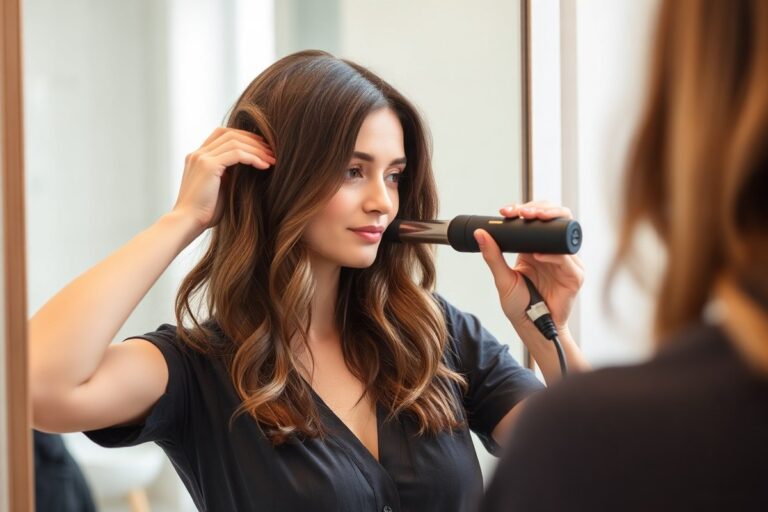
How to Use a Flat Iron: Simple Steps for Safe, Smooth Hair Results
Learning how to use a flat iron means getting smooth, straight hair without damage. Start with dry hair, then pick a flat iron with plates that fit your hair length. Set the temperature to about 365 degrees to avoid burning your strands.
Before you start, apply a light heat-protectant serum or oil. This step shields your hair and keeps it shiny. Take small sections of hair for even heat and better results.
To curl your hair, twist the iron 180 degrees away from your face at the spot you want to curl. Move the iron slowly and steadily, then spin it two full turns to set the curl. This method helps your curls last longer and appear more natural.
Key Takeaways
- Always make sure your hair is 100% dry before using a flat iron.
- Choose flat iron plates 1 to 1.5 inches wide for versatile styling.
- Set your flat iron temperature around 365°F for safe styling.
- Apply a light heat-protectant serum or oil before flat ironing.
- Divide hair into small sections for easier, even straightening.
- Twist the flat iron 180 degrees so it points away from your face to form curls.
How to Use a Flat Iron: Step-by-Step Guide

Using a flat iron properly makes your hair smooth without damage. Start by dividing your hair into small sections of about one inch. This method helps you straighten your hair evenly.
It also cuts down on the number of passes. This way, your hair gets better protection.
- Clamp the iron near your roots. Place the flat iron as close to the scalp as possible without burning your skin.
- Slowly pull the iron down. Glide it down the section in one smooth motion to avoid kinks or ridges.
- Repeat if necessary. Run the iron over the same section two to three times for the smoothest result.
- Continue section by section. Work from the bottom layer up, finishing with the top layer of hair.
- Straighten each section upward. Pull the irons toward the ceiling for the top layer for a polished look.
- Don’t hold it too long. Avoid keeping the iron in one spot to prevent heat damage and ridges.
- Mist with heat protectant if needed. Lightly spray your hair for added protection before the final pass.
Flat ironing takes about 20 to 30 minutes. How long depends on your hair’s length and thickness. Small sections with slow, even passes create the best, longest-lasting results.
Mist your hair with heat protectant spray when extra smoothing is needed. Use it between passes for more shine and safety. Avoid flat ironing wet hair, because it can cause serious damage and uneven results.
Choosing the Right Flat Iron for Your Hair Type
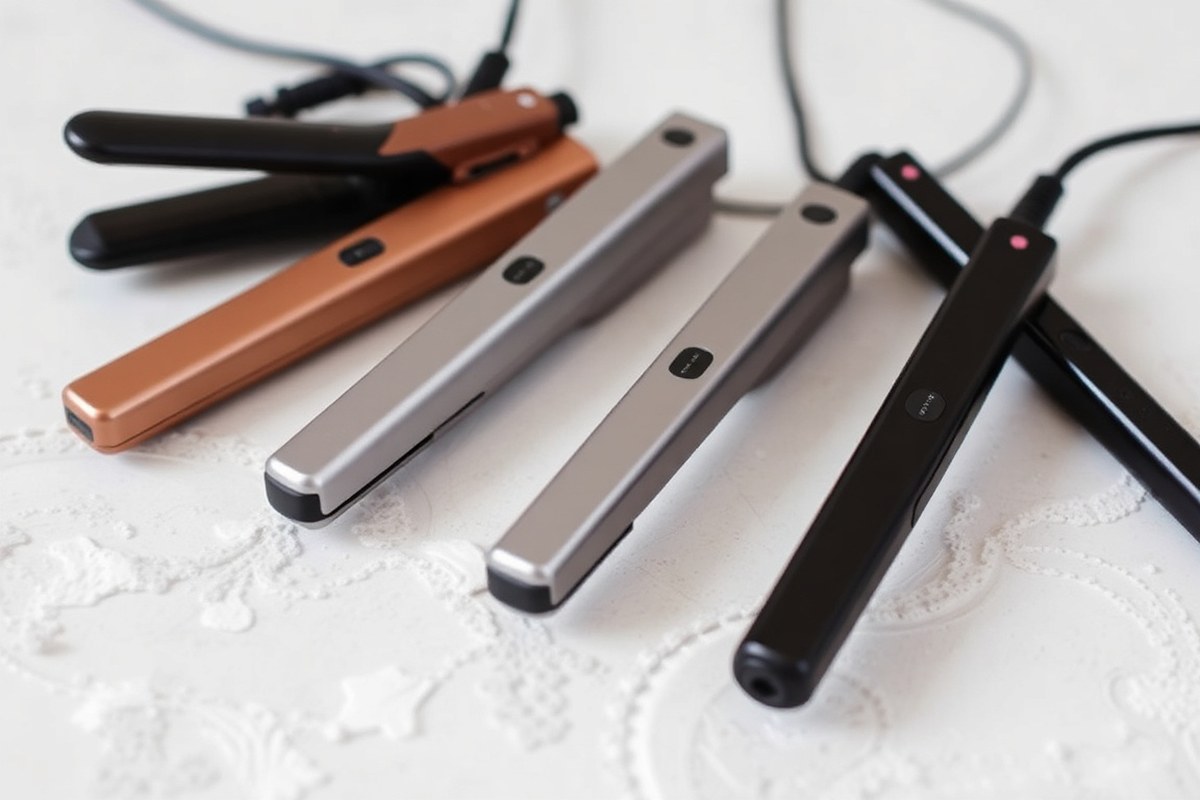
Picking the right flat iron depends on your hair texture and length. Different materials and plate widths work better for certain hair types. Knowing these details helps you avoid damage and get smooth, even results.
Plate Materials: Ceramic vs. Titanium vs. Tourmaline
Ceramic plates heat evenly and gently, making them the best choice for most hair types. They spread heat smoothly and cost less.
But their coating can wear off over time. Ceramic irons suit fine, medium, and color-treated hair well because they reduce hot spots.
Titanium plates heat up quickly and reach high temperatures steadily. They are better for coarse, thick, or hard-to-straighten hair because of their strong heat.
Titanium irons usually cost more and are less forgiving on fragile or fine hair. So use lower heat settings with them.
Tourmaline plates emit negative ions, which help reduce frizz and static. These irons usually combine tourmaline with ceramic to offer smooth, shiny results. People with frizzy or curly hair benefit from tourmaline for added smoothness.
Choosing the Right Plate Width for Short, Medium, and Long Hair
Plate width changes how much hair you can straighten at once. It also affects how easy the iron is to handle.
For short hair, plates that are 0.5 to 1 inch wide give better precision and control. Narrow plates can reach roots and edges without missing spots.
Medium-length hair works well with plates 1 to 1.5 inches wide. This size handles most hair lengths, balancing speed and accuracy. It’s a good all-around option if your hair is about shoulder length.
Long or thick hair needs wider plates, often 2 inches or more. Larger plates cover more hair per pass, which speeds up styling time. You’ll spend less time ironing, reducing heat exposure and potential damage.
| Hair Length | Plate Width | Benefit |
|---|---|---|
| Short (chin-length or shorter) | 0.5 to 1 inch | Precision and easy root access |
| Medium (shoulder-length) | 1 to 1.5 inches | Balance of speed and control |
| Long (past shoulders) | 2 inches or wider | Quick coverage, less time styling |
Picking the right width reduces styling time and keeps your hair smooth. Using too wide a plate on short hair can cause tangling or uneven heat.
Narrow plates on long hair mean more time with the iron. This increases the risk of damage.
Signs It’s Time to Replace Your Flat Iron
Flat irons don’t last forever and need replacing to protect your hair. Replace your iron if the plates are chipped, scratched, or snag your hair. Damaged plates cause uneven heat and hair breakage.
Also swap your flat iron if it overheats or the temperature controls stop working. Overheating can burn your hair and damage the tool. Faulty controls make it hard to use the right heat, increasing damage risk.
Daily use flat irons usually last 2 to 5 years, depending on quality and care. Spending $30 to $100 on a new iron can prevent damage. It also helps you get better results.
Warning: Never iron damp hair unless your flat iron is made for wet-to-dry use. It seriously damages hair.
Setting the Correct Temperature for Your Hair
The right flat iron temperature depends on your hair’s thickness, texture, and health. For fine or color-treated hair, keep the heat between 280 and 320 degrees Fahrenheit.
Medium-thick hair does well at 350 to 365 degrees. Coarse or thick hair may need 375 to 400 degrees to straighten properly.
Don’t set the temperature too high or you risk heat damage. Flat ironing over 400 degrees can burn your strands. This is worse if your hair is fragile or damaged.
Start at a lower setting first. Increase heat only if hair doesn’t straighten after a few passes.
Use a ceramic flat iron for fine or fragile hair. It spreads heat evenly to reduce damage.
Flat ironing dry hair helps prevent damage and improves results. Don’t flat iron hair that feels wet or damp because the heat will cause breakage. Before styling, blow-dry your hair completely, pointing the dryer downward to smooth the strands.
Spray heat protectant on your hair before ironing. Rinse out conditioners well to avoid burning.
When flat ironing, glide the iron slowly but steadily down the hair length. Moving the flat iron too slowly causes kinks or crimps. Moving too fast won’t straighten well.
Ironing the same section more than twice means heat is too low. Or your hair isn’t smooth enough.
Turn heat down immediately if you smell burning. Check your hair to see if it’s damaged. Use a heat-safe comb while ironing.
It detangles hair and keeps pressure even for smoothness. After ironing, apply a light hair serum. This keeps hair shiny and shields against humidity.
Preparing Your Hair Before Flat Ironing
Start with clean hair before using a flat iron. Make sure your hair is dry all the way through. Damp hair causes uneven heat and damage.
Wash your hair with a gentle shampoo to remove oils. This helps stop heat from spreading unevenly. It also clears buildup.
After washing, use a microfiber towel to gently dry your hair. Avoid rubbing, which roughs up the hair cuticle. Pat hair softly instead.
Never flat iron wet hair. Don’t use a flat iron on wet or damp hair. Heat can burn the hair cuticle and cause damage.
Hair needs to be dry first. Blow dry your hair fully before flat ironing. Use a low heat setting to avoid cooking the strands.
This keeps your hair safer. Using a heat protectant spray before blow drying adds a shield against heat damage.
After drying, detangle your hair with a wide-tooth comb or brush. This step ensures smooth sections that the flat iron can glide through easily.
Knots or tangles can snag or break when heated by a flat iron. Straighten small sections to prevent pulling or damage.
- Use a gentle shampoo and wash your hair thoroughly.
- Towel dry gently with a microfiber towel to reduce frizz.
- Apply a heat protectant spray or serum on dry hair.
- Blow dry completely on low heat before flat ironing.
- Detangle with a wide-tooth comb or brush.
- For added shine, use a light leave-in oil or serum post-drying.
Choose a heat protectant spray or serum for use up to 450°F. Apply evenly on dry hair, avoiding clumps. This reduces frizz and protects strands.
Finish blow drying with a light leave-in oil or serum. Use one made for heat styling to smooth your hair. It adds shine and control.
Avoid applying heavy products before ironing, which can burn under the heat. Keeping your hair light and well-protected prepares it for straightening while preserving its health and shine.
How to Section Hair for Effective Flat Ironing
Start by dividing your hair into four main sections. This helps you manage the hair better and makes sure you don’t miss spots. Then take smaller subsections to get even heat distribution from the flat iron.
Using Clips to Create Four Main Sections
First, comb your hair until it’s smooth and knot-free. Divide your hair horizontally from ear to ear to form two sections: top and bottom.
Clip up the top section into two parts, left and right. So you have four sections total. Use strong clips that hold hair firmly without slipping.
- Comb hair well.
- Separate hair from ear to ear into top and bottom.
- Clip the bottom section away.
- Divide the top section into left and right parts.
- Clip each top part separately.
- Release one section at a time for styling.
Keep all clipped sections tight but not too tight. Loose clips let hair slip and cause missed spots.
Taking Small Sub-Sections for Thorough Straightening
Work within each clip section by taking small subsections around ¼ to ½ inch wide. This size fits well under your flat iron’s plates for even heating.
Smaller sections let the flat iron reach hair thoroughly. If sections are too wide, you risk missing some strands or uneven straightening.
Adjusting Section Size by Hair Thickness and Length
Thicker or longer hair needs smaller subsections for heat to reach all strands. Fine or shorter hair allows slightly bigger sections.
Never take a section wider than the iron’s plate length. This protects your hair and helps the iron glide smoothly without snagging.
Safely Curling Hair with a Flat Iron
You can use one flat iron to both straighten and curl your hair. The key is adjusting your technique and heat settings for curling. This way, you protect your hair while getting the look you want.
Basic Curl Technique with 180-degree Rotation
Start by setting your flat iron to a moderate heat, usually between 300°F and 350°F. This range works well for most hair types without causing damage. Section your hair into manageable parts for easy curling. Follow these steps to create soft curls with a 180-degree rotation:
- Grab a 1- to 2-inch section of hair.
- Clamp the flat iron near the roots.
- Twist the iron 180 degrees away from your face.
- Slowly glide the iron down the hair shaft.
- Release the hair and let the curl cool.
Keep your movements slow and steady for even curls. You’ll notice hair forming a gentle wave with this method.
Creating Tighter Curls with Full 360-degree Rotation
Tighter curls need a full 360-degree rotation of the flat iron. Heat should be around 350°F to 375°F for curls to hold better. Start the curl close to your scalp but avoid burning yourself.
Use this script for tighter curls:
- Hold a 1-inch hair section firmly near the root.
- Clamp the iron at the base of your hair strand.
- Rotate the flat iron a full 360 degrees away from your head.
- Pull the iron horizontally away along the strand’s length.
- Let the curl cool without touching it.
Waiting for curls to cool helps locks set better. Too much heat or speed causes frizz or loose curls.
Finishing and Holding Curls with Product
After curling, use a lightweight hairspray or curl-improving product. This keeps curls defined and lasts longer through the day. Avoid heavy products that weigh hair down or make it sticky.
Spray from a 6- to 8-inch distance for even coverage. A light mist helps hold the shape without buildup.
Flat irons with ionic plates work well on damaged hair. They reduce frizz during curling and straightening. Use heat protectant sprays before styling to further protect hair from damage.
Common Mistakes When Flat Ironing and How to Fix Them
One common mistake is overheating your hair by setting the flat iron too high. Choose a lower temperature for thin or damaged hair, around 300°F to 350°F. Thick or coarse hair may handle 375°F to 400°F. But never go above 450°F to avoid damage.
Another error is using sections that are too large to straighten properly. When the section is too big, the iron won’t heat all strands evenly. Smaller sections, about 1-inch wide, let heat reach every hair strand for smooth results.
Holding the flat iron too long on one spot burns your hair and scalp. Keep the iron moving in fluid motions. Place it close to the scalp without touching to avoid burns, then slowly glide down.
- Use 1-inch sections of hair for even straightening.
- Set the flat iron temperature according to your hair type.
- Move the flat iron steadily; don’t pause on one spot.
- Limit to one or two passes per section to minimize damage.
- Keep your fingers at least an inch away from the plates.
- Apply heat protectant spray before straightening.
- Choose a flat iron with adjustable temperature settings.
Running the iron over the same section more than twice can cause heat stress. Typically, one pass is enough if you use appropriate heat and section sizes. You can go over the section twice.
Move quickly and gently. That avoids frizz and breakage.
Avoid touching the hot plates to keep safe. Always watch where your fingers are.
Use the flat iron in a well-lit area. Consider using gloves designed to resist heat if you often straighten hair.
Post-Flat Iron Care to Maintain Smooth, Healthy Hair
After flat ironing, apply a lightweight serum or oil to keep hair smooth. Look for products with argan oil, Moroccan oil, or coconut oil. These help lock in moisture.
They also reduce frizz. Use just a few drops on your palms.
Then run your fingers through the ends and mid-lengths. Avoid the roots to prevent greasiness.
A wide-toothed comb works best after applying serum to detangle hair gently. This prevents breakage and keeps strands aligned for that sleek look. Avoid brushing hair vigorously because that can cause static and undo the smooth finish.
To fight frizz, lightly mist your hair with a cool water spray once you’re done styling. Cool sprays close the hair cuticle, sealing moisture and adding shine. Don’t oversaturate; a quick spritz is enough to help your style last longer.
Avoid humidity as much as you can. Moisture in the air makes hair puff up. It also causes your hair to curl back.
Wearing a loose silk scarf or bonnet in humid weather protects your style while you’re out. At home, run a dehumidifier on high-humidity days to keep the air dry.
Using silicone-based finishing sprays can lock in your flat iron style throughout the day. These sprays form a protective layer, guarding against humidity and static. Spray lightly from a distance of 8 to 10 inches to avoid weighing your hair down.
Frequent flat ironing can dry or damage your hair. So deep conditioning once a week is good. Pick a mask with nourishing oils like Obliphica Berry or argan oil.
These oils support hair strength. They also help soften your hair. Leave the mask on for 10 to 15 minutes then rinse well to restore moisture.
Avoid flat ironing damp hair; it causes frizz and damages hair structure.
Combining these aftercare steps keeps your strands smooth and healthy with regular styling. Practicing gentle handling and sealing moisture helps you enjoy shiny, straight hair till your next wash.
Step-by-Step Action Plan to Master Flat Ironing
Follow these simple steps to safely use your flat iron and get smooth results every time.
- Before you start: Pick a flat iron made for your hair type. Set the temperature to fit your hair’s needs. Adjust carefully to avoid damage. Test a small section to make sure it’s not too hot.
- Day 1: Wash and dry your hair fully, then apply a heat protectant product evenly. Your hair should feel dry and smooth before styling.
- Day 1: Section your hair into small, manageable parts using clips. This helps you style each part evenly without missing spots.
- Day 1: Slowly glide the flat iron over each section without stopping or pressing too hard. Check that each strand looks sleek and straight.
- Day 1: To curl, twist the flat iron gently as you move it down the section. Your curls should hold a smooth, natural shape without frizz.
- After styling: Let your hair cool completely before touching it. This sets the style and minimizes shape loss.
- Daily: Use a light serum or smoothing spray to maintain shine and reduce flyaways. Your hair should feel soft, not greasy.
- Weekly: Apply a deep conditioning mask to repair any heat damage and keep hair healthy. Notice if your hair feels stronger and less dry over time.
Frequently Asked Questions
Should You Flat Iron Wet or Dry Hair?
You should always flat iron dry hair to avoid damage. Ironing wet hair can cause breakage and damage your strands.
Always dry your hair completely before using a flat iron. This helps protect your hair and prevents harm.
What Should I Put on My Hair Before I Flat Iron It?
Apply a heat protectant spray before you flat iron your hair. This helps shield your hair from heat damage and keeps it smoother and healthier after styling.
How to Straighten Your Hair for Beginners?
Start with dry, clean hair and apply heat protectant. Section your hair into small parts before straightening.
Slowly run the flat iron from root to tip. Avoid holding it in one spot for too long.
How Long to Wait for a Flat Iron to Heat Up?
Wait about 30 seconds to 1 minute for your flat iron to reach the right temperature. Check the maximum temperature recommended for your hair type to avoid damage.
Can I Use a Flat Iron Every Day Without Ruining My Hair?
Using a flat iron daily can damage your hair over time. Limit heat styling and use protective products to keep your hair healthy.
What Temperature Is Too Hot for a Flat Iron on Fine Hair?
For fine hair, avoid temperatures above 300°F to prevent damage. Lower heat settings protect fragile strands while still straightening effectively.
Before You Go
Using your flat iron carefully can bring smooth, stylish results without damage. Start each session with clean, dry hair and protect it well. Try your first styled look today, and watch your confidence grow.