How to Cut Men’s Hair with Shears: Complete Steps and Expert Tips
How to cut men’s hair with shears starts with knowing the right hair length. Shears work best on hair at least 4 inches (10.6 cm) long. For shorter cuts, clippers are a better choice because scissors won’t cut close enough.
Cutting damp hair gives the best results and feels less fragile than wet hair. Aim for hair that’s about 50 to 70 percent dry before you start. This way, the hair cuts evenly without slipping or stretching too much.
Section the hair into seven areas before you cut: top, sides, back, sideburns, and fringe. Moving the comb at a steady angle helps you create an even taper. Avoid rushing your first cuts; your skills will improve as you go.
Key Takeaways
- Use 6-inch hair shears for precise cutting and texturizing.
- Start with clean, damp hair to get predictable results.
- Divide hair into sections for better control and even trimming.
- Cut slowly and check length frequently to avoid cutting too much.
- Angle the comb consistently between 45 to 90 degrees to shape hair.
- Wait until hair is at least 3 inches long before cutting with shears.
How to Cut Men’s Hair with Shears Step-By-Step
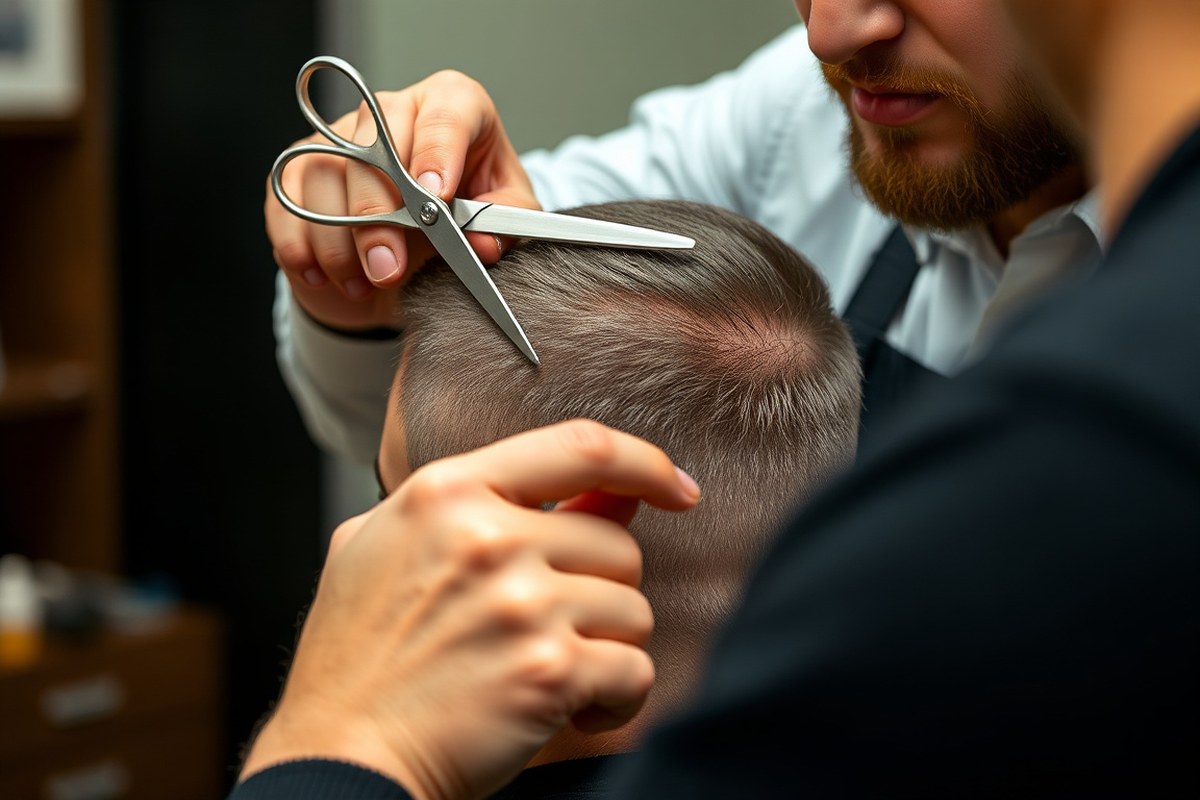
Cutting men’s hair with shears starts by preparing the hair into clear sections. You create a guide length first, then use it to trim the sides, back, and top. Finishing touches include tidying the neckline and sideburns for a clean look.
Sectioning the Hair for Precision Cuts
Divide the hair into seven parts to stay organized. These are top, left side, right side, back, left sideburn, right sideburn, and fringe.
Sectioning helps you work evenly and avoid missing spots. Use clips or hair ties to hold each section apart.
Start from the front and go back. This order helps you see the progress and use the cut hair as your guide. Comb each section smooth before cutting to remove tangles and check length.
Establishing a Guide Length and Cutting Technique
Choose your starting length carefully. Cut this length to keep the haircut consistent.
Start at the back or top where you want the longest hair. Cut a small initial section from there.
Hold the hair between your fingers and cut with the shears just above them. Point cutting works well here: hold the scissors vertically and snip tips to soften the ends. This avoids a blunt, harsh look.
- Comb the chosen starting section straight up.
- Pinch a small amount of hair between your fingers.
- Cut the hair just above your fingers evenly.
- Use this trimmed hair as a length guide for other sections.
- Repeat for each subsequent section, matching the guide length.
Cutting the Sides, Back, and Top with Shears
Work from front to back, trimming each section by comparing it to your guide length. On the sides and back, keep the hair shorter than the top.
Avoid cutting too close to the skin. This keeps a neat, natural fullness.
Use the hair you just cut as a guide for the next section. Pinch both and align them before cutting.
It helps you maintain an even, flowing length. Always comb between cuts to keep hair smooth and controlled.
Finishing the Neckline and Sideburns
Clean the neckline with small snips to follow your natural hairline. Keep the cuts short but neat, avoiding uneven or jagged edges. Use a handheld mirror to see the back clearly.
Trim the sideburns last to frame the face well. The length depends on the style you want. Use your scissors carefully and make small cuts to avoid mistakes.
Essential Tools and Setup for Cutting Men’s Hair with Shears

You need the right tools and a good setup to cut men’s hair well at home. Use sharp hair-cutting shears, a fine-tooth comb, a mirror, and plenty of light. Set up where you can sit or stand comfortably for 30 to 45 minutes without distractions.
Essential Tools for Cutting Men’s Hair
The main tool is a pair of hair-cutting shears made just for hair. Regular scissors are too dull and can damage hair. Good hair scissors cost between $40 and $200, depending on brand and quality.
You’ll also need a fine-tooth comb to hold hair in place. Clippers with guards help if the hair is shorter than 4 inches. A handheld mirror is great for checking hard-to-see spots.
Choosing a Comfortable Workspace
Pick a well-lit spot near a big window or use a bright lamp. Natural light or white LED bulbs show hair color and cut better. Set a chair at a height that feels comfortable for you.
Avoid bending or straining your back while sitting. This helps keep you relaxed and pain-free.
Keep a towel or cape close to catch cut hair. This stops hair from falling on clothes and floors.
It helps make cleanup easier. A clean space helps you focus and prevents slipping on hair clippings.
Organizing Your Tools and Accessories
Have your shears, comb, clippers, and mirrors within arm’s reach. Use a small table or tray to hold everything neatly. This prevents interruptions from looking for tools mid-cut.
Keep a spray bottle handy to lightly mist hair if it feels too dry. Avoid heavy sprays; just enough to make combing easier without soaking the hair.
Checklist for Your Home Haircut Setup
- Sharp hair-cutting shears designed specifically for hair
- Fine-tooth comb for precise sectioning
- Hair clippers with multiple guards (optional for shorter hair)
- Handheld mirror for seeing back and sides
- Bright, natural or daylight LED lighting
- Comfortable chair at the right height
- Towel or haircut cape to catch hair clippings
Having all these ready makes the haircut smoother and less stressful. It also cuts down on mistakes caused by poor lighting or awkward positions.
Common Setup Mistakes to Avoid
Cutting hair in dim light leads to uneven or missed spots. Using dull scissors makes hair look ragged and causes split ends. Sitting too close to a sink or kitchen table often means bad posture.
Use the proper tools and find a bright, roomy space to cut. Avoid rushing, these parts take time but improve your results dramatically.
Sharp scissors, good lighting, and a tidy sitting area make a haircut easier and cleaner.
Wet, Damp, or Dry: Choosing the Best Hair Condition to Cut
Cutting hair damp offers the best control overall. Damp hair is about 50-70% dry and feels less fragile than soaking wet hair. Wet hair is more delicate and stretches, so you might cut more than intended.
Dry hair shows the true shape. But it can be harder to control and judge length.
Wet hair lays flat and looks longer, making it easier for trimming sharp edges and fades. Dry hair shrinks by 10-15%.
So cutting dry means you must cut carefully to avoid too short a result. Checking the cut dry after the initial damp cut helps catch mistakes hidden when wet.
| Hair Condition | Control | Ease of Cutting | Length Accuracy | Best Use |
|---|---|---|---|---|
| Wet | Medium | Easy to cut perimeter | Less accurate, hair appears longer | Short, clean fades and edges |
| Damp | High | Good control | More accurate, less fragile | General cutting for even results |
| Dry | Lower | Harder to cut | Most accurate, reveals natural shape | Checking and correcting mistakes |
Start by wetting the hair to cut the perimeter if aiming for a fade. Then towel-dry to keep hair damp for most scissor work. Leave some moisture to avoid fragility but give you control over each snip.
After scissor cutting damp hair, dry and style it naturally. This final step shows how the hair falls and shrinks. You can spot uneven spots or longer areas that need trimming before finishing.
How to Blend and Taper Men’s Hair Using Only Shears
Blending and tapering men’s hair with only shears takes attention to angles and small, careful cuts. Hold the scissors at a 45-degree angle to gently remove weight and create smooth transitions. Use your comb to lift the hair.
Guide it to blend different lengths. This works well on the sides and back.
Preparing the Hair for Blending
Start with clean, damp hair for better control and accuracy. Comb the hair down and identify where the hard line between lengths appears. Lift hair sections with your comb.
Check where the lengths change. See where blending is needed.
Trim any stray hairs sticking out before starting the blend. This helps avoid jagged edges and uneven patches. Divide hair into small sections.
This helps you focus on one area. Work carefully to blend each part.
Scissor-Over-Comb Technique for Even Tapering
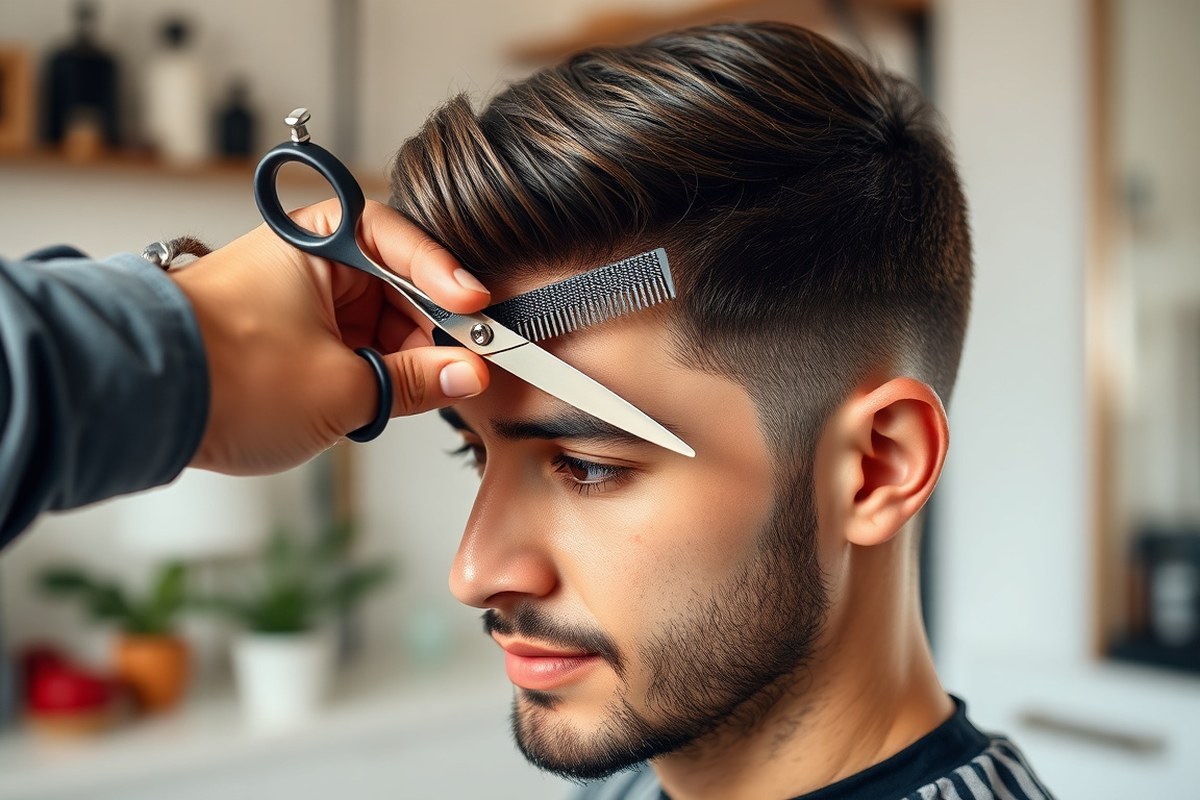
Use your comb to lift the hair, then trim the lengths that poke above it. Hold scissors at a 45-degree angle to the hair and comb. This angle removes bulk and softens the edges without making a harsh line.
Cut small amounts at a time. Move scissors and comb upward slowly. Start at the shortest hair going up.
Keep your scissor blades open slightly and snip gently for a natural fade. This method helps taper without clippers and keeps the transition smooth.
- Comb the hair upward where you want the taper.
- Hold scissors at about 45 degrees to the comb.
- Cut the hair sticking past the comb’s edge in small snips.
- Move the comb upward in increments to blend lengths gradually.
- Rotate the scissors while cutting to follow the head’s shape.
- Check the taper evenly on both sides, adjusting your angles.
- Repeat until the harsh lines disappear and the fade looks natural.
Checking and Refining the Blend
Step back often and examine the haircut in natural light. Comb the hair in different directions to spot uneven spots and hard edges. Trim gently any rough spots.
Use the same 45-degree angle method. This smooths out the blend nicely.
Use your fingers to lift the hair to feel for any lumps or short spots. Trim carefully without cutting too much in one go. Take breaks and compare both sides frequently to keep the taper balanced.
Common Mistakes Cutting Men’s Hair with Shears and How to Fix Them
Uneven cuts happen when you grab random chunks of hair. You cut without checking how they line up. This causes uneven length throughout the hair.
This makes the haircut look patchy or unbalanced. To fix uneven cuts, comb the hair smooth first.
Cut little by little and keep checking your work. Use a mirror or handheld mirror behind the head.
Overcutting happens when you cut away too much hair in one spot. This often happens trying to fix a small mistake. It results in noticeable short patches.
That usually leaves a hole or a thin spot. Stop cutting immediately when you spot a spot that looks too short. Trim only a little from the surrounding hair to fix overcutting.
Avoid cutting more from the already short spot. This evens out the haircut better.
Rough lines appear when you cut straight across without softening, especially on layered or tapered areas. This looks harsh and unnatural. Use point cutting to fix lines or blunt ends.
Hold your shears vertically. Snip small, controlled cuts into the hair tips. It breaks up the bluntness and creates a softer finish.
- Cut hair in small sections to control length precisely.
- Use mirrors to check the back and both sides while cutting.
- Comb through hair before every cut to spot uneven strands.
- Point cut ends to soften harsh lines and avoid blunt edges.
- Use steady hands and avoid rushing to reduce overcutting risk.
- Pause cutting if any spot looks too short. Blend nearby hair to fix the difference. Don’t cut the short spot more.
Check your work by pulling small sections of hair between your fingers after each pass. The hair should feel the same length when you slide your fingers along. Blend when one part feels shorter than the rest.
Use point cutting or trim nearby hairs. Avoid cutting the already short part again. This keeps the style natural.
Keep your scissors sharp and clean. Dull scissors pull hair and cause jagged cuts.
Take your time and recheck your work often. Cutting men’s hair with shears takes practice and patience to get right. Keep sessions shorter at first, about 45 to 60 minutes, and trim small amounts.
Practice helps you spot uneven areas early on. You can fix small mistakes before they grow. This leads to cleaner, sharper haircuts.
How Hair Type and Age Affect Cutting Techniques with Shears
Hair texture changes how you cut with shears. Straight hair lies flat and is easier to manage. You can cut it evenly without worrying about shrinkage.
Wavy hair adds natural volume and texture, so cut slightly longer to keep softness. Pinch small sections between your fingers and snip to keep natural flow.
Curly hair shrinks up to 4 inches when dry. So cut less while damp to avoid cutting too short.
Thicker or coiled hair needs more care but standard shears may struggle with heavy volume. Use sharp shears and small snips to avoid tearing. Cutting damp hair helps control curl bounce and thickness.
Keep in mind professional shears handle thick hair better. So you may need more frequent trims when cutting at home. Also, avoid cutting too much at once because curls appear shorter once dry.
Age affects hair by making it thinner or changing texture with gray hairs. Thin or aging hair breaks more easily, so use gentle cutting motions. Avoid slicing sharply through thin patches to prevent damage.
When cutting graying hair, focus on blending rather than harsh lines. Keep hair length a bit longer for better coverage and a fuller look.
For thinning spots around the crown or temples, cut less tightly. Let the hair fall naturally and avoid over-layering.
For all hair types, check your work often by having the person change head positions. Have them look down, then straight ahead to see length consistency. Use an ear comb to clean edges or an inverted clipper technique for sharp necklines.
This sharp border makes the haircut look polished. It works well for men with fine hair.
Older men with thinning hair see good results too. Tailor your approach based on hair feel and growth patterns rather than cutting by eye alone.
Cutting men’s hair with shears takes patience and attention to hair type and age. Work slowly and check the length often. Remember, you can cut more later.
But you can’t add hair back once cut. Adjust snip size and finger positioning based on curl tightness and thickness. This keeps cuts looking natural and avoids surprises when hair dries and shrinks.
Finishing Touches: Styling and Maintaining Your Haircut After Shears Cutting
Right after cutting, you want to style the hair to reveal the final shape. Blow dry the hair using a medium heat setting and a comb. This helps show the haircut’s texture and how it sits naturally on the head.
Use your fingers or a light styling product like a matte paste to arrange hair. Avoid heavy gels that can weigh the hair down or create unnatural shine. For a natural look, run your fingers through the hair to see the flow and balance.
Maintaining your haircut between trims keeps the shape fresh and clean. Comb the hair daily to prevent tangles and spot any uneven growth. A quick trim every three to four weeks helps control length and remove split ends.
When trimming at home, use scissors only on dry hair to see the real length. Hold scissors vertically and snip small amounts from the ends for subtle shaping. This technique keeps the cut natural and avoids blunt, harsh lines.
Longer hair needs more care to stay styled well. Apply a leave-in conditioner or light oil to prevent dryness.
You don’t need product daily. But use it two or three times a week if your hair feels rough or frizzy.
For guys with thicker hair, stripping a little bulk can help the style last longer. Point cutting with the tips of your scissors can thin the hair slightly without losing length. This method makes hair look controlled and natural instead of heavy.
Adjust your maintenance depending on your lifestyle and hair growth rate. Men who sweat a lot or have fast-growing hair might trim every two to three weeks.
If you want a more relaxed, growing-out look, extend your trims to six weeks. But expect less sharp edges.
When to Call a Professional Instead of Cutting with Shears Yourself
Cutting your own hair with shears can save time and money for simple trims. Your hairstyle, like a basic short cut, can be done by you. Just clean up your neckline carefully between barber visits to keep things neat.
Skip cutting your hair if you want a complex fade, sharp lineups, or special designs. These styles need precise blending and shaping that require professional skill. Barbers also know how to start the cut by consulting you and sectioning the hair properly.
Hair or scalp problems like uneven growth need a pro. These issues include scalp irritation or hair loss. Pros know how to avoid worsening cuts or irritating skin.
They handle these problems with care. Trying to fix these can backfire, so trust a barber who understands these conditions.
The easiest rule: trim your own hair only for small tidy cuts. Avoid fancy fades when you cut yourself. For a flat top, fade, sharp edge, or special style, call a pro.
They usually charge $20 to $50 for these, depending on the style and location. But save time and look better.
Leave fades and precise edges to barbers. Amateur tries often waste time and ruin the style.
Step-by-Step Action Plan for Cutting Men’s Hair with Shears
Follow these steps to get a clean, even haircut with your shears at home. Check each result to stay on track.
- Before you start: Gather your shears, comb, spray bottle, and a cape or towel. Make sure the hair is damp for precise cutting.
- First pass: Comb the hair straight and cut the bulk evenly to the desired length. Stop if the length looks balanced and even all around.
- Second pass: Cut vertical sections to remove weight and begin shaping. The hair should feel lighter and blend more naturally.
- Blending and tapering phase: Use shears to soften lines around the sides and neckline. Check for smooth transitions without harsh edges.
- Detail work: Trim around the ears, neckline, and sideburns carefully. The edges should be neat and symmetrical.
- Styling phase: Dry the hair completely and style as desired. See if the hair holds shape and the cut looks polished.
- Final check: Inspect the haircut in natural light and fix any uneven spots. You want a clean, consistent finish everywhere.
- Aftercare: Clean your shears and store them safely to keep them sharp for the next cut.
Frequently Asked Questions
How to Cut a Man’s Hair with Scissors for Beginners?
Start by working with damp hair to see the natural fall. Hold the hair between your fingers and cut small sections at a time. Take your time and check your progress using a comb and mirror often.
What Is the 3:2:1 Rule for Haircuts?
The 3:2:1 rule helps balance length by dividing hair into sections. It guides you to keep the top longer. Taper the sides.
Leave the back the shortest. This method creates a natural, even look for men’s haircuts.
Is It Best to Cut a Man’s Hair Wet or Dry?
Cutting hair when it’s damp, about 50-70% dry, works best for precision. Wet hair feels fragile and stretches, so it can lead to uneven cuts. Dry hair shows the true length, so always recheck after cutting damp sections.
How Should a 60 Year Old Man Cut His Hair?
Older men often prefer shorter, low-maintenance styles that suit thinning hair. Use shears to keep the sides neat and blend with a soft taper. Avoid cutting hair too short on top to keep a natural volume.
How to Cut Men’s Hair with Shears?
Use shears on hair at least 4 inches long for best results. Comb sections, hold between fingers, and cut small amounts at a time. Check the cut dry, as hair length appears shorter when dry.
Can I Use Regular Scissors to Cut Men’s Hair at Home?
Regular scissors don’t offer the grip or sharpness needed for clean cuts. Hair cutting shears are designed to cut precisely without damaging hair. Using the right tool helps avoid uneven or rough hair edges.
The Bottom Line
Cutting men’s hair at home with shears can give you a sharp, professional look. Start small and practice with these clear steps today. That first haircut will build your confidence for the next one.