

Can You Straighten Wet Hair? What Actually Works and How to Do It Safely
Can you straighten wet hair? The short answer is no. Straightening wet hair with a regular flat iron causes serious damage.
Heat applied to wet hair traps water inside the strands, which turns to steam. This steam expands and breaks the hair’s cuticle, leading to split ends and breakage.
You should always dry your hair completely before using a flat iron. Aim for at least 90 to 100 percent dry to avoid damage. Using a blow dryer first helps remove most moisture and smooths the hair, cutting down on heat exposure during straightening.
If you want to straighten damp hair safely, use tools made for wet-to-dry styling or keep the temperature very low. Starting with mostly dry hair produces straighter results and less stress on your strands. Applying heat gradually and in small sections also helps prevent unnecessary damage.
Key Takeaways
- Do not apply a standard flat iron to wet hair; it damages strands.
- Hair should be at least 90% dry before flat ironing for safety.
- Use a blow dryer to get hair about 80% dry before styling.
- Avoid temperatures above 140°C on damp hair to reduce heat damage.
- Tools made for wet-to-dry straightening can be used carefully.
- Start with damp hair, not wet, for better styling control.
Can You Straighten Wet Hair Safely?
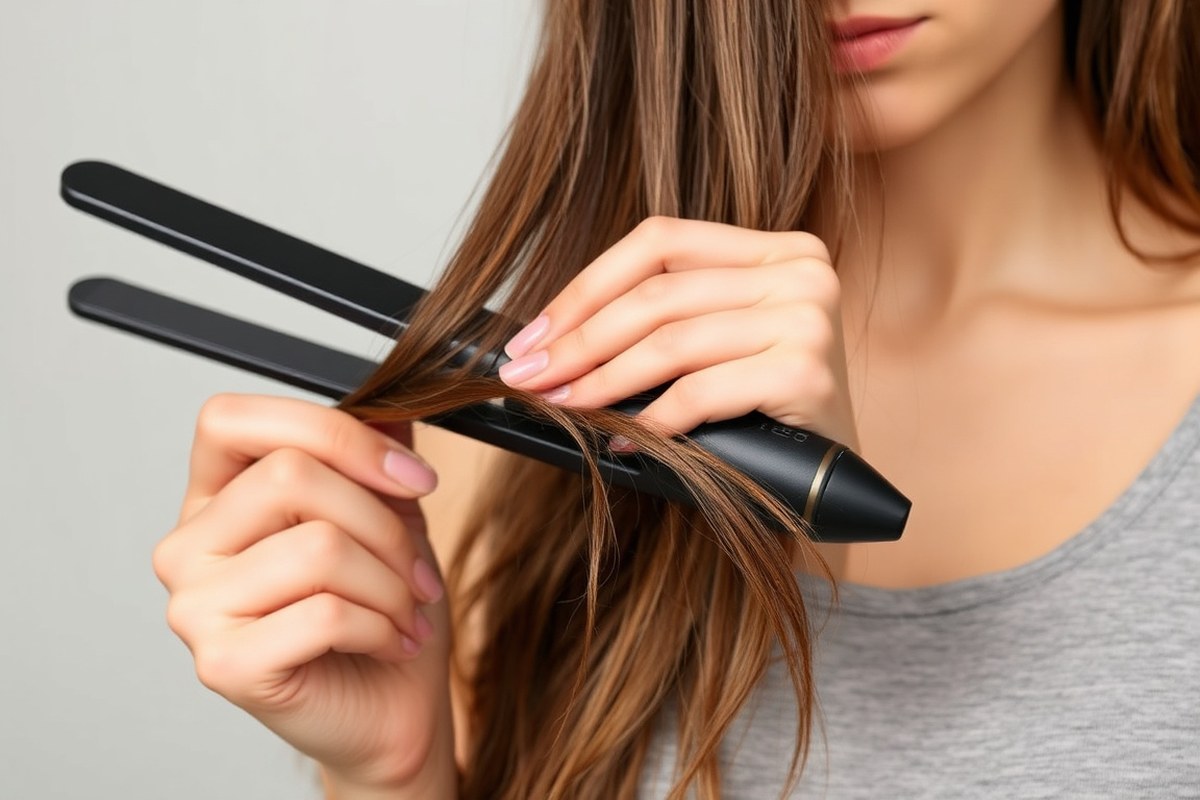
You should avoid straightening hair when it is wet. Wet hair is very fragile and easily damaged by heat. When you use a regular flat iron on wet hair, it steams.
The water inside your hair turns to steam very fast. This can hurt your hair. Steam from wet hair can crack and break the cuticle.
This damage leads to hair breaking and long-term harm. It is best to avoid this.
Heat styling tools get hotter than 300°F (150°C), well above the boiling point of water. That sudden steam can cause the outer layers of hair strands to lift and weaken.
This damage changes the structure of your hair and is often permanent. Experts warn that this damage compounds the more you straighten wet hair.
Some tools are made for damp hair use. They heat up to about 150°F (65°C). This lower heat helps keep your hair safe.
Even then, you should never apply heat to soaking wet hair. Start with towel-dried hair or slightly damp strands. Work in small sections and use slow, gentle passes to avoid damage.
Fine or delicate hair types are especially vulnerable. For them, straightening wet hair is high risk and not recommended even with wet-to-dry tools. Thick or coarse hair may seem tough.
It can still get steam damage from heat. Wet strands face breakage too.
Let your hair dry or mostly dry before heat styling. This helps keep your hair safe from damage. Never use heat on soaking wet hair.
Using a heat protectant spray also helps lower heat damage. Straightening dry hair gives smoother, shinier results.
It avoids steam damage and breakage. Always dry your hair well first.
What Happens to Hair When Straightened Wet?

Straightening wet hair harms it because keratin bonds weaken in water. The heat turns water into steam inside hair strands, causing internal damage. This steam buildup leads to breakage, cuticle burns, and frizziness over time.
Weak Keratin Bonds When Hair Is Wet
Keratin bonds give hair its strength and shape. When hair is wet, water breaks hydrogen bonds in keratin, making strands weaker. This makes hair stretch more but also snap easier when stretched or heated.
Applying heat to wet hair stresses these weakened bonds. The heat breaks keratin bonds faster, causing permanent damage rather than just temporary shape change. That’s why wet hair straightening raises breakage risk.
Steam Formation Damages Hair Internally
Heat from a straightener instantly turns water inside wet hair into steam. This sudden steam build-up creates pressure inside the hair shaft, causing internal cracks or bubbles. This process is sometimes called internal steaming damage.
The damage is similar to boiling water inside a closed container. The pressure can pop the hair cuticle, the protective outer layer. Once the cuticle breaks, hair loses moisture and becomes rough and frizzy.
Hydrogen Bonds and Heat Interaction
Hydrogen bonds hold hair’s shape but break easily with water and heat. Wet hair has already lost some bonds due to water. Adding heat causes those bonds to break violently instead of gently reshaping hair.
This causes the cuticle to burn or lift as heat escapes through steam. You might hear sizzling sounds as water inside pops out fast. Frequent exposure makes hair dry and prone to split ends.
Risks of Using High Temperature on Wet Hair
Flat irons normally reach temperatures between 180 and 230°C (356-446°F). Using these on wet hair instantly vaporizes water and damages hair structure. Soft, smooth hair becomes fragile, brittle, and loses shine.
Repeat straightening wet hair causes long-term damage like discoloration, breakage, and frizziness. Hair may take months to recover fully from this combined heat and moisture trauma.
Always dry hair completely before straightening to avoid damaging steam inside hair strands.
How Hair Type Influences Straightening Risks
Different hair types handle heat and moisture in varied ways. Straightening wet or damp hair raises risks but affects some hair types more. You must adjust your temperature settings and technique based on your hair’s thickness and fragility.
Fine and Delicate Hair Considerations
Fine hair is fragile and more prone to heat damage when straightened wet. Use the lowest temperature setting possible, around 80°C (176°F), if you must style damp hair. Keep sections small and work quickly but gently to avoid breakage.
Apply a strong heat protectant spray every time, especially for fine or damaged hair. Even slight dampness risks weakening strands, so avoid soaking wet. Blow dry first if you can to reduce damage.
Medium and Wavy Hair Guidelines
Medium hair withstands heat better but still should never be straightened soaking wet. For damp hair, use about 120°C (248°F) and do short passes for safe styling. You’ll need a comb to detangle while you go.
Wavy hair may need more time per section to get dry and straight. Don’t rush by increasing heat. Wet spots on thicker sections cause uneven results and possible breakage.
Thick and Coarse Hair Advice
Thick hair resists heat damage better but straightening fully wet strands is risky for all types. Use a temperature near 140°C (284°F) for damp coarse hair and divide it into small sections. Let each dry fully as you go.
This type takes longer to straighten damp, so be patient. Too much heat on wet patches causes steam and weakens hair fiber. You’ll get smoother results by blow drying halfway first.
Here is a table showing temperature guidelines for straightening by hair type. These settings are significantly lower than regular irons to protect damp hair better.
| Hair Type | Recommended Temperature (°C) | Recommended Temperature (°F) | Notes |
|---|---|---|---|
| Fine or Damaged | 80 | 176 | Lowest heat needed; avoid wet straightening altogether |
| Medium or Wavy | 120 | 248 | Moderate heat for damp hair; small sections help |
| Thick or Coarse | 140 | 284 | Higher heat, slow work; must dry hair gradually |
Adjusting the iron temperature by hair type lowers burn risk on damp hair. Don’t exceed these settings when styling wet or even damp hair. Always watch for uneven drying, which leads to damage.
Difference Between Dry, Damp, and Wet Hair for Styling
Hair can hold different levels of moisture. Knowing the exact state matters a lot before straightening. Wet hair usually means water beads are clearly visible, and strands stick together.
Damp hair feels moist but does not drip water. It has no visible pools of water. You often find it this way after towel drying or air drying for a few minutes.
Straightening when your hair isn’t dry enough is risky. Your hair should be completely dry before using a flat iron. Aim for 90 to 100 percent dryness.
This helps protect your hair from damage. Trying to straighten wet or damp hair makes water inside steam.
Steam from heat cracks or breaks your hair cuticles. This damage makes hair brittle and fried over time.
The sweet spot is dry and smooth hair. It may still hold some moisture inside the strands.
Hair that’s too damp is soft, limp, and lets off steam when heated. That steam damages hair fibers, making your style harder to achieve and your hair more vulnerable.
- Feel your hair: no wet strands or dripping water
- Use a blow dryer to fully dry towel-dried hair
- Check strands in natural light for dryness
- Run your fingers down hair; it should feel smooth and dry
- Avoid starting straightening right after a shower
- Wait 15 to 30 minutes for hair to air dry if you skip the dryer
- Use a heat protectant spray once hair feels fully dry
Trying to jump straight to flat ironing wet hair backfires because wet strands heat unevenly. The hair won’t straighten properly, plus the risk of breakage rises sharply.
Sticking to fully dry hair means your straightening will last longer. Your hair stays healthier.
Catching a hot flat iron on wet hair? Turn it off immediately.
Use a hair dryer to finish drying, then return to your styling. This pause protects your hair from the extreme heat that wet hair can’t handle safely.
How to Safely Straighten Damp Hair: Step-by-Step Guide
Straightening damp hair takes care and the right process to avoid damage. Start by drying your hair most of the way, then add heat protectant on dry strands. Use correct temperature settings and section your hair for even heat exposure.
Step 1: Pre-Dry Hair to the Right Level
Blow-dry your hair until it’s about 80% dry. Hair straighteners work best on nearly dry hair, not soaking wet.
Use a medium heat setting on your dryer. Comb your hair with a wide-tooth comb.
This helps reduce tangles while drying. This makes straightening easier and safer because less moisture remains.
Step 2: Apply Heat Protection Evenly
Spray heat protectant evenly over completely dry sections of hair. Hold the spray about 6 inches from your head to spread it without soaking the hair.
Make sure to coat every hair strand well. Focus extra on the ends for protection.
This shields hair from the flat iron’s high heat. Avoid over-saturating because it won’t stop damage if hair is still wet underneath.
Step 3: Section Hair and Select Temperature
Divide your hair into small, manageable sections using clips, about 1-inch wide each. Smaller sections heat more evenly and straighten faster.
Set your flat iron temperature based on hair type. Use 300°F (149°C) for fine or damaged hair. Choose 350°F (177°C) for normal hair.
For thick or coarse hair, select 400°F (204°C). Higher temperatures risk damage without better results.
Step 4: Straighten Slowly and Evenly
Start at the roots and clamp a section tightly. Glide the flat iron slowly down to the ends.
Use one smooth pass for best results. Avoid going over the same spot multiple times.
Repeat for each section, keeping the flat iron moving steadily. This prevents hot spots and helps hair look sleek instead of burnt or dry.
- Blow-dry your hair until 80% dry, combing gently.
- Spray heat protectant evenly on all dry hair sections from 6 inches away.
- Section hair with clips into 1-inch wide parts.
- Set flat iron temperature to 300°F, 400°F depending on hair type.
- Start straightening from the roots, gliding down slowly in one pass.
- Finish all sections using the same method, avoiding repeat passes on the same spot.
Never use a flat iron on soaking wet hair, it causes breakage even with protectant.
Wet-to-Dry Straightening Tools: Do They Really Work?
Wet-to-dry straightening tools use controlled airflow instead of clamping hair between hot plates. These devices blow air at speeds around 11.2 meters per second through open arms. This air dries and straightens your hair as you move the tool along each section.
This design avoids the extreme, direct heat found in traditional flat irons. The hair doesn’t get squeezed between the heated plates. This lowers the chance of burns or steam damage.
However, they still use heat. So you should use them carefully and avoid daily use.
You’ll want these tools when your hair is damp but not dripping wet. Using a regular flat iron on wet hair risks serious damage. You could get breakage or fried ends.
Wet-to-dry stylers cut down your styling time. They cause less harm than traditional irons on wet strands.
Some tools, like the Dyson Airstraight, cost several hundred dollars. They combine drying and smoothing in one step, which is handy if you’re in a rush.
These tools cost more but are safer than standard irons. Regular irons can go above 400°F and hurt hair badly.
Despite being safer, wet-to-dry tools are not damage-free. Overusing any heated device stresses the hair cuticle and can cause dryness or split ends.
Use a heat protectant spray to shield your hair. Keep the tool moving instead of holding it still.
Wet-to-dry stylers are a good alternative when you want faster drying and straightening without heavy damage. Don’t replace your blow dryer and brush completely. Use them when you want faster results on damp hair.
Regular flat irons work better on fully dry hair. They help avoid damage and give a neater style.
Common Straightening Mistakes and How to Fix Them
Straightening hair when it’s still too wet causes damage from steam bubbles inside each strand. These bubbles burst and weaken your hair, causing breakage and frizz. You can dry your hair mostly with a towel first.
Then use a blow dryer before the flat iron. This helps avoid hair damage.
Skipping heat protectant sprays is a common mistake that amps up damage. These sprays coat your hair to lower heat harm and lock in moisture. Apply a pea-sized amount evenly before straightening, especially on damp hair.
Pulling or rushing the straightener down your hair risks snapping strands and rough cuticles. Use small sections of hair, no wider than one inch. Glide the iron slowly.
Make one smooth pass per section. This helps your hair stay smooth and strong.
- Don’t straighten soaking wet hair; towel dry first.
- Use heat protectant sprays before heat styling.
- Work in thin sections, about one inch wide.
- Use medium heat settings, 250°F to 300°F suits most hair types.
- Comb through damp hair before flat ironing to remove tangles.
- Define your part while hair is wet for natural fall.
- Avoid adding extra water or frizz-causing sprays before straightening.
Your hair looks uneven or has rough patches after straightening. This means the heat didn’t spread evenly. Try slower, steady passes with the iron.
Try going over those spots again at a lower heat. Avoid going back and forth too many times on the same section, it increases breakage risk.
Breakage often happens when hair is wrapped too tight in bands or pulled harshly while styling. Use soft fabric bands and wrap them gently but securely. This practice cuts down on stress to your hair and reduces split ends.
Aftercare and Repair for Hair Damaged by Wet Straightening
Split ends and breakage need prompt attention after heat damage. Trim your hair every 6 to 8 weeks to remove those damaged ends. This stops split ends from moving further up and causing more harm.
Deep conditioning treatments help restore moisture to heat-damaged hair. Use a nourishing mask once a week to repair dryness and brittleness. Look for products with ingredients like keratin, argan oil, or shea butter for best results.
Avoid daily heat styling for a while to let your hair recover. Use leave-in conditioners and heat protectants every time you straighten your hair. These help lock in moisture and reduce further damage.
After straightening damage, your hair loses its natural bounce and shine. Keeping it hydrated with regular conditioning prevents frizz and breakage. When your hair feels soft and manageable again, you’ll know the treatments worked.
Cost varies for salon conditioning treatments, roughly $30 to $100 per session, depending on your location. At-home masks range from $10 to $30. The key is sticking to a routine for several weeks and trimming as scheduled.
Don’t skip trims. Even a small split end left untreated can run up the hair shaft and worsen damage.
Your Step-by-Step Action Plan for Straightening Damp Hair Safely
This plan guides you through straightening damp hair while lowering damage risk. Follow each step closely to see healthier results.
- Before you start: Towel dry your hair gently to remove most water. Your hair should feel damp, not dripping wet.
- Right before styling: Apply a heat protectant spray evenly to your hair. It should smell fresh and not feel sticky.
- During straightening: Use a flat iron set between 300°F to 350°F. Check that your hair glides smoothly and stays glossy.
- After straightening: Let your hair cool before touching it. You’ll notice less frizz and it will stay straighter longer.
- Next day: Use a deep conditioner or hair mask to restore moisture. Your hair should feel softer and stronger by this time.
- Weekly: Limit damp straightening to once or twice per week max. Watch how your hair responds, less breakage means you’re right.
Frequently Asked Questions
Is It Possible to Straighten Hair When It’s Slightly Damp?
Yes, damp hair can be straightened safely using a low heat setting. Use a towel to make your hair damp, not wet.
This helps protect hair from damage. It also gives better styling results.
Does Using a Blow Dryer Before Straightening Protect Wet Hair?
Blow drying helps remove moisture from hair before straightening. Blow dry your hair until it’s dry or just slightly damp.
This prevents damage caused by heat on wet hair. Avoid using heat on soaking wet strands.
Are Wet-To-Dry Straighteners Truly Less Damaging Than Regular Flat Irons?
Wet-to-dry straighteners are designed to handle damp hair better than regular flat irons. Some tools use steam and low heat to protect your hair.
Still, using them often can cause damage. Keep an eye on how your hair feels.
Should You Avoid All Heat Styling on Very Fine or Damaged Hair?
Yes, fine or damaged hair is more vulnerable to heat damage. Don’t use heat tools when hair is wet or very damp.
Heat can cause breakage easily. Always spray heat protectant on dry hair before styling.
Can Straightening Wet Hair Cause Color to Fade Faster?
Yes, heat on wet color-treated hair can speed up fading. Always dry hair fully before straightening to help keep color vibrant longer.
Is Straightening Wet Hair More Harmful If Done Frequently?
Yes, frequent straightening of wet hair increases risk of damage and breakage. Let hair dry first to avoid weakening strands and split ends.
Wrapping Up
Straightening damp hair can work if you follow safe steps carefully. Start by drying hair until it’s just damp and always use heat protectant. Try these tips next time and see how your hair improves.


