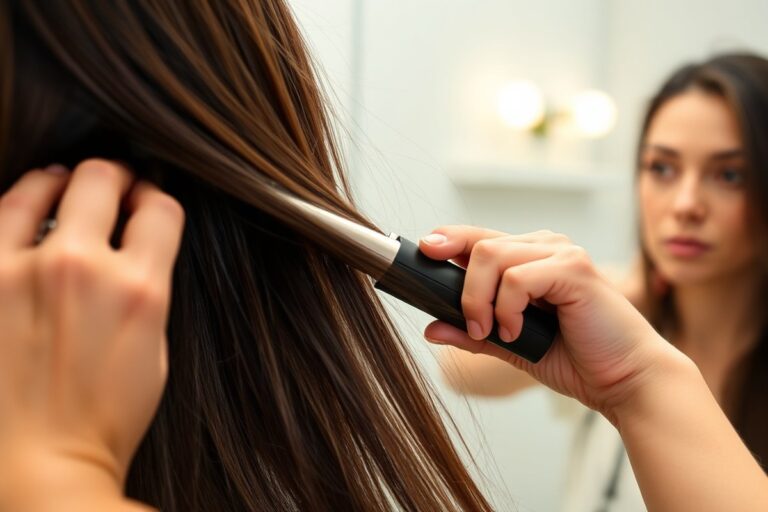
Can You Put Mousse in Dry Hair? How to Style with Volume and Hold
Can you put mousse in dry hair? Yes, you can, but it’s best to use light mousse levels.
Level 1 or 2 mousse works well without making your hair stiff or crunchy. Using too strong mousse makes dry hair feel hard and wired.
Start by dispensing a small amount onto your palm. Rub it gently through dry hair, focusing on roots and mid-lengths. This helps give natural volume and defines texture without needing to wet your hair again.
Applying mousse on dry hair can boost volume quickly when you don’t have time to wash. It also helps refresh second-day hair with minimal fuss. Just avoid heavy mousse that weighs hair down or leaves it sticky.
Key Takeaways
- Use a light level 1 or 2 mousse for dry hair to avoid stiffness.
- Put a small amount in your palm before applying mousse to dry hair.
- Focus mousse application on roots and mid-lengths for more volume.
- Avoid strong level 3 or 4 mousse; it makes dry hair very hard.
- Applying mousse on dry hair can refresh second-day texture and volume.
- Light mousse defines curls and waves naturally without extra water.
Can You Put Mousse in Dry Hair Without Damage?

You can safely apply mousse to dry hair without causing damage. Mousse mainly adds volume and texture. But using too much can make your hair feel stiff or crunchy.
Apply a golf-ball sized amount near your roots. Style your hair right away. This stops your hair from getting sticky.
Mousse does not hydrate dry hair, so it won’t replace your conditioner or moisturizer. Instead, it can feel drying if your hair lacks moisture before application. Make sure your hair is clean first.
Remove any buildup before you style. This helps the mousse work without weighing hair down.
Applying mousse to dry hair works well for quick touch-ups or second-day styling. Sarah, a London office worker, used mousse on dry hair. She did this before her commute.
It helped her refresh her look. It dried faster on dry hair and gave her natural volume without needing to wash again.
Choosing the Right Mousse for Dry Hair Types and Needs

Pick mousse with the right hold for your dry hair type. Low hold level 1 or 2 works best for dry hair to avoid stiffness. Using level 3 or 4 mousse can make dry hair feel hard.
It can feel unnatural too. This defeats the soft, voluminous look you want.
Fine or thin hair benefits from lightweight, volumizing mousse. It adds body without weighing hair down.
For naturally straight hair, mousse lifts roots and keeps strands separated, preventing flat styles. Curly or wavy hair needs low hold mousse to define curls gently without crunch.
| Product Type | Best For | Pros | Cons |
|---|---|---|---|
| Mousse | Volume & Texture | Lightweight, adds body | Can dry hair if overused |
| Gel | Hold & Definition | Long-lasting hold, good for curls | Can cause crunchiness |
| Cream | Moisture & Control | Hydrating, soft styling | Can weigh hair down |
| Spray | Finishing Touch | Tames flyaways, adds shine | Possible stickiness |
Dry hair needs volume and texture more than stiff hold. Volumizing mousse designed for dry hair lifts strands and adds movement.
Be cautious about mousse with drying alcohols if your hair is very dry. Take a golf-ball-sized amount and apply it mainly at roots for best volume.
Curl definitions improve with low hold mousse to avoid crunch and flaking. Keep your mousse use light and layer with moisture products if your hair feels brittle. Thick hair may need stronger products like sprays.
Sea salt sprays work well too. They help keep styles in place on dry hair.
Use light hold mousse on dry hair to avoid stiffness and maintain softness.
Step-by-Step Guide to Applying Mousse on Dry Hair
You can apply mousse to dry hair by using a small amount and spreading it carefully. Focus on roots for volume or all over for texture. Use a blow-dryer with low heat and a diffuser to finish.
Prepping Dry Hair Before Application
Make sure your hair is free of heavy oils or buildup before applying mousse. Brushing or combing your hair helps remove tangles and opens up the strands. This lets the mousse spread evenly and work better.
When your hair feels very dry, use a light leave-in conditioner first. Apply it a few minutes before the mousse for best results. This prevents the product from sticking to overly dry patches, which can look flaky or stiff.
Correct Mousse Dispensing and Placement
Use about a golf-ball-sized amount of mousse for medium-length hair. Less mousse leads to lighter hold but avoids stiffness. For thick or dense hair, apply mousse in sections to cover roots and mid-lengths evenly.
Rub mousse between your palms before applying. Focus on roots first to get volume and lift. To get extra texture, smooth mousse along the hair shaft.
Also, apply it to the ends of your hair. But don’t overload those areas.
Styling Techniques After Mousse Application
After applying mousse, gently rake fingers through your hair to spread the product. Avoid using a brush right away, as it could flatten the volume. For best results, use your fingers or a wide-tooth comb.
To create volume, flip your head upside down and scrunch your hair lightly. Then, blow-dry your hair with a diffuser on low heat to lock in the style. This step usually takes 5 to 10 minutes depending on hair thickness.
Using Heat Tools Safely with Mousse
Apply a heat protectant spray before using curling irons or straighteners to protect your hair. Use low to medium heat settings to avoid damaging dry hair and the mousse hold. High heat can cause frizz and breakage.
Blow-dry your hair with a round brush for volume and shape. Using a diffuser also helps boost volume. Both work well with mousse and heat styling.
Keep the dryer moving to prevent overheating any spot. Always finish with a cool blast to set the style.
- Brush or comb dry hair to remove tangles and dirt.
- Dispense a golf-ball-sized amount of mousse into your palms.
- Rub hands to warm up the mousse for easier application.
- Apply mousse first to the roots, then mid-lengths and ends.
- Use your fingers or a wide-tooth comb to distribute mousse evenly.
- Flip your head and scrunch hair lightly to add volume.
- Blow-dry with a diffuser or round brush on low heat.
- Finish with a cool air blast to lock the style.
How Mousse Effects Differ on Dry Hair Versus Damp Hair
Applying mousse on dry hair usually gives you more texture but less hold. When you put mousse on damp hair, it spreads evenly. It helps lock in moisture as your hair dries.
This makes styling easier and keeps your hair soft. Mousse on dry hair can make strands feel stiff.
It won’t give that smooth, set look you get on damp hair. So the finish may seem rougher than usual.
Mousse tends to hold longer on damp hair because it dries along with your hair strands. Dry hair mousse usually sets faster than damp hair mousse. But hold fades quicker, especially if your hair is fine or thin.
So it might not last all day. For thick hair, mousse on dry strands adds volume well.
However, you may need stronger hold mousse to keep style all day. Otherwise, the style might fall flat.
Mousse weighs down hair less when applied to damp hair. The added moisture helps it spread thin and light over the strands. On dry hair, mousse can clump up or look crunchy if you use too much.
Start with a small bit of mousse when your hair is dry. Add more only where you want extra lift or volume. This helps avoid a heavy, sticky look.
Damp hair acts like a better canvas because the water loosens cuticles and lets mousse absorb. Mousse on dry hair mostly stays on the surface. This can cause your hair to feel rough or show flakes.
It won’t blend in as smoothly as with damp hair. Thick or coarse hair may not hold style well with dry mousse.
You need heat or layering products to help it stay in place. Without these, the style may not last.
For the best balance, spritz a little water on dry hair before applying mousse. This helps spread the product without making your hair wet. After applying mousse, you can air dry your hair or use a diffuser.
This sets your style with bounce and softness. Dry mousse alone may not give this effect.
Avoiding and Fixing Common Mousse Mistakes on Dry Hair
Applying too much mousse on dry hair is the most common mistake. Just a fist-sized amount can make hair look sticky, stiff, or greasy. Using less mousse helps avoid flakes and keeps your hair feeling natural.
Another slip-up is skipping the sectioning step. Putting mousse all in one spot will clump the hair, leading to uneven texture. Spread mousse in small amounts on thin sections for better coverage and bounce.
- Use a golf ball-sized or smaller amount of mousse.
- Divide hair into 3 to 4 sections before applying.
- Evenly distribute mousse from roots to ends.
- Avoid touching hair too much after applying to prevent stiffness.
- Choose a lightweight mousse that’s alcohol-free to protect dryness.
- Allow mousse to dry fully before touching or styling further.
If your dry hair looks weighed down or sticky, try using a fine-tooth comb to gently break up clumps. You can also lightly mist your hair with water and scrunch it to loosen product buildup. Using too much mousse means starting fresh with a shampoo or dry shampoo to remove residue.
Too much mousse makes dry hair flaky and stiff; less is always better.
Remember, mousse works differently on dry hair than damp hair. It refreshes style without extra water but needs careful application. The right amount and technique bring back bounce without the sticky feeling.
Refreshing and Maintaining Styles with Mousse on Dry Hair
You can refresh your hairstyle during the day or on second-day hair with mousse. Using mousse on dry hair adds volume and brings back shape. It works well on fine, thin, or curly hair without making it heavy.
Light Mist and Targeted Mousse Application
Start by lightly misting your hair with water or spray. Use this step if your mousse feels thick. It helps the mousse spread better.
This helps the mousse spread better and prevents clumping on dry strands. Focus on areas that feel flat or frizzy for the best results.
Apply mousse directly where your hair needs a boost, like roots or ends. Don’t use too much.
About a small golf ball size is enough for most hair types. Using your fingertips or a wide-tooth comb helps evenly spread the mousse across dry hair.
Techniques to Boost Volume Without Weighing Hair
To add body without weighing hair down, avoid piling mousse on top in one spot. Instead, gently lift hair at the roots while applying mousse for natural bounce. Using a wide-tooth comb or your fingers can reshape curls or waves and spread mousse well.
For second or third-day hair, start by separating the hair slightly with your fingers. This opens up the style and makes mousse coverage easier. Try to focus on lifting and defining hair rather than saturating the strands.
Finishing Touches for Long-Lasting Hold
After putting in mousse, let your hair air dry. Or use a diffuser on low heat to keep volume. Avoid high heat to protect hair.
Avoid heavy brushing, which can flatten your style and reduce the mousse’s effect. A light mist of hairspray can lock in your refreshed look if needed.
Repeat mousse application sparingly through the day as needed. Overuse can cause buildup or a sticky feel. Carry a small mousse bottle under $10 in your bag.
It’s perfect for quick touch-ups on the go. This keeps your style looking fresh.
- Lightly mist your dry hair with water or a refreshing spray.
- Squeeze a small amount of mousse (about a golf ball size) on your fingers.
- Apply mousse to roots or flat areas, using fingers or a wide-tooth comb.
- Lift hair gently at the roots to add volume and body.
- Use fingers to reshape curls or waves if needed.
- Let hair air dry or use a low-heat diffuser to set the style.
- Optionally, spray a light hairspray for extra hold.
- Repeat touch-ups sparingly throughout the day for fresh volume.
Pairing Hair Products and Heat Styling with Dry Hair Mousse
Lightweight leave-in conditioners and heat protectant sprays work well with mousse on dry hair. Apply a small amount of leave-in conditioner first to add moisture without weighing hair down. Then, spritz heat protectant evenly to shield hair from damage during heat styling.
Using mousse together with these products helps keep dry hair hydrated and protected. Choose formulas labeled for dry or damaged hair for the best effect. Avoid heavy creams.
They can clump mousse. This makes hair greasy or stiff.
Heat styling tools can be used with mousse on dry hair. But use a low to medium temperature.
Keep flat irons and curling wands below 350°F to prevent overheating fragile strands. Always spray heat protectant before styling to reduce the risk of breakage or dryness.
Start by applying mousse and letting it set for a minute or two. Then, use a blow dryer with a diffuser on low heat or a styling iron cautiously. Don’t apply heat over one spot longer than 10 seconds.
This prevents damage. It also helps your style last longer.
For curly or textured hair, scrunch mousse into dry curls before diffusing. This technique amplifies curl definition without intense heat. Let your hair air dry some before using heat.
This reduces heat exposure. It keeps styling time reasonable.
Trying to multitask with too many products can make hair look stiff or flaky. Stick to mousse, a hydrating leave-in, and a heat protectant for simple styling that works. Most good mousse and heat protectants cost $10 to $20.
They last many months with daily use. Prices can vary.
Long-Term Care and Cost Benefits of Using Mousse on Dry Hair
You can use mousse on dry hair daily. But it needs care to stay healthy. Mousse helps style dry hair but can cause buildup if overused.
Applying mousse on dry hair usually means you use less product. It can save you money over time. This is because you don’t need to soak your hair first.
Daily Use Safety and Hair Health Implications
Using mousse on dry hair every day can dry hair out if the mousse contains alcohol. Look for alcohol-free mousse to keep hair from becoming brittle. Over time, daily mousse use without washing buildup may make hair feel heavy and dull.
Applying mousse on dry hair gently is key to protect it. Spread an egg-sized amount on your palms first. Then section your hair and apply mousse evenly to avoid clumping or uneven dryness.
Cost Comparison: Amount of Product Used Dry vs Damp
Applying mousse on dry hair generally uses less product per application than on damp hair. Mousse spreads more easily on damp hair. However, you often need more to cover all strands.
This can add up faster than dry application. On dry hair, mousse holds better, so less product is enough for style.
For example, using an egg-sized scoop for damp hair means about 10 ml of mousse. For dry hair, you might only need 7 ml to get a similar hold. Over a month, this difference can save around 30% of mousse you would otherwise buy.
Maintaining Healthy Hair While Using Mousse
To keep hair healthy, clean it regularly to prevent product buildup from mousse. Use a gentle shampoo every two to three days or when hair feels heavy. Deep conditioning once a week helps restore moisture often stripped by styling products.
Go slow with mousse quantity, especially on dry hair. Too much mousse can make the hair stiff and dry, leading to breakage. Use just enough mousse to define your style.
Avoid using too much to keep residue off your hair. Rinse your hair thoroughly the next time you wash it.
Always spread mousse in your hands before applying to hair for even coverage and less buildup.
Step-by-Step Action Plan for Using Mousse on Dry Hair
Follow these steps to apply mousse on dry hair effectively and get great hold without damage.
- Before you start: Choose a mousse designed for dry hair or added moisture. This prevents extra dryness and keeps hair soft.
- Right after washing: Towel-dry your hair gently to remove excess water. But keep it slightly damp. Mousse spreads easier and holds better on damp hair.
- Application time: Shake the mousse can well and dispense a walnut-sized amount into your palm. Spread it evenly through your hair, focusing on roots and mid-lengths for volume.
- Styling phase: Use a wide-tooth comb or your fingers to shape your hair as desired. The mousse adds light hold without crunchiness.
- Heat styling stage: If you use heat tools, apply a heat protectant before mousse. This prevents damage and keeps your style lasting longer.
- After styling: Let your hair air-dry or use a blow dryer on a low setting. Avoid high heat to keep hair healthy.
- Daily refresh: In the morning, add a small amount of mousse. Use it on dry hair to revive your style. This also helps reduce frizz. Avoid overusing it to prevent stickiness.
- Weekly check: Use a moisturizing shampoo and conditioner once a week. This keeps dry hair balanced while you enjoy mousse benefits.
Frequently Asked Questions
Can Mousse Revive Second-Day Hair Without Washing?
Yes, mousse can refresh second-day hair and add volume. Apply lightly on dry hair to avoid stiffness.
Does Mousse in Dry Hair Work for All Hair Types?
Mousse can work on all types but choose formulas carefully. Fine hair benefits from lighter mousse, while thick hair may need more hold.
Is Mousse Better for Texture or Hold on Dry Hair?
Mousse mainly adds volume and texture on dry hair. The hold strength depends on the mousse level you pick.
Can Mousse Make Dry Hair Sticky or Crunchy?
Using heavy mousse or too much product can cause crunchiness. Use a small amount and a lighter mousse to avoid stickiness.
Should You Avoid Mousse on Dry Hair with Product Buildup?
Yes, product buildup can cause uneven mousse results. Clean hair before applying mousse for the best effect.
How Long Does Mousse Hold Style in Dry Hair?
Mousse can hold styles for several hours on dry hair. Humidity and hair type affect how long the hold lasts.
Final Thoughts
Yes, you can put mousse in dry hair safely if you do it right. Start with the right product and apply it properly for best results. Try these steps today to see how mousse can improve your dry hair styling.