How to Use Hair Mousse: A Complete Guide for Style, Volume & Hold
Knowing how to use hair mousse can boost your style and volume easily. Apply mousse to damp hair for the best hold and texture. Use just the right amount based on your hair thickness to avoid heaviness or stickiness.
Start with your hair about 80% dry so mousse spreads evenly without dripping. Work it through roots to ends, then style as usual with fingers or a comb. Be sure hair is fully dry before heat styling to keep your look smooth and lasting.
Mousse offers softer hold than hairspray and works well with many hair types. It’s also quick to use and easy to layer with other products if needed. Adjust how much you apply to suit your style and hair type for best results.
Key Takeaways
- Apply mousse to hair that is about 80% dry for best coverage.
- Use a small amount at first; add more if your hair needs extra volume.
- Distribute mousse evenly from roots to ends for balanced hold.
- Wait until hair is completely dry before applying hot styling tools.
- Pick mousse formulas based on your hair type, light for fine, richer for thick.
- Mousse generally lasts up to 12 months once opened; check the date.
How to Apply Hair Mousse Correctly Step-by-Step

Start with your hair about 80% dry. This means it should feel damp but not wet. Damp hair helps mousse spread without diluting it or causing clumps.
Use about a golf ball-sized amount of mousse for medium hair. This is the right amount for most people. It helps style the hair without weighing it down.
For shorter hair, use less, about half that. Long or thick hair may need a full handful, especially if you work in sections.
Spread the mousse on your palms first. This prevents clumps from sticking in one spot. Then, apply evenly, focusing on roots for volume and lengths for hold and definition.
- Start with clean, towel-dried hair. Hair should be damp, not dripping. This step ensures mousse applies smoothly.
- Divide your hair into small sections. This helps you spread the mousse evenly, especially in thick or coarse hair.
- Squeeze mousse onto your palm. Use about 1 to 2 tablespoons depending on hair length.
- Rub hands together. This warms the product and prevents clumps.
- Apply mousse starting at the roots. Work down through the strands for full coverage.
- Use your fingers or a wide-tooth comb. This helps distribute mousse without creating spots with excess.
- Dry your hair with a blow dryer and round brush. Focus on lifting roots to build volume.
- Finish styling as desired. Use tools or your hands to shape the style confidently.
Mousse feels sticky or hair is crunchy when you use too much. Or you might not spread it evenly through your hair. Work in sections if needed to avoid this.
Apply mousse on damp hair for heatless styles like foam rollers. Let hair dry fully after applying mousse. This helps your style hold better.
When mousse is used right, hair looks fuller and moves naturally. It keeps your style in place without feeling stiff or crunchy.
Avoid applying mousse on completely dry hair since it can clump and fail to spread evenly. Proper dampness and careful application make all the difference.
How Hair Types Affect Mousse Application and Benefits

Hair type shapes how much mousse you need and how to apply it. Fine hair calls for lighter mousse.
Thick or coily hair needs more hold and moisture. Different mousses suit straight, wavy, curly, or coily textures to control frizz or add volume.
Mousse Recommendations for Straight and Fine Hair
Straight hair doesn’t gain volume from mousse but benefits from texture and light hold. Choose lightweight mousse that adds grip without weighing hair down. Apply about 2 pumps for fine straight hair, focusing from roots to ends.
Fine hair needs mousse that boosts body without heaviness. Use a light volumizing mousse and avoid heavy products that flatten your strands. Two pumps usually give enough lift without greasiness.
Best Practices for Wavy Hair
Wavy hair works well with mousse to add volume and define natural waves. Use 2 to 4 pumps depending on hair thickness. Spread mousse evenly by scrunching it into damp hair for better texture.
Choose a mousse that improve waves but doesn’t weigh the hair down. Fine or medium wavy hair does well with lighter mousse. Medium or thick wavy hair needs stronger hold around three to four pumps.
Curly and Coily Hair: Defining Curls and Controlling Frizz
Curly hair benefits most from curl-improving mousse to define texture and cut frizz. Use moisturizing mousse with a strong hold, around 3 to 6 pumps depending on thickness. Apply evenly by dividing hair into sections and scrunching mousse thoroughly.
Coily hair requires more moisture and control. So use a mousse rich in hydrating ingredients.
Apply 4 to 6 pumps, focusing on curls’ shape and frizz control. Diffuse drying helps lock in definition without disrupting curls.
| Hair Type | Problem Area | How Mousse Helps | Pro Tip |
|---|---|---|---|
| Fine Hair | Lacks volume, appears limp | Mousse adds body and volume | Use lightweight volumizing mousse |
| Curly Hair | Prone to frizz in humidity | Mousse defines curls and reduces frizz | Use a diffuser after applying mousse |
| Straight Hair | Volume is hard to add | Mousse adds texture and grip | Apply evenly from roots to ends |
Mousse adjusts from light texture boost to full curl definition depending on your hair type. Matching the right mousse style to your hair matters.
It helps you get volume, curls, or control frizz. Choosing correctly gives the best results for your hair type.
Adjusting Application for Thick or Coarse Hair
Thick hair needs stronger hold to keep styles in place. Use 4 to 6 pumps of mousse based on your hair’s coarseness. Spread it section by section for even control and avoid heavy buildup near the scalp.
Coarse or thick curly and coily hair requires moisturizing mousse that keeps curls soft, not stiff. Focus on curl definition while fighting dryness and frizz. Applying mousse to damp hair and using a diffuser delivers shape and shine.
Tip: Using too much mousse can weigh down fine hair or leave thick hair feeling sticky. Measure carefully by pumps, not by eyeball.
Choosing the Right Mousse for Your Hair and Style
Choose mousse based on your hair texture and style goals. Pick lightweight mousse for fine hair and stronger hold for thick hair. Check if the mousse offers heat protection or color care for extra benefits.
Volumizing Mousses for Body and Lift
Volumizing mousses add lift and body without weighing hair down. They work well on fine or straight hair to prevent flat styles. Use these mousses on damp hair for the best boost.
Lightweight formulas avoid heaviness and help keep hair bouncy. Choose a mousse labeled for volume or body if you want a natural, full look. Applying too much can deflate styles, so start with a small amount.
Curl-Improving Mousses to Define and Reduce Frizz
Curl-improving mousses define curls and reduce frizz by shaping waves and coils. They often contain ingredients that hydrate hair to fight dryness. These mousses help curls keep their shape without crunchiness.
Look for mousse with nourishing oils or moisturizing extracts. Apply it evenly on wet curls and scrunch for better definition. Using the right amount prevents flaky residue or stiffness in curls.
Heat-Protecting Mousses for Styling Tools
Mousses with heat protection are made to shield hair from damage by hot tools. They usually include silicone or thermal-protectant ingredients. Use heat-protecting mousse if you blow-dry or use curling irons.
Apply mousse on damp hair before heat styling for the best shield. Some products combine volume and protection, cutting down on extra steps. Otherwise, use a heat protection spray along with regular mousse.
Color-Safe Mousses for Chemically Treated Hair
Color-safe mousses protect dyed or chemically treated hair from fading. They avoid harsh ingredients that strip hair color and dryness. Choose mousse labeled as safe for color or gentle formulas.
Many color-safe mousses include nourishing ingredients that keep hair soft. Use these mousses on damp hair to lock in moisture and maintain shine. Avoid strong alcohols and sulfates if your hair is fragile or color-treated.
Here is a quick guide to choosing mousse based on hair type, goal, and special needs:
| Hair Goal or Need | Mousse Type | Key Benefits | Ideal Hair Type | Important Ingredients |
|---|---|---|---|---|
| Lift and volume | Volumizing mousse | Adds body without weight | Fine, straight hair | Lightweight polymers |
| Define curls | Curl-improving mousse | Reduces frizz, hydrates curls | Wavy, curly hair | Oils, moisturizing extracts |
| Heat styling protection | Heat-protecting mousse | Prevents heat damage | All hair types using hot tools | Silicone, thermal protectants |
| Color protection | Color-safe mousse | Prevents fading, adds shine | Colored or chemically treated | No sulfates or harsh alcohols |
Choose based on your main styling needs and hair health. Lightweight mousses work best for volume without heaviness. Strong-hold mousses suit thick hair or styles needing extra grip.
Common Hair Mousse Mistakes and How to Fix Them
Using too much mousse can leave your hair sticky or stiff. But too little won’t give you noticeable volume or hold.
Aim for about a golf-ball-sized amount for medium-length hair. Spread the mousse evenly on your palms before applying it to avoid clumps.
Applying mousse to soaking wet hair is a common mistake that reduces its effectiveness. Hair that’s too wet dilutes the mousse, making it hard to hold style or lift roots. It’s best to towel-dry your hair or let it air dry until damp, about 80% dry.
Crunchy or sticky hair usually happens when mousse is piled on without proper distribution. Work the mousse through your hair in layers. Use your fingers or a wide-tooth comb.
Spread it evenly from the roots to the ends. This keeps your style soft, pliable, and natural-looking.
- Apply mousse to damp, not dripping hair for better hold.
- Use a golf-ball-sized dollop for medium hair length.
- Distribute mousse evenly from roots to ends with your fingers.
- Towel-dry hair first until it’s about 80% dry before applying.
- Avoid piling on too much mousse to prevent stickiness.
- Use a round brush or diffuser to finish styling for volume or curls.
- Don’t forget sectioning thick hair for better mousse coverage.
Using heat tools incorrectly can ruin mousse results too. Blow-drying hair without a diffuser can cause frizz or flatten styles made with mousse. Use a diffuser for curls or a round brush when aiming for volume.
Keep your hair dryer warm, not hot. Aim for about 250 to 300°F. This protects your hair and keeps the mousse’s hold strong.
Crunchy hair means you used too much mousse. It can also happen if it dries without brushing through. Use less or comb it out before drying.
Remember, mousse is lighter than gel or spray but still needs even application and proper drying. Keep styling tools and mousse balanced for soft, bouncy hair that lasts all day.
How to Combine Hair Mousse with Other Styling Products
Mousse and gel both hold hair, but they do it differently. Gel gives strong, stiff hold, while mousse offers light, natural volume.
Use gel first, then apply mousse to avoid stiff or crunchy hair. This order blends the products and keeps your style flexible and shiny.
When pairing mousse with serums or sprays, apply mousse on damp hair first. It adds body and hold without weighing your hair down. After the mousse dries, smooth on a frizz serum.
This adds shine to your hair. Or use a light hairspray for extra hold. This layering keeps your style soft, shiny, and frizz-free without buildup.
Heat protectants should go on before mousse. Spray or apply the protectant on damp hair, then follow with mousse to lock in volume.
This order protects your hair from heat damage and still gives you good hold. Avoid mixing too many products to prevent hair feeling heavy or greasy.
Some products may not mix well with mousse, especially heavy oils or thick creams. They create buildup and reduce mousse effectiveness.
Stick to lightweight serums or sprays if you like layering. Too many thick products can make mousse clump or lose hold, especially on fine hair.
Use your hands or a wide-tooth comb to evenly distribute mousse after layering. This prevents clumps and keeps hair bouncy.
For curly hair, apply gel first. This helps define your curls. Then add mousse to soften and add volume.
Mousse works well alone for a natural look or alongside gel for stronger hold. Adjust how much mousse you use based on your hair’s thickness and style goals.
On straight hair, mousse creates volume without stiffness. Use mousse first, then a light serum or shine spray. Avoid heavy gels unless you want a very slick look.
Layer light products with mousse for softness. This also gives your hair hold. You get shine without stiffness.
Expect to spend only a few extra minutes layering products this way. This small step improves results by making styles more flexible and natural.
It also helps control frizz and shine better than using one product alone. Try different combinations on your hair to see what feels best.
How Long Does Hair Mousse Last and When to Refresh It
Hair mousse usually holds style for about 6 to 8 hours. This depends on your hair type, mousse formula, and how much you applied. Humidity, wind, or sweat can make the hold fade faster.
You’ll notice the mousse effect fading when your hair starts looking flat or limp. Another sign is when curls or volume lose their shape. Your hair might also feel sticky or greasy if the mousse wore off unevenly.
To refresh mousse without washing your hair, lightly mist your hair with water. Then, scrunch your hair gently with your fingers to reactivate the mousse’s hold and shape. Avoid adding too much water or product to prevent buildup.
It’s generally safe to reapply mousse during the day if your hair feels flat. Use a small amount, roughly half a walnut size, and spread it evenly. Focus on the roots or areas that lost volume, not the whole head again.
Avoid reapplying mousse repeatedly if your scalp feels itchy or your hair looks heavy. This can cause buildup and make hair look greasy. If you need extra hold, try a light spritz of hairspray after refreshing mousse.
For curly hair, use a mousse with strong hold to maintain definition longer. Wavy hair might need lighter mousse for natural bounce without stiffness. Using a diffuser on low heat can help lock in mousse hold after refreshing.
Can You Use Hair Mousse Daily? Safety and Hair Health Tips
Using hair mousse every day can give you lasting volume and hold. But it comes with some risks. Mousse tends to build up on your hair because it dries and sets in place.
Skipping regular washing causes buildup. Your hair may look dull and feel stiff.
To keep your hair healthy while using mousse daily, wash your hair often. Rinse with a gentle shampoo every two or three days. This removes leftover product.
It also helps prevent scalp problems. Choose an alcohol-free mousse when your hair feels dry.
Look for ones with keratin or argan oil. These ingredients nourish and strengthen hair.
Some mousses have ingredients that may irritate sensitive scalps or cause allergies. Watch for redness or itching and stop using the mousse if any irritation happens. Avoid touching your hair too much during the day.
This keeps the mousse working longer. It also helps prevent damage to your style.
When washing mousse out, take your time to rinse thoroughly. Make sure to use warm water and shampoo your scalp well to remove all residues.
Sometimes a double shampoo rinse is useful if you apply mousse daily. Follow up with a conditioner to restore moisture, especially if your hair feels dry after styling.
Avoid mousses with alcohol if your hair is dry or damaged. Alcohol can worsen dryness and harm your hair.
Look for products labeled “hydrating” or “repairing” since they often contain oils and proteins. These keep hair shiny and soft, letting you style daily without extra breakage.
Using hair mousse daily works best when you match the product to your hair’s needs. Fine hair can benefit from light mousses that add volume without weight. Thicker hair may need a richer formula to hold styles longer.
Remember, keeping hair clean and moisturizing balances daily mousse use. So your hair stays healthy and stylish.
Integrating Heat Styling Tools with Hair Mousse for Best Results
Use heat protection before mousse to shield your hair from damage. Apply mousse after heat protection for volume and shape. With blow dryers, diffusers, or rollers, dry your hair right to lock in the style.
Applying Heat Protection Before Mousse
Heat protection spray or cream goes on first to keep hair safe from high temperatures. Apply it evenly on damp hair, focusing on ends where damage is worst. Wait a few minutes for it to dry slightly before adding mousse.
This step helps prevent breakage and dryness from styling tools. After heat protection, use about a golf ball, size amount of mousse. Flip your hair to coat roots for better volume.
Applying heat protection before mousse keeps hair from heat damage during styling.
Blow Drying with a Round Brush for Volume
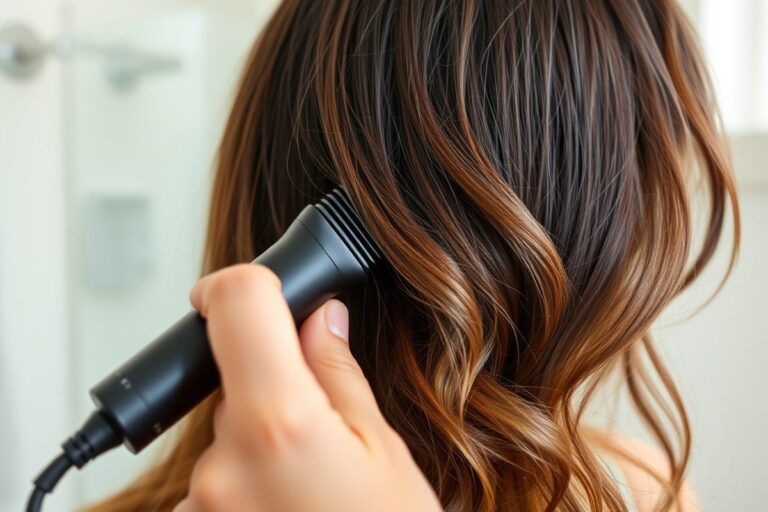
Using a round brush while blow drying shapes hair and lifts roots for volume. Start with hair sprayed with mousse and heat protectant. Flip your hair upside down to boost fullness at the roots.
Divide hair into sections for smoother drying. Wrap each brush section and pull it upward gently. Aim warm air at the roots while doing this.
This helps lift the hair as it dries. Move the dryer slowly to avoid heat damage.
- Smooth hair over a round brush section by section.
- Direct heat at roots and slowly pull brush to ends.
- Hold hair taut for a curved shape.
- Flip hair forward at the end to boost volume.
- Use a cool blast to set style.
Blow drying with a round brush after mousse amplifies volume and shapes hair.
Using a Diffuser to Define Curls
A diffuser spreads airflow to dry curls gently and keep their shape. After applying mousse and heat protectant, scrunch your curls lightly with your hands. Attach the diffuser and set your dryer to low or medium heat.
Place curls in the diffuser’s bowl and hold them there for about 10, 15 seconds. Move around your head, drying curls section by section to prevent frizz. Don’t touch your hair too much while drying.
- Apply heat protection, then mousse evenly to damp curls.
- Flip your head forward to start diffusing.
- Place sections of curls into diffuser gently.
- Set dryer to low or medium heat and dry for 10, 15 seconds per section.
- Repeat until curls feel mostly dry without moving hair excessively.
Use a diffuser on low heat with mousse to build curl definition and reduce frizz.
Styling with Hot Rollers or Flat Irons
Never use hot rollers or flat irons on hair still wet from mousse. Dry hair completely first to avoid heat damage and uneven styling. Wait until your hair is dry.
Then apply a small amount of mousse. Use it to add hold and volume before styling.
For hot rollers, section your hair and roll it away from your face. Leave rollers in for 15, 20 minutes until fully cool. Flat irons work best on dry, mousse-coated hair to smooth and add shine while keeping volume.
- Dry hair thoroughly before using hot rollers or flat irons.
- Apply a light layer of mousse for hold and volume.
- Set hot rollers in sections away from the face.
- Leave rollers in for 15, 20 minutes until cool.
- For flat irons, pass smoothly over dry hair without repeating in one spot.
Make sure hair is fully dry after applying mousse. Use hot rollers or flat irons only on dry hair. This prevents damage and keeps shape better.
Step-by-Step Action Plan for Using Hair Mousse
Follow these steps to get the best volume and hold with mousse. Check results after each step to adjust as needed.
- Before styling: Start with clean, towel-dried hair. Your hair should feel damp, not dripping wet.
- Right after washing: Shake the mousse can well. Dispense a golf-ball sized amount into your palm.
- Application phase: Spread mousse evenly by rubbing hands together. Work through hair from roots to ends.
- Styling prep: Use a wide-tooth comb or fingers to distribute mousse evenly. Look for no clumps or sticky spots.
- Heat styling (if using): Blow-dry or use heat tools on low-to-medium heat. Mousse should boost volume and hold without crunchiness.
- After styling: Check hair texture and shape. Add a small touch more mousse only if you need extra hold or definition.
- Daily care: On day two, refresh hair with a little water and mousse. Avoid piling on product to keep hair light.
Frequently Asked Questions
Can Hair Mousse Help Control Frizz?
Yes, mousse smooths the hair shaft and controls frizz, especially for coarse or unruly hair. It adds a light hold without stiffness, keeping your hair manageable throughout the day.
Is Hair Mousse Suitable for Color-Treated Hair?
Yes, you can use color-protecting mousse formulated to preserve vibrancy. It helps maintain color while styling and prevents fading caused by heat or sun exposure.
How Much Hair Mousse Should I Use?
Use mousse based on how thick your hair is and your style. Start with a golf ball size or smaller. Add more only if needed, as too much weighs your hair down or makes it sticky.
Can Mousse Replace Hairspray?
Mousse and hairspray have different jobs. Mousse gives volume and a soft hold.
Hairspray gives a firm hold and sets your style. You can use mousse alone for daytime styles and add hairspray for extra hold.
Should I Rinse Hair Mousse Out Before Bed?
Yes, it’s best to wash mousse out nightly to prevent buildup and scalp irritation. Leaving product on can clog follicles and lead to dandruff or itching.
Does Mousse Work Better on Clean or Second-Day Hair?
Mousse works best on freshly washed, damp hair for even distribution. On second-day hair, it may not spread well and can look greasy or clumpy.
Key Points to Remember
Hair mousse can give you volume and control without heaviness. Start using mousse with clean, damp hair to get the best effect. Try your new look today and see how your style holds up longer.