

Which Side of Foil Is Non Stick? A Complete Guide for Kitchen Use
Which side of foil is non stick? The dull side of aluminum foil has the non-stick coating. You want to place food on the dull side to reduce sticking during cooking.
Both sides of foil work for cooking. The dull side helps keep meals intact by reducing sticking.
The shiny side reflects heat but does not prevent sticking well. Always check your foil’s packaging for any specific instructions or variations.
Using the dull side for sticky foods like cheese, sauces, or marinades helps a lot. It keeps food from tearing or sticking, especially when you lift it off the foil. This makes cleanup much easier since less food clings to the surface.
Keep in mind some heavy-duty or commercial foils might treat both sides the same. But most household foil brands clearly have a non-stick dull side. Remember to handle the dull side gently to keep its coating intact.
Key Takeaways
- The dull side of aluminum foil has non-stick coating and is better for food contact.
- The shiny side reflects heat but does not provide a non-stick surface.
- Place sticky or sugary foods on the dull side to avoid burning and sticking.
- Check foil packaging for writing and follow those instructions for the non-stick side.
- Both sides are safe to use. But the dull side reduces the need for greasing.
- Your oven’s heat, pan type, and food placement impact cooking more than foil side.
Which Side of Aluminum Foil Is Non-Stick?

Non-stick aluminum foil has a special coating on one side, usually the dull side. That dull side often feels smoother and prevents food from sticking. You should place the food against the dull side to get the non-stick benefit.
Regular aluminum foil, whether shiny or dull, doesn’t have a non-stick coating. It is safe to use food-side up on either side of regular foil. The shiny and dull sides on regular foil come from its making.
They do not differ in stickiness. Both sides work the same for most uses.
To check if your foil is non-stick coated, read the packaging carefully. Look for phrases like “non-stick foil” or “silicone-coated dull side.”
You can test by placing sticky food, like cheese or marinade, on both sides. The side with less sticking is likely the coated dull side.
Use non-stick foil for sticky foods like fish or grilled veggies. It helps with foods that have sugary sauces too. This keeps food from sticking.
Regular foil works fine for wrapping, baking, and covering dishes. It’s okay when stickiness isn’t a problem. Use it for general cooking tasks.
Your foil’s dull and shiny sides on regular foil don’t differ much. Don’t expect a big change without non-stick labeling. Both sides usually perform the same.
Cooking results depend on your oven’s heat and the pan you use. How you place the food also impacts the outcome. Foil side matters less than these factors.
The foil’s non-stick coating only helps prevent mess and makes cleanup easier. Non-stick foil usually costs more than standard foil.
It’s about 20 to 50 cents extra per foot. Consider this when buying for sticky cooking needs.
Why Aluminum Foil Has a Shiny Side and a Dull Side
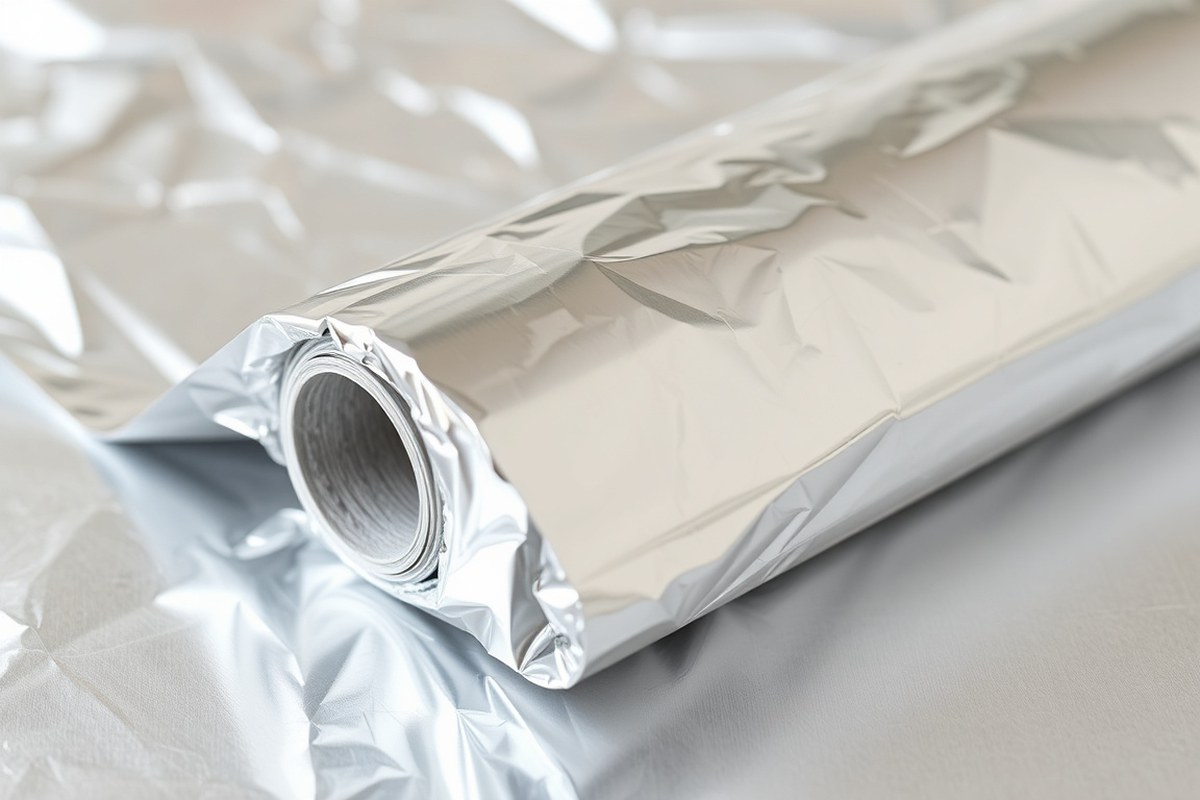
How Rolling Creates Two Distinct Sides
Aluminum foil gets its shiny and dull sides from a rolling process. The foil passes through polished steel rollers that smooth one side.
That side touching the rollers becomes shiny. The opposite side remains dull because it isn’t polished.
To prevent foil from breaking, two sheets are rolled together in the final step. The side pressed against the other foil sheet turns dull. This manufacturing trick keeps the sheets intact but causes one dull and one shiny side.
Why the Shiny Side Reflects Light
The shiny side reflects light and heat better than the dull side. It looks glossy because it contacts the steel roller directly during rolling. The dull side feels rougher and scatters light, causing its matte appearance.
This shine difference doesn’t affect the foil’s strength much. The finish mainly influences how foil looks under kitchen lights. You might notice less glare with the dull side facing up when cooking.
Does the Finish Affect Cooking Performance?
There’s no major difference in how the shiny or dull side cooks food. Both sides conduct heat well and are safe to use. Reynolds, a leading foil brand, confirms either side works fine for cooking.
The choice of shiny or dull side does not affect cooking times. It also does not change how evenly your food bakes. Both sides work the same way in the oven.
To cut glare from under-cabinet lights, put the dull side up. Use this side when you wrap or cover dishes. It helps reduce shiny reflections.
Non-Stick Foil Uses a Different Method
Non-stick aluminum foil has a special coating on one side that prevents food from sticking. This coating is separate from the shiny versus dull sides caused by rolling. With non-stick foil, the non-stick side is usually the dull one.
Standard foil has no coating, so the shiny-dull finish is all you see. When using non-stick foil, always check the package for the right side.
Using the correct side helps prevent food from sticking. Follow the package instructions carefully.
Why Two Sides Matter in Manufacturing
The double-sheet rolling method is necessary for making thin foil without tearing. It keeps costs down and production fast. Rolling only one sheet at a time would cause frequent breaks.
This would increase your costs over time. Using multiple sheets helps avoid that problem.
The result is two sheets with mirrored finishes. Both perform the same in most kitchen uses.
But you get options for shine and light reflection. That subtle difference comes straight from how mills produce the foil.
Place the dull side up to reduce light glare when covering food under bright kitchen lights.
Standard vs. Non-Stick Aluminum Foil: Key Differences
Non-stick aluminum foil is different because it has a silicone coating. This layer stops food from sticking during cooking.
Standard foil has no special coating. Sticky foods like cheese or sugar can cling to it.
With non-stick foil, you can skip extra greasing or oiling. It saves prep time and makes cleanup easier. Standard foil needs more effort.
You often have to grease it first. It also means scrubbing harder after use.
The price difference matters too. Non-stick foil usually costs more than standard foil.
You’ll find standard foil at a budget-friendly price everywhere. Non-stick versions are available at most major retailers but come at a premium.
| Feature | Standard Aluminum Foil | Non-Stick Aluminum Foil |
|---|---|---|
| Food Adhesion | High (especially with sugars and cheeses) | Very Low |
| Prep Time | Requires greasing or oiling | You can use it right away. |
| Scrubbing Level | Often requires heavy scrubbing | Minimal to no scrubbing |
| Effort Level | High maintenance | Toss and go simplicity |
| Surface | Raw aluminum | Silicone-coated |
| Food Release | Prone to sticking | Easy release |
| Price Point | Budget-friendly | Premium |
| Availability | Everywhere | Most major retailers |
| Best Use Case | Covering pots, wrapping leftovers | Baking, roasting, cheesy dishes |
Use standard foil when wrapping leftover food or covering pots. It works well for general kitchen use but needs some extra care. Non-stick foil fits better for baking or roasting sticky ingredients like cheese.
Keep in mind: even heavy-duty foil doesn’t have a non-stick surface unless it’s labeled. Thicker foil is just tougher and resists tearing but won’t help with sticking. You can expect better results releasing sticky foods with non-stick foil on the coated side.
How to Identify the Non-Stick Side of Foil in Packaging and Use
Non-stick foil has one side coated for easy release. It’s usually the dull side. Check the packaging for phrases like “non-stick side facing up.”
It might also say “place food on the matte surface.” These clues tell you which side is non-stick.You can tell the coated side by its texture.
Look for printing clues on the foil. These help you spot the non-stick side.
Check the Packaging for Labels and Instructions
The box or roll wrapper often tells which side is non-stick. Look for phrases like “non-stick side facing up” or “coated side for easy release.” These phrases show you which side faces the food.
Sometimes, instructions include reminders about placing food on the dull side. The packaging may warn not to use non-stick foil under a broiler.
It’s because the foil has temperature limits. Pay attention to these warnings.
This information helps you avoid confusion during cooking. It also helps you get the most from the coating. Use the right side for best results.
Look for Surface Texture Differences on the Foil Itself
Non-stick foil has a food-safe silicone coating on one side. That side feels smoother or slightly slick to touch, compared to the shiny side.
The dull side is where the non-stick coating is applied. So it won’t stick to sticky foods like BBQ sauce or melted cheese. The shiny side lacks this coating and feels more slippery but is not non-stick.
Holding the foil up to light may reveal a subtle matte finish on the coated side. Regular aluminum foil doesn’t have this difference.
Use Writing or Print Direction as an Orientation Clue
Reynolds Aluminum Foil shares a simple tip for finding the non-stick side. If you can read the print on the foil, that’s the non-stick side up. This works because the coating lets ink stick well.
Check for the printed brand name or instructions right on the foil. The printed side is usually the coated, non-stick side. The side without print is the shiny side.
This trick is useful when the coating’s feel is hard to tell. It also helps if your kitchen lighting is low. Use the print to guide you.
Follow these steps to find the non-stick side on your foil:
- Read the box or roll label for words like “non-stick side facing up.”
- Look at the foil sheet to see which side feels smoother or has no shine.
- Hold foil up to light; the coated side often looks matte or dull.
- Check for any printed words or logos on the foil itself.
- Orient the foil so the printed side faces up during cooking.
- Place food on the dull, non-stick coated side for best release.
- Avoid broiler use unless the packaging says it’s safe.
When Does Foil Side Affect Cooking and Food Quality?
The side of the aluminum foil you use hardly changes cooking time or heat transfer. The shiny side does reflect a tiny bit more radiant heat.
However, this difference is so small it won’t really change how food cooks or browns. Both sides conduct heat well and cook food evenly.
People often wonder if the shiny or dull side affects sticking or browning. For regular foil, neither side has a significant non-stick quality. Some non-stick foils are treated on one side.
But that’s clearly marked on the package. Shiny versus dull foil mainly causes confusion without making a big cooking difference.
There are some situations where side choice matters more, like wrapping food versus covering a pan. Here are some useful rules to keep in mind:
- For standard foil, the shiny or dull side facing the food won’t affect cooking results.
- Use the shiny side out to reflect heat away. It works well when covering a hot dish. This helps keep heat from escaping.
- Use the dull side out for less heat reflection. It gives a matte look under broilers or grills. This can reduce glare when cooking.
- Choose non-stick foil when cooking sticky items like fish or BBQ, not based on side.
- Wrap food tightly regardless of side to keep in moisture and heat.
- Remove foil carefully to avoid tearing or sticking regardless of which side is up.
Many think the shiny side speeds roasting. Others believe the dull side stops food from sticking. Neither is fully true for cooking results.
Those ideas are myths. The real key to browning is cooking temperature and surface contact, not foil side. Shiny side alone won’t make a steak sizzle more or a vegetable crispier.
Always check if your foil is labeled non-stick. The side facing food does not change sticking much. It does not matter for sticking prevention. Focus on other factors like oiling the foil.
When broiling, the dull side may brown food more. This happens because it absorbs heat differently. The effect is usually minor but noticeable.
Still, this difference is subtle and should not affect your overall cooking plan. For most home cooking tasks, using foil without worrying about side orientation works just fine.
Tips for Using Non-Stick Foil Effectively in the Kitchen
Before you cook, lightly grease the non-stick side of the foil. Put a little cooking oil or use a quick spray on this side. This helps stop food from sticking while cooking.
Spread the oil evenly for the best result. This method suits baking cookies or roasting vegetables well.
It also helps with cooking sticky foods that cling. Try it when food tends to stick during cooking.
Even if you use regular foil, a little oil makes cleanup easier. You don’t need to worry about which side faces the food if it’s regular foil. But the greased non-stick side really helps if you’re using the special kind.
When roasting, wrap food loosely to let hot air circulate. Avoid sealing tightly to stop moisture buildup inside the wrap. Trapped moisture can make food steam, not brown.
- Lightly spray or brush the non-stick side before adding food.
- Use foil to line baking sheets to prevent roasting messes.
- Wrap food loosely so heat circulates and cooks evenly.
- Check the label to find the non-stick side for coated foil.
- Don’t skimp on oil or spray for sticky items like fish or cheese.
- Use parchment under foil for baking at 420°F or lower for extra non-stick protection.
- Remove foil carefully after cooking to avoid tearing or stuck bits.
When roasting, putting the foil inside the pan can shield food from direct heat. This helps avoid burning and keeps food juicy. To speed cleaning, the non-stick surface means you only have to wipe once, not scrape.
Safety Considerations and Temperature Limits for Non-Stick Foil
Non-stick aluminum foil handles temperatures up to 450°F safely. Using it above 500°F risks damaging the coating and causing fumes. Avoid placing it directly on grill grates or gas burners to protect the non-stick layer.
Temperature Thresholds for Safe Foil Use
Non-stick foil performs best between 200°F and 350°F. This range keeps the coating stable and prevents sticking to your food. You can use it up to 450°F with care. But monitor food with high-sugar glazes closely.
Temperatures above 500°F can break down the non-stick coating. It may release unpleasant smells or fumes that affect food flavor. Avoid using non-stick foil under ultra-high heat for safety reasons.
| Temperature Range | Suitability | Effect on Non-Stick Coating |
|---|---|---|
| 200°F, 350°F | Ideal | Perfectly stable; maximum performance. |
| 350°F, 450°F | Generally Safe | Works well; monitor high-sugar glazes. |
| Above 500°F | Risky | Coating may break down or release fumes. |
Using the foil within safe limits keeps your food cooking evenly. It also extends the foil’s life and avoids chemical risks.
Appliance Compatibility and Precautions
Non-stick foil is safe for conventional and toaster ovens. Keep it away from direct heating elements to avoid damage. It works in air fryers when you keep it weighted down firmly.
Without weight, it might blow into the heating coil and cause issues. Use a heavy dish or foil ball to hold it in place.
Avoid putting aluminum foil inside microwaves to prevent sparks and fire dangers. Also, keep non-stick foil away from grill grates or gas burners. High heat can melt the coating and emit unpleasant smells.
| Appliance | Safe to Use? | Why? |
|---|---|---|
| Conventional Oven | ✅ Yes | Designed for high heat and conductivity. |
| Toaster Oven | ✅ Yes | Works great (keep away from heating elements). |
| Microwave | ❌ No | Causes arcing, sparks, and potential fire. |
| Air Fryer | ⚠️ Caution | Safe if weighted down; otherwise may fly into element. |
Following these guidelines helps avoid accidents and prolongs the foil’s usefulness.
Health and Chemical Safety of Coatings
Non-stick foil coatings usually handle heat well but can degrade above 500°F. Avoid exposing the coating to ultra-high heat. Doing so risks releasing fumes that might affect food flavor or smell.
Avoid cooking acidic foods on foil for long periods. Acid can transfer aluminum into food, which some people want to limit. The non-stick coating helps reduce sticking but doesn’t prevent all aluminum transfer.
Some non-stick materials are BPA-free and certified safe under LFGB standards. Use foil as directed on the package to stay within safe use guidelines. When unsure, choose silicone baking mats or parchment paper as alternatives for non-stick protection.
Alternatives to Aluminum Foil for Non-Stick Cooking
You have a few good options if you want a non-stick alternative to aluminum foil. Parchment paper offers a smooth, non-stick surface that works well for baking and roasting. It handles oven temperatures up to 420°F but should not touch an open flame or broiler.
Silicone baking mats make an excellent reusable choice. They resist heat beyond usual oven settings. They provide a non-stick layer.
Use them for cookies, roasting vegetables, and more. Though pricier upfront, they save money and waste over time.
| Alternative | Advantages |
|---|---|
| Parchment Paper | Non-stick, heat-resistant, ideal for baking up to 420°F |
| Silicone Baking Mats | Reusable, eco-friendly, excellent non-stick for high heat |
| Bee’s Wrap | Natural, reusable, good for wrapping but not heat use |
Parchment paper works best as a disposable liner for pans or wraps for food during baking. Its major downside is the temperature limit. You can use parchment to stop sticking when baking or roasting.
It works well at moderate heat. Avoid using it for broiling or direct flame.
Silicone mats shine in baking situations with repeated use. They’re flexible and clean up easily, cutting down on foil waste.
They work well up to 480°F and stop cookies from sticking. You don’t need oil or spray with them.
Avoid using parchment paper under a broiler or direct flame because it can burn.
Choosing between these alternatives depends on what you cook and how often. For every day baking and a good non-stick surface, parchment paper is cheap and effective. Silicone mats suit heavy use better.
They need washing after use. They cost about $15 to $25 upfront.
Step-by-Step Action Plan for Using Non-Stick Aluminum Foil
Follow these simple steps to use non-stick foil well and avoid sticking problems.
- Before you start: Check the package for the non-stick label. Confirm which side is marked as non-stick.
- When prepping food: Place food on the dull, non-stick side. This prevents sticking as you cook or bake.
- While cooking: Use non-stick foil for sticky or delicate foods like fish or cheese. You should see less residue left on the foil.
- After cooking: Let food cool slightly before removing it from the foil. This helps keep food whole and neat.
- When wrapping leftovers: Use the non-stick side against the food to make reheating easier. The non-stick surface keeps food from clinging.
- For high heat: Avoid letting foil touch open flames or heating elements. Stick to temperatures below about 500°F to keep foil safe.
- Once done: Toss or recycle used foil if it is torn or heavily stuck. Fresh foil keeps non-stick benefits consistent.
Frequently Asked Questions
Which Side of Aluminum Foil Is Non-Stick?
The dull side of non-stick foil is coated for non-stick use. The shiny side is uncoated and may cause food to stick.
Does It Matter Which Side of Regular Foil I Use for Cooking?
No, regular foil has no non-stick coating, so either side works fine. The shiny and dull sides don’t affect cooking or food quality.
How Can I Tell the Non-Stick Side of Foil When Buying?
Non-stick foil is coated on the dull side, which usually faces the food. Check the package or place food on the dull side for best results.
Will Using the Shiny Side of Non-Stick Foil Cause Sticking?
Yes, food may stick on the shiny side because it lacks the coating. Always place food on the dull, coated side to avoid sticking.
Can I Reuse Non-Stick Foil for Cooking Again?
You can reuse non-stick foil if it’s clean and intact. But food may stick more. It’s best to use fresh foil for sticky foods.
Does the Foil Side Matter for Wrapping Food in the Fridge?
No, side does not matter for storage or wrapping in the fridge. Use whichever side is convenient for wrapping and sealing.
Before You Go
The non-stick side of aluminum foil is usually the dull side. Use it facing the food to prevent sticking and clean-up hassle. Now grab a roll of non-stick foil and try these tips to make cooking easier today.


