What Is Purple Shampoo Used for? A Complete Guide for Clear, Brass-Free Hair
Purple shampoo removes brassiness and yellow tones from blonde, silver, or gray hair. Its purple pigment cancels out warm shades, making hair look cool and vibrant. It also refreshes color-treated hair by neutralizing unwanted orange tones.
This shampoo works best on light hair colors, including bleached or highlighted strands. Applying it regularly prevents dullness and brassiness from building over time. Leave it on for a few minutes depending on your hair color to get the right tone.
For silver or white hair, rinse after 1 to 3 minutes. Natural blondes should leave it on 2 to 5 minutes. Adjust timing to avoid a purplish tint on your hair.
Use purple shampoo once a week if your hair has low porosity. For damaged hair, space applications every one to two weeks. This keeps your tone fresh without drying out your hair.
Key Takeaways
- Use purple shampoo to neutralize yellow or brassy tones in light hair.
- Leave the shampoo on 1, 3 minutes for silver or gray hair for best results.
- Let it sit 2, 5 minutes if you have natural blonde hair to refresh tones.
- Apply purple shampoo once a week for healthy hair or every 1, 2 weeks if damaged.
- Always follow with a good conditioner to avoid drying out your hair.
- Choose a product designed for your hair type and porosity for better effects.
What Is Purple Shampoo Used For?
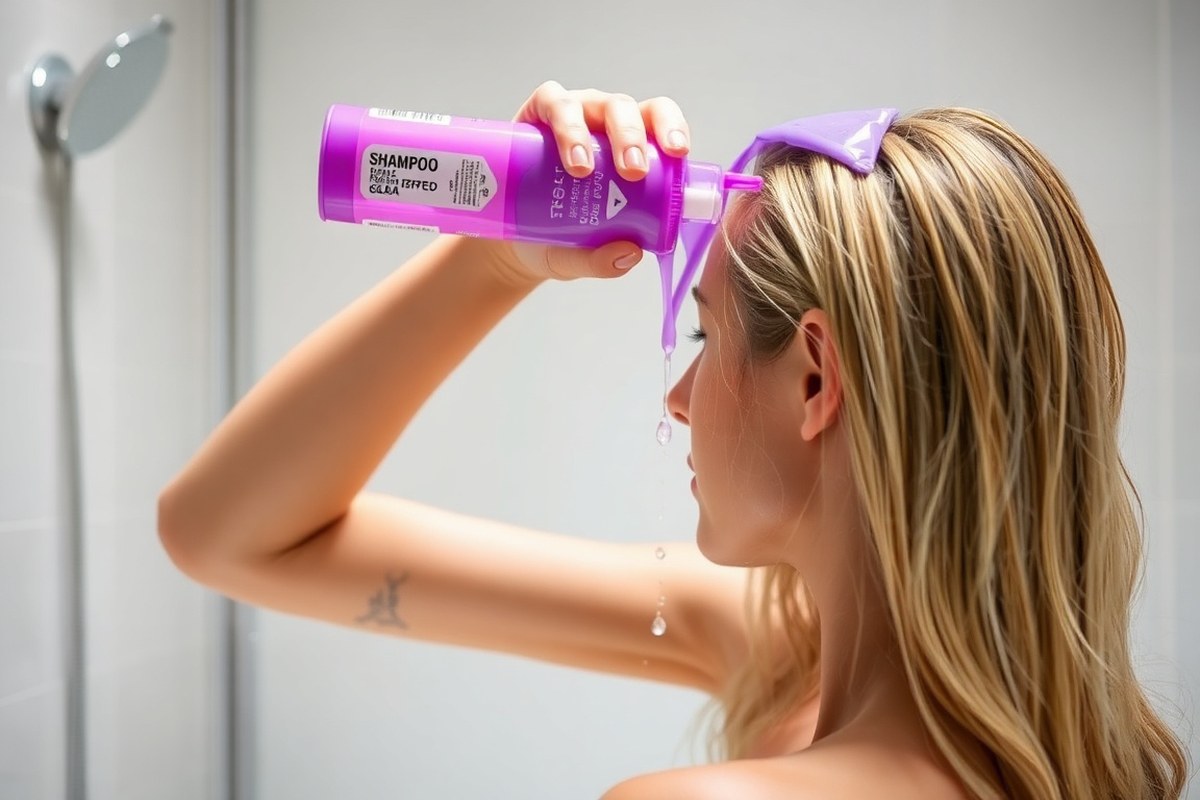
Purple shampoo cancels yellow or brassy tones in your hair. It works for blonde, gray, silver, or lightened hair. Use it to keep your hair color fresh.
It contains violet pigments that act like a toner, neutralizing unwanted warmth and dullness. This keeps your hair color looking fresh and bright.
Brassiness happens when blonde or silver hair starts to show yellow or warm shades over time. These tones can make hair look dull or unnatural. Purple shampoo deposits violet pigments on your hair.
Violet colors cancel yellow tones since they are opposites on the color wheel. This balances out unwanted brassiness.
People with medium blonde hair level 8 or lighter benefit most from purple shampoo. Gray and silver hair also responds well to it for cancelling yellow hues. Purple shampoo doesn’t work on orange tones or pastel shades.
It only targets yellow and brassy colors. Avoid using it if your hair has those colors.
How Purple Shampoo Works to Neutralize Hair Tones

Purple shampoo works by depositing violet pigments onto your hair. These pigments are synthetic dyes like D&C Violet No. 2, usually making up 0.5% to 3% of the formula.
Purple is opposite yellow on the color wheel. So it cancels out yellow and orange tones that cause brassiness.
When you use purple shampoo, the violet pigments cling to the hair’s surface during washing. Let the shampoo sit for up to five minutes. This helps neutralize warm tones better.
Pigments work best with this extra time. This process doesn’t bleach or lighten your hair. It only adds temporary pigment to balance color.
The shampoo also contains cleansing agents that remove dirt and oils without stripping hydration. Conditioning agents in the formula help your hair feel smooth even after pigment deposition. This balance prevents your hair from feeling dry or brittle after use.
Since purple shampoo only coats the hair temporarily, it won’t permanently dye your strands. You might see some violet tint on your fingertips or nails after applying it.
But this washes out easily. Regular use every few washes helps maintain a fresh, soft blonde or silver without brassiness.
People with gray or color-treated hair notice that purple shampoo keeps yellowish tones at bay. For brunettes or darker blondes, variations with blue or green pigments serve the same neutralizing purpose. Choosing the right color pigment depends on your hair tone and brassiness level.
Don’t leave purple shampoo on too long. Avoid using it daily. Your hair might get a slight purple tint. A few minutes per wash usually works best.
Choosing the Right Purple Shampoo for Your Hair Type and Color
Choosing the right purple shampoo depends on your hair color and porosity. Different formulas work better on platinum, gray, blonde, or brown hair. Picking between sulfate-free and moisturizing options helps avoid dryness or buildup.
Formulas for Blonde and Platinum Hair
Platinum and light blonde hair soak up purple pigment quickly. Let the shampoo sit for 1 to 3 minutes to get rid of brassy yellow tones. Look for a gentle formula that won’t dry out bleached or fragile blonde hair.
Moisturizing purple shampoos with ingredients like Vitamin B5 and Glycine are a good bet. These nourish your hair while toning, helping it stay shiny and soft. Use these shampoos two to three times a week to keep your blonde bright.
Options for Gray, Silver, and White Hair
Gray, silver, and white hair also benefit from purple shampoo to fight yellowness. These shades absorb purple pigment fast.
So limit the shampoo’s contact time to 1 to 3 minutes. Weekly use helps maintain a natural, shimmery look without buildup.
Try formulas that add volume and do deep conditioning. Some purple shampoos specifically advertise benefits like strengthening hair while removing brassiness. Opt for sulfate-free if your hair feels dry or fragile.
Purple Shampoo Choices for Brunettes and Natural Blondes
Brunettes and natural blondes can use purple shampoo too, but pick subtler formulas. These shampoos tone highlights and prevent unwanted warm tones. Go for products marketed as color-safe and moisturizing.
Sulfate-free purple shampoos help protect natural oils and avoid stripping. Use these once or twice a week to refresh highlights without over-toning. They won’t change your base color but improve shine and reduce brassiness.
Considerations for Hair Porosity and Condition
Hair porosity affects how purple shampoo works and feels. Low-porosity hair repels moisture and shampoo pigments.
So leave the shampoo on a bit longer. High-porosity hair absorbs more pigment and dries out faster, so use moisturizing shampoos.
Damaged or dry hair needs gentle, hydrating formulas to avoid extra brittleness. Sulfate-free options are kinder on sensitive scalps and chemically treated hair. Adjust shampoo frequency based on how your hair responds.
Use the table below to match your hair type with the right purple shampoo features.
| Hair Color | Recommended Contact Time | Formula Type | Usage Frequency |
|---|---|---|---|
| Platinum and Light Blonde | 1-3 minutes | Moisturizing, with Vitamin B5 or Glycine | 2-3 times per week |
| Gray, Silver, White | 1-3 minutes | Volume-boosting, sulfate-free suggested | At least once weekly |
| Brunette and Natural Blonde Highlights | Less than 1-2 minutes | Color-safe, sulfate-free, moisturizing | 1-2 times per week |
| Low Porosity Hair | Up to 3 minutes | Hydrating formulas | Adjust as needed to avoid buildup |
| High Porosity Hair | Shorter contact time, 1-2 minutes | Moisturizing and sulfate-free | Less frequent or with conditioner |
Using purple shampoo that fits your hair color matters. Your hair’s porosity and condition also affect results. Picking the right product helps avoid dryness and gets the tone you want.
Choosing the wrong shampoo can leave your hair dull or with a purple cast. Adjust your choices based on your hair’s changes and needs.
How to Use Purple Shampoo for Best Results
Use purple shampoo on damp hair, right after wetting it, to get the best tone. Apply it evenly and leave it on for two to five minutes, then rinse well. Follow with a hydrating conditioner to avoid dryness.
Step 1: Prepare Hair and Wet Properly
Wet your hair with lukewarm water. It opens the cuticles to let the purple shampoo work better.
Do not use purple shampoo on dry hair at first. Damp hair helps spread it evenly. You can try dry hair once you know how your hair reacts.
Step 2: Apply Purple Shampoo Evenly
Dispense a small amount of shampoo. Start at the roots and work toward the ends.
Massage gently to cover all areas that need toning. Avoid clumps for even color correction.
Step 3: Leave in for Recommended Time
Leave the shampoo on your hair for two to five minutes. Never exceed five minutes to prevent purple tinting.
Check the shampoo label for exact timing. If you have dry or damaged hair, keep it closer to two minutes.
Step 4: Rinse Thoroughly with Cool Water
Rinse your hair well to remove all purple shampoo. Use cool water to close the cuticles afterward.
Incomplete rinsing causes uneven tone or slight purple buildup. Cool water also helps hair stay smooth.
Step 5: Follow with Hydrating Conditioner
Apply a hydrating conditioner after rinsing shampoo. Purple shampoo can dry your hair out without it.
Choose a moisturizing or a purple conditioner for gentle toning plus hydration. Skip the conditioner only if you want extra toning and your hair can handle it.
- Wet hair thoroughly with lukewarm water.
- Apply a small amount of purple shampoo evenly.
- Massage gently from roots to ends.
- Leave shampoo on for 2 to 5 minutes.
- Rinse thoroughly with cool water.
- Apply a hydrating conditioner after rinsing.
What to Expect: Realistic Results and Timing
Purple shampoo tones brassiness right away during the wash. The violet pigment binds to yellow tones immediately, making your hair appear cooler and less brassy. Fine or porous hair needs less purple shampoo time.
Leave it on for one minute max. Longer time may cause a gray tint. Up to 3 minutes suits stubborn brassiness better.
You won’t get permanent brightness from purple shampoo since it doesn’t lighten or dye your hair. Its effects fade after a few washes as the violet pigment washes out. Use purple shampoo once or twice a week.
This keeps yellow tones away. It also stops excess pigment build-up.
Purple shampoo won’t remove existing hair dye or your natural color completely. It just neutralizes yellow undertones, so brassiness fades but doesn’t vanish fully. To keep gray, silver, or blonde hair bright, use purple shampoo regularly.
Combine it with gentle hair care products. This mix works best.
Leave purple shampoo on longer than recommended. You risk a purple or ashy tint on your hair.
Low-porosity hair soaks up pigment slower than other types. You may need to use purple shampoo more often. This keeps tones balanced.
Overuse, however, can dry hair and create unwanted ashy tones. Find a purple shampoo routine that works for you.
Don’t wait too long between uses. Avoid washing with it every day.
Common Purple Shampoo Mistakes and How to Fix Them
Leaving purple shampoo on too long can cause your hair to turn purple, pink, or blue. Most users see good results with three to five minutes of application.
You may get patchy violet tint if you leave it on too long. It’s worse on dry hair.
Put a thin layer of petroleum jelly or barrier cream on skin. Cover your ears and hairline to prevent stains. Use gloves if you’re worried about staining your nails.
Rinse your hands promptly after washing out the shampoo. Wiping off any shampoo drips immediately with a damp cloth helps too.
Your hair probably needs more hydration if it feels dry or brittle. Purple shampoos with added moisturizing ingredients can help.
Use purple shampoo no more than two or three times a week. Don’t overuse it if your hair is dry or damaged.
Wash your hair with a gentle or clarifying shampoo to remove purple tint. Deep cleansing shampoo also helps clear unwanted color. A warm water rinse helps lift the color faster.
Mix one part apple cider vinegar with two parts water. Rinse your hair with this to reduce purple tones.
- Don’t leave purple shampoo on more than 5 minutes to avoid tint buildup.
- Use petroleum jelly around hairline to stop skin staining.
- Wear gloves to protect your nails from purple staining.
- Limit use to 2-3 times per week, especially on dry hair.
- Use a sulfates-free regular shampoo before purple shampoo to reduce dryness.
- Rinse hair with warm water and clarify with a cleansing shampoo to remove color.
Some purple shampoos like Bust Your Brass Blonde also hydrate and strengthen hair. These help brittle or aging hair too.
These formulas pull water into your hair strands to reduce dryness. But still, avoid overuse to prevent uneven violet patches.
Applying purple shampoo to already dry or porous hair can cause the color to absorb unevenly. Try using it on freshly washed, damp hair for the most even tint.
Correct unwanted purple tone fast with a clarifying wash. Acting quickly avoids bigger fixes later.
Safety Considerations and When to See a Professional
Some people can have allergic reactions to purple shampoo. Symptoms like itching, redness, or swelling might show on your scalp or skin. Always test a small patch of skin before using purple shampoo on all your hair.
Stop using purple shampoo if your scalp feels sore, burns, or develops rashes. Sensitive scalps may not tolerate regular use of this product. Pick formulas designed for sensitive skin or consult a professional before trying a new purple shampoo.
Using purple shampoo too often can cause your hair to turn purple or grayish. Notice unnatural tones or dry hair? Cut back or take a break.
Hair porosity matters. Use it once a week for low porosity hair. For high porosity hair, use it every one to two weeks.
You should consider professional toning when purple shampoo doesn’t fix brassiness or uneven color. Experts can apply stronger toners that last longer and adjust the color tones precisely. Professional color correction typically costs between $50 to $150 depending on your salon and hair length.
Stopping purple shampoo about two weeks before a salon appointment can protect your hair color. A stylist can better assess your natural tone without leftover pigments from the shampoo. Professionals can also treat damage from over-bleaching more effectively than store-bought purple shampoo.
Integrating Purple Shampoo into Your Hair Care Routine
Using purple shampoo works best when paired thoughtfully with other hair care steps. It tones brassiness and strengthens your hair. Combining it with conditioner, protection, and your routine keeps hair bright and healthy.
Using Purple Conditioner for Moisture and Toning
Purple conditioner supports your shampoo by adding a lighter layer of purple pigments. It won’t tone as strongly as shampoo but helps fight brassiness while hydrating your hair.
You’ll want to apply purple conditioner after shampooing, leaving it on for 2 to 5 minutes. This step seals moisture and extends the toning effect without weighing hair down.
- After washing with purple shampoo, towel dry your hair gently.
- Apply purple conditioner mainly on ends or dry areas.
- Leave it on 2 to 5 minutes, then rinse well with cool water.
- Limit purple conditioner use to 2-3 times a week to avoid buildup.
- Skip it if your hair feels too heavy or greasy.
Protecting Hair from UV and Heat Damage
Heat styling and sun exposure speed up brassiness and dryness. Heat above 350°F can raise your hair’s porosity, letting in more unwanted tones.
Before using hot tools, apply a heat protectant spray. Use a UV-protective leave-in product outdoors, especially in summer. These steps slow fading and keep silver or blonde hues crisp.
Use heat protectants every time you style hair with a flat iron or curling wand.
Swimming and Brassiness Prevention
Chlorine and minerals in pools can turn blonde or silver hair yellow or green. Swimming without protection leads to quicker brassiness and dryness.
Wear a swim cap or wet your hair before swimming to limit chlorine absorption. Rinse hair with clear water right after swimming to wash out chemicals.
- Use clarifying shampoo once a week if you swim often.
- Apply a leave-in conditioner that forms a barrier against chlorine.
- Consider purple shampoo use shortly after pool days to refresh tones.
Scheduling Purple Shampoo Use for Maintenance
How often to use purple shampoo depends on your hair’s brassiness level. For mild tones, once a week is enough. For stronger brassiness, try two to three times weekly but watch for dryness.
Adjust frequency based on results and hair condition. Overuse can make hair dull or purple tinged. So test and reduce use if that happens.
- Start with one use per week and increase if needed.
- Use on days when you shampoo, not daily.
- Between purple shampoo days, use regular shampoo and conditioner.
- Apply purple shampoo for 3 to 5 minutes before rinsing off.
Step-by-Step Action Plan
Start using purple shampoo today with this simple routine to see toned hair fast. Follow each step and watch how your hair changes.
- Before you start: Choose a purple shampoo made for your hair type and color. Check the label for suitability.
- Day 1: Shampoo your hair with your regular shampoo first. Rinse well to prep hair for purple shampoo.
- Day 1: Apply purple shampoo to damp hair. Leave it on for 2 to 3 minutes before rinsing to avoid over-toning.
- Week 1: Use purple shampoo twice, spaced out every 3 days. Notice any dullness or brassiness getting softer.
- Week 2: Adjust timing based on results. If your hair feels dry, leave the shampoo on for less time or use less often.
- Week 3: Combine purple shampoo with your usual conditioner or a deep conditioner. This helps keep hair smooth and hydrated.
- After 1 month: Evaluate hair tone and condition. Cut back if your hair turns too purple or dry, or keep using twice weekly.
Frequently Asked Questions
Can Purple Shampoo Be Used on All Blonde Shades?
It works best on medium to light blondes, level 8 or higher. Darker or warmer blondes may see little change or uneven color.
Is Purple Shampoo Safe for Colored or Dyed Hair?
Yes, it is safe but use it sparingly to avoid dryness. Always follow with a conditioner to maintain moisture.
Can You Use Purple Shampoo on Gray or Silver Hair?
Yes, and it helps keep those shades bright and free from yellow tones. Leave it on for 1 to 3 minutes for best effect.
How Often Should I Use Purple Shampoo on Damaged Hair?
Use it once every 1 to 2 weeks if hair is dry, bleached, or porous. Overuse can cause extra dryness or brittleness.
Will Purple Shampoo Permanently Change Hair Color?
No, it only deposits temporary purple pigments to counter yellow tones. The effect washes out after one or two shampoos.
Can Purple Shampoo Prevent Brassiness on Blonde Extensions?
Yes, it can help keep extensions looking fresh by neutralizing yellow tones. Just avoid overuse as it may dry out synthetic hair fibers.
Wrapping Up
Purple shampoo gently keeps unwanted tones away while preserving your hair color. Try it a few times with this plan, and adjust as you go. The next step is picking the right product and starting your first wash today.