What Is Deep Conditioning: A Complete Guide to Benefits and Effective Methods
What is deep conditioning? It’s a treatment that goes beyond regular conditioner to fix your hair. It soaks into your strands deeply, repairing damage and adding moisture.
Deep conditioning products stay on your hair longer than regular conditioner. You usually leave them on for 20 to 30 minutes. This helps deeply nourish your hair.
You start by applying a deep conditioner after shampooing. Then, let it sit to open your hair’s cuticles so the product absorbs better. Adding gentle heat helps this process and makes your hair feel softer and stronger.
Deep conditioning works hard to make tired, dry hair healthier. It’s especially helpful if your hair has been damaged by heat or chemicals. Don’t leave the product on for more than 30 minutes.
Check the packaging first to see if it says otherwise. Too long can harm your hair.
Key Takeaways
- Deep conditioning requires leaving the product on hair for 20 to 30 minutes.
- Apply deep conditioner after shampooing for better absorption.
- Use gentle heat to open hair cuticles and boost deep conditioning.
- Do not leave deep conditioners on for over 30 minutes unless instructed.
- Deep conditioning restores dry or damaged hair by adding moisture deeply.
- Regular conditioner works quickly, but deep conditioning treats hair more thoroughly.
What Is Deep Conditioning and How Does It Differ from Regular Conditioner?

Deep conditioning is a richer, longer treatment for your hair than regular conditioner. It aims to repair dryness, damage, or breakage by penetrating deeper into the hair strands. Regular conditioner usually works on the surface to add daily moisture and ease detangling.
The main difference is how long you leave it on and the ingredients inside. Regular conditioner stays on for 1 to 3 minutes and uses lightweight ingredients. Deep conditioners require 10 to 30 minutes and contain richer, often protein-packed ingredients.
Many deep conditioners work better with gentle heat. Heat helps the product soak deeper into your hair. This makes the treatment more effective.
| Feature | Regular Conditioner | Deep Conditioner |
|---|---|---|
| Purpose | Daily moisture & detangling | Intensive repair & nourishment |
| Ingredients | Lightweight, surface-level | Rich, penetrating, often with proteins |
| Application Time | 1, 3 minutes | 10, 30 minutes |
| How Often | Every wash day | Weekly or bi-weekly |
| Rinsing | Rinse thoroughly | Rinse thoroughly (sometimes cool water to seal cuticle) |
| Best For | Maintaining daily softness | Addressing dryness, damage, or breakage |
Use your regular conditioner for a quick fix when pressed for time. Deep conditioners work better on dry or damaged hair. They often need more time and heat to open the cuticle.
Deep conditioning takes 20 to 30 minutes without heat. Adding heat may extend the treatment to 45 minutes. Follow the product instructions for best results.
Using deep conditioner once every week or two keeps hair strong. Regular treatments help prevent breakage.
Stick to this schedule for healthier hair. With deep conditioning, your hair should feel noticeably softer and easier to comb after each treatment.
How Does Deep Conditioning Work on Hair at the Structural Level?
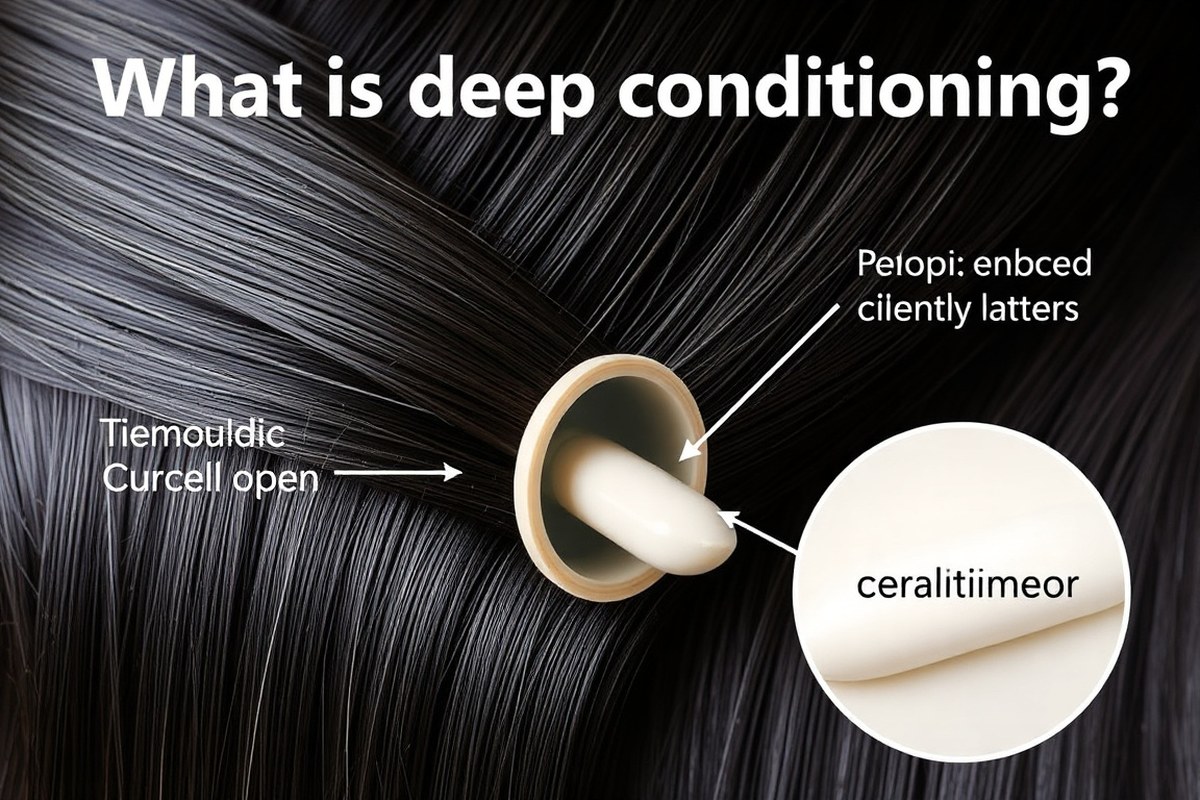
Deep conditioning works by penetrating the hair shaft to deliver moisture and nutrients deeply inside. Unlike regular conditioners, it reaches inside the hair structure. Heat and time help the treatment soak in, improving moisture, strength, and manageability.
How Deep Conditioners Enter the Hair Shaft
Hair strands are made of three layers: the cuticle, cortex, and medulla. Deep conditioners mostly target the cortex, where most of the hair’s protein and moisture live. These treatments use smaller molecules and special ingredients to push through the cuticle’s protective layers.
Regular conditioners sit on the outside, coating the cuticle for surface smoothness. Deep conditioners go beyond that, filling gaps and cracks inside the cortex. This rebuilds hair from the inside, helping it resist damage better.
The Role of Heat in Deep Conditioning
Heat opens up the hair cuticle slightly, which makes it easier for conditioners to penetrate. Warmth increases the hair fibers’ absorption rate. So ingredients reach deeper parts of the shaft.
Many people wrap their hair in a warm towel after deep conditioning. Some use a heat cap instead. This helps the conditioner work better.
You don’t want to overheat because that can damage hair further. Keeping the temperature around 95 to 105°F helps without causing harm. Ideally, maintain this warmth for 20 to 30 minutes to let the conditioner soak thoroughly.
Why Time Matters in Deep Conditioning
Deep conditioners need at least 15 to 30 minutes on your hair to work properly. This time allows hydration and protein treatments to set inside the cortex. Leaving it on less than 10 minutes often won’t deliver the full benefits.
Some treatments recommend even longer times for severely dry or damaged hair. A full 30-minute session promotes better moisture retention and improved hair elasticity. Quick rinses waste the nutrients before they can settle in.
Hair Components That Benefit Most
The cortex gets the biggest boost from deep conditioning. It contains keratin fibers and water-holding proteins that keep hair strong and flexible. Deep conditioners replenish lost moisture and repair broken keratin bonds, helping prevent breakage and frizz.
The cuticle also benefits by getting smoother and less rough. A healthy cuticle layer means hair reflects more light and looks shinier. The medulla, if present, plays a smaller role but still gains hydration indirectly.
How to Maximize Deep Conditioning Results
Apply the deep conditioner on freshly washed hair. Clean hair lets treatments absorb better without dirt blocking the shaft. Use a wide-tooth comb to evenly distribute the product from roots to ends.
Put a plastic cap over your hair first. Then use a warm towel or heat cap for gentle heat. This helps the conditioner soak in.
Let the conditioner sit for 20 to 30 minutes before rinsing with cool water. Skip your regular conditioner after to keep the deep treatment working longer.
Use max 105°F heat to open your hair cuticles during deep conditioning, avoiding damage.
How to Apply Deep Conditioner Properly for Best Results
Deep conditioning your hair requires a careful routine to get the best results. Start by washing your hair well. Next, spread the deep conditioner evenly.
Use heat if needed. Rinse carefully after the set time. Here’s a simple step-by-step way to do it right.
- Choose a deep conditioner suitable for your hair type.
- Shampoo your hair to remove dirt and product buildup.
- Towel dry gently so hair stays damp but not dripping wet.
- Section your hair for easy and even application of the product.
- Liberally apply deep conditioner to your hair shafts using your fingers.
- Use heat options like a blow-dryer on low to warm hair (optional).
- Leave the product on for 20 to 30 minutes, as directed.
- Rinse your hair with cool water to seal the cuticles.
Prepping Hair Before Deep Conditioning
Start with clean hair by shampooing thoroughly. This clears away oils and dirt, letting the conditioner absorb better. Towel dry your hair until it’s damp.
Avoid soaking wet hair. Or apply treatment before shampooing if you need to detangle.
Sectioning hair helps apply the deep conditioner evenly. Work from roots to ends to coat all strands. This ensures every bit of your hair gets nourishment, especially dry or damaged parts.
Methods to Apply Heat During Treatment
Heat opens hair cuticles, helping the conditioner soak in deeper. Use a blow-dryer on the lowest heat setting.
Warm your hair gently after applying the product. Be careful not to overheat or burn your scalp.
For low porosity hair, heat is particularly helpful. Wrapping your hair in a warm towel or using a heat cap are other gentle options. Avoid strong direct heat if your hair is fragile or very dry.
Rinsing and Drying After Deep Conditioning
Rinse hair with cool water to close the cuticles and lock in moisture. Avoid hot water, which can strip away conditioning benefits. Make sure to rinse until the water runs clear to prevent buildup.
Pat your hair dry gently with a towel to avoid breakage. Let hair air dry or use a low-heat blow-dryer if needed. Heavy rubbing can cause frizz and undo the conditioning work.
Who Benefits Most from Deep Conditioning and How Often to Use It
People with textured, curly, color-treated, heat-damaged, or protective style-prone hair benefit most from deep conditioning. Dry, frizzy, or damaged hair types also need it to restore moisture and shine. Even those with straight hair can use deep conditioning to maintain hydration and health.
How often you deep condition depends on your hair’s texture and condition. Tightly curled hair needs more frequent conditioning. Natural oils don’t move down the strands easily.
That’s why extra care helps keep it healthy. Dry or damaged hair may need deep conditioning once a week.
Sometimes twice a week works better. This keeps hair soft and strong.
Color-treated or heat-styled hair can be deep conditioned regularly without worry. These treatments help repair the cuticle and reduce breakage. Avoid skipping it if your hair feels brittle or looks dull from chemical or heat damage.
- Curly or coily hair: deep condition once or twice weekly
- Straight or wavy hair: deep condition every 1 to 2 weeks
- Damaged or chemically treated hair: deep condition 2 times weekly
- Normal or healthy hair: deep condition once every 2 weeks
- Protective styles: deep condition before and after styling
Use water-wet hair for better product absorption during deep conditioning. It usually takes 20 to 30 minutes for the treatment to work well. Over-conditioning can sometimes weigh hair down, so tune in to how your hair feels.
Signs you need deep conditioning include dryness, breakage, and frizz. Your hair absorbs product quickly but loses moisture fast. You should add deep conditioning more often.
This helps keep moisture balanced. Regular treatments help maintain elasticity and softness, especially in harsher weather or with frequent heat use.
Which Ingredients and Products Make Effective Deep Conditioners?
Deep conditioners work best when they include strong moisturizing ingredients and match your hair needs. Knowing which products and ingredients to use helps your hair absorb nutrients deeply. You can choose from store-bought treatments or make simple DIY masks for certain cases.
Key Moisturizing Ingredients to Look For
Look for avocado oil in deep conditioners. Aloe vera also helps curly hair. These ingredients keep dry hair soft and smooth.
Hyaluronic Acid also boosts moisture and keeps strands hydrated longer. These ingredients go beyond surface care, helping hair recover from dryness or damage.
Products with humectants and emollients hold in moisture and smooth the hair cuticle. Ingredients like shea butter or honey are rich in nutrients and seal moisture. Avoid products with too many silicones if you want natural shine without buildup.
Types of Deep Conditioning Products Available
Moisturizing deep conditioners suit hair that feels brittle or limp. They gently replenish lost water and oils, restoring softness.
Some cost around $6, like the SheaMoisture Manuka Honey Masque. Others, like 5 Bond Maintenance Conditioner, can cost closer to $28.
You’ll find these conditioners come as creams, masks, or intensive treatments. Creams work well for regular deep care.
Masks offer a thicker layer for intense repair and need 20-30 minutes sitting time. Intensive treatments often combine oils and proteins for very dry or damaged hair.
| Product Type | Best For | Typical Cost | Key Feature |
|---|---|---|---|
| Moisturizing Mask | Dry, brittle hair | $6 – $28 | High concentration of emollients and humectants |
| Intensive Treatment | Very damaged or chemically treated hair | $20 – $35 | Includes oils and proteins for repair |
| Cream Conditioner | Normal to slightly dry hair | $5 – $15 | Lighter texture for frequent use |
Match the product to your hair’s condition to get the best outcome. Using too heavy a product can weigh fine hair down. Thicker products shine on curly, coarse, or chemically treated hair.
DIY Recipes and When to Use Them
Natural ingredients like avocado, honey, or aloe can make effective deep conditioners at home. Mash the fruit or mix aloe gel with a bit of oil for a quick mask. These are best for mild dryness or as an occasional boost.
DIY treatments work well if your hair lacks moisture but isn’t severely damaged. Homemade deep conditioners save money and avoid chemicals. They work okay for normal hair.
But they can’t fix very brittle or broken hair. Use homemade masks once a week or less to avoid buildup.
Never leave a DIY deep conditioner on longer than 30 minutes to avoid scalp irritation.
How to Tell If Deep Conditioning Is Working on Your Hair
You’ll notice your hair feels softer and less dry after a few deep conditioning sessions. Hair should also become easier to detangle and look shinier without oil or product buildup.
These changes may appear after just one treatment. But repeated care over weeks shows the best results.
Check for less breakage when brushing or styling. Split ends might decrease, but visible repair takes time. Deep conditioning strengthens strands, so your hair resists damage better.
Your hair may still feel brittle after several uses. Try a new product or method.
Tracking progress is simple. After each deep conditioning, gently run your fingers through your hair to note softness and smoothness. Pay attention to how your hair reacts to heat and styling tools.
Less frizz and fewer flyaways mean success. You can also snap photos before and after treatments every two weeks to see changes clearly.
Applying deep conditioner on soaking wet hair can cause greasiness after rinsing. Use towel-dried hair instead, not dripping wet. Cover with a shower cap or plastic wrap and leave on for 20 to 40 minutes, depending on hair length and thickness.
Try this checklist after deep conditioning: your hair should feel soft but not weighed down. Look for reduced tangling and a shiny appearance without extra oils.
Your scalp should feel comfortable with no irritation. Lack of improvement after several tries means you could use a richer conditioner or consult a stylist.
Common Deep Conditioning Mistakes and How to Avoid Them
Common Deep Conditioning Mistakes and How to Avoid Them
Many people overdo deep conditioning, thinking more means better results. Too much conditioner can weigh hair down and cause buildup, making strands look dull and greasy. Using the right amount and rinsing well helps keep hair light and smooth.
Another mistake is leaving deep conditioner on for either too long or too short a time. Most treatments need about 10 to 30 minutes to work deeply.
Less time might not repair damage fully. More than 40 minutes can overload your hair and scalp, causing irritation or residue.
Applying deep conditioner to dry hair without warming it up reduces how well it penetrates. Warm damp hair opens cuticles, letting nutrients sink in better. Wrap your hair in a warm towel for 20 minutes.
You can also use a heat cap for the same time. Both help get better results.
- Using too much product; apply about a quarter-sized amount or less
- Not rinsing thoroughly, which leads to buildup and dullness
- Skipping heat activation to help product absorb better
- Conditioning too often which causes over-conditioning and limp hair
- Ignoring uneven damage and applying conditioner only on the scalp
- Using heavy products on fine hair that can weigh it down
- Leaving product on too short or too long interfering with effectiveness
Over-conditioning can harm hair by making it too soft and prone to breakage. Hair gets limp when the protein-moisture balance is off. Aim to deep condition once a week or less, depending on your hair type and condition.
Curly, dry hair may handle weekly treatments. Fine, oily hair might only need it every two weeks.
Product buildup is common when conditioners aren’t rinsed out well or are used too often. This buildup blocks nutrients from entering hair strands and causes scalp issues.
Rinse with lukewarm water until the water runs clear. Consider using a clarifying shampoo monthly to remove buildup.
When to Consult a Professional for Deep Conditioning Treatments
Look for signs like extreme dryness, breakage, or uneven damage to consider professional deep conditioning. Your scalp might also feel irritated, or your hair may seem limp despite daily care. The four-point check, scalp, roots, mids, and ends, helps identify which areas need targeted repair.
Salon deep conditioning treatments offer more than just hydration. They use rich, creamy blends with ingredients like AHA and Omega-9. These help rebuild hair bonds.
At-home products often can’t match this level of repair. These treatments adapt to your hair’s condition, focusing on the parts that need the most help. So you get tailored care.
A professional applies the treatment first. Then they cover your hair with a shower cap. This traps heat to boost the treatment.
This speeds up ingredient absorption and improves results. The whole process usually takes 30 to 45 minutes. Prices vary depending on the salon and product quality.
Expect to pay between $40 and $100. The cost depends on your location and service.
Scheduling professional treatments every four to six weeks is a good rule of thumb. Your hair might need treatment every three weeks for severe damage. This applies especially if it is chemically treated.
Regular visits help maintain hair health in such cases. Otherwise, once a month keeps your hair hydrated and protected without overdoing it.
Don’t skip the consultation. Salon pros can spot hidden issues and adjust treatment for your hair’s exact needs.
Step-by-Step Action Plan for Your First Deep Conditioning Treatment
Follow these steps to start deep conditioning your hair properly. Check your hair’s feel and bounce after each step.
- Before you start: Choose a deep conditioner with ingredients like shea butter or keratin. Your hair should feel softer after use.
- Day 1: Shampoo your hair with a gentle cleanser. This removes buildup so the conditioner can work better.
- Right after shampooing: Apply the deep conditioner evenly from roots to ends, focusing on dry spots. Your hair should feel coated but not weighed down.
- During treatment (15-30 minutes): Cover with a shower cap to trap heat. This helps the conditioner penetrate better.
- After treatment: Rinse with cool water to close the hair cuticle and lock in moisture. Hair should feel smooth and less frizzy.
- Week 1: Deep condition once to twice depending on hair type. Notice if your hair looks shinier or feels stronger after drying.
- Week 2 and beyond: Adjust frequency based on how your hair feels. Use deep conditioning especially when hair feels dry or brittle.
Frequently Asked Questions
Can Deep Conditioning Help Reduce Hair Breakage?
Yes, deep conditioning strengthens the hair shaft and reduces breakage. It adds moisture and proteins that improve hair’s elasticity. This makes hair less likely to break when brushing or styling.
Is Deep Conditioning Suitable for Oily Scalp Types?
Deep conditioning helps mainly the hair strands. So it’s fine if your scalp is oily.
Avoid applying the product directly on your scalp. Focus on mid-lengths and ends to prevent greasiness.
Can You Deep Condition Colored or Chemically Treated Hair?
Yes, deep conditioning is great for color-treated or chemically processed hair. It helps restore moisture lost during treatments and keeps hair soft. Use a mask free of harsh sulfates or silicones.
Does Deep Conditioning Make Hair Grow Faster?
Deep conditioning does not directly speed hair growth. It improves hair health by preventing breakage, which helps hair appear thicker and longer over time. Healthy strands break less, so they last longer.
Can Men Use Deep Conditioning Treatments?
Yes, men can use deep conditioners for dry or damaged hair, just like anyone else. It improves hair manageability and moisture, especially for curly or coarse hair. Use a product suited for your hair texture.
What’s the Difference Between a Hair Mask and a Deep Conditioner?
Hair masks sometimes offer more intense treatment and vary in ingredients. Deep conditioners specifically focus on hydration and strengthening over a longer application time. Both improve softness but target slightly different needs.
Wrapping Up
Deep conditioning gives your hair extra moisture and strength beyond regular conditioner. Try the steps today and pay attention to changes in texture. Keep treating your hair regularly for lasting health and shine.