
How to Use the Purple Shampoo: A Complete Guide for Best Toning Results
Knowing how to use the purple shampoo helps you keep blonde hair fresh and bright. Apply it after shampooing and leave it on for a few minutes. This lets the purple pigments neutralize any yellow or brassy tones.
First, wet your hair completely, then apply the purple shampoo from roots to ends. Let it sit for the right amount of time, depending on your hair’s condition and color. Too long can cause a slight purple tint, so watch the timing carefully.
Use purple shampoo only once or twice a week if your hair is dry or damaged. For healthy hair, once a week is usually enough. The shampoo’s purple molecules cancel out unwanted brassiness by balancing warm tones with cool color.
Key Takeaways
- Wet hair fully before applying purple shampoo for even coverage.
- Start with 2-3 minutes of processing time if you’re new to purple shampoo.
- Leave shampoo on longer, around 15 minutes, if hair is brassy or recently dyed.
- Use purple shampoo once a week for low-porosity hair. Once every 1-2 weeks if porous.
- Wait 48-72 hours after bleaching before using purple shampoo.
- Don’t leave purple shampoo on too long to avoid a purple tint.
How to Use Purple Shampoo Step by Step

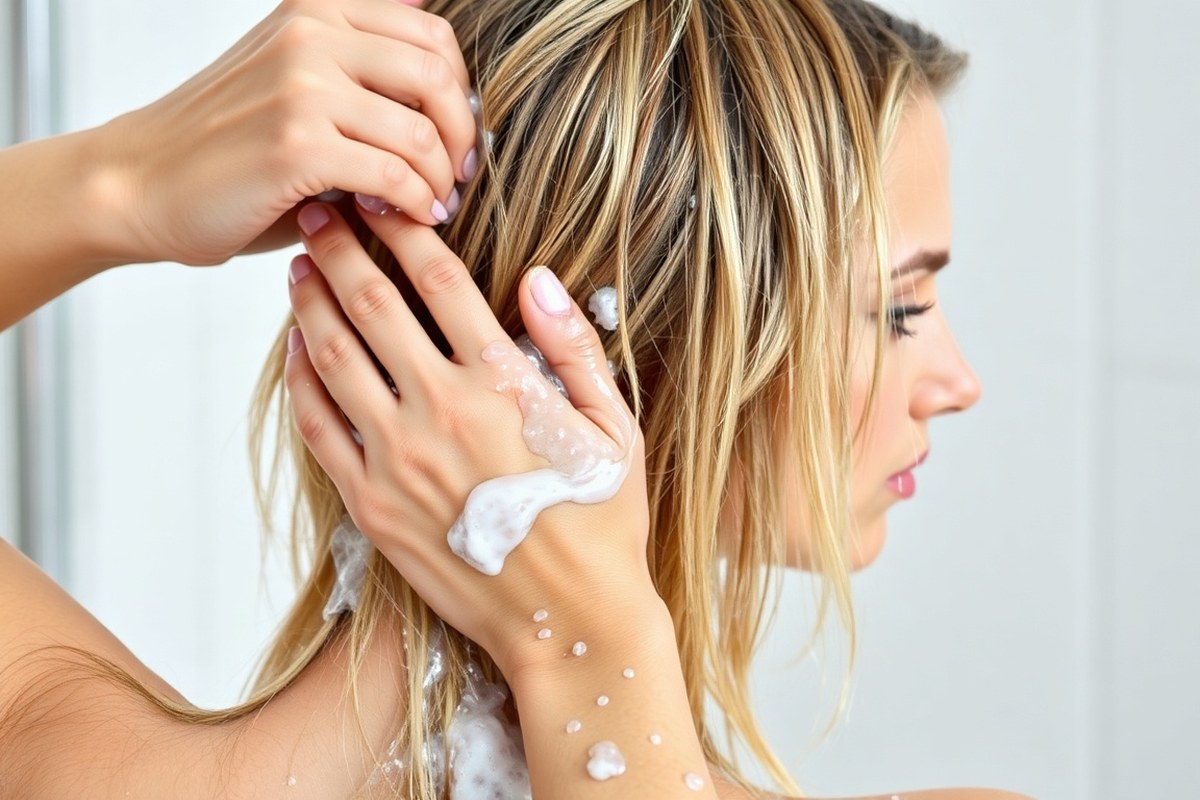
To use purple shampoo properly, wet your hair first with lukewarm water. Apply the shampoo to damp hair and massage it from roots to ends. After leaving it on for the right time, rinse with cool water and then condition.
Preparing Your Hair for Purple Shampoo
Start by soaking your hair with lukewarm water. This temperature helps open the hair cuticles and lets the shampoo work better.
Open cuticles absorb the purple pigment more evenly. Avoid cold or hot water first to keep the process smooth and controlled.
Application and Distribution Techniques
Apply the purple shampoo to damp hair, section by section. Focus extra on the mid-lengths and ends, where brassiness usually shows.
Massage the shampoo gently from root to tip using your fingertips. This spreads the pigment evenly and prevents patches of uneven toning.
For dry or very brassy hair, you can try applying the shampoo dry. This method deposits more pigment but risks uneven color if not careful.
Rinsing and Conditioning After Shampoo
Rinse out the purple shampoo using cool water only. Cool water seals the cuticles and helps lock in moisture.
After rinsing, apply a conditioner to nourish your hair. Conditioner keeps your strands soft and hydrated after the pigment treatment.
Put on a shower cap if you leave the shampoo on longer than recommended. This keeps the product from drying out on your hair.
- Wet your hair thoroughly with lukewarm water to open cuticles.
- Section your hair and apply purple shampoo to each part, focusing on brassy areas.
- Massage shampoo gently from roots to ends for even coverage.
- Leave the shampoo on the time suggested on the bottle, usually 2 to 10 minutes.
- Use a shower cap when leaving shampoo on for longer durations.
- Rinse your hair fully with cool water to close cuticles and retain moisture.
- Apply conditioner to the hair after rinsing to restore softness.
How Long to Leave Purple Shampoo for Best Results
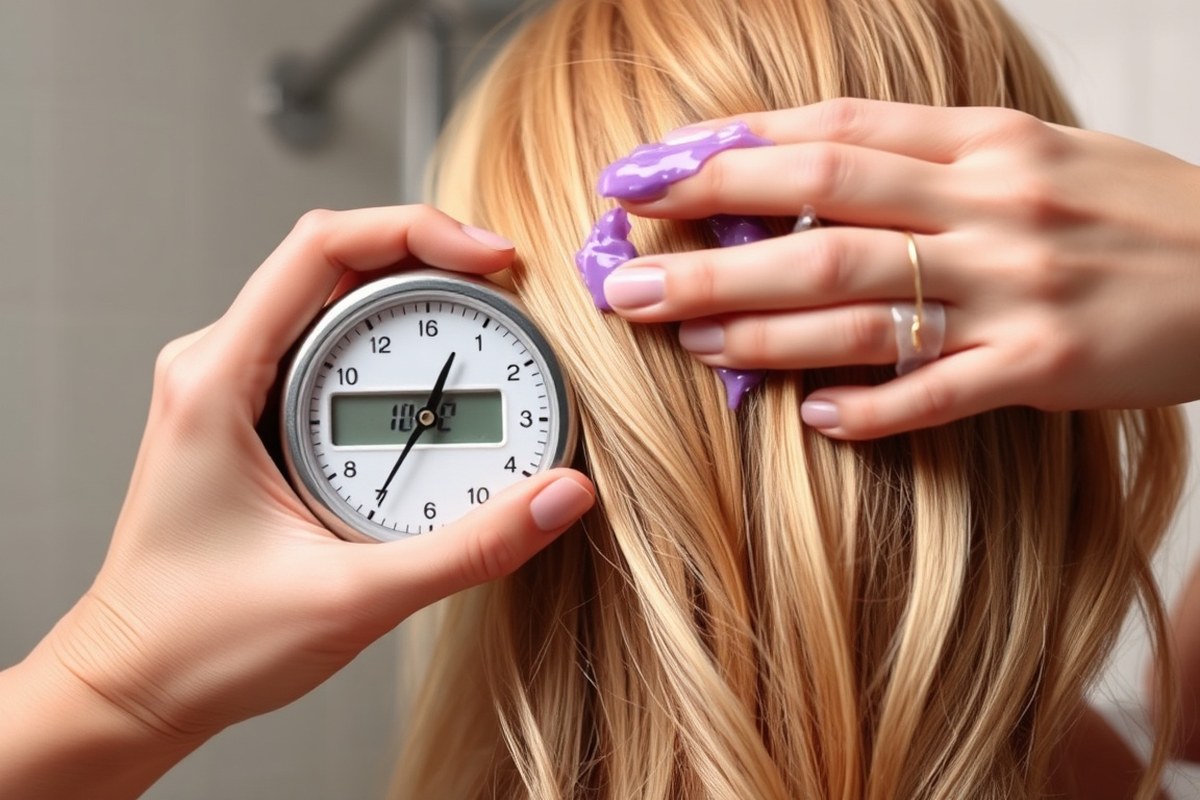
Leave purple shampoo on your hair between 1 and 10 minutes. The timing depends on your hair’s color, porosity, and how brassy your hair feels.
Use shorter times for natural blondes and grays. Longer times for bleached or coarse hair.
Timing for Different Hair Porosity Levels
Hair porosity affects how fast purple pigment soaks into your strands. Low porosity hair resists absorbing color. So you may need to leave the shampoo on nine to ten minutes.
High porosity hair takes in color quickly. It means your hair is very porous or damaged. You only need to leave toner on for 1 to 3 minutes.
Porous hair also fades color faster, so shorter processing prevents over-toning. Notice a purple tint after rinsing?
That shows your hair might be high porosity. Adjust the timing to prevent this.
Timing Based on Hair Color and Condition
Natural blondes with light warmth leave purple shampoo on for two to three minutes. Bleached or color-treated hair usually needs five to ten minutes to neutralize stronger yellows. Gray, silver, and platinum shades absorb pigment quickly and need only one to three minutes.
First-time users should start with one to two minutes to test how their hair reacts. Highlights or balayage with mild brassiness take three to five minutes. Coarse or low-porosity hair may need up to ten minutes.
| Hair Situation | Recommended Time |
|---|---|
| First time using purple shampoo | 1 to 2 minutes |
| Natural blonde with light warmth | 2 to 3 minutes |
| Highlighted or balayage with mild brassiness | 3 to 5 minutes |
| Bleached blonde with stronger yellow tones | 5 to 10 minutes |
| Yellow tones appear on gray, silver, or white hair. This unwanted brassiness often dulls your light color. | 1 to 3 minutes |
| Coarse, low-porosity hair that resists toning | Up to 10 minutes |
Applying the right time helps you avoid a purple tint and get the best tone. Use more time only when your hair is heavily bleached or coarse. Shorter times protect fine and light hair from purple stains.
Risks of Overprocessing Purple Shampoo
Leaving purple shampoo on too long can cause a lilac or purple tint. This is especially true for porous, platinum, gray, and very light blonde hair. Purple tint is temporary but can look uneven and hard to remove.
Excessive timing may dry out or damage hair, especially if it’s brittle or chemically treated. Avoid leaving the shampoo for more than ten minutes. Watch how your hair looks each time.
See purple color after rinsing? Try using less time for toning next time.
Test purple shampoo on a small hair section first to avoid unwanted purple tint.
How Often Should You Use Purple Shampoo?
Using purple shampoo every day can make your hair dull or purple. Most people see the best results using it once or twice weekly. The amount you use depends on your hair condition.
Your hair’s porosity affects how often you should reach for purple shampoo. Healthy, low-porosity hair needs purple shampoo about 1 to 2 times a week. Porous or damaged hair needs purple shampoo less often.
Use it once every 1 to 2 weeks. This helps avoid over-toning and drying out your strands.
Alternate purple shampoo with your regular shampoo for fresher blonde hair. This stops overusing purple shampoo. It helps keep your hair color balanced.
This switch keeps your hair cleansed without depositing too much purple pigment. For example, after a purple shampoo wash, use regular shampoo the next time.
- Use purple shampoo 1, 2 times weekly for low-porosity hair.
- For porous hair, limit use to once every 1, 2 weeks.
- Alternate purple shampoo days with regular color-safe shampoo.
- Follow purple shampoo with a moisturizing conditioner.
- Deep condition once a week to combat purple shampoo’s dryness.
- Avoid leaving purple shampoo on longer than recommended.
Deep conditioning is key when you use purple shampoo regularly. Purple shampoo can dry out curls and bleached hair. Use a deep conditioner at least once a week.
This keeps your hair soft and healthy. This step helps replace moisture and keeps your hair soft and healthy.
You’ll want to watch your hair color and texture to adjust your schedule. Too ashy or purple hair means purple shampoo is used too often. Cut back on it and use deep conditioner more.
This restores your hair’s natural tone. Keeping your hair hydrated lets you maintain a fresh, brass-free blonde without over-treating your hair.
How Purple Shampoo Works to Neutralize Brassiness
Purple shampoo targets yellow and brassy tones in blonde or light-colored hair. Purple is opposite yellow on the color wheel. This means it cancels out yellow tones.
Applying purple pigment reduces yellow brassy hues. Color theory shows why purple shampoo works well.
It neutralizes unwanted warm tones in hair color. This helps keep your blonde cooler.
The color wheel is a circle of colors that shows opposite hues neutralize each other. Purple is directly across from yellow.
So purple pigment deposits counteract yellow pigment on your hair strands. This effect helps maintain cool, natural-looking blonde shades without the brassy yellow cast.
Purple does not cancel orange tones. Blue, not purple, is opposite orange on the wheel. Orange brassiness needs blue or blue-violet shampoo instead.
Try blue or blue-violet shampoo if your hair looks orange or very warm. These colors cancel out orange tones better.
Purple may not work well then. For yellowish brassiness, purple shampoo deposits violet color that balances out the yellow strands evenly.
Purple shampoo does not actually lighten your hair. Instead, it hides yellow tones, making hair look more neutral and sometimes brighter. Violet pigment covers yellow pigment.
This makes blonde hair look cooler. It can even make hair seem lighter without bleaching.
The violet pigment in purple shampoo coats your hair strands to fight brassiness. It deposits color that cancels yellows while cleansing your hair. Regular shampoos remove oils but don’t change colour.
Purple shampoo works best after cleansing hair well. Cleansing removes buildup for even pigment deposit. This means better results from the purple shampoo.
Adjusting Purple Shampoo Use by Hair Type and Condition
Hair porosity affects how purple shampoo pigments soak in. High-porosity hair absorbs more color than low-porosity hair. It may turn purple or gray if left too long.
Keep an eye on your rinse time. Low-porosity hair resists pigments and may need a longer wait time, especially for brassy color-treated hair.
Damaged or dry hair can use purple shampoo safely. But you need a gentle formula.
Shampoos with nourishing ingredients like avocado oil and glycerin help hydrate while toning. Let these shampoos sit just 2 to 3 minutes to avoid extra dryness or damage.
You have natural blonde or light brown hair. Purple shampoo helps keep yellow tones away.
Let it sit for 2 to 3 minutes before rinsing. Avoid leaving it longer unless your hair is heavily brassy, to prevent a faint purple tint.
Gray, silver, or white hair benefits a lot from purple shampoo. These shades tend to yellow. Purple carefully cancels that out to keep a natural shine.
Use purple shampoo gently. Rinse your hair after 2 to 3 minutes. This helps avoid drying your fragile strands.
Color-treated hair must be treated carefully with purple shampoo. It can help neutralize brassiness, especially on lightened or highlighted hair. Leave purple shampoo on up to 15 minutes only if hair is strong.
Avoid long sitting time if hair is damaged. Check your hair’s condition first.
Purple shampoo may dry out hair if used too often. It’s worse on damaged strands. Don’t leave it on too long.
Common Purple Shampoo Mistakes and How to Fix Them
Using purple shampoo the wrong way often causes uneven brassiness or unwanted purple stains. This happens when you leave it on too long, apply it unevenly, or overuse it. Using too much can make your blonde dull.
It might leave a lilac tint. Strong formulas cause this most often.
Leaving purple shampoo on more than 15 minutes risks a purple or ashy tint. Hair might look dull or have a grayish or lavender cast after washing. Your hair looks too toned or has purple spots?
Rinse it immediately. Use conditioner to soften and reduce the tint.
Uneven brassiness often happens by not spreading the shampoo evenly on all hair sections. Work it through from roots to ends to avoid uneven color and patches of brassiness. Use a wide-tooth comb while shampooing to distribute the product evenly.
- Check the purple shampoo strength, choose violet shampoo for honey or highlighted blondes.
- Use a timer to avoid leaving shampoo on too long, check color every minute.
- Dilute strong shampoo with water to cut its intensity for sensitive blonde hair.
- Apply shampoo section by section to prevent patchy results.
- Limit use to once a week or less, depending on your hair tone.
- Rinse thoroughly and follow with conditioner to avoid dryness.
- Consult a hairstylist if unsure about your hair’s needs or results.
Dilution can help if your purple shampoo feels too strong or dries out your hair. Simply mix a small amount of shampoo with water in your palm before applying. That lowers pigment concentration and reduces over-toning risk.
Sometimes you might need a professional’s help if purple shampoo causes too much tint or dryness. A stylist can correct uneven tones or suggest treatments for brittle hair. They have stronger toners that last longer.
These also suit your hair type better. Use these for more durable color fixes.
Purple Shampoo vs Blue Shampoo: Which One to Use?
Purple and blue shampoos fight brassiness but target different tones. Purple shampoo mainly cancels out yellow tones, perfect for lighter or blonde hair. Blue shampoo works best on orange tones, which often show in darker or brunette hair.
Target Brassiness: Purple vs Blue
Purple shampoo uses violet pigments to neutralize yellow and light brassiness. It helps blondes keep a cooler, fresh look by removing yellow tint. Blue shampoo targets orange tones often near darker roots.
It’s mainly for brunettes. It works well on brassy areas.
Both shampoos balance warm unwanted colors by using complementary shades on the color wheel. Purple cancels yellow because purple and yellow sit opposite. Blue cancels orange for the same reason.
| Shampoo Type | Target Tones | Best for Brassiness |
|---|---|---|
| Purple Shampoo | Yellow | Light blonde, platinum, gray |
| Blue Shampoo | Orange | Darker blonde, brunette, black |
| Purple Shampoo with Blue Hint | Light orange, yellow | Light highlights with mild orange tinge |
Some purple shampoos mix blue pigments lightly. This helps with mild orange tones too. Using blue shampoo works best if your orange brassiness is strong or in darker hair.
Formula Strength and Usage Differences
Blue shampoos tend to have stronger pigment meant for deeper orange tones. Purple shampoos vary in intensity but usually feel gentler on hair. Dark purple shades often lean towards indigo for platinum or light blonde hair.
You can alternate between blue and purple shampoos in one routine. Use blue shampoo for orange tones at roots or dark sections. Follow with purple shampoo on lighter ends to keep yellows in check.
Keep shampoo formulas in mind. Heavy pigment shampoos like some purples feel more intense. Don’t leave them on too long.
They need careful use. Both shampoos work better with warm water that opens the hair shaft slightly. Avoid hot water that fades color.
Recommended Hair Colors for Each
Purple shampoo suits blondes, platinum, or gray hair best. Look for darker purple or indigo formulas if you have pale hair. Avoid bright violet shades that may stain or feel harsh.
Blue shampoo is ideal for brunettes, dark blondes, and black hair fighting strong orange brassiness. It can also refresh darker-colored hair tones between salon visits.
Use both shampoos on mixed tones by switching between them. This helps balance your color. Brunettes can use blue shampoo on orange roots.
Use purple shampoo on lighter highlights. This combo controls brassiness well. This combo helps balance multiple unwanted warm shades in one routine.
Safety Tips and When to Consult a Professional
Test purple shampoo on a small hair section before full use. Apply a small amount, wait 5 minutes, then rinse. This helps check for unwanted color changes or irritation.
Look for signs of overuse like dryness, brittle strands, or uneven purple tints. Purple shampoo can dry hair, so limit use to once a week or less. Always follow with a moisturizing purple conditioner or hair mask.
Avoid purple shampoo right after bleaching or toning. Wait at least 72 hours before trying it. Sudden use may irritate scalp or damage weakened hair.
- Do a patch test on less visible hair strand.
- Wait 24 hours after patch test to observe any reaction.
- Use purple shampoo once a week at most.
- Apply a deep conditioner after each purple shampoo wash.
- Skip purple shampoo if hair is severely dry or damaged.
- Consult a pro if scalp is irritated or symptoms persist.
- Ask a hairstylist if unsure about your hair’s needs.
Consider professional advice if your hair feels fragile or you see no color improvement. Stylists can suggest customized toning treatments. They may recommend gentler products or conditioners to protect your hair.
Always follow manufacturer directions and avoid using purple shampoo more than once weekly to prevent damage.
Step-by-Step Action Plan to Use Purple Shampoo
Follow this plan to tone your light hair without damage. It ensures you get the right balance of brassiness control and hair health.
- Before you start: Read the shampoo label carefully. Do a patch test on a small hair part. This checks for allergic reactions and tone results.
- Day 1: Apply purple shampoo on wet hair. Leave the shampoo on for 3 minutes with fine or normal hair. Use 5 minutes for thicker hair instead. Rinse thoroughly and check the tone.
- Week 1: Use purple shampoo twice. Note any color changes and brassiness reduction. Adjust time by 1 minute longer if brassiness remains.
- After 2 weeks: Cut usage to once a week if your tone looks good. Overuse may cause a purple or gray tint.
- Adjust as needed: Use the shampoo less often for dry or damaged hair. Try every 10 days to keep hair healthy.
- Maintenance: Combine purple shampoo with a moisturizing conditioner. It keeps hair soft and avoids dryness commonly caused by toning shampoos.
- Monthly check: Assess your hair tone and health. Brassiness or brittle hair? Change how often you use the shampoo. You can also ask a stylist for advice.
Frequently Asked Questions
Can You Use Purple Shampoo on Highlighted Hair?
Yes, you can use purple shampoo on highlighted hair. It helps keep the highlights cool and reduces brassiness over time for a fresher look.
Can Purple Shampoo Cause Dryness?
Purple shampoo can dry out your hair if overused. Limit use to once or twice a week. Always follow with a good conditioner.
Is It Necessary to Use Conditioner After Purple Shampoo?
Yes, use conditioner after purple shampoo to restore moisture. Purple shampoos can be slightly drying. So conditioner helps keep your hair soft and smooth.
Can Purple Shampoo Lighten Hair?
No, purple shampoo doesn’t lighten hair. It tones down yellow and brassy tones but won’t bleach or change your natural hair color.
Should You Towel Dry Hair Before Applying Purple Shampoo?
Yes, towel dry your hair gently before applying purple shampoo. Hair that is damp but not dripping helps the shampoo distribute evenly.
Can I Use Purple Shampoo If I Have a Sensitive Scalp?
Use purple shampoo cautiously if your scalp is sensitive. Choose fragrance-free and pH-balanced options to avoid irritation.
The Bottom Line
Purple shampoo tones your blond and light hair without harsh damage when used right. Try the first step today to see how your hair reacts. Adjust timing and frequency gradually for the best results.


