

How to Use a Straightener Comb Safely: Step-by-Step Guide for Best Results
Knowing how to use a straightener comb helps you get smooth, shiny hair quickly. Heat settings matter a lot; start low and raise temperature as needed. This approach keeps hair damage low and styling easy.
Begin with clean, dry hair for the best results. Apply a heat protectant spray before you start straightening. This step cuts breakage and keeps your hair healthy longer.
Work in small sections, about one to two inches wide, for thick or curly hair. Glide the comb slowly from roots to tips for even heat distribution. Don’t leave the comb on one spot too long.
Choose the right comb size based on your hair texture for better control. Regularly clean the comb to avoid product buildup that can harm hair. Finish by applying a light serum to add shine and reduce frizz.
Key Takeaways
- Choose a straightener comb with ceramic or tourmaline plates for gentler heat.
- Adjust heat between 300°F and 450°F based on hair type and texture.
- Start with a low heat setting for fine or medium hair to avoid damage.
- Use higher heat (350°F to 400°F) for medium to coarse hair types.
- Section thick or curly hair into 1-2 inch parts for better straightening.
- Always apply a thermal protection spray before using the comb on hair.
How to Use a Straightening Comb: Step-by-Step Instructions

Using a straightening comb requires dry, detangled hair with heat protection. You part your hair into sections for easier styling.
Take your time and glide the comb slowly from roots to tips. Finish by applying smoothing products to keep hair sleek and frizz-free.
Preparing Hair Before Styling
Start by washing your hair with shampoo and conditioner suited for your hair type. Towel-dry completely, then blow-dry your hair until it’s fully dry.
Apply a thermal protection spray to shield your hair from heat damage. Hold the spray about 1 inch away and mist each section evenly before styling.
Sectioning Hair for Efficient Straightening
Divide your hair into three main sections using butterfly clips to keep it manageable. Leave about a 1-inch section out at your nape to work on last.
This keeps your hair organized and ensures you don’t miss any parts while straightening. Smaller sections let the heat comb glide smoothly and evenly.
Straightening Technique and Movements
Set your comb to the right heat for your hair type. Start on low heat and raise it only if needed. Avoid max heat to prevent damage.
Slowly glide the comb from root to tip on each 1-inch section. Keep the movement steady and avoid going over the same spot multiple times.
Finishing Touches After Straightening
Once all sections are straightened, apply a smoothing shine hairspray or straightening balm. This locks in the style and reduces frizz throughout the day.
Use a paddle brush to gently smooth your hair and blend the sections. Avoid touching your hair too much to keep it sleek longer.
- Wash and condition your hair, then towel-dry thoroughly.
- Blow-dry hair until completely dry to avoid heat damage.
- Apply thermal protection spray evenly on each section.
- Part hair into three sections and secure with clips.
- Release one section and comb through with the heated straightener slowly.
- Repeat for all sections, leaving the nape for last.
- Apply smoothing products and gently brush hair to finish styling.
Choosing and Adjusting Heat Settings for Hair Types
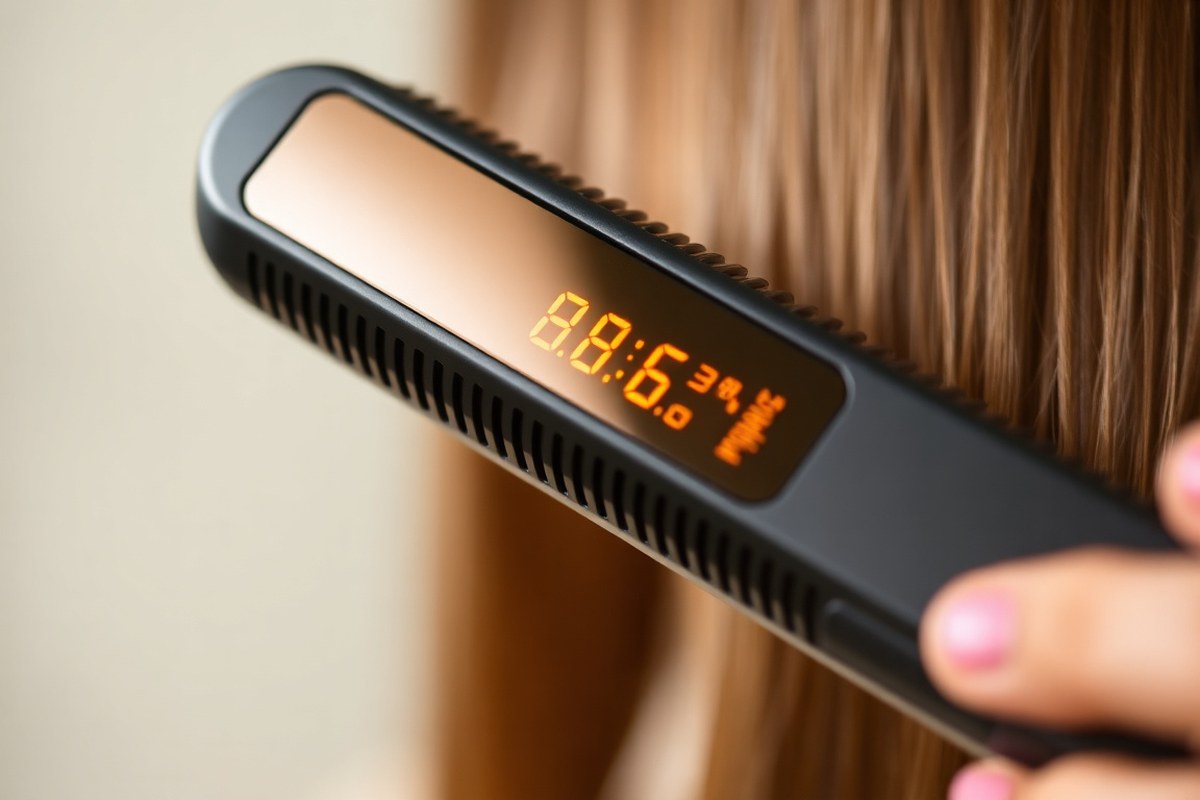
Choose a heat setting that matches your hair type and condition to prevent damage. Use lower temperatures for fine or damaged hair.
Higher for thick or coarse hair. Adjust heat upwards or downwards based on how your hair reacts during straightening.
Heat Settings for Fine and Thin Hair
Fine, thin, or damaged hair needs the lowest heat settings to avoid burning or breakage. Start around 300°F and don’t exceed 330°F. Testing on one strand helps see how your hair handles the heat.
This temperature range allows you to straighten without stripping moisture or weakening strands. Use a good heat protectant every time to reduce risk further. Keep the passes light and quick if you notice dryness.
Medium to Wavy Hair Temperature Guide
For normal or wavy hair, aim for moderate heat between 330°F and 360°F. This is the sweet spot for most hair textures, balancing smooth results with less damage risk. You might increase heat slightly for thicker areas.
At this range, the comb works effectively without needing repeated passes. When your waves loosen too much, increase temperature by 10-20 degrees, but avoid high settings. Always apply heat protectant before starting.
High Heat for Thick or Coarse Hair
Thick, coarse, or curly hair often requires heat from 360°F up to 400°F. For very coarse or resistant hair types, 400°F is the max safe level. Protect your hair well, since high heat can cause damage if used carelessly.
Multiple passes may be necessary for stubborn curls, but move the comb gently. Avoid exceeding 400, 410°F, as it can fry strands or lead to breakage. Use straightener combs with adjustable heat for exact control.
| Hair Type | Recommended Heat | Notes |
|---|---|---|
| Fine, thin, or damaged | 300°F, 330°F | Lower heat; test on a single strand first |
| Medium or wavy | 330°F, 360°F | Sweet spot for most people |
| Thick, coarse, or curly | 360°F, 400°F | May need a second pass on stubborn sections |
| Very coarse or resistant | 400°F (max) | Use only with quality heat protectant; do not exceed |
Adjust heat by checking how your hair feels during styling. Lower the temperature when the straightener pulls or hair looks dry. Increase heat slowly for stubborn areas, never past the max safe limit.
Always apply a heat protectant and start with the lowest heat that works for your hair.
What Is a Straightening Comb and How It Works
A straightening comb combines a comb with heated plates to straighten hair. You start at the roots and slowly comb down, using the teeth to detangle. The heated plates smooth the strands as you go, creating straighter hair.
This tool works differently than flat irons and straightening brushes. Flat irons clamp hair between two flat plates for pin-straight results. Straightener combs let you work through hair more naturally, keeping some volume and flexibility.
Compared to straightening brushes, the comb gives better access to roots. It detangles as it heats, unlike flat irons, which don’t detangle hair. The comb’s teeth spread hair out, letting heat target each strand more evenly.
You’ll find straightening combs in several types. Some have ceramic plates, which heat evenly and reduce damage. Others release negative ions to fight frizz and dryness, great for color-treated or coarse hair.
Thick or curly hair needs smaller sections for straightening. Use sections about 1 to 2 inches wide. This size helps make straightening easier and faster.
Using a straightening comb often is gentler on your hair. Flat irons use much more intense heat than combs do. This can reduce damage and dryness over time.
Flat irons might suit you if you want very sleek and smooth ends. Meanwhile, a straightening comb keeps some body in your hair and cuts down styling time. Prices for straightening combs usually range from $20 to $80, depending on features.
Using a straightening comb well means moving it slowly through dry hair. Hair that’s damp or wet can cause uneven results or damage.
So always dry hair first. Keeping your hair moisturized before styling helps achieve smooth, frizz-free strands.
Common Mistakes to Avoid for Healthy Hair
Using the wrong heat setting can seriously damage your hair. High heat on fine or damaged hair dries it out and causes breakage. Low heat may not work well on thick hair.
It might waste your time. Doing repeated passes can cause extra damage.
Many people make the mistake of using their straightener comb on wet hair. Wet hair is fragile and more likely to break. Heat and moisture together create steam, which can burn your scalp and weaken hair shafts.
Holding the comb too long in one spot can cause frying or sizzling sounds. This means moisture is trapped, or the heat is burning your hair. Slide the comb slowly and evenly to prevent hot spots.
- Always dry your hair completely before straightening.
- Use the right heat: around 300°F for fine hair, 350-400°F for thick hair.
- Work in small sections, about 1 to 3 cm wide, for better control.
- Keep the comb moving steadily; don’t pause in one place.
- Choose a comb with negative ions to reduce heat damage.
- Rinse hair thoroughly to remove shampoo or conditioner residue first.
- Power off and unplug the device immediately after use.
Heating damp hair causes steam that can hurt your scalp and hair. Always make sure hair is dry before you start. Work with small sections near the roots and slowly slide the comb down to the ends.
A sizzling noise means you’re either on wet hair or holding the comb too long. You should hear a smooth gliding sound instead. Using a negative ion comb can lower static and keep your hair smooth after straightening.
Preparing and Protecting Hair Before Straightening
Always start with clean, completely dry hair before using a straightener comb. Wet or damp hair can create steam that causes burns and damage. Use a hair dryer to finish drying your hair if needed.
Make sure every strand is completely dry. This helps your hair stay smooth and healthy.
Detangle your hair gently using a wide-tooth comb or brush before applying heat. This step stops hair from getting caught and breaking during straightening. The straightener comb’s teeth help with detangling, but starting smooth helps protect hair better.
Applying a thermal protection spray or leave-in product is essential. These products shield your strands from heat and reduce damage risk. Spray evenly on hair before heat styling, covering every section lightly without overloading.
After using thermal spray, wait a minute to let it settle before you start straightening. This helps the product absorb well and work best. Good thermal protection products cost about $8 to $20.
They usually last for several weeks of use. Applying them helps protect your hair from heat damage.
For natural or relaxed hair, finishing with a lightweight serum or oil adds shine and smoothness. They help hold your style longer and reduce frizz. Apply just a few drops to your palms and smooth over your hair ends.
Keep the comb moving while straightening to avoid heat spots that cause damage. Hot teeth sitting in one place can burn hair quickly. Moving steadily also helps create even, natural-looking straight strands.
Never use a straightening comb on wet hair. Always fully dry your hair first to avoid burns and damage.
Maintaining and Cleaning Your Straightening Comb
Always unplug your straightening comb right after using it to stay safe. Place it on a heat-safe stand and wait until it cools fully. This stops burns and protects the heating elements inside the comb.
Clean your straightener comb once a week to keep it running smoothly. Use the small brush that usually comes with it to clear hair and product from the teeth. Be sure the comb is unplugged and cooled down before cleaning.
Wipe the heated parts gently with a damp cloth if you notice residue. Avoid harsh chemicals or soaking the device, which can cause damage. Regular cleaning helps your comb stay effective and safe for years.
Store your straightening comb in a dry place, away from water and heat sources. Use a heat-resistant mat if placing it on surfaces. Coil the cord loosely to prevent damage and tangling.
Check the cord and plug regularly for frays or damage. Spot any damage or issues?
Stop using the comb right away to avoid shock risks. Proper care lowers repair costs and extends your comb’s life.
Safety Tips and Troubleshooting Common Issues
Hair burns mostly when you use a straightener comb on wet hair. Wahl says that using high heat on damp hair causes this damage. This can hurt your scalp and ruin your hair.
Don’t touch the hot comb or the plug to avoid shocks or burns. Keep your hands away from these parts while using it.
Always use the straightener comb on dry hair and keep the device away from water. Move the comb continuously and don’t press it too close to your scalp to prevent burns.
Sometimes, hair can get damaged despite taking precautions. You can treat this by trimming split ends and using deep conditioning treatments. Try to reduce heat use temporarily until your hair recovers to avoid further damage.
- Use the comb only on fully dry hair to prevent sizzling.
- Keep the comb moving; don’t pause on one spot.
- Maintain a small gap between the comb and your scalp.
- Unplug the device after use to avoid accidental burns.
- Avoid using metal or damaged straightening combs to prevent shocks.
- Apply heat protectant spray before straightening for extra care.
Pressing the hot comb hard on your scalp causes discomfort. Holding it too long on your skin also hurts.
To ease the scalp, lower the temperature or choose a comb with adjustable heat. Continuous movement reduces the chances of pain or redness.
Look for signs of heat damage like dry, brittle strands or split ends. These signs mean you should decrease heat or use protective products more often. Taking these steps helps you manage your hair health without giving up your styling routine.
Types of Straightening Combs and Their Best Uses
Straightening combs come in electric, traditional hot, and cordless types. Each style works better for certain hair kinds and situations. Choosing the right one depends on your hair texture and heat needs.
Also think about where you want to use it. This helps you pick the best tool.
Electric Straightening Combs
Electric straightening combs heat up quickly and keep a steady temperature. They usually have adjustable heat settings up to about 450°F. This helps you set the heat for your hair type.
It’s especially good for thick or curly hair. Matching heat means better results and less damage.
Many electric models feature bristles with ball tips that glide easily through stiff curls without pulling. They suit users who want fast, consistent results at home. These combs can cost anywhere from $30 to $80 depending on brand and features.
The design is often like a brush, letting you detangle and straighten simultaneously. For best results, use high heat on thick hair.
Always test on a small section first. This prevents damage to your hair.
Traditional Hot Combs
Traditional hot combs heat on a stove or with a built-in electric plate. Heating takes longer and requires careful temperature checks. These combs shine with natural, coarse, or very curly hair.
The comb’s flat teeth press hair straight and smooth with firm strokes. These tools usually weigh more, which helps control thick hair. But they can make your hand tired if used long.
Keep breaks to avoid strain. They usually cost $15 to $40 and last for years if well cared for.
These combs don’t have adjustable heat. You control temperature by how long they heat on the stove or if they’re plugged in. That takes practice for good, even results.
Cordless Models
Cordless straightening combs offer ease of use on the go and flexibility without wires. They use rechargeable batteries that generally last 20 to 30 minutes per charge. This suits quick touch-ups but might fall short for full styling sessions on thick hair.
These tend to be lighter and may have fewer heat settings than corded electric models. That limits how hot they get, often maxing around 400°F. Cordless designs need slower, careful combing to prevent frizz or missed spots.
They cost more, around $50 to $100, due to battery and portability features. Good for those who travel or want a lightweight, handy tool for quick fixes.
| Type | Heat Source | Heat Range | Best Hair Types | Portability | Typical Price |
|---|---|---|---|---|---|
| Electric Comb | Electric plug-in | Up to 450°F, adjustable | Curly, thick, natural | Low (corded) | $30 – $80 |
| Traditional Hot Comb | Stove or electric plate | No precise control | Coarse, very curly | Low (corded) | $15 – $40 |
| Cordless Comb | Rechargeable battery | Up to 400°F, limited | Fine to medium, touch-up | High (portable) | $50 – $100 |
Choosing a comb with bristles that fit your hair also matters. Curly or thick hair responds well to ball-tip bristles that reduce pulling. For finer hair, straight-edged bristles keep strands smooth without snagging.
Always test your comb’s heat on a strand away from sight to prevent burning or damage.
Step-by-Step Action Plan
Follow these simple steps to start using your straightening comb safely and effectively today.
- Before you start: Wash and dry your hair completely to avoid damage. Dry hair ensures even heat distribution.
- First use: Select a low heat setting based on your hair type. You want the comb hot but not burning your hair.
- During styling: Section your hair and comb slowly down each strand once. Check if hair feels smooth and not greasy.
- After 10 minutes: Assess how your hair looks and feel. If it is still frizzy, increase the heat slightly next time.
- After styling: Apply a heat protectant spray or serum to cool and seal your hair. Your hair should feel soft, not stiff.
- Daily use: Clean the comb carefully after every few uses. This keeps the comb working well and your hair healthy.
- After 1 week: Notice how your hair reacts and adjust the heat setting as needed. Avoid any signs of dryness or breakage.
Frequently Asked Questions
Can I Use a Straightener Comb on Wet Hair?
You should never use a straightener comb on wet hair. Wet hair heats unevenly, which risks damage and breakage. Always dry your hair completely before straightening for the best results and safety.
Is It Safe to Use a Straightener Comb Daily?
Using a straightener comb every day can damage your hair. Heat weakens hair strands, causing dryness and split ends. Try limiting use to a few times a week and always apply heat protectant spray.
Can a Straightener Comb Reduce Frizz?
Yes, a straightener comb can reduce frizz effectively. The heat smooths the hair cuticle, which lowers frizz and flyaways. For best results, use it on clean, dry hair and follow with a lightweight serum.
How Do I Choose the Right Temperature on My Straightener Comb?
Choose a lower heat near 300°F for fine hair. Use higher heat, up to 450°F, for thick hair. Adjust temperature based on your hair’s needs.
Starting low prevents heat damage, and you can increase heat if needed. Always test on a small hair section first.
What Is the Advantage of Ceramic Plates in a Straightener Comb?
Ceramic plates distribute heat evenly and help reduce hot spots that can burn hair. This material also smooths hair better and reduces static. It’s a good option for gentle styling on all hair types.
Can Straightener Combs Be Used on Curly Hair?
Yes, straightener combs can work on curly hair but need proper heat settings. Use moderate heat and section hair to avoid uneven straightening. Always prep curly hair with a heat protectant and comb through gently.
Before You Go
A straightening comb helps you get smooth hair fast when used correctly. Start with your hair dry and the right heat level. Try using it today with these simple steps and watch your hair improve gently without damage.


