How to Cut Hair by Yourself Man: A Complete Guide for Clean, Easy Results
Figuring out how to cut hair by yourself man saves time and money. With the right tools and simple steps, you can get a clean look at home. The key is patience because your first attempts won’t be perfect.
Start by choosing good clippers with adjustable guards to control length. Cutting your hair wet offers more control, but dry hair reveals the true shape. Set up a well-lit spot with a mirror and keep your tools close.
Take your time on the first cut, and trim a little at a time. Fix any mistakes by blending edges with scissors or a shorter guard. Small touch-ups every few weeks keep your style sharp without much hassle.
Key Takeaways
- Use clippers with guards to manage hair length safely.
- Cutting wet hair gives better control for straight cuts.
- Set up a bright, comfortable station with a large mirror.
- Trim little by little to avoid cutting too much at once.
- Blend uneven spots with scissors or a shorter clipper guard.
- Expect your first few haircuts to take longer than usual.
How to Cut Your Own Hair: Step-By-Step Basics for Men
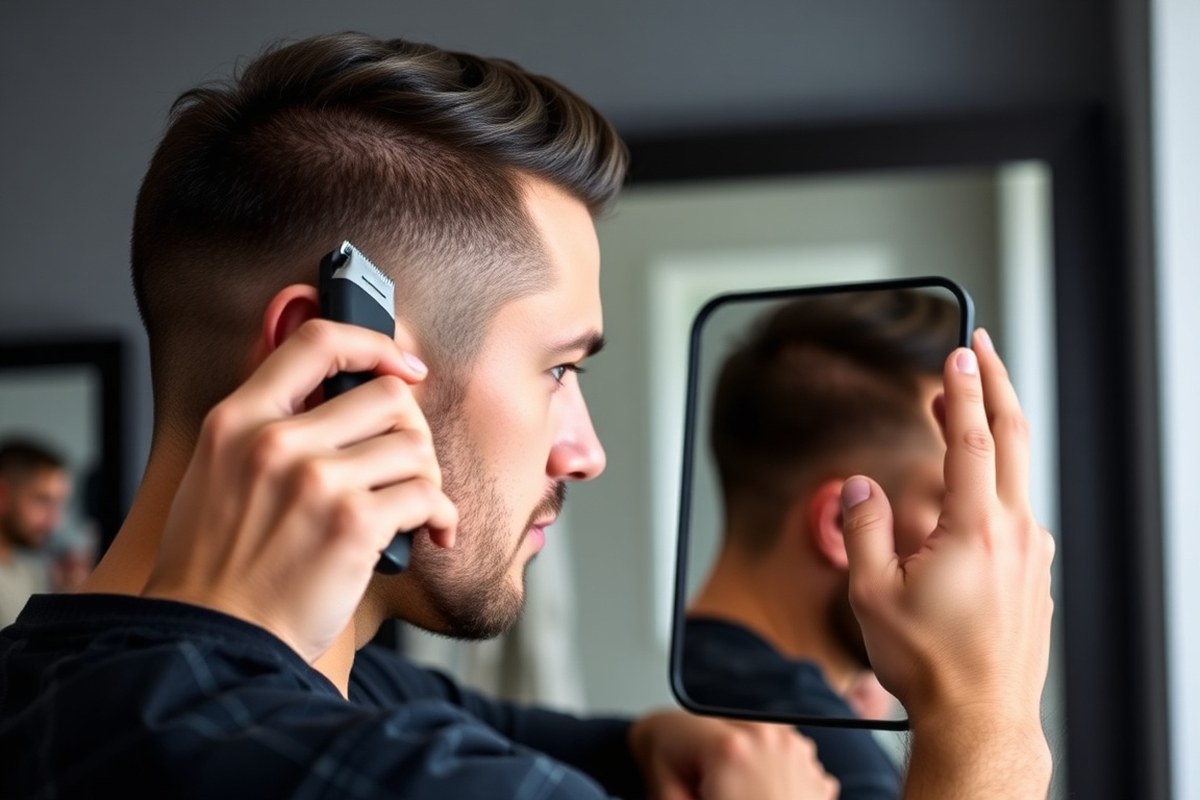
Cutting your own hair as a man starts with simple steps you can follow carefully. Most beginners find a uniform buzz cut easiest to try first. You work mainly with clippers, mirrors, and guards to get an even, neat look.
Preparing Your Hair and Workspace
Start with clean, dry hair that’s free of product. Dry hair helps you see length changes clearly and prevents clippers from clogging. Next, set up two mirrors to see all angles of your head, especially the back.
Place one mirror in front of you and the other behind. Hold the back mirror so you can check your hairline and sides. This two-mirror technique helps spot uneven spots without twisting your neck too much.
Using Clippers and Guards Effectively
Begin with the longest guard that matches the hair length you want on top. Attach that guard to your clippers before turning them on to avoid cutting too short. Run the clippers against the grain of your hair, moving slowly.
Cut the sides first. Start near the bottom of your head on one side and work upward.
Make sure you overlap passes slightly. Then move to the back, using the hand mirror to guide your strokes.
Trim the top last if you want different length there. For a buzz cut, use the same guard all over.
To do a fade, switch to shorter guards as you move down toward the neck. Getting smooth fades takes practice; keep your hand steady.
Finishing Touches: Edges and Clean-Up
Clean up your hairline with a bare clipper blade or a trimmer without guard. Use short, careful strokes along the neck and around ears. For edges, check your two mirrors often to keep symmetry.
Comb loose hairs away and recheck your cut. Touch up any missed spots. Use a handheld mirror to inspect your work from all sides before you finish.
- Wash and dry your hair fully before starting.
- Set up two mirrors: one in front, one behind.
- Attach the longest guard to clippers and trim sides upward.
- Use the hand mirror to cut the back with slow, overlapping strokes.
- Trim or buzz the top with the chosen guard.
- Switch guards shorter for fading the sides down to the neck.
- Remove guard and carefully clean up hairline and edges.
- Reinspect all angles with the two-mirror system and fix any uneven spots.
What Tools You Need to Cut Your Hair at Home

Get a good pair of hair clippers with multiple guards to start. Clippers make short haircuts faster and cleaner than scissors do. Choose scissors designed for hair cutting to trim longer spots or refine edges.
Clippers vary by price and quality. Budget models can cost $20 to $40 and handle most cuts. Premium clippers usually cost between $70 and $150.
They offer a smoother motor and quieter use. Their blades also last longer.
Scissors for hair should be sharp and comfortable. Look for 5 to 6-inch barber shears with stainless steel blades. Avoid cheap sewing scissors, they can damage hair and give jagged cuts.
Accessories like a comb, cape, mirror, and spray bottle help a lot. A comb sections your hair evenly, while a cape keeps clippings off your clothes. A spray bottle moistens hair before cutting if needed.
The numbers on clipper guards refer to hair length left after cutting. Here’s a quick chart for reference:
| Guard Number | Length (mm) | Length (inch) |
|---|---|---|
| 0 | 1.5 | 1/16 |
| 1 | 3 | 1/8 |
| 2 | 6 | 1/4 |
| 3 | 10 | 3/8 |
| 4 | 13 | 1/2 |
| 5 | 16 | 5/8 |
| 6 | 19 | 3/4 |
Clean hair cuts easier and protects your tools. Hair with product build-up can clog blades and cause uneven cuts. Regularly oil clipper blades to keep them sharp and running smooth.
Practice cutting in small sections to avoid mistakes and improve your control.
Should You Cut Your Hair Wet or Dry? Effects on Cutting
Wet vs. Dry Hair: Quick Choice
Cutting hair slightly damp works well with scissors. It helps keep hair manageable and easy to section. Dry hair is better for clippers to avoid uneven cuts and maintain shape.
Wet hair changes length and shape, which can mislead you on final results. Dry hair shows real texture and volume, letting you trim precisely for your style.
Why Slightly Damp Hair Suits Scissor Cuts
Damp hair holds together well, making it easier to snip straight lines. It shouldn’t be dripping wet because too much moisture makes the hair slippery. Lightly spray water to keep strands in place without shifting during cutting.
This method helps especially for length and layering since hair lies flat. You can section and comb it neatly, so cuts stay even and clean. It also makes blending easier between different hair lengths.
Dry Hair Works Best for Clippers
Clippers cut dry hair better because wet hair clogs blades and leads to uneven trimming. Wet hair can stick to the clipper guard, causing inconsistent lengths. Also, moisture and electricity don’t mix well, so clippers work safer on dry hair.
Make sure your hair is completely dry before cutting. Comb it well to remove any tangles. This helps the clippers or scissors work better.
Dry hair shows you the true length and how it falls. You avoid surprise patches or uneven spots after drying.
Hair Type Affects Your Choice
Thicker, curly, or frizzy hair cuts better when slightly damp. It’s easier to manage and less prone to flyaways. So scissors can cleanly snip without tugging.
Straight, fine hair can slip when wet. It needs some dampness to keep static and flyouts away. Use a little water, not too much.
For very curly or coarse hair, dry cutting with clippers might cause unevenness. Using scissors on damp hair reduces that risk and lets you shape the hair better. Adjust guard sizes carefully and cut slowly on dry hair if using clippers with curls.
Preparing Hair for Cutting
Wash and towel-dry your hair before cutting to remove oils and dirt. Comb through completely to detangle and set the hair in its natural fall. Lightly spray your hair with water to keep it damp.
Avoid soaking it when you cut with scissors. This helps you get a cleaner cut.
Dry your hair completely before using clippers. Wet hair can clog the blades and cause uneven cuts.
Comb it again to get rid of snags and ensure even length. Starting clean and dry helps your clippers cut smoothly and prevents pulling or clogging.
Setting Up Your Home Haircut Station for Best Results
Choosing the Right Space
Pick a spot with enough room for your tools and movement. An area near a sink or trash bin helps with cleanup. Make sure the surface is sturdy enough for your clippers, scissors, and comb.
Cleanliness is key. Wipe down surfaces before you start to avoid spreading hair everywhere. Sweeping soon after also keeps the space neat for your next cut.
Setting Up Mirrors to See All Angles
Use two mirrors to get a full view of your haircut. Place one mirror in front for your main view. Hold a smaller, handheld mirror behind your head to see the back clearly.
Hold the handheld mirror at different angles to check uneven spots. Stand in front of a big mirror. Hold a hand mirror too.
This helps you track your progress easily. This setup avoids crooked cuts.
Lighting That Shows Detail
Natural light works best if you can get it near a window. Bright, white LED bulbs mimic daylight well if natural light isn’t available. Avoid lights that cast shadows on your head.
Good lighting highlights your hairline and helps spot uneven areas. Position lights above or slightly in front of you to reduce harsh shadows. This makes trimming safer and more precise.
Keeping Clean and Comfortable
Wear an old T-shirt or a barber cape to keep hair off your clothes. A barber cape works best, but a towel around your shoulders can also help. Choose something easy to clean or disposable.
Have a towel or cloth handy to wipe clippers or scissors as you cut. This stops buildup and keeps tools working well. Clean scissors cut hair more evenly.
Home Haircut Station Checklist
Keep these essentials close by to save time during your cut:
- Two mirrors: one large wall mirror and one handheld mirror
- Bright, natural or LED lighting above or in front
- A sturdy chair with good back support
- Barber cape or old towel to catch hair
- Sink or trash bin nearby for easy cleanup
- Surface to hold clippers, scissors, combs, and spray bottle
- Towel or cloth to wipe tools during trimming
Having this setup ready before you start lets you work calmly. It also cuts down on mistakes and keeps you comfortable through the process.
Common Mistakes Men Make Cutting Hair Themselves and How to Fix Them
One common mistake is cutting hair too short on the sides. Many cut too high on the sides as well. This makes the style look uneven.
This can cause your hair to stick out in an odd way. Fix this by trimming little by little.
Stop often to check length in the mirror. This helps avoid cutting too much.
Uneven sides happen when you don’t keep the clipper steady or use an uneven hand. Use a hand mirror to see the back and sides well. This helps you spot trouble spots easily.
It keeps your haircut even. Spot uneven patches?
Trim them carefully in small sections. Doing this helps even out your haircut.
The neckline is another tricky area. Men often cut it too high, making the haircut look unnatural.
To fix this, set the neckline slightly below your natural hairline. Use short, gentle strokes with clippers or scissors and check with a mirror frequently.
- Don’t press clippers or scissors too hard; it causes uneven cuts.
- Cut less than you think you need to; you can always go shorter.
- Trim in good light with two mirrors for better angles.
- Comb hair back to natural fall before final checks.
- Use quality scissors with sharp blades for precise cutting.
- Take breaks to avoid rushing and making mistakes.
- Handle the neckline last for a clean finish.
Your cut is too short? Don’t panic or rush. Wait a few days to let it settle.
You can make it look intentional by blending the top with the short sides. Use a longer clipper guard to fade the top edges softly into the short parts. Styling products like pomade can also help press down any hair that sticks out.
Keep patience during every cut; rushing leads to mistakes you’ll regret.
Adjusting Haircut Techniques for Different Hair Types
Curly hair needs gentler cutting to avoid frizz and uneven edges. Use scissors to trim dry curls individually instead of clippers. Cutting hair dry helps you see the natural curl pattern and how each strand falls.
Thick hair can feel heavy after a haircut if not thinned out. Use thinning scissors to remove bulk without cutting length. Take small sections of hair and hold them between your fingers.
Snip a few times to soften harsh lines. This makes your hair easier to manage.
Thin or thinning hair demands a careful approach to avoid looking patchy. Avoid cutting too short, as this exposes scalp areas more. Use clippers with a guard size 1 or 2 for best results.
They keep some hair length while covering evenly. This helps your haircut look neat.
Fades and buzz cuts generally look good on most hair textures but vary in execution. For buzz cuts, clippers with guards work best. They give smooth length transitions in thick or curly hair.
This avoids patchy cuts and keeps your style consistent. For curly hair, cut when dry to avoid shrinkage changes after washing.
Your chosen tools affect how well the cut matches your hair pattern. Clippers with adjustable guards offer control for straight or thick hair. Scissors are better for curly or thin hair to prevent over-cutting and preserve texture.
Hold small sections of hair between your fingers before cutting. Take your time to use the hair as a guide. This helps you cut more evenly and safely.
Cut horizontally to keep an even length. Use a hand mirror to check hard-to-see spots. These habits help you stay consistent and avoid uneven patches.
How Long It Takes and Maintaining Your Haircut at Home
The first time you cut your hair at home, expect to spend 20 to 30 minutes. That time lets you work slowly and avoid mistakes. After you get comfortable, touch-ups are simple and quick.
They usually take 5 to 10 minutes. Do this every two to three weeks.
Hair length and experience change the time needed. Short hair cuts can be faster but risk uneven spots if rushed.
Longer hair takes more care and trimming. So plan for more time when you start cutting.
Trimming often keeps your haircut looking fresh and sharp. Setting a regular schedule helps you avoid big fixes later. Most men trim their hair every two to three weeks.
It depends on hair growth speed. Also, it depends on how sharp they want the style.
- Start by washing and drying your hair; clean hair cuts easier
- Use a good comb and sharp scissors or clippers for accuracy
- Trim small sections, about one-fourth inch thick, to control length
- Check your progress frequently with a hand mirror
- Keep your work area and tools clean for smooth cuts
Maintaining your haircut means sticking to a routine. Light trims every two weeks stop your style from getting messy or overgrown. You can fix uneven areas quickly and avoid longer sessions where mistakes are more likely.
Cutting your own hair is fine for regular upkeep. Still, visit a barber a few times a year. This keeps your style looking professional.
They can clean up hard-to-reach spots and offer advice tailored to your hair type. This blend of self-care and pro help works well for lasting style.
When to Seek a Professional Barber Instead of Cutting Yourself
Cut your own hair only if you stick to simple styles like buzz cuts. Complex fades or layered styles need a pro’s skill and special tools. A bad fade or uneven layers can look messy and take weeks to grow out.
You shouldn’t cut your hair if it’s severely damaged or tangled. Damaged hair often breaks easily, making it harder to get a clean cut by yourself. Your barber can cut split ends and frizz to improve your hair.
Visit a barber right away if you make a big cut mistake. Barbers use professional tools to even out uneven spots and fix mistakes faster. Trying to fix big errors yourself can make things worse and lead to uneven hair lengths.
Cut your hair only if you want a short, even style. Complex shaping is hard to do yourself. Keep it simple.
Call a barber for blending, layers, or styled looks like fades. They can handle textured crops too. Spend $20 to $40 at a barber if you feel unsure about cutting your own hair.
Cut small sections slowly and carefully; never rush or cut large chunks at once.
Step-by-Step Action Plan to Cut Your Hair by Yourself
Follow these simple steps to cut your hair at home confidently. Each phase builds on the last for a clean, sharp look.
- Before You Start: Gather your clippers, scissors, comb, and a mirror. Clear lighting helps check your work.
- First Cut: Trim the sides with clippers using a longer guard first. Stop when you see even length all around.
- Shape the Top: Use scissors to trim the top hair a little at a time. Make sure hair falls naturally without gaps.
- Blend Edges: Use a shorter guard to blend the sides into the top. It should look smooth and not choppy.
- Check in the Mirror: Use a hand mirror to view the back. Fix any uneven spots by trimming carefully.
- Clean Up: Brush off hair scraps and trim any stray hairs along your neckline and ears.
- After 2 Weeks: Assess regrowth and trim lightly to maintain your style. This keeps your hair neat and fresh.
Frequently Asked Questions
How Do I Avoid Uneven Hair When Cutting by Myself?
Start cutting hair in small sections and go slow. Check your progress often with a mirror to catch uneven spots early on. You can fix minor unevenness with small adjustments later.
Can I Use Regular Scissors to Trim My Hair at Home?
Regular scissors can work but hair-cutting scissors give cleaner cuts. They’re sharper and reduce split ends. If using regular scissors, cut very carefully and use small snips.
How Do I Cut My Sideburns Neatly on My Own?
Use clippers with a small guard or a trimmer for sideburns. Start trimming from the bottom up. Comb sideburn hair straight down to see the shape clearly.
Should I Wash My Hair Before Cutting It Myself?
Yes, washing hair helps remove oils and dirt for a clean cut. Dry hair slightly for better control and to avoid cutting too much. Damp hair shows natural fall and length more clearly.
How Often Should I Clean My Clippers When Cutting at Home?
Clean clippers after every use by removing hair and oiling blades. This keeps them sharp and prevents pulling or snagging hair. Proper care extends the life of your tools.
Is It Harder to Cut Curly Hair on My Own?
Cutting curly hair takes more care and patience. It’s best to trim curls dry to see their natural shape. Use scissors carefully to avoid frizz and uneven cuts.
Wrapping Up
You can cut your hair at home without stress by following simple steps. Start with small trims to build confidence. Grab your clippers and try your first cut today.