How to Tease Hair: A Complete Guide for Volume and Damage-Free Styling
How to tease hair is a common question for adding volume and style. Backcomb small sections gently toward the scalp to create lift without breaking strands. A fine-tooth comb works best because it grips hair well.
Start teasing about 3 to 4 inches from the roots with short, controlled strokes. Avoid long or harsh strokes to prevent damage and frizz. Lightly spraying hairspray on dry hair before teasing helps hold volume longer.
Always prep your hair dry and clean for the best results. Teasing tangled or wet hair increases breakage and frizz. A teasing brush or comb with smooth teeth makes teasing easier and safer.
Finish by smoothing the top layer gently without disturbing teased sections. This keeps your style looking natural and polished. Taking time and using the right methods avoids flat, lifeless hair.
Key Takeaways
- Use a fine-tooth rattail or “Never Let Go” comb for best control.
- Backcomb small 3/4 to 1 inch sections for natural volume.
- Start teasing 3 to 4 inches from the scalp to avoid damage.
- Mist flexible hairspray from 10 to 12 inches away to set volume.
- Always tease on dry hair to reduce breakage.
- Lift hair straight up with tension before teasing.
What Does It Mean to Tease Hair and Why It Works
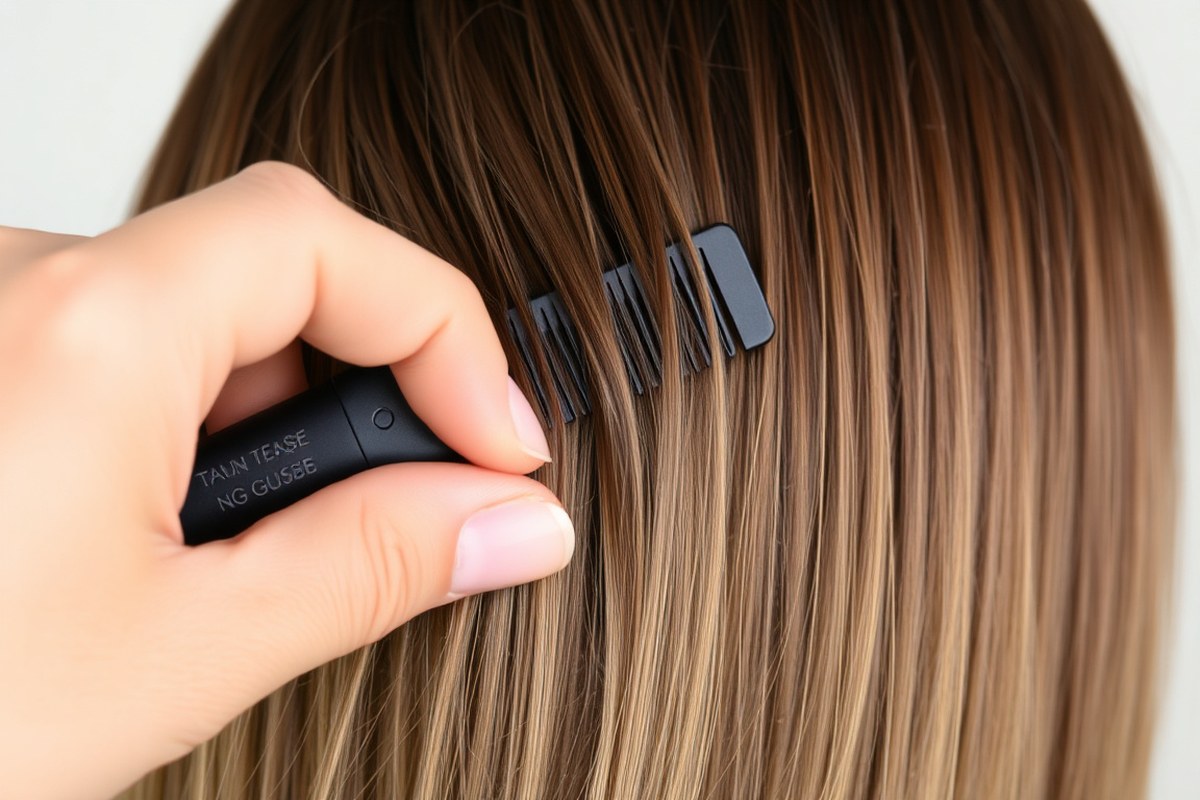
Teasing hair, also called backcombing, means combing your hair toward your scalp. This creates a cushion of hair at the roots that lifts your style. You gently push the comb down a small section while holding the ends up.
The volume appears because backcombing tangles the hair slightly near the roots. These tangles add texture and make the hair stand up more. The result looks fuller.
It gives your hair more body. This is great if your hair is fine or flat.
A tail comb with fine teeth works best for teasing. The tail helps separate sections.
The teeth catch more strands as you comb back. Before teasing, a light texturizing spray at the roots adds grip so the volume lasts longer.
Despite newer styling tools and products, teasing stays popular for its immediate lift and texture. It’s simple to do and doesn’t need heat, which can damage hair. You get a quick boost.
It helps styles like ponytails, buns, or waves. These look thicker and more styled.
Good teasing feels like gently ruffling hair instead of harsh combing. Avoid teasing dry, fragile hair too often because it can cause breakage. You’ll notice the volume right away.
It may feel rough or bumpy under the top layers. This is normal. You can smooth it out with a brush.
Choosing the Best Tools and Products for Teasing Hair

Use a teasing brush or a fine-tooth comb to tease your hair. These tools have dense, fine bristles that grip hair well. You’ll get volume with less damage because the bristles smooth hair while teasing.
For fine or fragile hair, gentle teasing is important. Use a soft teasing brush or a comb with fine teeth spaced closely. Avoid thick, coarse brushes that can pull and break delicate strands.
Styling products boost grip and help hold volume. Texturizing sprays and dry shampoos add texture and avoid slipping. Mousse or light wax works well on thick hair to give extra hold during teasing.
Choose hairsprays labeled as flexible hold to avoid stiffness or flakes. Avoid sticky formulas that can cause buildup or weigh hair down. Light sprays also help keep hair soft and manageable after teasing.
Hair clips save time and keep sections tidy. Use metal clips or claw clips to hold hair back. Separate your hair into small 1- to 2-inch sections.
Clip each section away as you tease. This makes teasing controlled and less messy.
Start teasing on second-day hair for best results. Fresh hair can be too slippery, so add dry shampoo if needed. For fine hair, tease gently near roots with short downward strokes to build height without damage.
| Tool or Product | Best For | How to Use | Price Range |
|---|---|---|---|
| Teasing Brush | All hair types, gentle on fine hair | Short strokes near scalp on small sections | $5 – $20 |
| Fine-Tooth Comb | Fine or fragile hair | Tease roots slowly to avoid breakage | $2 – $10 |
| Dry Shampoo | Slippery or fresh hair | Spray roots before teasing to add grip | $5 – $15 |
| Flexible Hold Hairspray | All hair types, keeps volume soft | Light mist after teasing to set style | $6 – $20 |
| Hair Clips | Sectioning hair for easier teasing | Use to pin back unteased hair sections | $3 – $10 |
Tease gently and in small sections to protect your hair’s health.
How to Prep Your Hair Properly Before Teasing
Your hair should be fully dry and lightly prepped before teasing. Dry hair holds volume better and avoids breakage. Applying a texturizing product and sectioning hair into small pieces helps create more control and lift.
Confirm Hair Is Completely Dry
Apply texturizing or root grip product Section hair into manageable pieces Working in small sections makes teasing easier and prevents tangles. Start by dividing hair into 4-inch chunks, then split those into two 2-inch sections. Hold each section taut for best results. A tight hold while teasing gives better volume. Focus on the crown or where you want extra lift. Clip finished sections out of the way to keep volume intact. Follow these steps to prep hair before teasing: Wash your hair and towel dry gently. Apply mousse to damp hair and blow dry upside down until dry. Spray texturizing or root grip spray at the roots and all over. Use a wide-tooth comb to detangle hair carefully from ends to roots. Divide hair into 4-inch sections, then subdivide into 2-inch pieces. Hold each section straight up with light tension before teasing. Tease small sections near roots to build volume. Clip teased sections away gently to maintain height.
Step-by-Step Guide to Tease Hair Like a Pro
Tease hair for volume by sectioning it carefully. Backcomb small sections near the roots. Use hairspray to lock in volume.
Use a comb and give each section multiple gentle backcombs. Mist flexible hold hairspray from 10 to 12 inches away.
This keeps your style lively. Avoid spraying too close to prevent stiffness.
Section Out Hair Carefully for Easy Handling
Divide your hair into manageable sections. Clip the top layers away to expose the part you want to tease first. This way, you avoid tangling and get better control over each section.
Start teasing at your crown or hairline, not all at once. Work with thin sections about 1 inch wide to make teasing easier. Thicker pieces can become messy and hard to smooth over.
Backcomb Small Sections Starting 3-4 Inches from Roots
Hold a small section straight up and place your comb 3-4 inches above the roots. Gently push the comb downward towards the scalp in short strokes. This creates a nest-like base that traps air and builds volume.
Backcomb only the roots. Avoid harsh yanking to prevent damage and tangles. Be extra gentle with fine or damaged hair.
Use a soft-bristle brush to smooth the edges later. This helps avoid breakage.
Repeat teasing on multiple small sections, moving around the area you want fuller. Each section adds extra hold and bounce.
Mist Each Teased Area with Flexible Hold Hairspray
Spray a light mist of flexible hold hairspray about 10 to 12 inches from the roots. This keeps volume without making hair stiff or crunchy. Avoid heavy sprays that weigh hair down.
Finish by releasing the clipped sections so they softly cover the teased base. Spray lightly again on top to lock everything in place. Lift roots with your fingers if volume fades.
Respray lightly for extra hold. Avoid heavy sprays to keep hair soft.
- Section out your hair into small, easy-to-work pieces.
- Start teasing at your hairline or crown with thin sections.
- Hold a section straight up and position your comb 3-4 inches above roots.
- Backcomb by pushing the comb downward in gentle, short strokes.
- Mist teased roots with flexible hold hairspray from 10, 12 inches away.
- Release clipped top layers to cover teased areas smoothly.
- Apply a final light hairspray mist over the whole style to lock volume.
- Refresh volume during the day by lifting roots gently and spraying lightly.
Common Mistakes When Teasing Hair and How to Fix Them
Teasing wet hair causes breakage because hair stretches more when wet. Roots that feel cool to the touch are especially vulnerable. Always wait until your hair is completely dry and detangled to start teasing.
Overteasing shows up as rough, tangled hair with a lot of texture. It looks messy rather than full. Avoid going over the same section repeatedly to stop extra damage and unwanted knots.
Skipping prep, like not brushing through tangles before teasing, leads to breakage and a messy finish. Fine hair needs extra care, so try backcombing gently instead of harsh teasing. This reduces pulling on delicate strands.
- Use a fine-toothed teasing comb, not a brush meant for smoothing
- Start teasing away from the scalp and work your way closer slowly
- Stop teasing once you reach the desired volume, don’t go farther
- Clip the top hair layer out of the way, then replace it after
- Do not touch or comb teased hair too often, it will fall flat
Pulling or tugging is a common mistake that damages strands. Instead, tease using gentle upwards strokes with your comb. When done, let the top layer fall naturally over teased sections to hide any rough texture.
Tangled hair after teasing is usually from overdoing it or skipping the prep step. It takes seconds longer to brush through hair before teasing.
But it saves you from painful knot removal. When you remove teased hair, do it gently to avoid damage.
Tease only dry, detangled hair to protect strands from breakage and stress.
Teasing is not a daily habit for fine or damaged hair. Use it sparingly to keep your hair healthy.
Practice makes perfect. So try teasing in small sections while keeping your hair soft and strong.
How to Tease Different Hair Types Without Damage
Teasing hair safely means changing your technique for different hair types. Fine hair needs gentle care, while thick or curly hair requires bigger sections. Layered or short hair needs teasing only at the roots.
This prevents damage. It also helps keep your style intact.
Teasing Fine Hair with Minimal Tension
Fine or fragile hair breaks easily if you use too much force. Use a soft teasing brush, like one with natural bristles that spread your hair’s oils. Take very small sections about ¼ inch wide.
Tease with slow, light strokes. Focus only near the roots.
Limit teasing to the top layers so you don’t tangle your hair. After teasing, smooth over softly with a wide-tooth comb or your fingers. This keeps volume without pulling hard on your strands.
Adapting Teasing for Layered and Short Cuts
Short hair or layers can’t hold teasing everywhere. Focus teasing on the crown and roots to boost volume exactly where you want it. Use slightly bigger sections, about ½ inch, and backcomb gently to avoid damage.
Keep your strokes controlled so the layers don’t become fuzzy or messy. Brush lightly through the teased parts to blend and create a natural look. Use a boar bristle teasing brush for short or layered hair.
It spreads oils evenly. This adds shine to your hair.
Preserving Natural Curls While Adding Volume
Teasing curly hair can damage the curl pattern if done roughly. Pick larger sections, around ½ to 1 inch wide, for teasing near the roots only. Use gentle backcombing motions without disrupting the curls’ shape below.
Stop teasing once you gain enough lift at the scalp. Avoid brushing through the curls after teasing.
Instead, use your fingers to separate and shape curls. This keeps curls bouncy while adding the volume you want.
How to Remove Teased Hair Gently and Maintain Health
Undoing teased hair requires patience and care to avoid breakage. Teasing opens the hair cuticles, which makes strands fragile and easy to damage. Detangling carefully helps prevent split ends and keeps hair healthy.
How often you tease hair matters. Doing it every day can quickly weaken your hair and lead to damage. Limit teasing to a few times a week and give your hair regular breaks to recover.
Post-teasing care supports hair health. Use a gentle conditioner and avoid heat styling for at least a day. A deep conditioning treatment once a week can help repair any damage caused by teasing.
Follow these steps to remove teasing gently and protect your hair:
- Apply a generous amount of conditioner or detangling spray. This adds slip and reduces friction on hair strands.
- For highly textured or coily hair, detangle in the shower using conditioner. Let the conditioner sit for a few minutes first.
- Start gently finger-combing to loosen the bulk of the teased sections. Work slowly to avoid pulling.
- Use a wide-tooth comb or detangling brush now. Begin at the ends and comb downward toward roots.
- Brush or comb in small sections instead of the entire head at once. This prevents large tangles.
- Be patient. Avoid forcing knots out as this causes breakage and split ends.
- Rinse out conditioner with cool water to help close the cuticles and seal moisture.
- Finish with a leave-in conditioner to add softness and protect strands throughout the day.
Gentle detangling takes 10 to 15 minutes depending on hair length and texture. Skipping conditioner or rushing can cause hair to snap or tangle worse. Taking your time ensures you keep your hair healthy and strong.
Creative Styles You Can Achieve with Teased Hair
Teasing adds instant volume to hairstyles like updos, ponytails, and loose textured looks. You can boost a ponytail’s fullness by lightly teasing the roots before smoothing the top back.
For updos, tease the crown and sides to add height. This helps the style stay lifted and not fall flat.
After teasing, use a brush with boar and nylon bristles. Gently smooth the top layer without pressing down too hard.
This blend helps your hair look full yet polished. It works well for loose styles where you want texture with a neat finish.
- Start teasing at the crown for natural height in updos.
- Use the pointed end of your teasing brush to create a sharp part.
- Apply a strong-hold hairspray before and after teasing for all-day hold.
- Lightly tease temple areas for extra width in low chignons.
- Use hands to gently lay smooth strands over teased sections for a polished look.
- For ponytails, tease roots, then brush hair back and secure tightly.
- Add a shine serum at the end to reduce frizz and boost smoothness.
Maintaining teased styles requires the right amount of hairspray and light touch when smoothing. Too much brushing can flatten your volume.
So only use a brush with soft pressure from roots to ends. Sculpt your strands with your fingers to hold texture while keeping a soft finish.
Choose a brush rather than a comb to smooth teased hair. This method maintains fuller volume for a longer time.
Different hair types can benefit from teasing, especially fine hair that needs extra lift. Just remember to tease gently to avoid damage or tangles.
Teased hair pairs well with styling gel or shine serum. These products hold texture and give a polished look.
Step-by-Step Action Plan to Master Teasing Your Hair
Follow these steps to get volume and style safely. Check each result before you move on.
- Before You Start: Gather a fine-tooth comb, a gentle hairspray, and a detangling spray. Make sure your hair is clean and dry for the best hold.
- First Try: Practice teasing a small section near the crown of your head. You’ll know it’s right when you feel a soft cushion of hair beneath the surface.
- Day 1: Tease all desired sections using short, light strokes. Your hair should feel fuller but not stiff or tangled.
- Day 2: Use a light hairspray to set the teased areas. Watch for a natural finish without crunchiness or flakes.
- Week 1: Try teasing different hair types and spots. See which gives the most volume without damage. Keep it gentle and watch your hair’s reaction. Notice which method feels gentler on your hair.
- Week 2: Practice removing teasing gently at the end of each day. Use a wide-tooth comb or your fingers to smooth hair without pulling.
- After 2 Weeks: Maintain your hair health by using deep conditioning treatments twice a week. Your hair should stay soft and resilient despite regular teasing.
Frequently Asked Questions
How Do I Avoid Tangles When Teasing Hair?
Always start with dry, detangled hair. Tease small sections gently to prevent knots.
Can I Tease Damp Hair for Better Volume?
Avoid teasing damp hair; it causes damage. Make sure hair is fully dry first.
How Often Should I Tease My Hair Without Causing Damage?
Limit teasing to special occasions. Give hair breaks to keep it healthy.
Is It Better to Use Fingers or a Comb for Teasing?
Use a fine-tooth teasing comb for best results. Fingers don’t create enough lift.
Can I Tease Hair with Extensions or Wefts?
Yes, tease the wefts gently. This adds volume without stressing natural hair.
How Do I Keep My Teased Style Longer Without Stiffness?
Lightly spray a flexible hairspray. Avoid heavy sprays that make hair stiff.
Before You Go
Teasing your hair creates volume when done carefully. Keep tools gentle and avoid rough strokes. Try teasing today to see how much fuller your hair looks in minutes.