
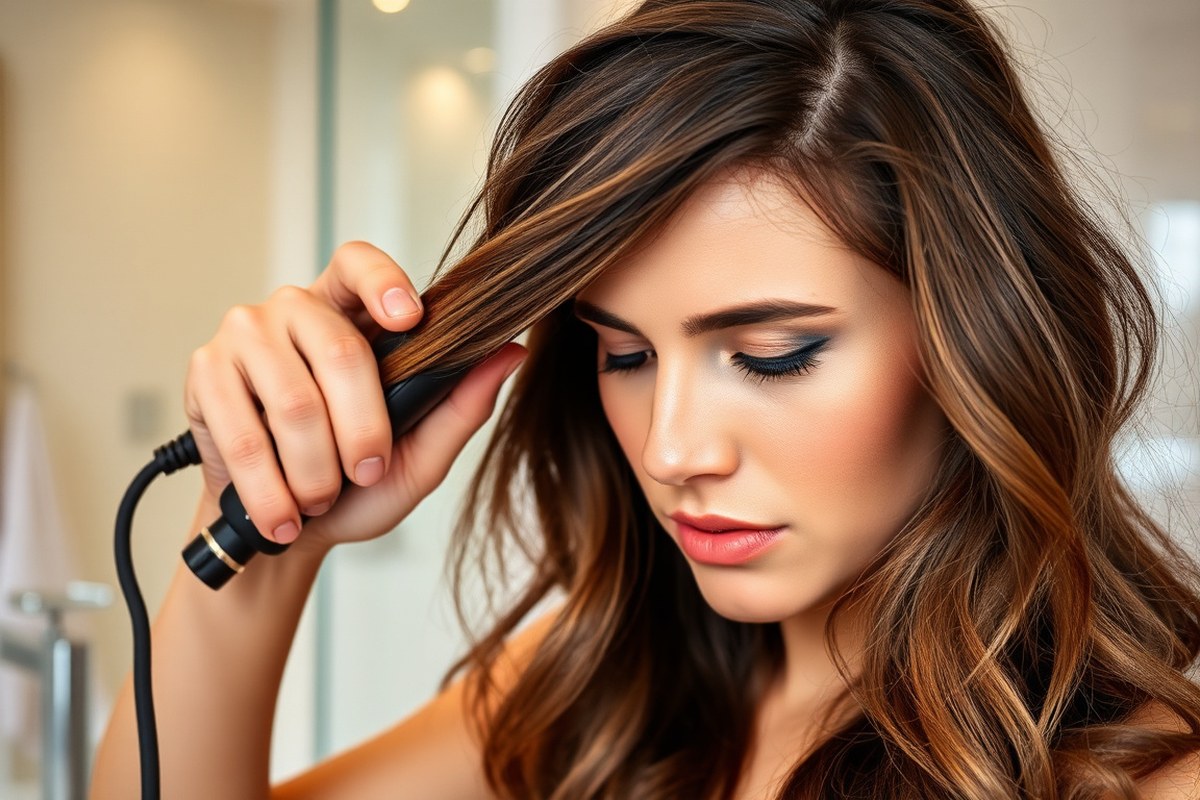
How to Use Straight Iron for Perfect Hair: A Complete Guide for Beginners
How to use straight iron correctly matters for sleek, healthy hair. First, start with clean, dry hair to avoid damage and uneven straightening. Use a heat protectant spray on damp or dry hair to keep strands safe from heat.
Set your iron’s temperature to match your hair type. Use lower heat for fine hair. Use higher heat for thick hair textures.
Section your hair into manageable parts to get each strand nicely straightened without redoing any area. Move the iron smoothly and don’t stay too long on one spot to prevent burns.
Pick a flat iron with the right plate size for your hair. One inch plates usually work best. This size gives better control and styling results.
Rounded plates help avoid creases or harsh lines at your hair ends. Take your time. With practice, you’ll master the technique and keep your hair healthy.
Key Takeaways
- Always shampoo and dry your hair fully before using a straight iron.
- Apply a thermal protectant spray for heat protection up to 450 degrees.
- Use 300°F or less if your hair is fine; never exceed 340°F.
- Section your hair into small parts for even, smooth straightening.
- Choose flat irons with ½ to 1-inch plates for easier handling.
- Rounded edges on plates prevent creases and bent ends.
How to Use a Straight Iron the Right Way

Using a straight iron correctly changes how your hair looks. It also affects how it feels. This makes a big difference in your style.
Clamping small sections helps you get each strand smooth without overheating or missing spots. Work slowly and carefully when using the iron.
Start near the roots. Keep it away from the scalp to avoid burns.
Taking your time means fewer passes, which reduces heat damage. Aim for one or two passes per section instead of rushing through it quickly. A good flat iron helps your hair glide smoothly.
Ceramic or titanium plates work best. They give you silky, straight hair in minutes.
- Separate your hair into small 1-inch sections. Smaller sections let you control the heat better and smooth each piece evenly.
- Clamp the flat iron near your roots, about half an inch away from your scalp. This avoids burns while making sure your roots get straightened too.
- Slowly glide the iron down each section towards the ends. Pull the iron in a smooth, downward motion to prevent bends or creases.
- Limit yourself to one or two passes over each section. More than that can damage your hair. Slower strokes work better than repeating fast passes.
- Gradually release clips and work through all hair sections one by one. Don’t rush; this ensures every strand is straight and smooth.
- Use an iron with rounded edges if you want to avoid sharp lines or bends. These models help make your ends look natural and sleek.
Heating your hair too fast or on thick chunks leads to uneven results. You won’t get that smooth, shiny finish if multiple passes ruin the hair’s surface. Use slow, steady strokes on small hair sections near the scalp.
Then move evenly toward the ends. This helps your hair straighten nicely.
For natural hair textures that are prone to damage, handling each section gently is extra important. Use a heat protectant spray to guard against heat damage. Choose one that protects up to 450 degrees.
This adds safety at higher temperatures. This step keeps your hair healthy during straightening.
Choosing the Right Flat Iron for Your Hair Type

Picking the right flat iron depends on your hair length, texture, and styling goals. Smaller plates suit short hair.
Larger plates work best for long or thick hair. Understanding plate materials and edge shapes helps you get smooth, shiny results without damage.
Plate Sizes Explained
Flat iron plates usually come in widths of 1 inch or more. Small 0.5 to 1-inch plates are ideal for short or fine hair. They let you style curls or waves and reach close to the scalp easily.
For medium-length hair, 1 to 1.25-inch plates are perfect. They balance control and coverage for smoothing or straightening.
Long, thick, or coarse hair needs larger plates from 1.5 to 1.75 inches. These cover more hair at once and cut styling time.
| Plate Width | Best For | Styling Benefits |
|---|---|---|
| 0.5 – 1 inch | Short, fine hair | Detailed styling, curls, edges |
| 1 – 1.25 inches | Medium hair length | Balanced straightening and styling |
| 1.5 – 1.75 inches | Long, thick, coarse hair | Faster smoothing, less passes |
Choosing the right size reduces styling time and heat damage risks. Oversized plates may hit your scalp if hair is short. Smaller plates feel slow and less efficient on thick hair.
Material Types and Benefits
Ceramic plates are the most common and modern choice. They heat evenly, glide smoothly, and add shine to your hair. Ceramic helps prevent hot spots that may burn strands.
Titanium plates heat faster and stay hot, ideal for coarse or curly hair that resists heat. They are lightweight but run hotter than ceramic, so lower temperatures work best. Tourmaline plates emit negative ions that reduce frizz and static, perfect for dry or damaged hair.
Picking the right material helps protect hair and improves styling results. Ceramic works well for most hair types. Titanium suits thick or stubborn hair, and tourmaline is great for extra smoothness.
Special Design Features
Plate edges come in flat or beveled shapes. Beveled edges help create curls and waves easily, not just straight lines. Flat edges deliver sleek, sharp straightening without bends.
Beveled irons offer more styling versatility but may not get the cleanest straight look. Flat-edge irons are better for strong, pin-straight style. Your choice depends on how you want to finish your hair.
Never leave a flat iron clamped on one section for too long. It can damage your hair.
Preparing Your Hair Perfectly Before Straightening
You should always straighten fully dry hair for the best results. Straightening damp or wet hair risks damage and uneven texture. Prepare your hair by washing, drying, detangling, and applying heat protectant before using a flat iron.
Washing and Conditioning Tips
Wash your hair with a smoothing shampoo to reduce frizz and add shine. Follow with a lightweight conditioner to avoid weighing your hair down. Rinse with cool water to seal the cuticle and lock moisture inside.
A clean scalp and hair allow the straightener to glide smoothly. Avoid heavy products before straightening, they can leave residue and cause straggly results. Use gentle, sulfate-free formulas if you have color-treated or damaged hair.
Drying Hair Correctly
Always dry your hair completely before straightening it. Use a blow dryer with a nozzle attachment to focus airflow and speed the process. Keep the dryer moving constantly to avoid heat spots and damage.
Dry your hair on low heat for longer times. This helps reduce frizz. Use this method if your hair usually gets frizzy.
Avoid ironing wet or damp hair unless your flat iron is made for wet-to-dry use. Never attempt to straighten hair right after washing without drying.
- Towel dry gently with a microfiber towel to reduce frizz
- Apply a leave-in conditioner to help moisture levels
- Use a heat protectant before blow drying
- Set the blow dryer temperature to medium or low
- Comb or brush hair while drying to prevent knots
- Finish with a blast of cool air to seal the cuticle
Applying Heat Protectant Products
Apply heat protectants on clean, dry, or slightly damp hair if the product instructions say so. A thin layer spreads easier and keeps the hair from feeling greasy or heavy. Wait a few minutes after applying the protectant to let it absorb fully before straightening.
Products with silicone or oils give a good barrier against high heat up to 450°F. Choose sprays, serums, or creams depending on your hair type and preference. For fine or damaged hair, use lighter formulas to avoid weighing strands down.
Setting the Ideal Temperature for Your Hair
Match your straight iron temperature to your hair type and condition. Use low heat for fine or fragile hair and higher heat for thick, coarse hair. Testing your iron at a low setting first prevents damage and helps find the safest temperature.
Temperature Ranges by Hair Type
Hair varies from fine and fragile to coarse and very thick. Each type tolerates different heat levels to avoid damage. Use the table below to check safe heat levels for your hair.
Match your hair type and thickness to the right temperature range. This keeps your hair from getting damaged.
| Temperature Setting (°F) | (°C) | Hair Type |
|---|---|
| 250-290 (121-143) | Fragile, Very Fine |
| 290-330 (143-166) | Fine |
| 330-370 (166-188) | Medium-Textured |
| 370-410 (188-210) | Thick |
| 410 (210) | Coarse, Very Thick |
Start at the lower end of your range and adjust up only if needed. Start at 290°F for fine hair.
Raise the heat by 10 to 20 degrees if it takes too long to straighten. Adjust carefully to avoid damage.
Avoiding Excessive Heat
Using temperatures beyond 410°F risks serious hair damage like breakage and dryness. Many flat irons warn against setting it hotter than recommended for your hair. Stick closely to your hair type’s heat range to keep strands healthy.
Testing the temperature before full use is smart. Plug your iron in and set it to the lowest suggested heat. Run a small 1-inch section of hair through and watch for signs of over-drying or burning.
Lower the heat when you see smoke or your hair feels brittle. Stop heating at once to protect your hair.
You should not need to hold the iron on your hair longer than a few seconds. Moving too slowly or using excessive heat causes heat damage even if your temperature is moderate.
Adjusting Heat for Damaged or Color-Treated Hair
Color-treated or damaged hair needs less heat than healthy, thick hair. Use the lowest temperature that works to straighten. That usually means staying near the 250-290°F range to avoid stripping color or worsening damage.
Some leave-in products protect hair up to 450°F. Don’t use them to increase your iron’s heat too much. It’s safer to keep the heat lower.
Heat protection helps, but it can’t fix damage from too-hot settings. Choose protection serums as an extra safety step, not a reason to raise the temperature.
Test your iron carefully on damaged hair. Lower the temperature if your hair feels dry or brittle after one pass. Let your hair recover before you continue straightening.
This helps prevent damage. Remember, better slow and gentle is safer than fast and hot on fragile strands.
Mastering Sectioning and Ironing Techniques
Properly dividing your hair helps the straightener work evenly. You want manageable sections, not too thick or thin. Small clips keep sections out of the way so strands don’t mix during straightening.
Each section should be about 1 inch wide for most hair types. Thicker hair needs smaller sections around half an inch wide. Thin or fine hair can handle slightly wider sections up to 1.5 inches.
Moving the flat iron too fast misses spots. Move the iron slowly, about 1 to 2 seconds per inch of hair. This lets heat smooth the hair effectively without extra passes, which can cause damage.
- Start by brushing your hair thoroughly to remove tangles.
- Divide your hair into top and bottom halves using one or two clips.
- Take a 1-inch wide section from the bottom half near the nape.
- Place the flat iron as close to the roots as you can without burning your scalp.
- Slide the iron slowly down the hair shaft, taking about 1.5 seconds.
- Release the section and move onto the next 1-inch piece, repeating the slow glide.
- Once the bottom half is done, release the top clips and repeat sections and ironing.
- For curly or very thick hair, break 1-inch sections into two smaller passes for smoother results.
Use sectioning clips to keep worked-on hair separate. This avoids uneven heat and lost strands.
Avoiding Damage and Common Straightening Mistakes
Heat damage shows up as dry, brittle strands that break easily. Your hair might feel rough or look lifeless and dull. Avoid this by not using high heat settings above 350°F for fine or damaged hair.
Repeatedly straightening the same section hurts your hair’s health. Passing the flat iron over one spot twice or more causes stress and dryness. Let your iron glide smoothly once per section for best results without damage.
Uneven or frizzy hair often happens when sections are too thick or damp. Thin, dry sections give smooth, even straightening. Moisture left in hair makes that frizz pop up right after styling.
- Use a heat protectant spray before straightening to shield your strands.
- Don’t rush; section hair into 1-inch pieces for consistent heat distribution.
- Allow your flat iron 5 to 10 minutes to reach the set temperature fully.
- Move the iron steadily and don’t hold it in one spot for more than 5 seconds.
- Let hair cool naturally to lock in the style and keep strands from puffing up.
- Save straightening for every few days to give your hair time to recover.
Using ceramic flat irons prevents snags and spreads heat evenly. This reduces chances of hot spots that burn hair or create uneven looks. Straighten hair in small sections starting at the roots.
Pull the iron upward to the tips. This motion adds shine and smoothness.
Without these precautions, your hair may look patchy or feel straw-like. Consistent heat damage can lead to split ends and limp hair that no product fixes easily. Protect your hair by following these simple habits and trusting quality tools.
Finishing and Maintaining Your Straightened Hair
Right after straightening, use a small amount of hair serum. Apply it to smooth any flyaways. This keeps your style neat and shiny.
Use serums with silicone or light oils like argan or coconut oil. These products help lock in moisture and add shine.
They make hair look sleek and soft. Plus, they don’t weigh your hair down.
To keep your hair straight throughout the day, avoid touching it too much. Frequent contact can cause frizz and mess up your work.
You can also use a light anti-frizz spray or a dry oil spray. These products create a thin barrier that fights humidity and keeps hair smooth.
You can mix up your styles even after straightening. Try curling just the ends with your flat iron. You can add gentle waves too.
This gives your hair a fresh, different look. Flat irons with ½ or 1-inch plates work best.
They offer easier control over your styling. Plus they let you try more looks.
- Apply serum on dry or slightly damp hair after straightening
- Use silicone-based or natural oils like argan or coconut oil
- Carry a small anti-frizz spray for touch-ups during the day
- Skip heavy products that can weigh hair down or make it greasy
- Try curling ends or soft waves with your flat iron to change styles
- Use a flat iron with smaller plates for versatile styling
- Use nourishing shampoo and conditioner if you straighten hair daily
Maintaining your straightened hair depends on gentle care. Use hydrating shampoo, conditioner, and a weekly hair mask to avoid dryness from heat styling. Good maintenance keeps your hair shiny and healthy, making straight styles last longer.
When you apply serum, start with just a pea-size amount. Spread it evenly on your palms before running fingers through hair to prevent buildup. A little goes a long way and helps hair stay smooth and frizz-free all day.
Cleaning, Storing, and Caring for Your Flat Iron
Clean your flat iron every two to three weeks. Clean it more often if you use many styling products.
Built-up residue on the plates causes uneven heat and may damage your hair. Use a soft cloth with rubbing alcohol or a special cleaner made for styling tools.
Unplug the iron and let it cool slightly but stay warm. Dampen a cloth with rubbing alcohol, then gently wipe the plates to remove leftover products. Avoid using water or harsh chemicals because they might damage the plates or electronics.
After cleaning, wipe the plates with a dry cloth. Let your iron cool completely before storing it.
Find a spot away from water and heat sources. Use a heat-resistant pouch or place it on a flat surface.
- Unplug the flat iron and wait 5 minutes for it to cool but remain warm
- Use a soft cloth or cotton pad with a little rubbing alcohol
- Gently wipe both plates to remove product buildup
- Wipe again with a dry cloth to remove moisture
- Store in a dry place, avoiding direct sunlight or damp areas
- Keep the cord loosely coiled, not tightly wrapped
Check the plates often for scratches or chips. Damaged plates can cause hair snags or hotspots. Replace your flat iron if you notice any serious damage.
Never clean your flat iron plates while they are hot. It risks burns and tool damage.
Step-by-Step Action Plan for Your Straight Iron
Follow these steps to get smooth, straight hair safely and easily today.
- Before you start: Wash and dry your hair completely to protect it from heat. You’ll know it’s ready when it feels dry to the touch.
- Right before straightening: Apply a heat protectant spray evenly. Your hair should feel light, not sticky or heavy.
- Sectioning time: Divide hair into small, even sections. Each piece should be no thicker than one inch to heat evenly.
- Ironing: Set your flat iron to the proper temperature for your hair type. Glide the iron slowly from root to tip once per section.
- Check your work: After finishing, run your fingers through your hair. It should feel smooth, not brittle or dry.
- Finishing touches: Apply a light serum for shine and frizz control. Avoid using too much to keep your hair soft.
- Aftercare: Let your flat iron cool before cleaning it. Wipe off any residue carefully. Store it somewhere safe to protect the plates.
Frequently Asked Questions
Can I Use a Straight Iron on Wet Hair?
You should avoid using a straight iron on wet hair. Damp hair can cause more damage when heated directly, leading to breakage or frizz. Use a heat protectant spray designed for damp hair if styling immediately after washing.
How Often Should I Replace My Flat Iron?
Replace your flat iron every 2 to 3 years or when it stops heating evenly. Old irons can cause uneven heat, increasing damage risks. Regular cleaning also helps maintain performance over time.
Can I Use a Straight Iron to Curl My Hair?
Yes, you can curl hair using a flat iron with rounded edges. Look for irons like Paul Mitchell Style+ that ease curling by wrapping hair around the plates. Start with small sections to get defined curls.
Is It Okay to Use a Heat Protectant Spray Before Straightening?
Always use a heat protectant spray before straightening. It shields hair from damage and maintains moisture.
For example, L’Oréal Paris SLEEK IT Iron Spray protects hair up to 450 degrees. It works on both damp and dry hair.
What Plate Size Is Best for My Hair Length?
For most hair lengths, 1″ to 1.25″ plates work best. They provide control over small sections and straighten efficiently without missing strands. Wider plates suit longer, thicker hair for faster straightening.
Can I Straighten My Hair Every Day Safely?
Avoid straightening your hair every day to prevent damage and dryness. Try spacing sessions by a few days and use deep conditioning treatments. Consistent heat weakens strands, leading to breakage over time.
Final Thoughts
Using a straight iron properly gives you silky, straight hair without damage. Start by preparing your hair and picking the right heat. Next time, try controlling the speed and temperature for even better results.


