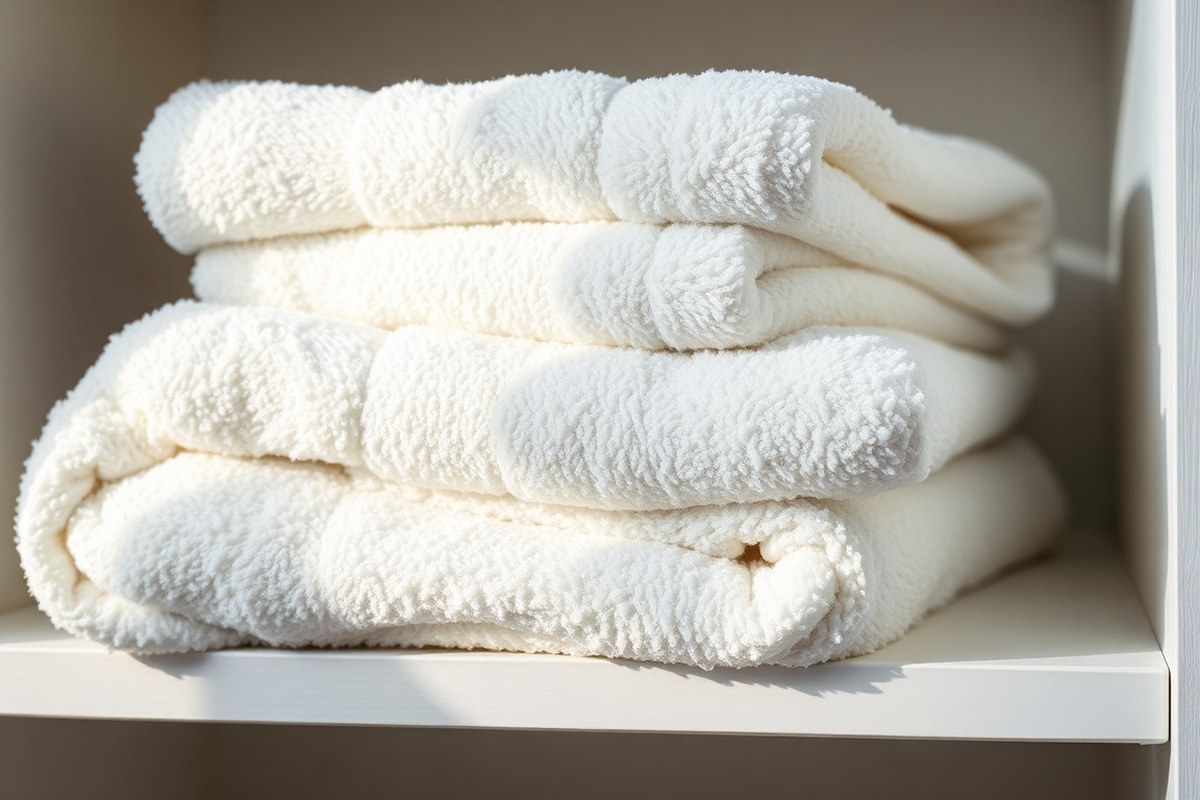
How to Get Towels Soft Again: 8 Proven Methods That Work Fast
How to get towels soft again starts with the right washing steps. Use warm water, and don’t overload the machine so towels can tumble freely. This helps loosen stiff fibers and avoid rough spots.
Next, try adding white vinegar during the rinse cycle to cut detergent buildup. Let towels soak for 15 minutes before draining and wringing them out. This clears residues that make towels stiff.
Use only mild detergent and skip fabric softeners, which can coat fibers and reduce absorbency. Washing towels separately from clothes prevents lint transfer that makes towels rough.
Dry towels fully in a dryer or hang them outside until almost dry. Toss towels into the dryer for 10 minutes. This fluffs the fibers.
Fluffing is key for soft towels. Avoid over-drying, as heat can damage cotton over time.
Key Takeaways
- Leave at least 6 inches of space in the washer for towels to tumble well.
- Use warm water, around 40°C, instead of hot, to protect fibers and save energy.
- Add 250ml white vinegar during rinse every 6 weeks to remove detergent residue.
- Soak towels for 15 minutes during wash to help soften fibers deeply.
- Dry towels until nearly dry on a line, then use dryer for 10 minutes.
- Avoid fabric softener as it can build up and reduce towel absorbency.
1. How to Get Towels Soft Again Using Proven Laundry Steps

To get your towels soft again, clear detergent buildup first. Fabric softener and minerals also cause buildup. Removing these helps towels feel soft again.
Buildup traps residues that make towels stiff and less fluffy. Follow these steps to wash your towels right.
Rinse them well to remove leftover residue. This restores softness without using extra chemicals.
- Sort and avoid overloading: Wash towels separately from heavily soiled clothes. Fill the washing machine about halfway to ensure water can rinse towels well and remove residue.
- Use the right detergent amount: Measure detergent carefully. Using too much detergent leaves buildup that stiffens towels. Use less than the detergent package recommends if you have soft water.
- Add white vinegar: Pour 1 cup of white vinegar into the rinse cycle. It breaks down detergent residue and mineral deposits that cause stiffness. Vinegar also helps towels feel softer and fresher.
- Use baking soda in the wash: Add ½ cup of baking soda along with detergent. Baking soda neutralizes soap residue and balances water pH, which improves towel softness.
- Set washing temperature to 104°F (40°C): This temperature removes bacteria and helps detergent dissolve well. Hotter water can damage cotton fibers and reduce softness.
- Skip fabric softener: Fabric softeners build up on towels, causing stiffness and lowering absorbency. Use vinegar instead for softness.
- Dry towels properly: Dry towels fully but not over-dry. Slight dampness removed is best to avoid stiff fibers. Toss in a clean tennis ball or dryer balls to break clumps and restore fluffiness.
These steps will tackle buildup and restore softness in towels after washing. Avoiding detergent and fabric softener overload lets fresh water rinse towels completely. Adding vinegar and baking soda helps break down residues that standard washes miss.
Don’t overload the machine to ensure water and rinse cycles reach every fiber. With these methods, towels will feel soft and fluffy again, not rough or scratchy.
2. Why Towels Lose Their Softness and Feel Scratchy

Towels lose softness mainly from detergent, fabric softener, and mineral buildup. These residues stick to towel fibers and make them stiff. Hard water minerals add to this coating, making towels less soft.
These residues stick to the towel fibers and cause them to feel stiff or rough. Over time, that buildup weighs down the fabric and reduces its natural softness.
Hard water contains minerals like calcium and magnesium that attach themselves to towel fibers. These minerals block the fabric’s ability to absorb water and leave towels feeling scratchy or stiff. The harder the water, the more minerals deposit, making softness harder to maintain after each wash.
Residue from detergents and fabric softeners also clings to towel fibers. Detergent residue comes from using too much soap or not rinsing towels properly. It creates a layer that makes towels less fluffy and harder to dry.
Fabric softeners coat fibers with silicone or waxy substances. The residue feels soft at first but lowers towel absorbency.
Over time, towels get heavy and have a waxy texture. This makes towels less comfortable to use and dry poorly.
Wash towels in the hottest water safe for the fabric to help break down residue. Avoid using too much detergent. Skip fabric softeners and dryer sheets to prevent buildup.
Proper rinsing and occasional deep cleaning help remove both detergent and mineral deposits. Brushing towels gently after washing can also help loosen fibers and remove leftover residue, restoring softness.
Run a two-step wash cycle now and then to remove buildup. This cleans both the towel fibers and inside the washing machine. It helps restore towel softness and absorbency.
Improper drying also plays a role in making towels stiff. Towels dried on high heat or left damp can harden fibers. This also causes a musty, unpleasant smell in towels.
Avoid very hot drying and make sure towels dry completely. That smell and stiffness happen because minerals and residues trap moisture inside fabric folds.
Towels designed to absorb moisture attract buildup. So cleaning and drying methods need to address residues at every stage for lasting softness.
3. How Detergent Use and Hard Water Affect Towel Softness
Use the recommended detergent amount on the package when washing towels. Usually, this means around 2 tablespoons for a regular washer load. Using too much detergent leaves soap residue on towels, making them stiff and less absorbent.
Hard water contains minerals like calcium and magnesium. These minerals build up in towel fibers, causing stiffness. If your towels stay rough even after washing, hard water could be the culprit.
You can spot hard water effects if your towels feel scratchy or look dull. They might also smell a bit musty between washes. Mineral deposits may show as white or grayish spots on towels.
| Situation | Detergent Use | Water Condition | Recommended Action |
|---|---|---|---|
| Normal water | Use full detergent dose | Soft or moderate hardness | Wash as usual, avoid overdosing detergent |
| Hard water area | Use reduced detergent, about 1 tablespoon | High mineral content | Add water softener or vinegar in detergent drawer |
| Very hard water | Use minimal detergent, no fabric softener | Very high hardness minerals | Use water softening system or baking soda wash cycle |
| Detergent residue build-up | Skip detergent once per month | Any water type | Rinse towels with vinegar or baking soda cycle |
Hard water causes limescale build-up inside machines and on towels. Using a water softener like Calgon helps prevent this. Add 250 ml of white vinegar to the detergent drawer to dissolve mineral and detergent residues.
Don’t pour vinegar directly into the drum; it might damage rubber parts. Run towels through a hot 40°C cycle after adding vinegar to remove residues well.
Baking soda helps too. Add 1/2 cup with detergent to soften towels and clean fibers.
4. Can Fabric Softener Help or Hurt Towels’ Softness?
Fabric softeners make towels feel soft by coating their fibers. This coating can block water, reducing towel absorbency over time. Using fabric softener often leads to towels feeling heavy or waxy instead of fluffy.
Many experts advise against liquid fabric softener for towels. It contains oils that build up and stop moisture absorption. If you want soft towels without this risk, avoid fabric softener or use it sparingly, knowing it shortens towel life.
White vinegar is a natural alternative to commercial softeners. Add 1 cup of vinegar to the fabric softener dispenser.
Wash towels in hot water without detergent for best results. Vinegar helps remove detergent residue and balances the towel’s pH, restoring softness without harming absorbency.
Another option is tumble drying towels on a low heat setting. Tumble drying stops fibers from matting and keeps towels fluffy. While line drying is gentler, it can leave towels stiff, especially with hard water.
Choosing towels made from high-quality cotton helps maintain softness longer. Cheap cotton tends to get rough faster, no matter the softener.
Considering cost, vinegar is inexpensive and easy. Fabric softeners add extra expense and potential problems in the long run.
5. Drying Towels Correctly to Maintain Softness and Fluffiness
Dry your towels on low heat in a tumble dryer. Medium heat works too. This keeps them soft and fluffy.
Using wool dryer balls or tennis balls can help separate the towels and cut drying time. Air drying works well if done the right way.
Follow it with a short tumble dry. This helps keep towels soft.
Using Wool Dryer Balls to Fluff Towels
Wool dryer balls create air gaps between towels, letting warm air circulate evenly. This prevents over-drying, which can make towels rough and stiff. They also help fluff the fibers, leaving towels soft without chemicals.
Place three to six wool dryer balls in your dryer with the towels. Use low or medium heat when drying towels. Avoid dryer sheets.
They coat fabric and reduce absorbency. The balls absorb moisture and speed up drying, saving energy and time.
- Add 3 to 6 wool dryer balls per load
- Set dryer to low or medium heat
- Skip dryer sheets to keep towel fibers absorbent
- Remove towels while slightly damp for best softness
- Use tennis balls as an alternative to wool balls for fluffing
Wool dryer balls cost $10 to $20 per set. They last for hundreds of laundry loads.
They’re a good investment. They outperform tennis balls for moisture absorption and reducing drying time.
Air Drying Methods to Keep Softness
Air drying towels outside or inside can keep them soft but needs proper airflow. Hang towels fully spread out on a clothesline or drying rack. Avoid folding or bunching towels, which traps moisture and stiffens fabric.
Choose a sunny, breezy spot when drying outdoors, or use a fan indoors. Towels dry best when they don’t stay damp for too long.
So flip and shake them as they dry. Avoid direct heat sources, which can damage fibers and reduce softness.
Air drying saves money and energy. Towels may get stiff in bad weather. Turn them regularly to avoid stiffness.
Combining Air Dry and Tumble Dry
Hang towels until nearly dry to save energy, then tumble dry briefly to restore softness. Use low heat and wool dryer balls to fluff fibers during this short tumble. This combo reduces stiffness while cutting energy costs.
For example, air dry towels until they feel mostly dry, then tumble dry for 10 minutes. This finishes the drying process without over-drying. Towels will be softer and fluffier than air drying alone.
Do not over-dry towels in the tumble dryer; it can cause roughness and shrinkage.
6. Natural and DIY Methods to Soften Towels Without Chemicals
Using simple kitchen ingredients like white vinegar and baking soda can revive your towels’ softness. These natural softeners remove detergent buildup and soften fibers without harsh chemicals. They cost just a few cents per load and are safe when used properly.
Using Vinegar in the Wash or Rinse Cycle
White vinegar helps break down detergent residue and mineral deposits. Adding about ½ cup during the rinse cycle softens towels gently.
You can run a separate wash cycle with a cup of vinegar. This helps clear heavy buildup on your towels.
Never mix vinegar and baking soda together in the same cycle. Vinegar should go into the fabric softener dispenser or directly into the rinse cycle.
You’re sensitive to vinegar’s smell. Add a second rinse cycle without vinegar to rinse towels well.
- Load your towels into the washing machine without detergent.
- Pour ½ cup of white vinegar into the fabric softener compartment or during the rinse cycle.
- Run the washing machine on a normal wash and rinse cycle. Use warm or hot water if allowed.
- Towels with heavy buildup need a second wash. Add 1 cup of vinegar directly to the washer drum.
- Dry towels as usual, preferably with dryer balls to help fluffiness.
Adding Baking Soda Before Washing
Baking soda lifts odors and softens fibers by balancing pH levels. Add ½ cup to the washing machine drum or water before starting the wash. It works well with your regular detergent to boost cleaning and softness.
This method costs about 10 cents per load and doesn’t leave a scent behind. Baking soda can also help tackle musty smells that vinegar might not fully remove.
- Place ½ cup of baking soda into the empty washing machine drum.
- Add towels on top of the baking soda.
- Pour your usual amount of detergent over the towels.
- Choose a warm or hot water wash cycle suitable for towel care.
- Complete the wash and dry towels as you normally do.
The Timing and Frequency for Natural Softeners
Use white vinegar every other wash or as needed to avoid vinegar buildup. Baking soda can be alternated in separate washes to keep towels fresh. Overuse may cause towels to wear or leave a faint scent.
Towels that smell musty or feel rough need a hot water wash. Add vinegar occasionally for a good reset.
Skip vinegar and baking soda every few washes. Wash towels with detergent alone to keep fibers balanced.
Regularly using these natural softeners helps prolong towel life while avoiding the chemicals in commercial softeners. Stick to about ½ to 1 cup per wash to keep things safe and effective.
7. When to Replace Towels Instead of Trying to Soften Them
Know when towels are too worn to get soft again by checking their texture and look. Towels may be too damaged if they still feel stiff after vinegar or baking soda washes. Look for thinning fabric, holes, and persistent roughness that doesn’t improve after cleaning.
Softness can’t come back if the towel’s fabric is breaking down. The loops might be flat or the colors faded badly. Towels usually lose their best softness after 2 to 3 years.
Washing won’t fully bring it back. Egyptian cotton towels can last longer but still wear out with time and frequent use.
To decide if you need new towels, follow this quick checklist: Are they limp or threadbare? Have they lost color and absorbency?
Do they feel scratchy even after several softening attempts? You should replace your towels if you answer yes to more than one question.
Replacing towels isn’t just about feel but hygiene too. Old towels can trap bacteria and odors even with washing. Budget basics towels often cost under $10 each.
Spending $20 to $30 on good cotton towels brings softness that lasts longer. These towels feel nicer on your skin.
Keep an eye on your towels’ age and condition to decide when to replace. Changing them every few years keeps your bathroom fresh and comfortable. That swap also avoids frustration from towels that just won’t soften, no matter what you try.
8. Best Practices to Keep Towels Soft Long-Term and Avoid Common Mistakes
Keeping towels soft needs regular care and smart handling. Wash them often with lighter detergent doses. Store towels so they stay fluffy and dry to avoid stiffness.
Washing Frequency and Load Spacing
Wash towels after about three uses to keep them fresh and soft. Washing them too often wastes water and wears fibers faster. Leaving towels too long risks bacteria buildup, which makes them stiff.
Don’t pack your washing machine. Towels need space to rinse and wash fully. Overloaded loads cause detergent and dirt to stick in fabric, losing softness.
Separate towels from bath mats and clothes. Different fabrics need different washing cycles. This stops lint transfer and keeps towels from getting rough.
Avoiding Detergent and Softener Buildup
Use only half the detergent amount the label says. Too much detergent leaves residue that stiffens towels over time. Choose a gentle detergent without bleach or added brighteners.
Skip fabric softeners to preserve towel absorbency. Softener builds up and coats towel fibers, making them less fluffy and less soft. Instead, use vinegar once a month to break down residues in the wash.
Run an extra rinse cycle if your machine allows it. This helps remove leftover detergent. Keep washing water temperature moderate, around 40 to 60 degrees Fahrenheit, to avoid damaging fibers.
Proper Folding and Storing of Towels
Store towels dry and loosely folded so air circulates. Avoid tight stacks that crush fibers and reduce fluffiness. Keep towels off the floor to prevent dampness.
Don’t hang damp towels in a ring or fold them wet. This traps moisture and encourages bacteria growth that stiffens fabric. Spread wet towels flat or drape over a bar to dry quickly.
Rotate your towel use and washing schedule. Using the same towels repeatedly causes uneven wear and stiffness. Having several towels helps each one rest and stay soft longer.
- Wash towels every 3 uses to avoid bacteria buildup
- Use half the recommended detergent for a gentler clean
- Separate towels from clothes and bath mats in laundry
- Avoid fabric softener; try vinegar rinse monthly instead
- Don’t overload washer or dryer to ensure thorough cleaning
- Fold towels loosely and store in a dry, ventilated spot
- Don’t fold or hang towels damp; air dry flat when wet
Never store towels damp; trapped moisture causes stiffness and smells.
Step-by-Step Action Plan to Get Your Towels Soft Again
Follow these easy steps to restore softness and keep your towels fluffy over time.
- Before you wash: Sort towels by color and check the care labels. This helps avoid damage and color bleeding.
- Day 1: Wash towels in warm water with the right detergent amount. Too much detergent leaves residue that stiffens towels.
- After washing: Put 1 cup of white vinegar in the rinse cycle. This helps break down detergent buildup on towels. You’ll notice softer fibers right away.
- Drying time: Use a low or medium heat setting on your dryer. Overdrying causes rough fibers and scratchiness.
- First fluff: Toss a couple of clean dryer balls or tennis balls in with the towels. This keeps towels fluffy as they dry.
- Weekly care: Wash towels every three to four uses to prevent buildup from oils and dirt. It keeps softness consistent.
- Monthly deep clean: Soak towels in hot water and baking soda for 30 minutes. Then, do a normal wash for extra softness.
- Ongoing care: Skip fabric softener and use vinegar instead, avoiding chemical buildup that ruins softness.
Frequently Asked Questions
How Often Should I Wash Towels to Keep Them Soft?
Wash towels every three to four uses to avoid buildup. Frequent washing removes oils and dirt that make towels stiff.
Can Reusing Towels Without Washing Affect Softness?
Yes, reusing towels without washing builds up residue that stiffens them. Always dry towels thoroughly between uses to keep softness.
Does Using Vinegar Help Soften Towels in the Wash?
Yes, adding half a cup of white vinegar once a month removes detergent residues. Vinegar helps restore towel fibers’ absorbency and softness.
Should Towels Be Washed Separately from Other Laundry?
Yes, washing towels separately prevents lint transfer and fabric damage. Keeping towels apart maintains their fluffiness and reduces roughness.
Is Hot Water Better Than Cold for Washing Towels?
Hot water kills bacteria but can wear fibers faster than cold water. Use warm water to clean effectively while preserving towel softness.
Can Over-Drying Towels Cause Them to Feel Rough?
Yes, over-drying breaks down fibers and causes roughness. Remove towels from the dryer when slightly damp for best softness.
Final Thoughts
Towels get soft by removing buildup and drying them right. Start by washing with the right detergent and add vinegar. Try these steps now and enjoy soft, fluffy towels every day.