How to Deep Condition Hair: Simple Steps and Expert Tips for Best Results
Knowing how to deep condition hair helps fix dryness and damage fast. Use a quality deep conditioner on clean, damp hair and let it sit.
Applying heat for 20 to 45 minutes helps the product soak deep inside strands. This approach softens hair and makes it easier to comb.
Start by shampooing and rinsing your hair well. Then, spread the deep conditioner from ends to roots.
Cover your hair with a plastic cap to keep moisture locked in. Avoid skipping heat if your hair is very dry or damaged.
Deep conditioning is not the same as regular conditioning. It takes longer and works more deeply inside your hair shaft. Plan to leave the treatment on for 20 to 30 minutes.
Use up to 45 minutes if your hair is very dry or damaged. Longer time helps deep conditioners work better in tough cases.
Key Takeaways
- Shampoo and rinse hair before applying the deep conditioner.
- Apply deep conditioner evenly, starting from hair ends to roots.
- Use a plastic cap to hold in moisture during deep conditioning.
- Add gentle heat to improve deep conditioner absorption for damaged hair.
- Deep condition for 20, 30 minutes, longer for more damaged hair.
- Regular conditioning takes a few minutes; deep conditioning needs longer.
What Is Deep Conditioning and How Does It Work?

Deep conditioning uses a thick, nutrient-rich product to soak into your hair shaft. This process lasts about 30 to 45 minutes and often involves using heat.
Heat helps open the hair cuticle. So the conditioner can penetrate more deeply than regular conditioners do.
Different from everyday conditioners, deep conditioners contain higher concentrations of cationic agents. These ingredients smooth hair and restore flexibility. They make detangling easier.
Hair breaks less often. Deep conditioners stay in your hair longer than rinse-out ones. Rinse-out conditioners work for 1 to 5 minutes.
Applying heat during deep conditioning, such as with a heat cap or warm towel, improves absorption. The warmth makes your hair cuticles more porous, allowing oils and moisturizers to sink in better.
This helps dry, damaged, or chemically treated hair. Such hair struggles to keep moisture.
Regular deep conditioning boosts moisture levels in your hair. It softens strands, adds shine, and can reduce split ends and breakage.
Heat styling demands deep conditioning more often. Dryness comes from blow dryers, curling irons, and flat irons.
Wash your hair with shampoo first. This opens cuticles and removes buildup. Put a generous amount of deep conditioner in your hair.
Cover it with a shower or heat cap. Leave the conditioner on for 20 to 30 minutes.
Time depends on how damaged your hair feels. Rinse it out well.
Deep conditioning works differently depending on your hair type. Thicker, coarser hair may require treatments once a week. Finer hair might need them less often.
Choose water-based deep conditioners if your hair feels greasy. They don’t weigh your hair down.
Step-by-Step Guide to Deep Conditioning Hair at Home
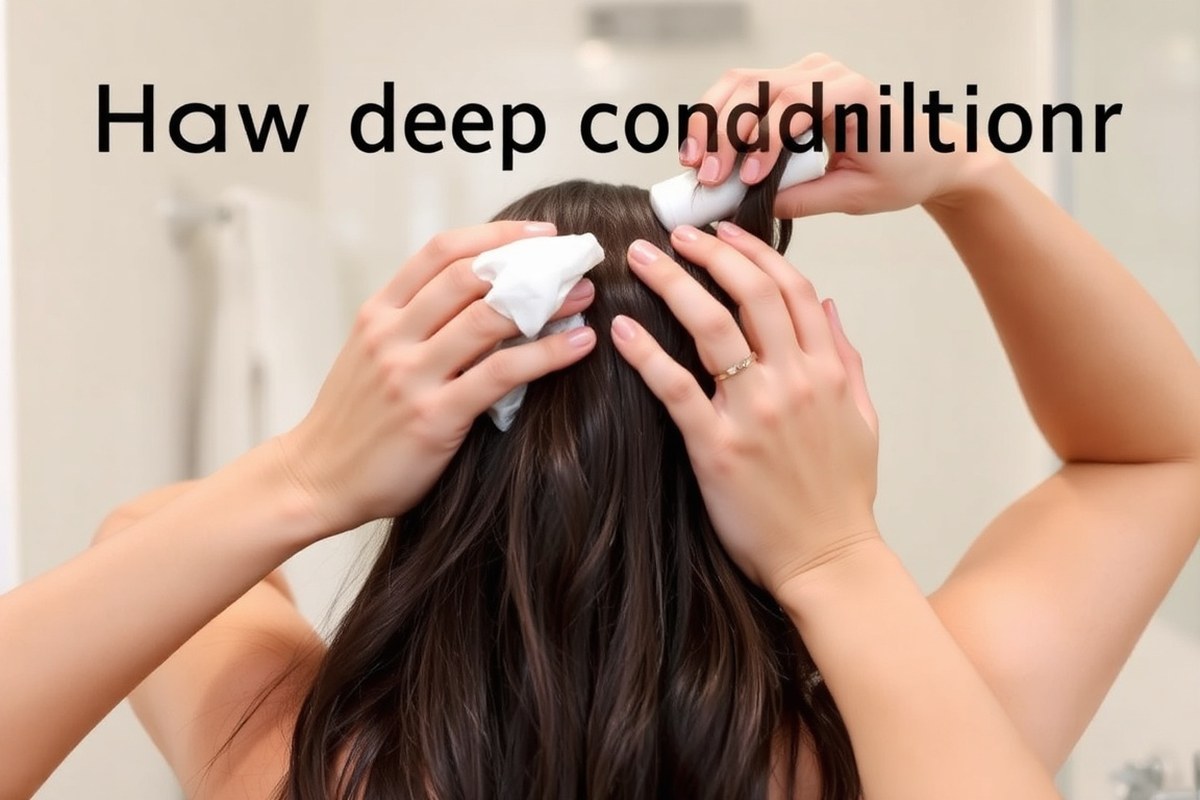
Deep conditioning your hair at home starts with clean, damp hair. You apply the conditioner generously on your hair. Then cover your hair to trap heat.
Rinse it with cool water after 15 to 30 minutes. Using heat can help the treatment soak in better. But timing and product choice depend on your hair type.
Cleansing and Preparing Hair
Start by washing your hair with a gentle shampoo that suits your scalp and hair type. Shampooing opens your hair cuticles, which helps the deep conditioner work better.
After rinsing out the shampoo, gently squeeze your hair with a towel. Pat it until it is damp but not dripping. Soaking wet hair can dilute the conditioner and reduce its effect.
Applying Deep Conditioner Correctly
Section hair into manageable parts to ensure even coverage and saturation. Start applying a generous amount at the ends of your hair.
Work your way upward. Use more near roots if your hair is dry or curly.
Cover your hair with a plastic cap to lock in moisture. Gentle heat, like a warm towel or hooded dryer, helps conditioner absorb.
Skip heat for fragile or fine hair. Limit time to 10 minutes then.
- Shampoo and rinse hair thoroughly.
- Pat hair dry until damp.
- Divide hair into 4, 6 sections.
- Saturate each section fully with deep conditioner, from ends to roots if dry or curly.
- Comb through with a wide-tooth comb to spread product evenly.
- Cover hair with a plastic shower cap.
- Use a warm towel for 20 to 30 minutes to apply gentle heat. For fine hair, skip heat and limit time to 10 minutes.
- Prepare to rinse with cool water after waiting.
Deep conditioner works best on damp, not soaking wet hair. This helps your hair absorb it better and reduces waste.
Rinsing and Finishing Touches
Rinse the deep conditioner out using cool or lukewarm water. Rinse with cool water to help close the hair cuticle. This locks in moisture and makes hair shinier and less frizzy.
Be gentle while rinsing to avoid stripping too much product out. After rinsing, gently squeeze excess water and follow with your usual styling or leave-in treatments.
Choosing the Best Deep Conditioner for Your Hair Type
Choosing the best deep conditioner depends on your hair type and needs. Dry hair benefits from moisturising ingredients like shea butter, avocado oil, or aloe vera. Damage calls for protein-rich options with keratin to help repair and strengthen strands.
Curly hair usually needs deeper moisture because natural oils don’t travel as easily down its coils. Color-treated hair needs gentle conditioners that repair bonds. Look for formulas without sulfates or parabens.
Products with amino acids or Olaplex-type ingredients work well. Straight hair often needs lighter hydration to avoid weighing it down.
Store-bought deep conditioners often have concentrated blends of oils and proteins designed for specific issues. DIY masks with honey, olive oil, or avocado help dryness. They come from common kitchen staples.
But these masks may not fix severe damage due to lack of protein. Skip deep conditioners with harsh sulfates or alcohols.
Heavy silicones can also weigh down your hair. These ingredients might strip moisture and damage hair over time.
| Concern | Recommended Treatment |
|---|---|
| Dryness | Moisturising formulas with shea butter or aloe vera |
| Breakage | Protein-based deep conditioners with keratin |
| Frizz | Smoothing treatments with natural oils like argan oil |
| Chemically treated hair | Bond-repair products like Olaplex or amino acid formulas |
To pick a deep conditioner, check ingredients first. Look for coconut, olive, or avocado oils, which can actually penetrate hair shafts. These oils hydrate and help restore softness.
Stay away from deep conditioners that have drying alcohols. Avoid ingredients that sit on hair and build up. Buildup can weigh hair down and dull its shine.
Deep conditioning once a week suits dry or heat-styled hair. Protein treatments work best every 4 to 6 weeks.
You can mix and match store-bought and DIY masks to match your hair’s changing needs. Pay attention to how your hair feels after treatments to adjust your routine.
How Often and How Long to Deep Condition Your Hair
The right deep conditioning frequency depends on your hair type and damage. For damaged hair, try deep conditioning once a week to help restore moisture. Healthy hair benefits from deep conditioning once or twice a month to maintain softness and shine.
Hair texture also affects how often you should apply deep conditioner. Coarser, dry-textured hair like 4C may need weekly treatments to combat breakage and dryness.
Fine or oily hair should use lighter conditioners less often. Use them about every two weeks to avoid weighing down hair.
Most deep conditioners require 20 to 30 minutes of application time. Follow the instructions on your product label, as some may specify shorter or exact times.
Leaving conditioner on overnight can cause limp, greasy hair. It may also damage hair from sleeping wet.
Apply your deep conditioner mainly mid-shaft to ends, where hair needs the most hydration. Roots usually produce natural oils, so they need less product. Rinse your deep conditioner out with shampoo when your hair gets oily to remove residue.
A weekly deep conditioning routine works best for hair suffering from damage, color treatments, or dryness. For low-maintenance hair, monthly treatments keep hair healthy without over-conditioning.
Adjust timing based on how your hair feels and looks. Too much conditioner makes hair soft but limp and heavy.
Using Heat with Deep Conditioning: When and How
Heat helps open your hair cuticles, letting deep conditioners sink in better. This makes your hair softer and adds a moisture boost that plain application may miss.
Still, heat isn’t always needed for deep conditioning healthy hair. But dry or damaged hair can benefit most from it.
You can use several methods to add heat safely during deep conditioning. A warm towel wrapped around your head is the cheapest and gentlest way. A plastic shower cap traps your body heat and increases conditioning power.
For stronger heat, a hooded dryer or a heat cap plugged into an outlet works well. Keep the temperature low to medium to avoid stress or damage.
- Heat cap or hooded dryer uses medium heat around 104°F to 113°F. Use it for 15 to 30 minutes. This helps deep conditioning without overheating your hair.
- Warm towel wrap: Heat towel in hot water, squeeze out excess, wrap for 20 minutes
- Plastic shower cap alone: Trap natural scalp heat for 30 to 45 minutes
- Steamer at salon or home use: Apply heat and moisture simultaneously for 15 to 20 minutes
- Heated deep conditioner products: Some have built-in warming effects, follow label instructions
Applying heat above 115°F can damage hair during deep conditioning. Heat that’s too hot breaks protein bonds and dries out strands.
Remove the heat source right away when your scalp feels uncomfortable. Always check your hair’s reaction and scalp condition before using heat regularly.
Never leave heat on your hair unattended during deep conditioning to avoid burns or damage.
Soaking your hair before applying conditioner helps absorption even without heat. Use heat only when your hair feels dry or brittle to get better results. Using heat occasionally prevents unnecessary stress and keeps your deep conditioning safer over time.
Homemade Deep Conditioning Recipes That Actually Work
You can create effective deep conditioning masks with simple natural ingredients. Different recipes work better depending on your hair type and damage level. These masks help restore moisture, add protein, and soften your strands gently at home.
Moisturizing Honey and Olive Oil Mask
This mask suits dry or coarse hair needing moisture and softness. Honey attracts water to the hair.
Olive oil adds a rich layer of hydration. Use it when your hair feels rough or brittle.
Mixing and applying this mask is quick and straightforward. It works best on damp hair to help it absorb better. Leave the mask on for about 20 minutes.
This helps your hair absorb the nutrients well. It gives your strands time to get moisturizing benefits.
- Whisk ¼ cup honey with ¼ cup olive oil in a bowl.
- Add more olive oil if the mixture feels too sticky.
- Dampen your hair lightly with water if it’s dry.
- Apply the mask evenly from roots to ends using your fingers or a brush.
- Use a plastic cap or wrap to keep moisture trapped. This step helps the treatment work better. It stops your hair from drying out while you wait.
- Let the mask sit for 20 minutes without rinsing it off early.
- Rinse thoroughly with lukewarm water to remove all residue.
Use this mask up to twice weekly for soft, hydrated hair. Avoid overuse, as too much can weigh down finer hair.
Protein-Rich Avocado and Egg Treatment
This treatment works well if your hair is damaged or weak. Avocado and egg are packed with proteins and omega-3 fatty acids. They help strengthen strands and reduce breakage after regular use.
Mix the ingredients into a smooth paste and spread gently on damp hair. Leave it on for 20 minutes to repair damage before rinsing. This protein boost is important to balance with moisturizing treatments in your routine.
- Mash one ripe avocado until smooth in a bowl.
- Whisk one egg with 2 to 3 tablespoons of olive oil.
- Combine the avocado and egg mixture thoroughly.
- Apply evenly to damp hair, focusing on damaged areas.
- Cover your hair with a shower cap.
- Leave the mask on for about 20 minutes.
- Rinse your hair thoroughly with cool or lukewarm water.
Limit this protein mask to once a week to prevent dryness. Overdoing protein can make hair stiff and brittle.
Soothing Aloe Vera and Yogurt Blend
This mask suits normal to oily hair types needing light hydration without heaviness. Aloe vera calms the scalp and adds softness. Yogurt boosts moisture and contains lactic acid to remove buildup gently.
Apply this mix to clean, damp hair and leave it on for 20 minutes. It brightens hair and reduces dryness while keeping fine or oily strands bouncy. You can use it twice weekly for a gentle moisture boost.
- Combine ¼ cup plain Greek yogurt with 2 tablespoons aloe vera gel.
- Mix well until smooth and consistent.
- Spray or wet your hair lightly with water beforehand.
- Distribute the mask evenly from roots to ends.
- Cover your hair with plastic wrap or a shower cap.
- Leave the mask on for 20 minutes at room temperature.
- Rinse out completely with lukewarm water.
This blend adds shine and softness without leaving oily residue. It’s a good option if you want natural care without heavy oils.
Common Deep Conditioning Mistakes and How to Fix Them
You can tell you’re over-conditioning if your hair feels heavy, greasy, or limp. It may also look dull or become harder to style. This happens when your hair has too much moisture, making it lose its natural bounce.
Using the wrong deep conditioner can harm your hair by causing buildup or dryness. For example, heavy creams can weigh down fine hair.
Protein-heavy masks may make already dry hair brittle. Choose a product that matches your hair type and needs.
To avoid weighing your hair down, apply deep conditioner only where it needs it most. Your scalp is oily.
Focus treatment from mid-shaft to the ends. This keeps roots fresh and prevents greasy buildup near your scalp.
Poor deep conditioner penetration is a common mistake, especially for low porosity hair. These hair types repel moisture, so the product often just sits on the surface. Using gentle heat helps open hair cuticles.
A warm towel works too. This boosts how well the treatment absorbs.
- Don’t leave deep conditioner on for too long; follow product instructions.
- Rinse thoroughly to avoid residue that can weigh hair down.
- Use a wide-tooth comb to spread the conditioner evenly.
- Apply heat cautiously; try a warm towel instead of a hot cap.
- Don’t ever apply conditioner directly to very oily or dirty roots.
- Stick to your hair type’s recommended product to prevent issues.
- Deep condition regularly, but not daily, once a week works for most.
Following these tips makes your deep conditioning more effective and prevents common problems. Avoiding over-conditioning and weighing down hair keeps it fresh and manageable.
Heat boosts soaking in but should be used carefully to protect your strands. Proper product choice and application go a long way to repair and nourish your hair safely.
Tailoring Deep Conditioning for Different Hair Textures and Conditions
Different hair types need different deep conditioning approaches. Texture, damage, and porosity all affect how you should apply and what product to use. Making the right adjustments can give you softer, stronger hair without extra buildup or damage.
Consider Hair Texture and Curl Pattern
Coily and 4C hair usually needs heavier, more moisturizing deep conditioners. These hair types get dry fast, so pick rich creams with oils or butters.
Fine hair can get weighed down. So use lighter, protein-based conditioners that strengthen without bulk.
Apply the product generously on coily hair in sections to reach every strand easily. Fine hair benefits from focusing conditioner on the mid-lengths and ends only. Let heavy products sit longer on thick curls and shorten time for fine, fragile strands.
Adjust for Chemical or Heat Damage
Color-treated or heat-damaged hair needs more protein to rebuild structure. Choose deep conditioners with hydrolyzed proteins or keratin. Use these treatments once or twice a week.
Leave them on for 20 to 30 minutes. This helps proteins soak into your hair.
Avoid heavy oils or thick creams right after chemical treatments since they can block moisture. Instead, layer a lightweight conditioner under an oil for sealing. Damaged hair also benefits from applying heat during conditioning to open the cuticle and improve absorption.
Match Conditioner to Hair Porosity
High porosity hair absorbs products quickly but loses moisture fast. So use thick creams with humectants and seal with oils. Let these conditioners sit for 30 minutes or more to fully hydrate.
Low porosity hair doesn’t soak up moisture easily. Use lighter, water-based conditioners. Leave them on for 10 to 15 minutes.
Medium porosity hair can handle a balanced conditioner with both moisture and protein. This hair type usually needs deep conditioning 1 to 2 times weekly.
To check porosity, drop a strand in water. Sinking fast means high porosity, floating shows low.
Customize Application and Rinse Techniques
Section hair for even coverage, especially with tight curls or fine strands that tangle easily. Use fingers or a wide-tooth comb to spread conditioner gently but thoroughly. Avoid rubbing hair harshly to prevent breakage or frizz.
Rinse fine or low porosity hair with cool water. This helps close the cuticle. It also adds shine to your hair.
Warm water works better for coarse or high porosity hair to remove residue and seal softness. Aim for a light rinse so some conditioner stays behind to keep hair moist longer.
Don’t skip sectioning thick or curly hair before deep conditioning. It helps product reach every strand.
Step-by-Step Action Plan to Start Deep Conditioning Your Hair
Follow this simple plan to get your hair soft and healthy. Each step helps you see and feel the difference.
- Before You Start: Choose a deep conditioner that fits your hair type. Test it on a small strand to avoid bad reactions.
- Day 1: Wash your hair with shampoo to remove buildup. Apply the deep conditioner evenly and leave it on for 20 minutes. Your hair should feel softer afterward.
- Week 1: Add heat once during your deep conditioning to boost absorption. Use a warm towel or heat cap for 15 minutes. Notice your hair looks shinier and feels smoother.
- After 2 Weeks: Deep condition twice a week if your hair is dry or damaged. Reduce to once a week for normal hair. Your hair should feel stronger and less frizzy.
- Week 3: Try a homemade deep conditioning mask with ingredients like honey or avocado. Leave it on for 30 minutes. Your scalp should feel healthy and your strands more hydrated.
- Week 4: Fix any buildup by clarifying your hair before deep conditioning. This clears the way for better moisture absorption.
- Month 2: Adjust how often you deep condition based on your hair’s needs. Cut back if your hair feels heavy or oily.
- Ongoing: Always detangle gently before deep conditioning. This prevents breakage and helps the conditioner spread well.
Frequently Asked Questions
Can I Deep Condition My Hair Without Washing It First?
Deep condition right after washing your hair. Clean hair lets the conditioner absorb better into the shaft. This step helps the product work deeper and more effectively.
Is It Okay to Deep Condition Daily If My Hair Is Very Dry?
Daily deep conditioning is too much for most hair types. Overdoing it can weigh your hair down and cause buildup. Stick to 1-2 times weekly for very dry or damaged hair.
Can I Use a Regular Conditioner as a Deep Conditioner?
Regular conditioners are not strong enough for deep conditioning. Deep conditioners have richer ingredients and need more time to work. Use a product labeled “deep conditioner” or “hair mask” instead.
Does Deep Conditioning Help with Hair Scalp Issues?
Deep conditioning mainly nourishes hair strands, not scalp conditions. For scalp problems, use treatments made for the scalp specifically. Still, healthier hair can reduce breakage and improve overall hair look.
Should I Detangle My Hair Before or After Deep Conditioning?
Detangle hair gently before deep conditioning once it’s wet and conditioned. This reduces breakage and spreads the product evenly. Use a wide-tooth comb for best results.
Can I Leave Deep Conditioner in Overnight Safely?
Leaving it overnight isn’t usually recommended unless stated safe on the product. Long exposure can dry out hair or cause scalp irritation. Follow product instructions for best timing.
Before You Go
Deep conditioning is key to keeping your hair soft and strong. Start with a deep conditioner that fits you and be consistent. Now, pick your product and schedule your first deep conditioning session.