Does Dyson Airstrait Damage Hair? What Actually Works to Protect Your Hair
Does Dyson Airstrait damage hair? The simple answer is it causes less damage than traditional straighteners.
It uses hot air instead of metal plates, which lowers the risk of burning your hair. That airflow technology helps protect your strands from direct heat.
The Airstrait features temperature settings from 175°F to 285°F, which are lower than many hot tools. This range lets you pick the right heat for your hair type and styling needs. Starting at the lowest temperature reduces stress on your hair.
To protect your hair when using the Dyson Airstrait, dry it about 80% first. Using it on damp hair cuts styling time and heat exposure. Also, avoid the highest “boost” mode unless you just want a quick touch-up.
Key Takeaways
- Use the lowest temperature setting to reduce heat damage risks.
- Dry your hair 80% before styling with the Airstrait for faster results.
- Hot air heat is gentler than metal plates, lowering burn chances.
- Avoid using the boost mode regularly to protect your hair.
- Choose the temperature based on your hair’s thickness and texture.
- Using the Airstrait reduces styling time, which cuts heat exposure.
Does Dyson Airstrait Cause Hair Damage?
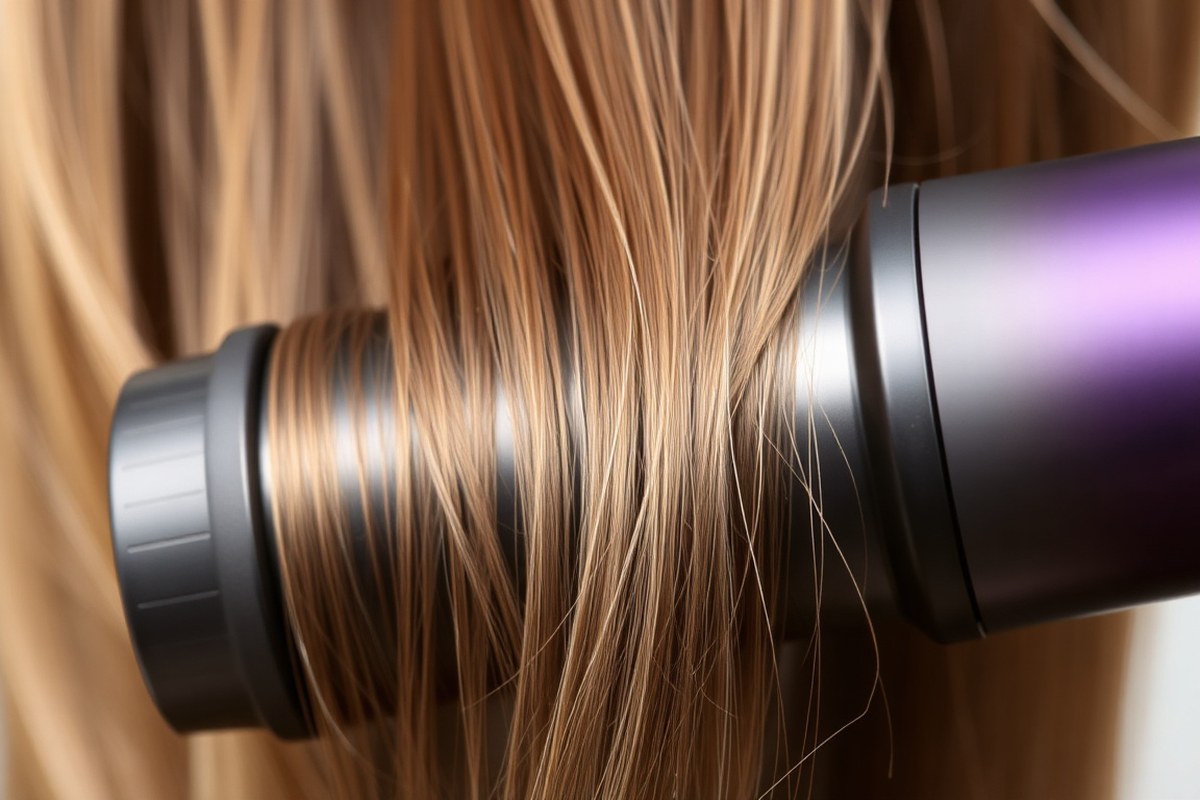
The Dyson Airstrait does not cause the same heat damage typical of traditional straighteners. It uses hot air instead of heated plates. This lowers the risk of burning your hair.
It also keeps your hair from drying out too much. The device controls heat with sensors.
They check airflow temperature up to 30 times a second. This keeps heat at safe levels for your hair.
Metal plates touch hair directly and get very hot. The Airstrait blows hot air instead. This method dries and straightens without direct heat contact.
This method avoids pressing and frying the hair cuticle. You can use it on damp hair right away.
This saves time by skipping the drying step. Plus, it lowers the heat exposure to your hair.
The Airstrait offers three temperature settings: 175°F, 230°F, and 285°F. The moderate heat does less damage daily. Flat irons can reach over 400°F, which is harsher.
So the Airstrait is gentler for regular use. With its built-in thermistors, the tool maintains consistent heat, preventing spikes that harm hair.
Compared to plate straighteners that crush hair between hot surfaces, the air-based technology is gentler. Your hair won’t have the flat iron look. It smooths hair with airflow, not pressing it.
This gives a softer, natural finish. Still, it leaves hair sleek and battle-ready without the damage traditional irons leave behind.
The Dyson Airstrait’s approach makes it safer for daily styling. It limits direct heat contact on your hair. Temperature control is very precise too.
This reduces risks of split ends and dryness. You can style wet hair straight without adding heat stress from blow-drying and straightening separately.
You can find the Dyson Airstrait online for around $500. The Airstrait costs more than regular straighteners. Many users find it worth the price.
It styles hair faster and keeps hair healthier. Using it often can improve hair condition.
It avoids typical heat damage from flat irons. Over time, hair looks and feels better.
How Dyson Airstrait’s Airflow Technology Protects Hair

The Dyson Airstrait uses high-velocity air jets to straighten hair instead of hot metal plates. It shoots heated air through two 1.5mm slots that converge into a thin blade aimed downward at a 45-degree angle. This method dries and straightens hair simultaneously without direct contact with hot surfaces.
The device measures the air temperature up to 500 times per second. This constant checking helps keep the heat level steady and prevents it from getting too hot.
The maximum temperature it reaches is 285°F. That is lower than many traditional straighteners. This helps reduce the risk of burns and heat damage.
Traditional straighteners clamp hair between heated plates. The Airstrait uses controlled air flow. It adds gentle tension instead of clamping.
Squeezing the two arms together turns on the air blade. This lets you glide it through hair smoothly.
You don’t need to press hard. This helps avoid crushed or damaged hair cuticles, supporting healthier strands.
Dyson’s Hyperdymium motor powers the airflow, making it strong enough to smooth hair without extreme heat. This airflow technology means you’re not exposing hair to direct hot surfaces. Instead, you get a continuous warm air stream that shapes hair gently while drying.
The air-based technology works well on wet hair. It also has a dry mode. This dry mode uses lower heat.
This flexibility lets you adjust settings for your hair type and condition. Using airflow to style fights humidity and frizz.
It needs less heat than traditional straighteners. This helps keep hair’s natural shine.
Always apply heat protectant spray before using the Dyson Airstrait. This adds an extra layer to protect hair from heat damage.
Choosing the Right Temperature and Mode for Your Hair
Choosing the Right Temperature and Mode for Your Hair
Pick the temperature and mode based on your hair type and condition. Use lower heat for fine or fragile hair and higher heat for thick or curly hair.
Wet mode works best when your hair is damp. Dry mode suits hair that’s already dry or nearly dry.
Temperature Settings Explained
Dyson Airstrait offers different heat settings depending on the mode. Wet mode temperatures are 175°F, 230°F, and 285°F. Dry mode has 250°F, 285°F, and a boost setting up to 320°F for quick touch-ups.
Lower temperatures reduce damage but take longer to style. Higher temperatures work faster on thick hair but carry more risk of drying out strands. Always start with the lowest setting that works for your hair.
When to Use Wet vs Dry Mode
Wet mode is designed for damp hair right out of the shower. It dries your hair gently while straightening to avoid extreme heat exposure.
Using wet mode on very wet hair will take longer. So towel-dry first to about 30-40% dry.
Dry mode is better for styling hair that’s already dry or mostly dry. It uses less airflow and higher heat options. Many users with fine or wavy hair report better control with dry mode.
Adjusting for Hair Thickness and Texture
Fine hair needs lower heat to avoid damage or frizz. Start at 175°F on wet mode or 250°F on dry. Thick and coarse hair needs higher heat settings.
Use up to 285°F or dry mode boost. This helps you get straighter results.
Curly hair is usually thicker and may need the highest wet mode temperature (285°F). For 4b curls or coils, start with wet mode at 230°F and increase if needed. Avoid boosting heat too fast or you risk dryness.
- Fine, thin hair: wet mode at 175°F or dry at 250°F
- Normal, wavy hair: wet mode at 230°F or dry at 285°F
- Thick, coarse hair: wet mode at 285°F or dry boost at 320°F
- Curly, 4b hair: start wet mode at 230°F, adjust upward carefully
- Towel-dry hair to 30-40% moisture before using wet mode
Adjust the mode and temperature slowly to find the best balance for your hair type. Overheating can cause breakage, so watch for dryness or brittleness after styling.
Recommended Settings for Color-Treated Hair
Color-treated hair is more fragile and needs gentler heat settings. Use wet mode at 175°F or 230°F to protect color and reduce damage. Avoid the boost dry mode unless you’re just doing a quick touch-up.
Keep styling sessions shorter and use cool mode afterward to set your style. This helps lock in moisture and shine. Fine color-treated hair especially benefits from the lowest heat and wet mode options.
How Long Does It Take to Straighten Hair Safely with Airstrait?
You can straighten your hair with the Dyson Airstrait in about 6 to 10 minutes. Many users report finishing their full head straightening in under 7 minutes.
This quick timing keeps your hair from getting too much heat. It lowers the chance of heat damage.
Start by drying your hair until it’s about 80% dry. Then use the Airstrait for the final straightening. This method cuts the overall heat time and protects your hair from overexposure.
Your hair will take about 10 minutes if it’s thick or curly. Apply smooth, slow passes with the Airstrait, focusing on small sections. Rushing might mean more passes and extra heat damage.
For fine or thin hair, keep your styling time shorter. Aim for about 5 to 7 minutes total. Use lower temperature settings to avoid overheating delicate strands.
Keep track of how your hair reacts. Notice dryness or breakage?
Cut your straightening time or use a gentler setting. The Airstrait’s airflow technology helps, but timing is still key.
What Hair Types Benefit Most and Least from Dyson Airstrait?
Hair types respond differently to the Dyson Airstrait. Straighter hair reacts well at the low heat setting of 175°F. This is a big deal because most flat irons need over 200°F to work well.
Fine hair can benefit from the Airstrait’s gentle heat and airflow. It styles without applying harsh pressure or very high temperatures. That means less risk of heat damage or breakage.
Curly or coarser hair may require more careful handling. The Airstrait still works but might need longer passes or higher heat. Avoid the highest temperature for curly hair to prevent overheating and dryness.
Using the tool on different hair types means adjusting speed and temperature. Slower passes with medium heat suit curly hair. Fast strokes at low heat work best for fine or straight hair.
The table below shows recommended settings by hair type to help you get it right. Follow these as starting points and tweak based on your hair’s reaction.
| Hair Type | Temperature Setting | Average Styling Time per Section | Notes |
|---|---|---|---|
| Fine, Straight | 175°F (lowest) | 3, 5 seconds | Quick strokes minimize heat exposure |
| Wavy | 175°F, 190°F | 4, 7 seconds | Use medium airflow for smooth finish |
| Curly | 190°F, 210°F (avoid max) | 6, 9 seconds | Slower passes to allow airflow penetration |
| Thick, Coarse | 200°F, 210°F | 8, 10 seconds | Higher temp and slow strokes needed |
Adjust the time and heat to your comfort level and hair’s reaction. Some curly or coarse hair may take longer to straighten fully. Patience helps avoid multiple passes that cause damage.
The Airstrait’s shape needs careful handling. Its smooth handle lacks a grip texture, which can make it tricky to hold perfectly. Holding it wrongly could reduce styling control or cause uneven heat application.
Hold the Airstrait firmly in front of a mirror. Get used to its grip and angle slowly. Practice will make you comfortable with it.
Extra care with coarse and curly hair includes starting at the lower heat and increasing slowly. Avoid rushing through sections. Using a heat protectant spray before styling is smart for any hair type.
Common Mistakes When Using Dyson Airstrait That Cause Damage
Using the Dyson Airstrait incorrectly can cause hair damage. Overusing hot settings, skipping prep, and too many passes raise the risk. You can fix these mistakes by adjusting your technique and caring for your tool.
Overusing Hot Settings or Boost Mode
The Airstrait’s higher heat modes can smooth hair quickly but cause damage if used too much. The boost mode heats plates up to 185° Celsius, similar to regular straighteners. Using this setting constantly dries out hair and weakens strands.
Stick to lower temperature modes for daily styling. Only use the boost mode for tough sections or quick touch-ups. This limits heat exposure and protects your hair’s natural moisture.
Not Preparing Hair Properly
You should start with towel-dried hair to avoid extra heat stress. Using the Airstrait on soaking wet hair makes styling slower and harms hair cuticles. Applying a heat protectant spray is also key for damage prevention.
Here’s a quick checklist to prep hair well:
- Towel dry hair gently until damp, not dripping
- Apply a heat protectant evenly through strands
- Comb hair to remove tangles before styling
- Separate hair into manageable sections
- Wait a minute for protectant to absorb
Proper preparation reduces styling time and heat damage risks significantly.
Applying Too Many Passes per Section
Drag hair through the Airstrait only enough to dry and smooth it. Passing the same section multiple times overheats hair. This leads to breakage and dull, frizzy strands after styling.
Hold the airflow downward and run one or two passes per part until dry. Let the heat cool between passes if you need more. Less time under heat keeps hair healthier and shinier.
Neglecting Regular Tool Cleaning
Leaving hair product residue on the Airstrait blocks airflow and raises its temperature. This causes uneven heat and increases hair damage. Cleaning your tool regularly keeps it working well and safe for your hair.
Use a dry cloth or soft brush weekly on the arms and vents. Unplug the device before cleaning. Avoid water on electronic parts to prevent damage.
How to Maintain Hair Health While Using Dyson Airstrait
Using the Dyson Airstrait means you need a careful hair routine. Do some prep before styling and follow up after. This routine helps avoid damage.
Use the right products to protect your hair. Don’t style hair that is soaking wet.
Treat your hair at home and keep the device clean. These steps help reduce heat damage and keep hair smooth and healthy.
Use Heat Protectant Products
A good heat protectant creates a shield that lowers heat damage. Spray or cream formulas absorb some heat and keep hair moisturized. Apply protectants evenly to dry or slightly damp hair at least two minutes before styling.
For best results, cover your hair fully without weighing it down. Choose products with silicones or proteins for a stronger barrier. Reapply heat protectant if you straighten hair in multiple sections or sessions.
Avoid Styling on Soaking Wet Hair
Straightening dripping wet hair lets heat boil the water inside, risking damage. Let your hair air dry first or use a blow dryer. Use low heat until your hair feels damp but not wet.
This helps protect your hair. This lowers steam pressure and hair cuticle stress during straightening.
Many users find starting with damp hair leaves hair smoother and prevents overheating. Skipping drying makes styling take longer.
It also causes more hair damage over time. The Airstrait works best when your hair is dry or nearly dry.
Regular Deep Conditioning Treatments
Deep conditioning nourishes hair and reduces breakage from heat. Use a silicone-free mask or treatment at least once a week after washing. These products rebuild moisture bonds, leaving hair more elastic and less prone to damage.
Apply conditioner from mid-lengths to ends and leave it on for 10 to 20 minutes. Rinse with cool water to seal the cuticle.
Don’t rely on quick leave-in conditioners alone. Deep treatments repair better after repeated heat styling.
Routine Airstrait Cleaning and Maintenance
Keeping your Airstrait clean helps maintain consistent airflow and heat distribution. Remove hair strands from the brush after every use. Wipe the surface gently with a dry cloth to prevent buildup.
Dirty brushes can overheat or snag hair, causing breakage. Clean the Dyson Airstrait monthly with a soft brush on vents.
Also, check the cord carefully for any damage. Proper maintenance helps the tool work safely and last longer.
- Apply heat protectant 2 minutes before styling
- Dry hair to damp, not soaking wet, before use
- Use a deep conditioning mask weekly
- Keep Airstrait brushes free of hair debris
- Wipe vents and surfaces monthly
- Avoid overusing heat; limit straightening frequency
- Use the lowest effective temperature and speed
Signs of Hair Damage Specific to Air-Based Straightening Tools
Damage from air-based straightening tools like the Dyson Airstrait often shows differently than from plate irons. Airflow tools don’t use heated plates. They clamp hair with unheated tension bars.
Then, hot air blows through the hair. This may cause dryness and rough texture before you see breakage or split ends.
Watch early signs like more frizz and less shine. Hair might feel brittle too. This happens especially near the ends.
You might notice tangled strands or hair that feels coarse after straightening. These signs mean your hair’s protective layer is weakening. Damage here comes from heat and strong airflow drying the hair out.
It’s not like using plate irons. The drying effect is stronger.
Look for these signs regularly if you use the Dyson Airstrait. A good checklist includes:
- Hair feels unusually dry or straw-like after using the tool.
- Ends appear split or frayed despite trimming regularly.
- Hair lacks natural shine and looks dull or faded.
- Increased tangling or knotting when combing after styling.
- A crispy or crunchy texture forming on some strands.
- Breakage that increases with each use, especially when brushing.
These symptoms should prompt you to reduce how often and how hot you set your Airstrait. Try using lower temperatures and less airflow pressure. Keep your hair hydrated with conditioning treatments and protective sprays designed for heat styling.
Always start with a low temperature and do a small test section before styling fully.
Damage from airflow is slower to appear than from direct-heat plates. But it can be just as bad. Try switching Airstrait modes to reduce damage.
Space out uses so hair can recover. These steps might help your hair stay healthier. Dryness and breakage won’t stop?
Talk to a haircare professional for advice. They can suggest better care and treatments. They can assess damage precisely and recommend treatments to restore hair health.
Step-by-Step Action Plan to Use Dyson Airstrait Safely
Follow these steps to protect your hair from damage while using the Dyson Airstrait. Each phase helps you check the health of your hair as you go.
- Before you start: Wash and condition your hair with a moisturizing shampoo. Your hair should feel soft and hydrated, not dry or brittle.
- First use: Set the Airstrait to the lowest temperature and air speed. Straighten a small section of hair and check if it feels smooth and not rough.
- Week 1: Use the medium heat setting for straightening most of your hair. Avoid repeat passes on the same spot. Your hair should still shine and not feel crispy.
- Week 2: Adjust temperature based on your hair type. Fine hair should stay on low, thicker hair can go higher. Observe for any signs of dryness or split ends.
- After 3 weeks: Add a heat protectant serum before using the Airstrait. This adds an extra shield and keeps hair soft. Look for less frizz and better manageability.
- Maintenance phase: Clean the tool’s air intakes every two weeks to ensure proper airflow. Poor airflow can cause uneven heat and damage.
- Monthly review: Trim any split ends and deeply condition your hair once a week. Healthy ends mean you’re protecting hair well from the tool.
Frequently Asked Questions
Does Dyson Airstrait Cause Heat Damage?
The Dyson Airstrait is designed to avoid heat damage by using hot air instead of plates. Its temperature regulates up to 30 times per second to keep heat safe for your hair.
What Is the Healthiest Way to Straighten My Hair Naturally?
Let your hair air dry for the safest natural drying method. Use a cool setting on styling tools when you style your hair.
This helps prevent heat damage and keeps hair healthier. Avoid high heat and minimize daily straightening to keep hair healthy.
Does Using a Hair Straightener Damage Hair?
Using a straightener can cause damage if it’s too hot or used often. Proper heat settings and protective sprays reduce risks.
Does the Dyson Hairdryer Damage Your Hair?
Dyson hairdryers use controlled heat and airflow to limit damage. Their intelligent heat sensors cut back on excess heat that harms hair.
Can I Use Dyson Airstrait on Very Curly Hair?
Yes, but very curly hair may need more time or multiple passes to straighten fully. Use the lower heat settings first to avoid dryness.
Does Dyson Airstrait Work Better on Wet or Dry Hair?
Dyson Airstrait works best on wet hair as it dries and straightens simultaneously. Using it on dry hair can still work but might not achieve the same smoothness.
Before You Go
The Dyson Airstrait can keep your hair safe if you use it right. Start slow, watch your hair’s reaction, and adjust settings carefully. Try the lowest heat first to see how your hair handles it today.