Where Are Dyson Made: A Complete Guide to Their Global Manufacturing Sites
Wondering where are Dyson made? Most Dyson vacuum cleaners are manufactured in Asia, especially in Malaysia and China. The company shifted production to Malaysia in 2002 to lower costs while maintaining quality standards.
Dyson also has some manufacturing and research facilities in the UK. Design and innovation work mostly happens there, focusing on developing new technologies. Final assembly is often done overseas to benefit from lower production costs.
This mix of UK design and Asian manufacturing helps keep prices competitive. It also means you get advanced engineering with efficient production processes. The parts often go through strict quality checks before leaving the factories.
Check where your Dyson model is assembled if you want to know more details. Assembly location doesn’t affect the warranty, which usually lasts two years on parts and labor. Regular maintenance and proper care matter more for making your vacuum last 5 to 10 years.
Key Takeaways
- Dyson vacuums are mainly made in Malaysia and China today.
- UK centers focus on design and innovation, not full production.
- Production moved to Asia in 2002 to reduce manufacturing costs.
- Warranty coverage stays the same regardless of where they are built.
- Look at the product label to find the exact manufacturing location.
- Proper maintenance helps Dyson vacuums last 5 to 10 years.
Where Are Dyson Vacuums Manufactured Globally?

Dyson vacuums are mainly made in Asia, especially in Malaysia and Singapore. These countries have well-established factories with skilled workers and advanced technology. Manufacturing in Asia helps Dyson keep costs lower and meet global demand.
Beyond Malaysia and Singapore, Dyson also uses facilities in the Philippines and China. Some high-end products, like certain hair dryers and styling tools, are still made in the UK. Production in multiple countries lets Dyson balance quality with cost efficiency.
The table below shows the key Dyson vacuum manufacturing countries and their specific roles.
| Country | Primary Role in Manufacturing | Notes |
|---|---|---|
| Malaysia | Main production hub for most vacuum models | Lower production costs since 2002, large-scale facilities |
| Singapore | Advanced manufacturing and quality control | High-tech processes, supports product assembly |
| Philippines | Component assembly and finishing | Supports growing production needs |
| China | Additional manufacturing and supply chain support | Part of global supply, handles specific parts |
| United Kingdom | Research, design, limited product assembly | Produces some advanced tools and prototypes |
Making vacuums in several countries helps Dyson adjust costs and keep production flexible. It also means quality checks happen at each key facility. Buyers worry less since Dyson has strict standards wherever vacuums are built.
How Dyson’s UK Facilities Focus on Innovation and Design
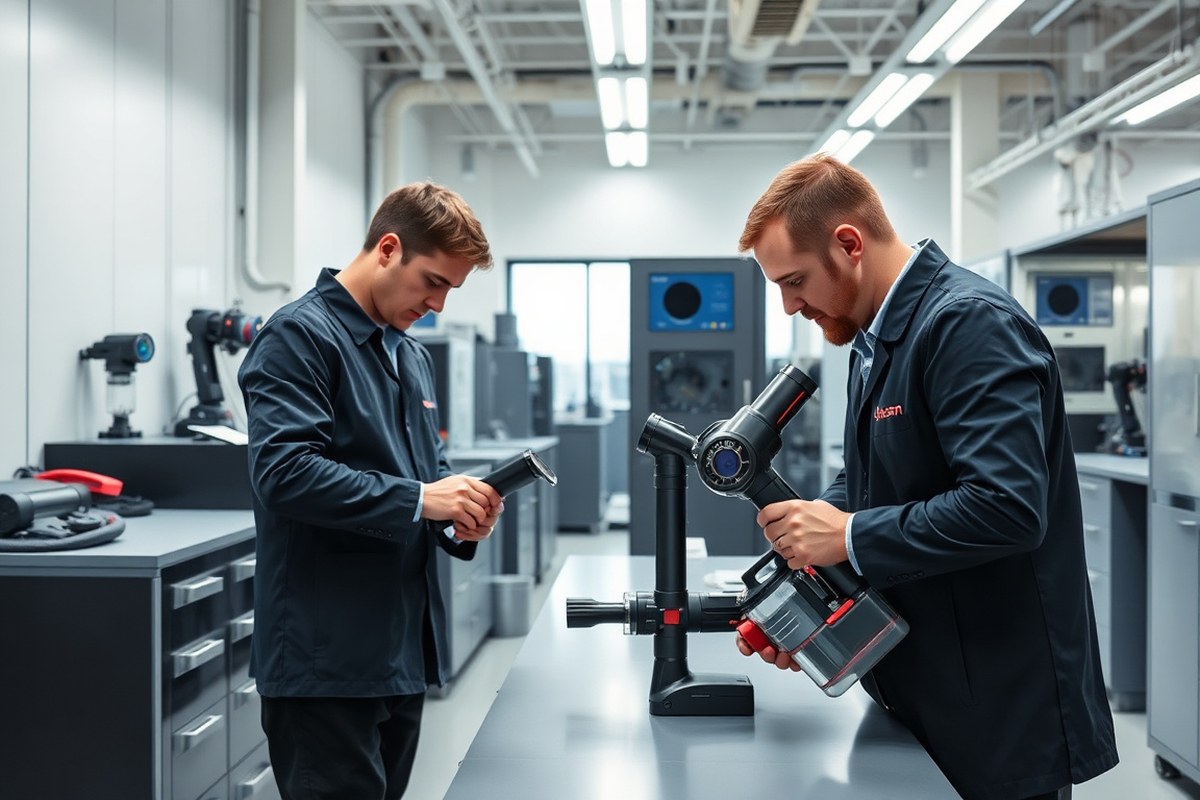
Dyson still makes parts of its products in the UK, focusing mainly on research and design. Its UK facilities help create new technology and improve vacuum cleaners.
Some Dyson vacuums are still assembled or finished in the UK. But most mass production happens in Asia.
Malmesbury Research and Development Center
The Malmesbury site in Wiltshire is Dyson’s main R&D hub. Engineers and designers here test hundreds of prototypes to find the best vacuum designs. This center lets Dyson innovate quickly and stay ahead in technology.
The R&D center focuses on inventing new motor designs and improving battery life. They also develop the unique cyclonic technology used in Dyson vacuums. Malmesbury remains a core part of Dyson’s innovation, even after moving the head office to Singapore.
Selective UK Vacuum Assembly Lines
Few Dyson vacuum models still see assembly in the UK. These include special or limited-edition models made with precision demands. The UK assembly lines handle quality checks and final tweaks before shipment.
Most everyday Dyson vacuums are assembled in Malaysia and the Philippines now. However, keeping some assembly in the UK helps Dyson stay close to its brand roots. It also allows for faster prototyping and testing of new designs.
- UK assembly focuses on premium and developmental models
- Smaller batch runs allow detailed inspections
- Close collaboration with Malmesbury R&D speeds innovation
- Supports high-precision motor and engineering work
- Faster response to design changes and quality issues
This approach balances cost efficiency and maintaining design quality. The UK lines typically run fewer shifts but prioritize craftsmanship.
Engineering and Design Innovations
Dyson’s UK teams drive many product breakthroughs, like improved suction power and quieter motors. Their work also targets making vacuums lighter and more user-friendly. The UK facilities often create prototypes and run rigorous testing.
The engineers use rapid prototyping tools to try hundreds of variations before finalizing. This trial-and-error process can take months but leads to innovative and reliable products. Design improvements from the UK often influence global production standards.
Keep an eye on product updates from Dyson’s UK R&D to spot new features early.
Why Dyson Moved Its Manufacturing to Asia
Dyson shifted its manufacturing to Malaysia in 2002 to cut production costs and boost global competitiveness. The move let Dyson tap into Malaysia’s skilled workforce and strong manufacturing infrastructure. This helped the company increase production without lowering its quality.
Asia offers several benefits for Dyson’s manufacturing. Malaysia, China, and the Philippines provide access to precision engineering talent and advanced technology. These factors allow Dyson to maintain high-quality standards while operating efficiently and at scale.
Dyson kept strict quality control after moving production overseas. Facilities in Malaysia focus heavily on precision and quality checks. Skilled workers make sure every vacuum meets Dyson’s strict rules.
They keep the same quality once done in the UK. Every part is checked to match Dyson’s high standards.
The shift to Asia required careful planning and coordination. Dyson gradually moved operations and built facilities with local expertise.
The process balanced cost savings with maintaining the engineering excellence Dyson is known for. Here’s how Dyson manages this manufacturing transition step-by-step:
- Identify locations with skilled labor and strong industrial infrastructure.
- Build state-of-the-art manufacturing facilities tailored for precision engineering.
- Train local workers to uphold exacting standards and manufacturing processes.
- Implement strict quality control systems modeled on previous UK operations.
- Scale production efficiently while monitoring cost and maintaining product excellence.
- Coordinate supply chains to ensure component availability and smooth operations.
- Maintain ongoing training and quality audits to sustain high performance.
Taking these steps lets Dyson keep making top-quality vacuums at lower cost. The process takes years and careful monitoring, reflecting a balance between cost, quality, and innovation. Moving to Asia gave Dyson more production options without sacrificing the engineering precision customers expect.
Understanding Dyson’s Global Supply Chain and Component Sourcing
Dyson’s global supply chain covers multiple countries to source parts efficiently. Motors are made in Singapore.
Other components come from Malaysia, Thailand, and the Philippines. The supply network includes countries like China, Taiwan, and Japan, known for electronics and precision manufacturing.
Dyson uses a complex system to coordinate these suppliers and production sites. Manufacturing hubs in Asia allow Dyson to cut costs and access skilled workers. Singapore hosts Dyson’s main office.
It has research and engineering teams. The supply chain team works there too.
Key parts like motors require advanced technology and quality controls. So producing them in Singapore helps maintain product quality.
The other components, such as casings and batteries, come from nearby countries with strong manufacturing bases. This mix of locations balances cost, quality, and speed of delivery.
| Component | Primary Country | Reason for Location |
|---|---|---|
| Motors | Singapore | Advanced manufacturing and strict quality controls |
| Electronic Components | China, Taiwan, Japan | Specialized suppliers, electronics expertise |
| Assembly & Other Parts | Malaysia, Thailand, Philippines | Lower production costs, skilled labor |
| Research and Design | Singapore, UK | Innovation hubs and company headquarters |
The global supply chain creates some challenges, like coordinating deliveries across countries. Delay in one location can slow overall production.
So Dyson keeps close ties with suppliers. They often tailor supply chain strategies depending on local conditions and demand.
Using several countries also spreads risks like trade issues or natural disasters. Businesses can shift orders between sites if problems arise. The supply chain complexity affects final product availability and sometimes influences price and warranty policies.
How Dyson Ensures Quality Across Manufacturing Sites
Dyson controls production standards by applying strict quality control across all sites. Each part and assembled unit must pass through several inspection stages. This helps keep quality stable regardless of where the vacuum is made.
Manufacturing location doesn’t reduce vacuum quality because Dyson uses the same standards everywhere. In Malaysia, the UK, or Mexico, workers follow strict rules. The company also invests in technology and training to maintain consistency globally.
Before shipment, Dyson tests vacuums through a series of checks to catch defects early. These tests include performance measurements, durability trials, and visual inspections. They confirm that every vacuum matches Dyson’s high benchmarks.
- Continuous monitoring and testing during material sourcing
- Step-by-step inspection of components before assembly
- Functional testing of motor and suction power
- Final assembly quality audits including fit and finish
- Random sample reliability tests simulating real use
- Ongoing feedback analysis from customers to spot issues
The quality control system uses time and resources. It reduces faults. This leads to happier customers.
Good results show vacuums running strong with no error flags in tests. Problems arise if inspections miss small defects, leading to failures later.
Failing to maintain strict quality checks can cause costly recalls and hurt Dyson’s reputation.
Dyson’s global approach combines strong process control with continuous improvement. Their quality assurance adapts as new materials and designs appear. This helps Dyson keep standards high and products reliable no matter the factory location.
Sustainability and Environmental Efforts in Dyson Manufacturing
Dyson takes several steps to reduce its environmental impact during manufacturing. They use recycled materials, improve energy efficiency and cut down on packaging waste. These efforts help make their factories more eco-friendly and sustainable.
Use of Up to 50% Recycled Materials in Products
Dyson incorporates up to half of recycled content in some of its vacuum parts. This helps cut demand for new raw materials and lowers resource waste. Using recycled plastics and metals also saves energy compared to making parts from scratch.
The company works closely with suppliers to verify recycled material quality. They balance performance and durability with sustainability goals. This careful material choice keeps Dyson products reliable without excess environmental cost.
Energy-Efficient Factory Machinery and Lighting
Factories use energy-saving machines and LED lighting to reduce power use. Efficient motors and automation help cut electricity consumed during production. This lowers factory carbon emissions and keeps Dyson’s footprint smaller.
Production teams monitor energy consumption regularly to find further savings. Small changes in process timing or equipment settings make a difference. This ongoing focus helps maintain a green manufacturing environment.
Packaging Reduction and Recycling Programs
Dyson minimizes packaging by cutting unnecessary materials and plastic wrap. Smaller, smarter packaging reduces waste and shipping costs. It also limits the junk that ends up in landfills.
Recycling programs exist across Dyson’s factories to handle scraps and packaging leftovers properly. These programs ensure materials get reused or disposed of responsibly.
- Eliminating plastic wrap around product boxes
- Using recyclable cardboard and paper materials
- Streamlining package size and weight
- Collecting waste for recycling or reuse
- Reducing ink and dyes on packaging
Packaging changes help lower environmental impact and shipping emissions. Recycling ensures less waste reaches landfill sites.
Clean Energy Investments at Manufacturing Locations
Some Dyson factories invest in renewable energy sources like solar power. This reduces reliance on fossil fuels and cuts greenhouse gases. Clean energy also supports long-term cost savings on electricity.
Along with efficient technology, renewable energy is key to their sustainable manufacturing strategy. Dyson keeps improving to use more green power across all sites.
Recent Changes and the Future of Dyson Manufacturing
Dyson has changed some main parts of its manufacturing in recent years. It is also growing its factories to keep up with demand. These moves help Dyson make more products for customers.
The company moved its main office from the UK to Singapore in 2019. This shows Dyson is putting more focus on the Asian market.
The new base helps the company work closer to many customers. Manufacturing growth in Malaysia and the Philippines supports production and innovation for future products.
Headquarters Relocation from UK to Singapore (2019)
In 2019, Dyson moved its main headquarters from the UK to Singapore. This change put Dyson closer to its main manufacturing sites in Asia. It helps the company manage its global operations more efficiently.
Being in Singapore also boosts Dyson’s access to local tech talent and resources. This move reflects a broader shift towards Asia for both business and manufacturing. It helps Dyson stay competitive and innovate faster.
New Digital Motor Factory in the Philippines (2017)
Dyson opened a digital motor factory in the Philippines in 2017. This factory focuses on making motors that power Dyson vacuums and other products. The site was added to meet rising global demand for Dyson motors.
Locating motor production in the Philippines helps keep costs steady and improves supply reliability. The factory uses advanced technology and quality controls to maintain Dyson’s standards. It plays a big role in supporting the company’s growth.
Increased Automation and Robotics in Malaysia
Malaysia remains Dyson’s main hub for assembling vacuum cleaners. The company has invested heavily in automation and robotics at these plants. This upgrade reduces errors and speeds up production lines.
More automation means Dyson can produce more vacuums without raising costs too much. Plants in Malaysia combine high-tech processes with skilled workers. This balance helps maintain product quality even as output expands.
Future Sustainability and Efficiency Targets
Dyson plans to make its manufacturing more sustainable and efficient in coming years. This includes using greener energy sources and cutting waste at its factories. The company wants to reduce its environmental impact while growing output.
Investing in smarter machinery and better logistics also features in Dyson’s goals. These changes aim to lower production costs longer term. Dyson’s future manufacturing will likely be more automated and eco-friendly, benefiting both the company and customers.
How Manufacturing Location Influences Dyson Warranty and Customer Support
Manufacturing location can affect warranty terms mainly through regional policies and parts availability. Dyson offers a strong warranty globally.
But specific conditions may vary by country due to local laws. Knowing where your Dyson was made helps you understand repair options and how quickly parts arrive.
Product origin also plays a role in customer support access. Dyson maintains service centers worldwide, but some regions have better infrastructure and faster repairs. Flagship facilities like the one in Singapore help supply chains run smooth.
They improve the speed of service and delivery. This makes it easier to get repairs and parts quickly.
Here are key points about how manufacturing location influences warranty and support:
- Warranty coverage often depends on the country of purchase, not just manufacture.
- Parts availability varies by region, affecting repair time and cost.
- Established manufacturing hubs like Singapore and the Philippines have strong service networks.
- Consumer confidence rises with clear product origin and accessible customer service.
- Products made closer to your location usually receive faster warranty service.
Dyson’s centralized global network supports consistent quality. But local laws can cause small warranty differences. In countries with strict consumer protection, warranties may extend beyond the standard period.
Save your purchase documents to prove your warranty eligibility. This is important if your Dyson was made outside your country. Keep them safe to avoid problems later.
Always register your Dyson product with the company online for quicker warranty claims and support.
Manufacturing location indirectly impacts customer support by shaping parts inventory and repair logistics. Regions with large manufacturing sites often have better-trained technicians and spare parts. This setup lowers wait times and sometimes service costs, making repairs less of a hassle.
The place where your Dyson was built shows what kind of service to expect. It often affects repair times and parts availability. This can change how easy it is to get support.
It does not directly mean better or worse warranty. But it influences how smooth and fast repairs go. Checking your product’s country of origin and warranty terms helps you plan for support if needed.
Your Quick-Start Plan to Understanding Dyson Manufacturing
Follow these steps to learn where Dyson vacuums are made and assess quality. You’ll get a clear picture and know how to check your vacuum’s origin.
- Day 1: Check your Dyson vacuum’s model number and serial code. Use it online to find where it was made.
- Day 2: Visit Dyson’s official website for manufacturing and warranty info. Confirm how your model’s warranty covers you.
- Week 1: Research Dyson’s UK design history to understand their innovation focus. This helps see what parts may be designed locally.
- Week 2: Learn about Asia-based manufacturing benefits and risks. Know why production moved and its effect on price and quality.
- Week 3: Explore customer reviews about build quality from different manufacturing sites. Look for consistent complaints or praises.
- Week 4: Check for Dyson’s environmental efforts in manufacturing. See how sustainable choices affect product materials.
- After One Month: Contact Dyson support with questions about manufacturing or warranty. Gauge how manufacturing location impacts your service experience.
Frequently Asked Questions
Where Are Dyson Vacuum Parts Manufactured?
Dyson sources parts globally, including Asia and Europe. Components come from different countries before assembly. This approach helps keep costs down and ensures quality parts.
Does Dyson Produce All Vacuum Models in the Same Factory?
No, Dyson’s models are made in various factories across Asia. Different product lines may be assembled in Malaysia, China, or Singapore. This helps meet global demand more efficiently.
Is the Dyson V12 Made in China or Malaysia?
The Dyson V12 cordless vacuum is made in Zhuhai, Guangdong Province, China. Some other models still come from Malaysia’s factories. This depends on the design and manufacturing needs.
Can I Tell Where My Dyson Was Made by the Serial Number?
Yes, Dyson vacuum serial numbers contain manufacturing info. You can check it online or contact Dyson support for details. This helps with warranty verification and repair options.
Do Dyson Hair Dryers Share the Same Manufacturing Locations as Vacuums?
Dyson hair dryers are produced in different factories, sometimes overlapping with vacuum sites. Manufacturing location varies by product line and year. This keeps quality consistent across products.
Are Dyson’s UK Sites Still Involved in Any Manufacturing?
UK facilities mainly focus on research and development now. Manufacturing shifted mostly to Asia for cost reasons. The UK sites design and test, but rarely build the vacuums themselves.
Before You Go
Dyson vacuums are designed in the UK but mostly made in Asia now. This global approach balances innovation and cost. Start by checking your vacuum’s origin using its serial number for clear insight.