Can You Curl Your Hair with a Flat Iron? A Complete Guide with Expert Tips
You can curl your hair using a flat iron. This tool creates smooth curls that often last longer than some curling irons. The curl’s hold depends on your skill and the flat iron model you choose.
Picking the right flat iron plate material and size matters. Ceramic plates work well for fine or color-treated hair because they distribute heat evenly. Titanium plates heat up fast and are ideal for thick, coarse hair that needs stronger heat.
To curl, take a small section of hair and clamp the flat iron near the roots. Twist the iron 360 degrees toward you while slowly pulling it down the hair shaft.
Stop twisting once your hair hangs straight down again. This gives you neat, defined curls without kinks or bends.
Practice controls your curl shape and smoothness. Using a heat protectant spray helps prevent damage. Adjust your iron’s heat setting based on your hair type to avoid burns or frizz.
Key Takeaways
- Use ceramic plates at 250, 300°F for fine or color-treated hair.
- Choose titanium plates heated between 375, 410°F for thick or coarse hair.
- Pick flat irons with one-inch plates for the most versatile curls.
- Clamp hair 1 inch from the roots and lift vertically to add volume.
- Rotate the flat iron a full 360 degrees towards you while curling.
- Curling long hair with a flat iron usually takes 20 to 30 minutes.
Can You Curl Your Hair with a Flat Iron? Here’s How It Works

Yes, you can curl your hair with a flat iron. This tool can straighten, wave, and curl hair, making it very versatile. The secret lies in how you use the flat iron to bend the hair strands.
The flat iron curls hair by heating a small section between its plates. You clamp the hair near the roots, then twist the iron halfway backward.
As you slowly move the iron down, the hair wraps around the plates. This action makes a curl or wave shape in the hair.
This curling method gives you more control than a curling iron. You control the curl’s tightness by twisting your wrist.
The speed you pull the iron also changes the curl’s tightness. Since the flat iron applies heat evenly through its broad plates, curls often last longer.
Another advantage is convenience. You don’t need two tools for smooth or curly hair, one flat iron does both.
This makes traveling easier. You can quickly switch from sleek straight hair to loose waves or defined curls.
Choosing the Right Flat Iron for Curling Your Hair
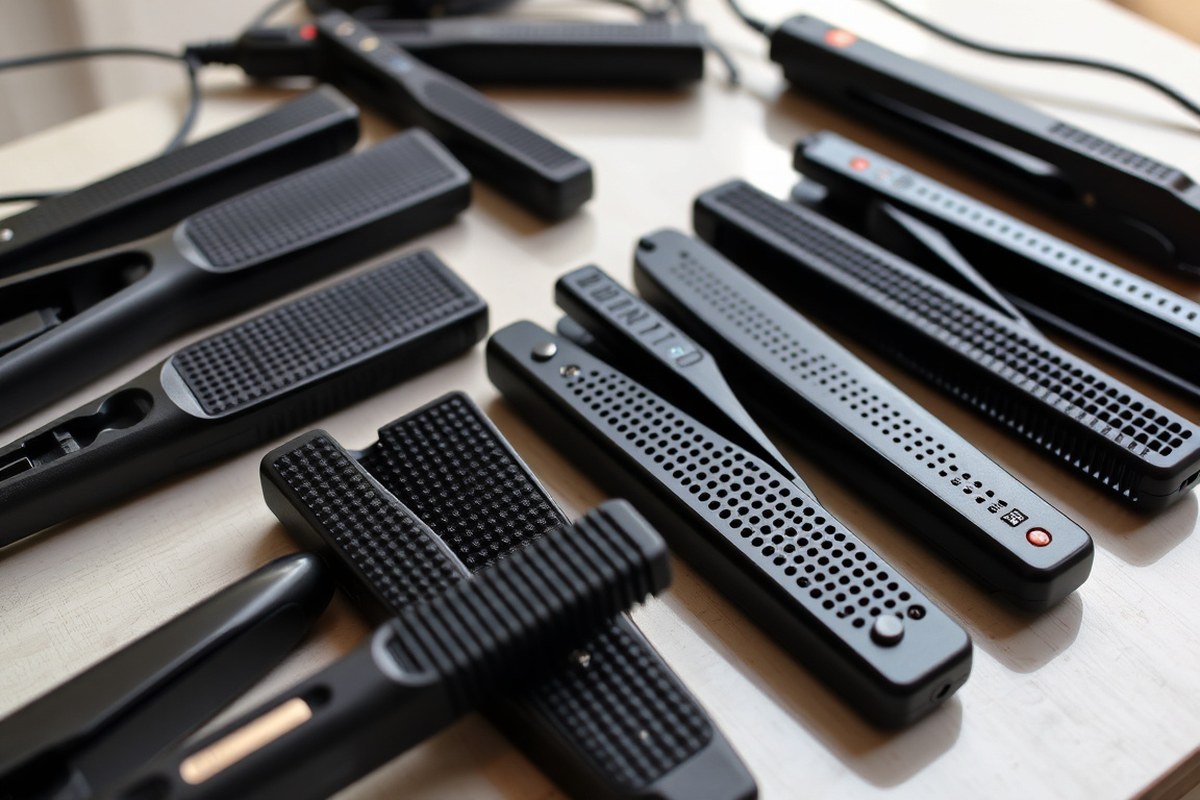
Any flat iron can curl your hair, but some kinds work better. Look for flat irons with rounded edges and plates that fit your hair type. The right size and material will protect your hair and make curling easier.
Plate Shape and Edges Matter
Rounded edges help you twist the iron without snagging your hair. Straight-edged irons might crease or flatten curls instead. Curved plates let you roll the hair smoothly to form loose or tight curls.
Pick a flat iron with gently rounded corners. Even if it’s not made especially for curling, this shape will make the process easier. Avoid very sharp edges that catch strands or cause uneven heat.
Plate Size for Your Hair Length and Curl Type
Plate width affects how big or small your curls turn out. Narrow plates (around 1 inch) work best for short hair and tight curls. Wider plates (1.5 to 2 inches) suit long hair or bigger waves.
Use smaller plates for short hair to get curls close to the roots. For long hair, wide plates let you grab more strands and curl quicker. To get defined, tight ringlets, choose a 0 inch flat iron.75 to 1-inch plate size.
Material: Protect Hair from Damage
Ceramic plates heat evenly and reduce hot spots that burn hair. Titanium irons heat quickly and stay hot but may be too intense for fine hair. Tourmaline plates emit negative ions to smooth hair and reduce frizz.
Ceramic is a good all-around choice, especially if your hair is fragile or dry. Thick, coarse hair curls faster when you use titanium plates. Look for flat irons that combine these materials for gentle but effective styling.
Other Features to Consider
Adjustable temperature control is key so you can match heat to your hair type. Fine or damaged hair needs lower heat settings (around 300°F to 350°F). Thick or coarse hair often requires 375°F to 450°F.
Fast heat-up times save you minutes during styling. A longer cord gives freedom to move your wrist while curling. Some irons have extra features like automatic shutoff and digital displays.
- Choose rounded edges for smooth curling motion
- Pick plate size based on hair length and curl type
- Opt for ceramic plates to reduce damage for most hair
- Titanium suits thick, coarse hair with fast heating
- Get adjustable temperature from 300°F to 450°F
- Look for a long cord and fast heat-up time
Press the flat iron gently so you don’t cause creases in the hair.
Flat irons costing $30 to $100 with these features are widely available. Cheaper models might heat unevenly or cause damage. Spending on a quality iron helps curls hold longer and protects hair.
Test the flat iron on a small section first. Notice if it glides smoothly and heats evenly. Good irons let you create curls that look natural, with soft bounce and shine.
How to Curl Your Hair with a Flat Iron Step-By-Step
You can curl your hair with a flat iron by getting it ready first. Section your hair evenly for better results. Use your wrist to twist the iron and finish the curls well.
This method works best on dry hair treated with heat protectant. Follow clear steps to avoid frizz and get long-lasting, uniform curls.
Preparing Your Hair for Curling
Start with completely dry hair to avoid damage and get better curls. Use a heat protectant, like a copolymer-based spray, to reduce breakage by about 38% at 392°F. Comb through your hair gently to remove all tangles before styling.
Washing your hair the night before helps it dry naturally and keeps it smooth. Avoid heavy products that weigh hair down; choose a lightweight leave-in treatment instead. This prep locks moisture in and protects hair from heat fatigue.
Sectioning Hair for Even Curls
Divide your hair into narrow 1-inch sections to ensure curls look even and defined. Hold back the rest of your hair with clips. Work on one section at a time.
This keeps your hair neat while curling. Large sections cause uneven curls and make styling harder.
Start curling from the bottom layers and work your way up. Keep each section manageable to avoid missing spots or overusing heat. This way, every strand curls nicely and the style lasts longer.
Curling Technique Using Wrist Twist
Place the flat iron close to your hair roots on a 1-inch piece. Twist your wrist to turn the iron 180 degrees away from your face. This wraps hair around the iron and makes natural curls.
Glide the iron slowly from root to end, holding 5 to 8 seconds per section. Avoid going over the same spot twice to reduce damage. Curl sections in different directions next to each other.
This adds about 40% more volume. It also stops your curls from looking all the same.
For tighter curls, wrap the hair tightly and hold longer. For loose waves, use bigger sections and a gentler twist. Set your iron temperature based on your hair type.
Use 250°F for fine hair and up to 375°F for thick hair. Adjusting heat protects your hair while curling.
Finishing and Setting the Curls
After curling, let your hair cool for 2 to 3 minutes. This step helps set curls and makes them last longer. Avoid touching or brushing your hair while it’s still warm.
Finish by spraying a flexible-hold hair spray or light mousse. These products extend curl life by 8 hours or more and reduce frizz. For extra shine and smoothness, use a small amount of serum after the spray.
- Wash and dry hair completely.
- Apply heat protectant evenly.
- Divide hair into 1-inch sections with clips.
- Clamp flat iron near roots on each section.
- Twist your wrist 180 degrees away from your face.
- Slowly glide the iron down toward the ends.
- Cool curls for 2, 3 minutes.
- Set with flexible-hold spray or mousse.
Adjusting Temperature and Technique for Different Hair Types
Set your flat iron temperature by your hair type to avoid damage and get lasting curls. Fine hair needs lower heat, around 300°F to 350°F. Using too high a heat on fine or damaged hair risks causing breakage and frizz.
Thicker or coarse hair can handle higher temperatures for better hold. Aim for 370°F to 400°F to shape your curls well. Using too low a temperature might not give you defined curls that last.
| Hair Type | Suggested Flat Iron Temperature (°F) | Suggested Temperature for Spiral Curls (°F) | Beach Wave Temp Range (°C) |
|---|---|---|---|
| Fine Hair | 300, 350 | 350, 360 | 150, 170 |
| Medium Hair | 350, 370 | 360, 380 | 170, 210 |
| Thick/Coarse Hair | 370, 400 | 380, 400 | 170, 210 |
For short hair, curling requires a bit more care. Use smaller sections and hold the iron vertically near the roots. Twisting the iron while slowly feeding the hair through creates tight curls or waves.
Short hair heats up quickly. So keep temperatures in the lower recommended range for your hair type. Fine short hair, for example, works well at about 300°F. Short thick hair may need 380°F. But never exceed 400°F to prevent heat damage.
Work in small sections and don’t hold the flat iron in one spot. Around 5 to 8 seconds per section gives a good curl without overdoing it. Let each curl cool fully before touching it; this helps set your style.
How Long Does It Take to Curl Hair with a Flat Iron?
Time Needed for Different Hair Lengths
Short hair usually takes about 10 to 15 minutes to curl with a flat iron. Medium-length hair can take 15 to 30 minutes depending on how thick it is. Long hair often needs 30 to 45 minutes or more for full curling.
Long hair requires more sections and passes with the flat iron. That’s why it takes longer to finish than short or medium hair. The extra time helps you get curls that last and look smooth.
How Thickness Affects Curling Time
Thicker hair means more sections to curl. Fine hair needs less time per section because heat spreads faster. Extremely thick or dense hair can double the curling time.
Take smaller sections if your hair is very thick. That helps the heat reach every strand for even curls. Bigger sections on thick hair may leave some hair straight or unevenly curled.
Ideal Section Size and Speed
For best results, clip sections about 1 inch wide or less. This size works well on most hair types and lengths. Clamp the flat iron near the base of the section before curling.
Twist the flat iron halfway and glide it down quickly. Moving too slow risks heat damage, and too fast can cause loose curls. A smooth, steady motion means curls hold better.
How Beginners Should Time Their Curling
Expect your first curling attempts to take about twice as long. Beginners often take 30 to 60 minutes to finish curls on medium hair. That extra time lets you get used to the grip and motion.
Practice will speed things up. As you grow confident, curling long hair with a flat iron becomes easier and faster. Start slowly to avoid mistakes and heat damage.
Helpful Steps to Manage Your Curling Time
- Start with clean, dry hair to save time on prep
- Divide hair into manageable sections using clips
- Use a flat iron with plate width suited for your hair length
- Work from the bottom layers up to avoid missing sections
- Practice your speed to find the right balance for curling
- Allow each curl to cool before touching for better hold
Following these steps helps reduce breaks and uneven curls. You’ll spend less time fixing mistakes and more time enjoying your style.
Don’t rush too fast. Moving the flat iron smoothly keeps curls neat and prevents heat damage.
Tips for Making Flat Iron Curls Last Longer and Stay Defined
You can make your flat iron curls last longer by using the right products and habits. Apply a flexible hold hairspray after curling to lock in the style without stiffness. Avoid heavy sprays that weigh curls down or make hair crunchy.
Preserving curls overnight helps save you styling time the next day. Wrap your hair loosely in a silk or satin scarf to reduce friction and prevent frizz. Sleeping on a silk pillowcase also helps maintain curl shape and reduce breakage.
The direction you curl your hair affects volume. Curling away from your face boosts lift at the roots and opens up your hairstyle. Alternating the curl direction on each section creates more natural body and fullness throughout your hair.
- Section hair into 1- to 1.5-inch widths for tighter, longer-lasting curls
- Hold flat iron on hair for 5 to 8 seconds, then cool curls before touching
- Use a flexible hold hairspray to keep curls defined and soft
- Wrap curls in a silk or satin scarf overnight to prevent frizz
- Alternate curl directions or curl away from your face for more volume
- Sleep on a silk pillowcase to reduce friction and keep curls intact
Cooling curls before touching improves longevity by up to 60%. Beta keratin bonds lock as hair temperature drops below 30°C, making curls last longer. Holding each curled strand until cool will boost hold without relying on too much product.
Using these techniques helps curls stay defined and smooth all day. They also cut down on the frizz that can happen after a few hours. Even if your hair is fine, you can add volume and bounce.
Use hair products designed for volume. Cooling your hair after styling helps too.
Common Mistakes and How to Avoid Them When Curling
Curls often fall out quickly when you apply too much heat or don’t let them set. Leaving your flat iron on each hair section too briefly causes curls to lose shape fast.
For fine or medium hair, hold the iron for five to eight seconds. For thick hair, aim for seven to twelve seconds to lock curls without damage.
Skipping a heat protectant spray leads to hair damage and frizz. You need a product like Herbal Essences Argan Oil &. Aloe Heat Protect Spray before curling.
This creates a shield that helps hair handle heat and keep curls smooth. Never curl hair when it is still damp.
Wet strands burn easier. They also get rough or brittle.
Uneven curls or frizz happen from wrong flat iron heat. Too high or too low causes issues. Temperature affects curl quality.
High heat can cause breakage and frizz. Low heat might not curl the hair properly.
Start your iron at the lowest heat that still shapes your curls. Ceramic plates, especially vibrating ones, help distribute heat evenly around the hair.
- Apply heat protectant spray evenly to dry hair before curling
- Section hair tightly to get consistent curls
- Hold the flat iron on hair 5-8 seconds for fine and medium hair
- Hold the flat iron 7-12 seconds for thick or coarse hair
- Use ceramic flat irons set to the right temperature
- Avoid combing hair right after curling to let curls set
- Don’t curl damp or wet hair to prevent damage
Another common mistake is touching curls while they are hot, which loosens them too soon. Let curls cool before running fingers through them or applying styling products. This delay helps curls keep their form longer.
Investing in a quality flat iron that heats evenly. Adjusting heat to your hair type, also cuts down on uneven curls and frizz.
When to Consider a Professional Stylist Instead of DIY Curling
Professional stylists offer real benefits for thick, coarse, or tightly textured hair. They know how to adjust heat settings carefully to prevent damage and boost curl shape.
This helps stop uneven curls and frizz. These problems happen with complex hair types when you try DIY curling.
Some hair textures need a flat iron with a smaller plate to curl well. Stylists use tools like half-inch flat irons or smaller. These work best on short or dense hair.
They control temperature well. Usually, it stays between 300°F and 375°F. This cuts heat damage but curls hair well.
You should think about booking a stylist when your hair is fragile or severely damaged. Adding heat on already weak hair could cause breakage or dullness. Pros pick the right protective products.
They also do treatments that strengthen hair before curling. It’s harder to do this on your own.
Special occasions call for flawless curls that last all day or night. Stylists offer services like curling, setting sprays, and finishing products.
You might not have these at home. These help curls stay smooth, shiny, and intact for hours, perfect for weddings, parties, or photoshoots.
Salon prices for curling services range from $40 to $100 or more. This includes washing, curling with the right tools, and styling products. It takes about 30 to 60 minutes, depending on hair length and thickness.
Spending on this can save you time. It also cuts damage risk compared to rushing DIY.
Use a heat protectant spray before curling to shield hair from damage. Applying it evenly makes a big difference in curl health and shine.
DIY curling is best saved for regular styling and simpler hair types. Your stylist’s skills can help if hair is thick, coarse, or fragile. This prevents bad results and harm.
They bring experience and the right tools. They use products to make curls look polished and feel healthy.
Step-by-Step Action Plan for Curling Hair with a Flat Iron
Follow these steps to curl your hair using a flat iron with confidence. This plan fits all hair types and skill levels.
- Before You Start: Wash and dry your hair completely. Your curls last longer on clean, dry hair.
- Prep Time: Apply heat protectant evenly. This helps avoid damage and keeps hair shiny after curling.
- Sectioning: Divide hair into small sections. You should see clear, manageable parts ready for curling.
- Curling Process: Heat your flat iron to the right temperature for your hair type. Thin hair: 300°F to 350°F. Thick hair: 350°F to 400°F. Glide the iron slowly for tight curls, faster for loose waves.
- After Curling: Let curls cool completely before touching. Curls set better when cooled.
- Styling: Run fingers gently through curls or use a light hairspray. This holds the curl shape without crunchiness.
- Maintenance: Avoid moisture and humidity for the first few hours. Use a satin pillowcase or scarf at night to keep curls intact.
Frequently Asked Questions
Can You Use a Flat Iron on Wet Hair to Curl It?
It’s best to dry your hair completely before curling. Wet hair can get damaged by heat and won’t hold curls well.
How Tight Should You Clamp the Flat Iron When Curling?
Clamp it firmly but not too tight to avoid creases. Too much pressure can ruin the curl’s shape.
Can You Curl Hair with a Flat Iron Without Heat Protectant?
Using no heat protectant increases damage risk. Always apply a heat protectant spray or serum before curling.
Do Flat Iron Curls Last Longer Than Curling Iron Curls?
Curl duration depends more on hair type and product use. Flat iron curls can last just as long with proper styling.
Is It Harder to Curl Very Short Hair with a Flat Iron?
Short hair is trickier because sections are small. Use a narrower flat iron and work carefully to avoid burns.
Can You Straighten Flat Iron Curls Back Out Without Damage?
You can smooth curls by running the flat iron through gently. Use low heat to reduce hair stress.
Final Thoughts
You can curl your hair with a flat iron by using the right technique and care. Start with small sections and the correct heat to see the difference. Try curling one section today to build your skill and confidence.