

How to Shave with a Safety Razor: Simple Steps for a Perfect Close Shave
Learning to shave with a safety razor takes practice. It gives a close, smooth shave each time. Using very little pressure and keeping the blade near a 30-degree angle helps a lot.
Shave in the direction your hair grows to reduce irritation and prevent cuts. Start by prepping your skin with warm water to soften hair and open pores. A good lather from quality shaving soap or cream helps the blade glide smoothly.
The COMPANION razor can help set the correct blade angle, making learning easier. Replace blades often to keep them sharp and avoid pulling hair. Take your time; rushing causes nicks and missed spots.
Shaving carefully with a safety razor takes practice but saves money and improves skin health. Following these steps will make your shaving routine comfortable and effective.
Key Takeaways
- Use very light pressure and let the blade do the cutting.
- Keep the razor at about a 30-degree angle from your skin.
- Shave with the hair grain to avoid irritation and cuts.
- Prepare your skin with warm water and a rich shaving lather.
- Choose a razor that helps you maintain the correct blade angle.
- Replace blades frequently to keep your shave smooth and comfortable.
How to Shave with a Safety Razor Step-by-Step

Hold your safety razor lightly and at the right angle to your skin. Use gentle, short strokes and shave with the hair growth to avoid irritation. Follow these steps carefully for a close, comfortable shave without cuts.
Positioning and Blade Angle
Hold the razor so the blade meets your skin at about a 30-degree angle. This angle lets the blade cut hair without scraping your skin deeply. Tilting more or less can cause tugging or nicks.
Align the flat side of the razor head slightly away from your face. The blade sticks out just enough to cut hair well. The safety bar doesn’t push hard against your skin.
This helps avoid cuts and irritation. The right angle feels smooth, not sharp or harsh.
Applying Pressure and Stroke
Use almost no pressure on your skin. The heavy razor head should do all the cutting by simply resting on your face. Pressing too hard can cause cuts and irritation.
Make short shaving strokes about 1 to 3 centimeters long. Move in straight lines, not curves. This keeps your blade steady and reduces skin pulling.
Passes and Direction
Start shaving with the grain, which means shaving in the direction your hair grows. This minimizes irritation and makes shaving easier. Use slow, light strokes for the first pass.
Try a gentle second pass for a closer shave. Go lightly to avoid irritation or cuts. You can shave across or against the grain carefully.
But only after your skin adjusts. Keep pressure light to avoid razor burn or cuts.
Follow these steps for a smooth, safe shave:
- Keep the razor tilted roughly 30 degrees from your skin. This angle helps the blade glide smoothly and cut better.
- Rest the razor head lightly, letting its weight do the work.
- Use short, straight strokes 1 to 3 cm long.
- Shave with the grain during your first pass.
- Rinse the razor often to keep it clean and smooth.
- For a closer shave, gently shave across or against the grain on a second pass.
- Stop shaving once irritation starts or hair removal is enough.
Essential Tools and Products Needed
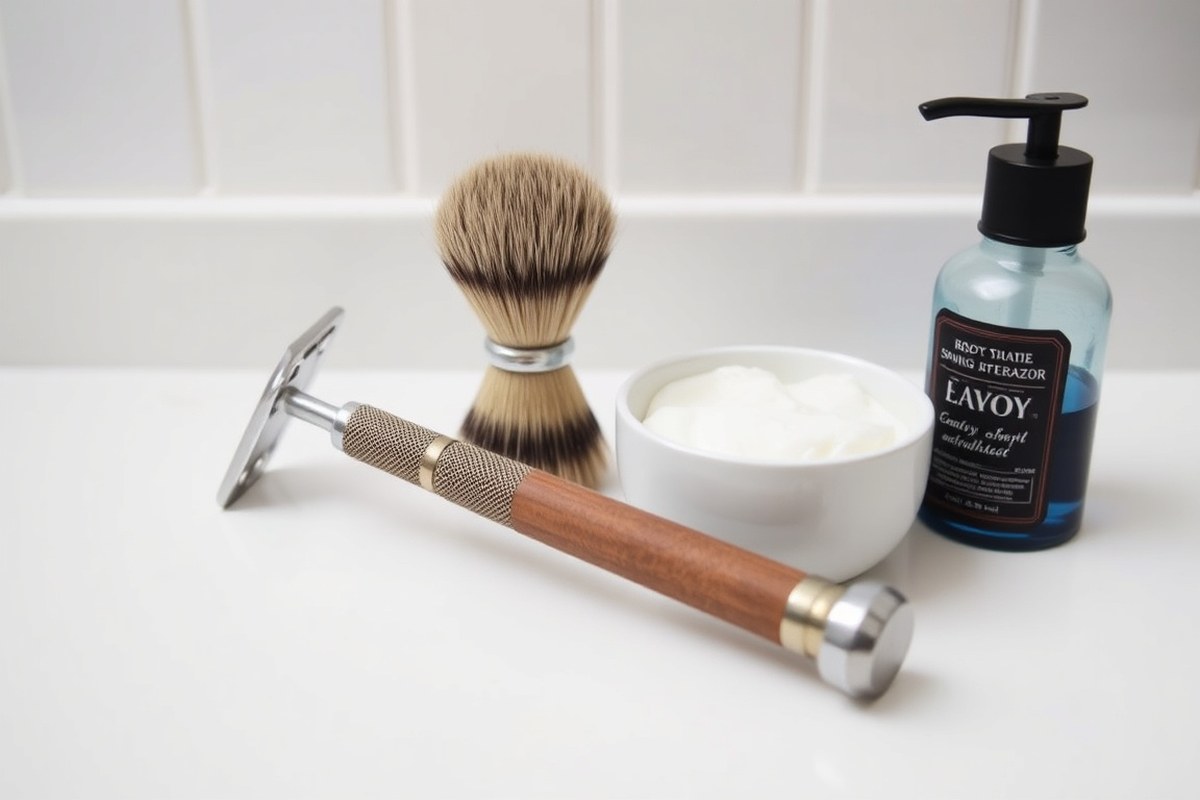
You need a safety razor designed for beginners to start shaving safely. Look for one with a closed comb or safety bar. It offers more skin protection and easier handling.
These models cost between $15 and $40. They have sturdy handles. This helps prevent slipping during use.
For blades, double-edged (DE) razor blades are what you’ll use. Pick blades labeled as sharp but not aggressive, like Astra or Derby brands. You can buy them online or in drugstores.
Blades come in packs of 10 to 100. They typically cost around $0 each.10 to $0.50 per blade depending on quantity and quality.
Using a shaving brush helps you create a thick, rich lather that lifts facial hair. Beginners should try a synthetic bristle brush, which is affordable, dries quickly, and works well.
Brushes range from $10 to $35. Avoid skipping the brush, as it improves the shave and softens your skin.
Choose between shaving soap, cream, or gel to lubricate your skin. A solid shaving soap bar lasts longer and extends the blade life by reducing friction.
Creams or gels are easier for quick lathers but might contain more chemicals. Price ranges vary from $5 to $25 per product, depending on brand and ingredients.
Post-shave care products soothe and protect your skin after shaving. An alcohol-free aftershave balm or lotion with moisturizing properties helps prevent irritation and razor burn.
These typically cost $8 to $20. Avoid heavily scented options if you have sensitive skin to reduce redness.
- Safety razor: choose closed comb for beginners, $15, $40
- Double-edged blades: Astra or Derby, sharp but gentle
- Shaving brush: synthetic bristles for beginners, $10, $35
- Lubricant: soap bar for better blade life, cream/gel for ease
- Aftershave balm: alcohol-free and moisturizing for skin recovery
Don’t rush swapping blades, using a dull blade can cause nicks and irritation.
Your kit costs vary but expect to spend around $50 to $100 starting out. A quality brush and soap will make the shave smoother and help your skin feel comfortable. Buying the right tools upfront is worth it.
You get fewer cuts while shaving. Your overall shaving experience improves too.
How to Prepare Your Skin for a Safety Razor Shave
Preparing your skin before shaving helps soften hair and protects your skin from irritation. Wet your skin with warm water. Use a quality shaving soap or cream.
This helps create a smooth surface to shave on. This preparation reduces razor drag and gives you a closer, more comfortable shave.
Cleaning and Softening
Warm water opens your pores and softens the hair for an easier cut. Start by washing your face thoroughly to remove dirt and oils that cause razor drag. Use a clean, warm towel on your face.
Keep it there for one to two minutes. This softens your skin before shaving.
Softened hair curls less under the blade, so you reduce tugging and irritation. Avoid cold water because it tightens your pores and toughens the hair. Aim to prep your skin for at least 3 to 5 minutes before shaving.
Lathering with Soap or Cream
A rich lather cushions your skin and helps the blade glide smoothly. Use a shaving brush to whip your soap or cream into a thick, creamy foam. Apply the lather in gentle, circular motions to lift hair and cover every shaving area.
Let the lather sit on your skin for one or two minutes to soften hair further. Avoid dry or minimal lather, which can cause blade clogging and skin irritation. Choose shaving soap or cream designed for protection and a smooth glide.
Optional Pre-Shave Products
Pre-shave oils add moisture to your skin. They also protect dry or sensitive skin. Use them to help reduce irritation.
Apply a few drops evenly over your wet skin before lathering. This helps reduce friction and razor burn during your shave.
Skip pre-shave oil if you have oily or acne-prone skin. It can clog pores and cause breakouts.
Pre-shave oil can cost between $10 and $20 but lasts for many shaves when used sparingly. Test new products on a small skin patch to check for reactions.
- Wash your face with warm water for 1 to 2 minutes.
- Apply a warm towel on your face. Leave it on for one to two minutes. Do this when you don’t shower first.
- Wet your shaving brush and swirl it in your shaving soap or cream.
- Build a thick, creamy lather with the brush.
- Apply lather evenly across the shaving area using gentle circular motions.
- Let the lather sit for 1 to 2 minutes to soften hair.
- Optionally, apply a few drops of pre-shave oil before lathering for extra skin protection.
Choosing and Replacing Blades Safely
Safety razor blades come mostly as double-edged stainless steel sheets. Some brands offer coated or sharpened edges to suit sensitive skin or coarse hair. Choosing a blade depends on your skin and hair type.
These affect how comfortable and close your shave feels. Pick a blade that suits those factors for best results.
A blade usually lasts about five to seven shaves. You’ll notice dullness if the razor pulls on hair or causes discomfort.
Swelling or redness after shaving can also signal a dull blade. Replace blades promptly to avoid irritation and achieve a clean shave.
To change blades safely, work over a flat surface to catch any drops. Unscrew the razor head carefully, holding the edges away from your fingers. Use a blade bank or closed container to dispose of used blades securely and prevent injuries.
Different blades do affect shave quality. Thicker hair may need sharper or more aggressive blades for a closer cut.
Sensitive skin prefers smoother blades with less shave irritation. Experiment with a few brands to find the right match for your needs.
Replace blades more often if your hair is coarse or dense. You can use different blades for different face parts. Try one blade for your cheeks.
Use another blade for your neck area. This keeps the blade sharper and reduces the risk of pulling in tougher spots.
You don’t need extra force with sharp blades. Apply gentle pressure to avoid cuts or razor burn.
A dull blade forces you to press harder, increasing injury risk. Keep your razor stand upright to let blades dry out, extending their life and preventing rust.
Post-Shave Care to Prevent Irritation and Razor Burn
Taking care of your skin after shaving helps reduce irritation. It stops razor burn too. You can keep your skin smooth and healthy.
Using the right products soothes and hydrates your skin. Cold water rinsing clears out soap and hair, reducing redness and inflammation.
Avoid exfoliating right after shaving. Your skin is sensitive, and scrubbing can cause more irritation. Instead, focus on gentle hydration and protection to keep your skin healthy and smooth.
- Rinse your skin with fresh cold water. It removes leftover soap and tightens pores.
- Pat your skin dry with a clean towel. Avoid rubbing to prevent irritation.
- Apply an alcohol-free aftershave balm or lotion. It soothes and hydrates skin.
- Use a light moisturizer suited for your skin type. This locks in hydration.
- Spot-treat any nicks or razor burn with an antiseptic cream or aloe vera gel.
- Wear loose clothing over shaved areas to avoid friction and irritation.
- Give your skin a break from shaving for at least one day if irritation occurs.
Don’t apply aftershave with alcohol right after shaving; it stings and dries out skin.
Cold water helps calm your skin faster than warm water. It shrinks pores and reduces redness. This simple step usually takes under a minute but makes a big difference.
Treating razor burn quickly cuts down how long it lasts. Aloe vera gel feels cooling and lowers inflammation. Antiseptic cream prevents infection if you nick yourself shaving.
Keeping your skin moisturized after shaving prevents itching and dryness. A gentle lotion or balm with calming ingredients works well. Avoid heavy creams that clog pores or cause breakouts.
Maintaining and Cleaning Your Safety Razor
Clean your safety razor after every use to stop buildup. Disassemble it by removing the blade carefully and separate the top cap, base plate, and handle.
Rinse all parts under warm running water to clear out soap, hair, and leftover cream. Avoid harsh scrubbing to keep the finish intact.
You can use mild soap to remove oily residue. Gently lather the razor parts, then rinse with warm water. To sanitize, wiping the razor with isopropyl alcohol helps kill bacteria.
Let the parts air dry fully on a clean towel before reassembling. This prevents rust and bacterial growth.
- Disassemble the razor carefully after each shave
- Rinse all parts with warm water to remove residue
- Use mild soap for deeper cleaning every few weeks
- Wipe with alcohol to sanitize if desired
- Dry all parts completely before storing
- Store in a dry place to avoid moisture buildup
- Replace blades regularly to keep shaves smooth and safe
Rust can form if moisture stays trapped. Keep the razor dry. Avoid storing it in a damp bathroom.
Keep your razor in a dry spot or use a dedicated case to protect it. Avoid leaving the razor sitting in water or on a wet surface. This extends its life and keeps metal parts working well.
Professional servicing is rarely needed. Use it if the razor jams. Also get it if the mechanism feels loose.
High-quality razors can last decades with simple care. Your razor can cost $20 to $60 or more upfront.
Maintaining it well saves money later. It helps avoid frequent replacements.
Common Mistakes When Shaving with a Safety Razor
Razor burn and irritation usually come from using too much pressure or a bad angle. Hold the razor so its blade makes about a 30-degree angle with your skin.
Don’t press hard; that can cut or irritate your skin. Let the razor’s own weight glide over your skin, not your force.
Dull or dirty blades cause stinging and a rough shave. The razor may pull or scrape your hair if the blade is dull. Change the blade regularly to keep the shave smooth and comfy.
Dirty blades get clogged with hair and cream, leading to a patchy shave. Flip the razor to use the other edge before rinsing to delay clogging.
Using the wrong shaving order can cause cuts and irritation. Avoid going back over the same spot too soon, especially against the grain. Start shaving gently in the direction your hair grows.
Then, shave smoothly across the grain for a closer shave. This method reduces pain and irritation.
- Do not press the razor; hold it loosely at 30 degrees.
- Rinse the razor often to clear hairs and cream build-up.
- Change blades after 3, 5 shaves for sharpness and safety.
- Shave in short, gentle strokes, not long, hard ones.
- Follow hair growth to reduce cuts and irritation.
- Use warm water beforehand to soften hair and open pores.
- Keep your skin tight to avoid nicks and bumps.
Clogged razors slow your shave and cause uneven cuts. Rinse the razor every few strokes under warm water to prevent build-up. Some safety razors let you flip the blade to a fresh edge.
So you don’t stop often. Keeping the blade clean means smoother strokes and less irritation over time.
Adapting Safety Razor Shaving to Different Areas and Hair Types
Shaving with a safety razor requires you to learn how hair grows on your skin. This helps avoid irritation, cuts, and ingrown hairs. Adjust your technique for sensitive spots.
Use care with thick, curly hair. This helps you get a smooth, comfortable shave.
Mapping Hair Growth Patterns
Hair grows in different directions depending on the area you shave. Stubble on the neck often grows downward. Chin hair can swirl in multiple directions.
Feel each section with your fingers first. Learn the hair growth pattern well. Study it before you start to shave.
Shave carefully along the hair grain. Move the razor in hair’s growth direction. This method reduces cuts and irritation.
This reduces skin irritation and razor bumps. Use short strokes, about 1 to 2 inches.
This gives you better control. It’s helpful near the neck or chin.
Run your hand over the area before shaving. Map out which way the hair grows. This helps you shave with the grain.
Shaving Sensitive or Delicate Areas
Areas like the neck, head, and pubic regions have more delicate skin that needs gentler handling. Pull the skin taut to smooth it. Use very light pressure with your razor.
This reduces nicks and cuts. Avoid going over the same spot repeatedly to prevent irritation or razor burn.
Use mild shaving cream before shaving. Apply pre-shave oil or lotion made for sensitive skin. This softens hair and protects skin.
These products help soften hair and protect skin. Extra skin prep, like a warm shower or warm compress, opens pores and makes shaving easier.
Use gentle strokes and a fresh blade for sensitive areas to avoid cuts and bumps.
Handling Coarse or Curly Hair
Thick, coarse, or curly hair often needs sharper blades to cut cleanly without tugging. Shave slower than you usually do. Use multiple light passes instead of one strong stroke.
This lowers irritation chances. This helps reduce irritation and nicks caused by pulling on the hair.
Always shave with the grain on the first pass. You can shave across or lightly against the grain later. Only do this if your skin shows no irritation.
Avoid this on the first pass. Change your blade after two or three shaves.
Sharp blades cut better on coarse hair. This keeps your shave smooth and easy.
Sharper blades cut coarse hair better but replace them after 2-3 shaves to avoid skin damage.
Your First Safety Razor Shave: A Quick-Start Plan
Follow this simple plan to get comfortable with your safety razor. Each step shows you what to do and how to tell it worked well.
- Before you start: Gather your essential tools like a sharp blade, shaving cream, and a brush. Check the blade is sharp and clean for a smooth shave.
- Day 1: Prep your skin by washing with warm water and applying shaving cream. Your skin should feel soft and moist before shaving.
- Day 1: Shave with light pressure at an angle around 30 degrees. When the razor glides smoothly and hair comes off easily, you’re doing it right.
- Right after shaving: Rinse with cold water and apply an aftershave balm. Your skin should feel calm, not irritated or dry.
- Day 2: Clean and dry your razor carefully. A shiny, rust-free razor means you’re keeping it in good shape.
- Week 1: Try shaving a different area or hair type, like underarms or the lower legs. The shave feels as comfortable as your face, showing you’re adapting well.
- After 2 weeks: Replace your blade regularly, about every 5-7 shaves. Tugging or discomfort means it’s time to switch to a fresh blade.
Frequently Asked Questions
How Do I Hold a Safety Razor Correctly?
Keep the razor angled roughly 30 degrees against your skin. That angle helps the blade work well and stay safe while shaving.
Can I Shave with a Safety Razor If I Have Sensitive Skin?
Yes, but use very little pressure and shave with the grain. That reduces irritation and razor burn.
How Long Should I Let Shaving Soap Sit Before Shaving?
Let the lather sit on your skin for about 1 to 2 minutes. This softens hair and protects your skin better.
Is It Okay to Shave the Same Spot Twice?
Avoid going over the same spot multiple times to prevent razor burn. Wait for your skin to settle before aiming for a closer shave.
Can I Use a Safety Razor on Body Hair Other Than My Face?
Yes, but adjust your technique to suit the hair type and area. Use lighter pressure and take extra care on sensitive spots.
How Do I Know When My Safety Razor Blade Needs Changing?
Change blades after about 5 to 7 shaves or when you feel tugging. A dull blade causes discomfort and poor results.
Before You Go
Shaving with a safety razor offers a close, smooth result when done right. Stick to gentle strokes and give your skin good care. Try your next shave with fresh prep and see how much better it feels.


